


An invoice, bill, or tab is a commercial document used in sales transactions. It is issued by the seller to the buyer and outlines details of the sale, such as the products or services provided, quantities purchased, and agreed-upon prices.
1998: XML Message Format for Electronic Invoices
The XML message format for electronic invoices has been in use since the inception of XML in 1998.


2001: Open Application Group Integration Specification (OAGIS) and Invoices
Since 2001, Open Application Group Integration Specification (OAGIS) has included an invoice.
October 2008: ISDOC Agreement in the Czech Republic
On October 16, 2008, 14 companies and the Czech government signed a declaration to use the ISDOC format within one year in their products. ISDOC is a standard developed in the Czech Republic as a universal format for electronic invoices.
2009: UBL and UN/CEFACT Convergence Agreement
In 2009, an agreement was reached between UBL and UN/CEFACT to converge their two XML message standards. The goal was to merge the two standards into one by the end of 2009, including provisions for an upgrade path for implementations started in either standard.
2010: EU Legislation for Electronic Invoicing
In 2010, the European Union passed directive 2010/45/EU to promote the growth of Electronic Invoicing across its member states. This legislation addressed various VAT and inter-country invoicing requirements within the EU, as well as legislating for the authenticity and integrity of invoices sent electronically.
2011: Estimated Growth of Electronic Invoices in the EU
In 2011, it was estimated that roughly 5 million EU businesses would have sent Electronic Invoices.
2022: Exemption of B2C Invoices from E-Invoicing in India
As of 2022, Business to Consumer (B2C) invoices are exempt from e-invoicing in India.
August 2023: Introduction of E-Invoicing in India
After the implementation of the Goods and Services Tax (GST) in India, the concept of e-invoicing was introduced from August 1, 2023, for businesses with a turnover exceeding Rs 5 crore. This includes reporting of Business to Business (B2B) invoices for notified categories of taxpayers.
Mentioned in this timeline
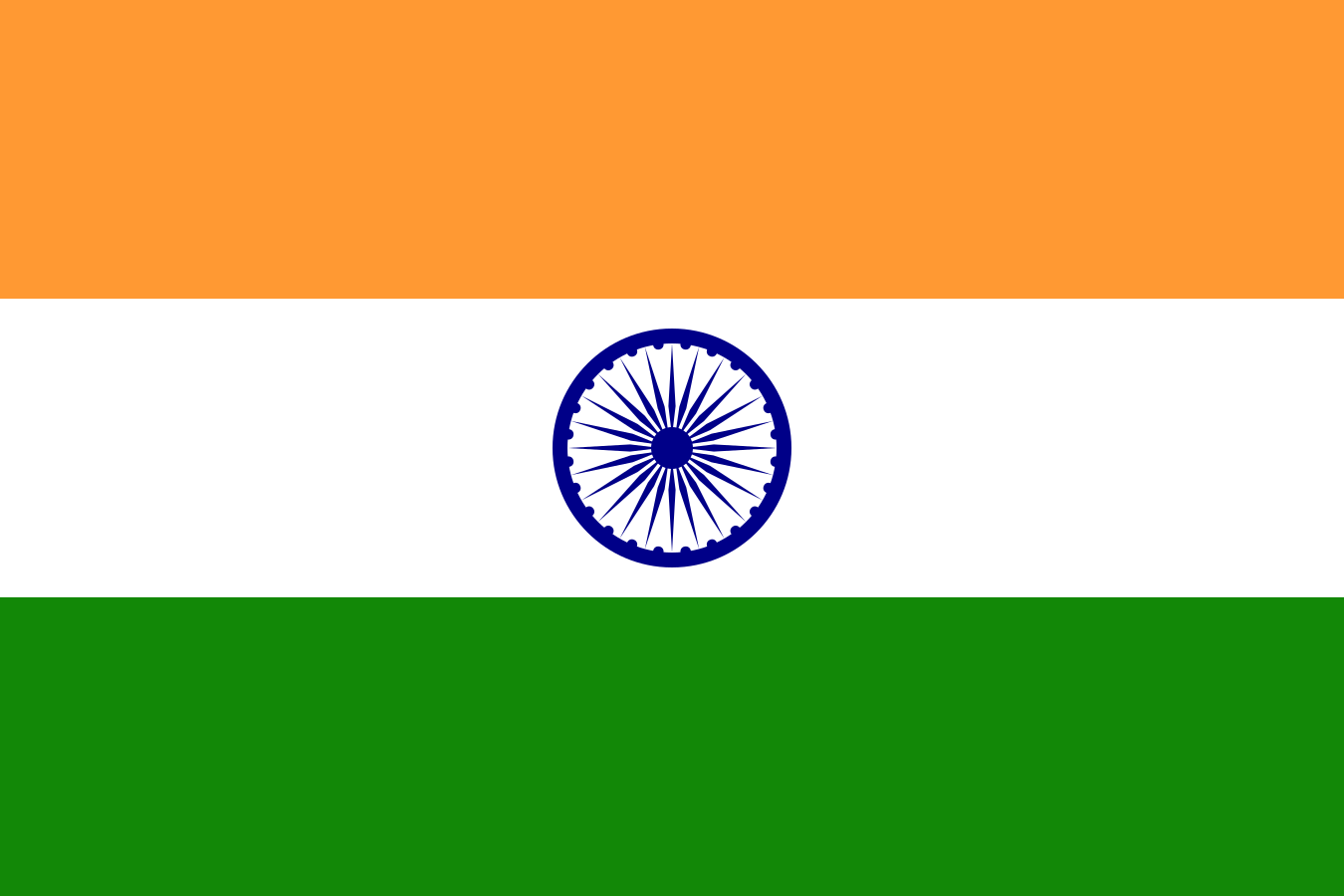
India officially the Republic of India is a South Asian...
Trending

3 hours ago Irina Shayk Stuns in Sheer Pants at Victoria’s Secret Fashion Show After-Party
3 hours ago Blueface Attends Church and Tattoos Chrisean Rock Name After Surprise Engagement

3 hours ago Jayson Tatum and Boston Celtics Prepare for Challenging 2026-27 NBA Season
4 hours ago Trump Administration Plans Strict Penalties for Defaulting Student Loan Borrowers

4 hours ago Chris Pratt and Pope Leo XIV Star in New Documentary About St. Peter's Tomb

4 hours ago Cade Cunningham Discusses Personal Life and Detroit Pistons Team Ambitions
Popular

Ilhan Omar is a prominent American politician currently serving as...

Ken Paxton is an American politician and lawyer serving as...

Elon Musk is a visionary entrepreneur and engineer known for...

Michael Joseph Jackson the King of Pop was a highly...

Cristiano Ronaldo widely considered one of the greatest footballers captains...

MrBeast the professional name of Jimmy Donaldson is the most-subscribed...