History of Kosovo–Turkey relations in Timeline


Kosovo and Turkey share strong bilateral relations, rooted in historical, cultural, and religious (predominantly Muslim) ties. Turkey was among the first countries to recognize Kosovo's independence and maintains a strong diplomatic presence there. Kosovo reciprocates with an embassy in Ankara and a consulate in Istanbul. A key aspect of the relationship is Turkey's consistent support for Kosovo's aspirations for membership in international organizations like the Council of Europe and NATO. Both nations have expressed interest in EU membership, further aligning their geopolitical goals.
1912: Balkan Wars and Albanian Diaspora Expansion
In 1912, the Balkan Wars led to a significant expansion of the Albanian diaspora in Turkey. Large numbers of Muslim refugees, including Albanians, arrived in Istanbul and Anatolia, overwhelming the Ottoman authorities' capacity to provide adequate assistance.


1913: Balkan Wars and Albanian Diaspora Expansion
In 1913, the Balkan Wars contributed to the expansion of the Albanian diaspora in Turkey. The large influx of Muslim refugees, including Albanians, strained the resources of Ottoman authorities, who struggled to provide food, shelter, registration, and documentation.
1923: Migration from Yugoslavia to Turkey Begins
From 1923 to 1939, a significant migration of Yugoslav citizens to Turkey occurred, with both Yugoslavian and Turkish sources indicating that Albanians constituted the majority of these migrants. The migration was driven by various factors, including land confiscations, redistribution to Serb colonists, and conflict between Albanian resistance movements and Yugoslav authorities.
1925: Yugoslavia-Turkey Migration Agreement Discussions
In 1925, Yugoslavia sought an agreement with Turkey regarding the migration of Muslims, raising concerns in Albania about the potential removal of Albanians from the Balkans. Turkey assured Albania that the matter primarily concerned ethnic Turks from Vardar Macedonia, aiming to reassure Albania amid concerns about Albanian migration.
July 1938: Turkish Parliament Refuses to Ratify Migration Agreement
In July 1938, the Turkish parliament declined to ratify a joint convention signed by Aras and Stojadinović regarding the migration of Muslim Turks to Turkey, just months before the death of Mustafa Kemal Atatürk. This decision halted the proposed relocation of 40,000 families and prevented the planned transfer of a large Albanian population to Turkey.
1939: Migration from Yugoslavia to Turkey Ends
From 1923 to 1939, a significant migration of Yugoslav citizens to Turkey occurred, with both Yugoslavian and Turkish sources indicating that Albanians constituted the majority of these migrants. The migration was driven by various factors, including land confiscations, redistribution to Serb colonists, and conflict between Albanian resistance movements and Yugoslav authorities.
1939: Migration Agreement Implementation Delayed
In 1939, a joint convention was to begin, signed between Aras and Stojadinović regarding the migration of Muslim Turks to Turkey. This convention planned to relocate 40,000 families between 1939 and 1944, however, with the onset of the Second World War, the measure was not reconsidered. This impacted the planned relocation of a large Albanian population to Turkey.
1944: Migration Agreement Implementation Delayed
In 1944, a joint convention was to end, signed between Aras and Stojadinović regarding the migration of Muslim Turks to Turkey. This convention planned to relocate 40,000 families between 1939 and 1944, however, with the onset of the Second World War, the measure was not reconsidered. This impacted the planned relocation of a large Albanian population to Turkey.
1952: Post-War Albanian Migration from Yugoslavia to Turkey Begins
In 1952, post Second World War, Albanian migrants began to leave Yugoslavia, particularly Kosovo, for Turkey due to discrimination and pressure to declare themselves Turkish. This period marked the start of significant emigration, with Albanians becoming a substantial portion of the migrants.
1967: Post-War Albanian Migration from Yugoslavia to Turkey Ends
Between 1952 and 1967, approximately 175,000 Muslims emigrated from Yugoslavia to Turkey due to discrimination and pressure to declare themselves Turkish. The majority of these migrants were Albanians.
February 2008: Turkey Recognizes Kosovo's Independence
On February 17, 2008, Kosovo declared its independence from Serbia, and Turkey became one of the first countries to recognize Kosovo. Subsequently, Turkey transformed its coordination office in Pristina into an embassy, strengthening diplomatic ties between the two nations.
February 18, 2008: Turkey Recognizes Kosovo's Independence
On February 18, 2008, Turkey was among the first countries to recognize Kosovo’s independence, just one day after its declaration. Following this, Turkish officials consistently supported Kosovo’s international recognition, including efforts to join the United Nations and other global organizations.
2009: Turkish Soap Opera 'Aci Hayat' Tops Viewership in Kosovo
In 2009, it was reported that the Turkish soap opera "Aci Hayat" (Acı Hayat in Turkish) was the top show in Kosovo, with over 50% viewership. This highlights the popularity and cultural influence of Turkish television in Kosovo.
October 2013: Erdoğan's Statement on Close Ties Between Turkey and Kosovo
In October 2013, during an official state visit, Turkish President Recep Tayyip Erdoğan affirmed close ties with Kosovo, stating that "Turkey is Kosovo, Kosovo is Turkey!". These comments emphasized the shared history, culture, and civilization between the two nations, though they were perceived negatively in Serbia.
February 2018: Kosovo Police Ban "Freedom to Kurdistan" Activity
In February 2018, Kosovo Police prohibited an activity called "Freedom to Kurdistan" due to lack of permits and potential security risks. Turkish media praised the ban, alleging the event would spread pro-terrorist propaganda, while a Kosovo minister condemned the planned event as a "provocation".
March 2018: Arrest of Turkish Nationals in Kosovo
On March 29, 2018, six Turkish nationals were arrested in Kosovo at Turkey's request over alleged links to schools financed by the Gülen movement, which Ankara blames for a failed 2016 coup. The Kosovar opposition strongly opposed these arrests, and the next day, the Prime Minister of Kosovo sacked the interior minister and secret service chief for failing to inform him about the arrests.
March 31, 2018: Erdoğan Criticizes Kosovo's Response to Arrests
On March 31, 2018, Recep Tayyip Erdoğan criticized Kosovo's Prime Minister for dismissing the interior minister and intelligence chief after the arrest of six Turkish nationals in Kosovo. Erdoğan questioned whose instructions the Prime Minister was following and accused Kosovo of protecting those who attempted a coup in Turkey, warning of repercussions.
2020: Turkey's Disappointment Over Kosovar Embassy in Jerusalem
In 2020, Turkey, a supporter of the Palestinian cause, voiced its disappointment over calls for the establishment of a Kosovar Embassy in Jerusalem. This disagreement stemmed from the US-brokered Kosovo and Serbia economic normalization agreements, with Turkey expressing concerns that it sidelined international law.
2024: Projected Trade Volume to Reach $1 Billion
As of 2023, the bilateral trade volume between Turkey and Kosovo reached $785 million. Turkey’s Trade Minister Ömer Bolat announced that the trade volume is expected to reach $1 billion by the end of 2024, highlighting Turkey’s growing economic engagement with Kosovo.
Mentioned in this timeline
Albania officially the Republic of Albania is a country in...
War is defined as an armed conflict involving the armed...
Turkey officially the Republic of T rkiye is a transcontinental...
Serbia is a landlocked country in Southeast and Central Europe...
Kosovo officially the Republic of Kosovo is a landlocked country...
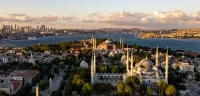
Istanbul is Turkey's largest city and its economic cultural and...
Trending

4 hours ago Tennis Prediction Markets Active for Upcoming Professional Matches

4 hours ago Dave Franco's Forgotten Island Struggles With Low Box Office Opening

5 hours ago Legal Challenges Mount Over Trump Administration's $810 Million Pocket Rescission of Congressional Funding

5 hours ago John Oliver Criticizes Flávio Bolsonaro and Analyzes Brazil's Upcoming Presidential Election

6 hours ago Mirra Andreeva Competes in WTA Beijing Tournament Amidst Significant Ranking Surge
6 hours ago Palmer Luckey and Musk Advise Pentagon on Future Warfare and New Drone Command
Popular

Jameis Winston is an American football quarterback currently playing for...

Ken Paxton is an American politician and lawyer serving as...

Sylvester Stallone is an iconic American actor screenwriter and filmmaker...

Shakira Isabel Mebarak Ripoll the Queen of Latin Music is...

Michael Joseph Jackson the King of Pop was a highly...

Peter Thiel is a prominent American entrepreneur venture capitalist and...