


Kurdistan is a geo-cultural region in West Asia characterized by a prominent Kurdish population and a historically rooted Kurdish culture, languages, and national identity. Geographically, it encompasses the northwestern Zagros and eastern Taurus mountain ranges. It is not a formally defined country but rather a region spread across parts of Turkey, Iraq, Iran, and Syria. The region is of significance due to its cultural heritage, geopolitical importance, and the ongoing pursuit of greater autonomy or independence by some Kurdish groups.
1918: Establishment of the Kurdish State
In 1918, the short-lived Kurdish State was established.


1919: End of the Kurdish State
In 1919, the short-lived Kurdish State ended.
1920: Koçgiri Rebellion
In 1920, the Koçgiri rebellion occurred against the Grand National Assembly.
1921: Establishment of the Kingdom of Kurdistan
In 1921, the Kingdom of Kurdistan was established.
1923: Establishment of Red Kurdistan
In 1923, Kurdistansky Uyezd, also known as "Red Kurdistan", was established.
1923: Treaty of Lausanne
In 1923, the Allies accepted the renegotiated Treaty of Lausanne and the borders of the modern Republic of Turkey, leaving the Kurds without a self-ruled region.
1924: End of the Kingdom of Kurdistan
In 1924, the Kingdom of Kurdistan came to an end.
1924: Sheikh Said Rebellion
In 1924, the Sheikh Said rebellion occurred under the Turkish state.
1925: Declaration of Closed Military Area
In 1925, the region was declared a closed military area from which foreigners were banned.
1927: Republic of Ararat
In 1927, the Republic of Ararat occurred under the Turkish state.
1927: Establishment of the Republic of Ararat
In 1927, the Republic of Ararat was established.
1929: End of Red Kurdistan
In 1929, Kurdistansky Uyezd, also known as "Red Kurdistan", ended.
1930: End of the Republic of Ararat
In 1930, the Republic of Ararat came to an end.
1937: Dersim Rebellion
In 1937, the Dersim rebellion occurred under the Turkish state.
1945: Kurdish Proposal at the San Francisco Peace Conference
At the San Francisco Peace Conference of 1945, the Kurdish delegation proposed consideration of territory claimed by the Kurds.
1946: Establishment of the Republic of Mahabad
In 1946, the Republic of Mahabad was established.
1965: End of Closed Military Area
In 1965, the region ceased being a closed military area.
1980: Military Coup and Prohibition of Kurdish Language
Following the military coup of 1980, the Kurdish language was officially prohibited in public and private life.
1983: Inclusion in State of Emergency Region
In 1983, the Kurdish provinces were included in the state of emergency region, which was placed under martial law.
1991: Turkish Government Acknowledgment of Kurds
Until 1991, the Turkish government categorized Kurds as "Mountain Turks".
1992: Emergence of Kurdistan Region
In 1992, amid the withdrawal of Iraqi forces from three northern provinces, Kurdistan Region emerged as an autonomous entity inside Iraq with its own local government and parliament.
2003: US invasion of Iraq
Following the invasion of Iraq in 2003, the new constitution issued in 2005 recognises Kurdistan Region as a federal region.
2003: US sponsorship of federal model in Iraq
Masrour Barzani warned about an imminent collapse of the very model of a Federal Iraq that the United States sponsored in 2003
2005: New Iraqi Constitution
In 2005, the new constitution issued in 2005 recognises Kurdistan Region as a federal region.
2005: Adoption of federal system in Iraq
Some Kurdish officials in Iraq have described punitive measures against KRI as evidence of the Iraqi government’s aim to return to a centralised political system and abandon the federal system it adopted in 2005.
July 2007: Kurdish Government Solicits Foreign Investment
As of July 2007, the Kurdish government solicited foreign companies to invest in 40 new oil sites, with the hope of increasing regional oil production.
2007: Start of Oil Extraction
Extraction of oil reserves in Kurdistan Region began in 2007.
2010: US Report on Kurdistan's Future
A 2010 US report attested that "Kurdistan may exist by 2030".
November 2011: Exxon's Contracts in Kurdistan
In November 2011, Exxon challenged the Iraqi central government's authority with the signing of oil and gas contracts for exploration rights to six parcels of land in Kurdistan.
July 2012: Agreement Between Turkey and Kurdistan Region
In July 2012, Turkey and the Kurdistan Region signed an agreement by which Turkey would regularly supply the KRG with refined petroleum products in exchange for crude oil.
2014: Northern Iraq Offensive by ISIS
Following the 2014 Northern Iraq offensive by the Islamic State of Iraq and the Levant, the weakening of the Iraqi state has presented an opportunity for independence for Iraqi Kurdistan.
2015: Turkey's support for Al-Nusra
As of 2015, Turkey was actively supporting Al-Nusra.
2016: Population Estimate
According to 2016 estimate Kurdish Institute of Paris, total population of Kurdistan is around 34.5 million, and Kurds making 86% of population of Northern Kurdistan.
January 2017: Turkey's stance on Al-Nusra
As of January 2017, Turkey's foreign ministry has said that Al-Nusra is a terrorist group and has acted accordingly.
July 2017: Iraqi Government Victory in Mosul
In July 2017, the Iraqi government declared victory in the Battle of Mosul against ISIS in the group’s last stronghold in the country.
September 2017: Iraqi Kurds Independence Referendum and Military Operation
In September 2017, Iraqi Kurds held a one-sided independence referendum which eventually triggered a military operation wherein the Iraqi government forces attacked the Kurds, defeating them and forcing them to abandon the referendum.
September 2017: Iraqi Kurds Independence Referendum
In September 2017, Iraqi Kurds held a one-sided independence referendum, which eventually failed and was abandoned.
September 2023: Masrour Barzani warns about collapse of federal model in Iraq
In a leaked letter published by Al-Monitor in September 2023, Masrour Barzani, the prime minister of KRG warned about an imminent collapse of the federal model in Iraq
2024: Report published by the Washington Institute for Near East Policy
According to a report published in 2024 by the Washington Institute for Near East Policy, Kurdistan Region's autonomy "hangs in the balance"
2030: Potential Existence of Kurdistan
According to a 2010 US report, "Kurdistan may exist by 2030".
Mentioned in this timeline
The United States of America is a federal republic primarily...
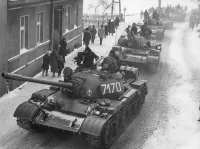
Martial law is the imposition of military rule in place...
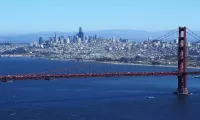
San Francisco is the fourth-most populous city in California and...
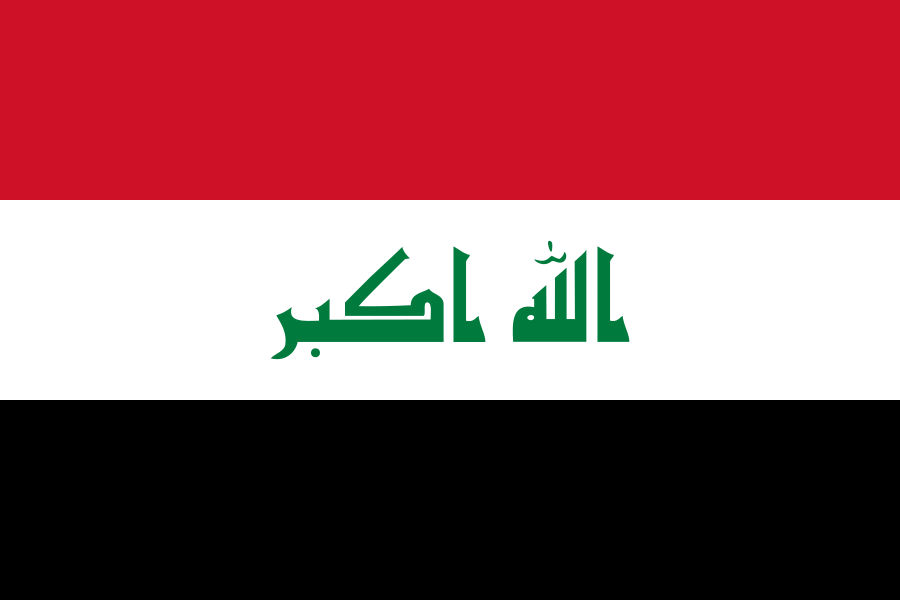
Iraq officially the Republic of Iraq is a country in...
War is defined as an armed conflict involving the armed...
Turkey officially the Republic of T rkiye is a transcontinental...
Trending

4 hours ago Jasmine Paolini Competes at the 2026 China Open Tennis Tournament

5 hours ago Tennis Prediction Markets Active for Upcoming Professional Matches

5 hours ago Dave Franco's Forgotten Island Struggles With Low Box Office Opening

6 hours ago Legal Challenges Mount Over Trump Administration's $810 Million Pocket Rescission of Congressional Funding

6 hours ago John Oliver Criticizes Flávio Bolsonaro and Analyzes Brazil's Upcoming Presidential Election

7 hours ago Mirra Andreeva Competes in WTA Beijing Tournament Amidst Significant Ranking Surge
Popular

Jameis Winston is an American football quarterback currently playing for...

Ken Paxton is an American politician and lawyer serving as...

Sylvester Stallone is an iconic American actor screenwriter and filmmaker...

Shakira Isabel Mebarak Ripoll the Queen of Latin Music is...

Michael Joseph Jackson the King of Pop was a highly...

Peter Thiel is a prominent American entrepreneur venture capitalist and...