History of Lockheed Martin Stalker in Timeline


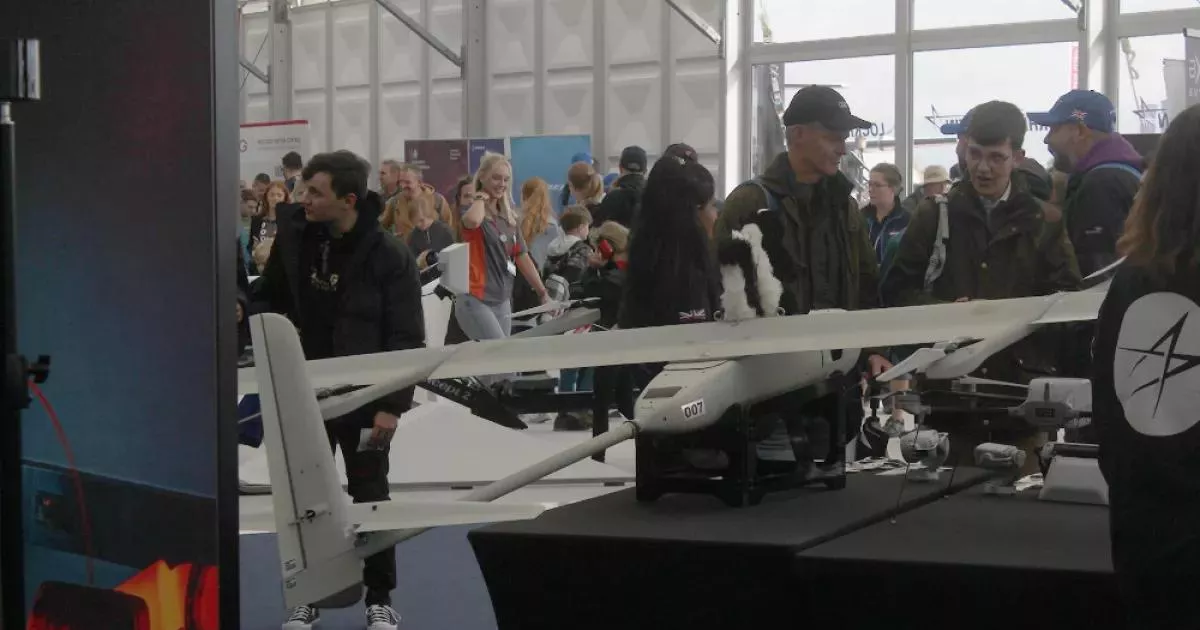
The Lockheed Martin Stalker is a hand-launched, electrically powered unmanned aerial vehicle (UAV) originally sold by Lockheed Martin Skunk Works. Designed and built by Edge Autonomy, it was primarily intended for military applications, focusing on intelligence, surveillance, and target acquisition (ISTAR). Its compact design and electric power allowed for relatively silent operation and ease of deployment in the field. While the specific customer was not publicly disclosed, it was presumably used by the United States Special Operations Command for tactical reconnaissance and situational awareness.
2006: Stalker Creation
In 2006, the Lockheed Martin Stalker was created by the Skunk Works team. It was hand-launched, belly-landed, and featured a quiet electric motor, propeller, and detachable camera payload with modules for daylight, low light, and infrared. The camera system could be replaced with droppable payloads.


July 2012: Stalker Demonstrates Extended Flight Capability
In July 2012, a Stalker UAV demonstrated its capability of over 48 hours of continuous flight in a wind tunnel by using a ground based laser system. Later, a series of outdoor tests were performed with the laser powering system by Lockheed and LaserMotive Inc. in August.
August 2013: Stalker XE Improvement
In August 2013, Lockheed revealed an improved Stalker XE with 13 hours endurance, utilizing a larger 3.2 liter liquid propane tank. The UAV was used in Afghanistan to detect IEDs. Lockheed planned to continue testing the laser-charged Stalker, with LaserMotive working to reduce the laser apparatus size.
2018: Development of 350 W SOFC system
In 2018, the Rapid Reaction Technology Office funded the development at ARL of a 350 W SOFC system to replace the 245 W system. The goal was to increase the power, mission duration, and reliability for future unmanned aerial systems (UASs). These developments were expected to provide new capabilities for small UASs and soldier-portable power applications, and could also be applied to unmanned ground vehicle systems.
Mentioned in this timeline
A tank is an armored fighting vehicle designed for front-line...
A camera is an instrument for capturing and storing images...
Directed by Robert Zemeckis Flight stars Denzel Washington as Whip...
An office is a space where employees perform administrative work...
Trending

4 hours ago Juwan Johnson Fantasy Football Week 4 Start or Sit Advice
4 hours ago Noah Fant Declared Inactive for Monday Night Football

4 hours ago Memphis Grizzlies Waive Jordan Hawkins Weeks Following Trade
4 hours ago Chase DeLauter Faces High Stakes Under ALDS Pressure With Cleveland Guardians
4 hours ago Children Automatically Enrolled in New Trump Account Investment Program

5 hours ago Saints Place Running Back Travis Etienne on Injured Reserve Due to Hamstring Injury
Popular

Ken Paxton is an American politician and lawyer serving as...

Shakira Isabel Mebarak Ripoll the Queen of Latin Music is...

Jameis Winston is an American football quarterback currently playing for...

Elon Musk is a visionary entrepreneur and engineer known for...

Bernie Sanders is a prominent American politician and the senior...
Cesar Chavez was a prominent American labor leader and civil...