History of MTA Regional Bus Operations in Timeline


MTA Regional Bus Operations (RBO) is the bus operations division of the Metropolitan Transportation Authority in New York City and is a crucial component of the city's public transportation network. It manages an extensive fleet of over 5,000 buses, the largest in the US, and operates over 300 routes. RBO provides various services, including local, rush, limited-stop, express, and Select Bus Service. A significant portion of these routes offer round-the-clock service, highlighting the system's importance for New York City's residents and visitors.
3 hours ago : Car Explodes Near Charging Bull in NYC: Fireball Engulfs Lower Manhattan
A car exploded near the Charging Bull statue in Lower Manhattan, New York City, resulting in a large fireball. The incident is under investigation with details continuing to emerge. The car caught fire before the explosion.


September 1919: City Involvement with Surface Transit
In September 1919, City involvement with surface transit in the city began. Mayor John Francis Hylan organized private entrepreneurs to operate "emergency" buses.
1919: New York City's First Municipal Bus Service
In 1919, MTA New York City Bus started as New York City's first municipal bus service.
1921: City Acquisition
In 1921, the city acquired the Bridge Operating Company, which ran the Williamsburg Bridge Local trolley.
June 2, 1940: City Takeover of Brooklyn-Manhattan Transit Corporation
On June 2, 1940, the city took over the Brooklyn–Manhattan Transit Corporation's surface subsidiary, the Brooklyn and Queens Transit Corporation.
February 23, 1947: Board of Transportation Takeover
On February 23, 1947, the Board of Transportation took over the Staten Island bus network of the Isle Transportation Company.
March 30, 1947: Further Acquisitions
Further acquisitions were made on March 30, 1947, with the North Shore Bus Company in Queens.
September 24, 1948: Further Acquisitions
On September 24, 1948, further acquisitions were made with the East Side Omnibus Corporation and Comprehensive Omnibus Corporation in Manhattan.
December 5, 1948: B39 Bus Route Replacement
On December 5, 1948, the B39 bus route replaced the Williamsburg Bridge Local trolley.
June 15, 1953: NYCT Created
On June 15, 1953, the New York City Transit Authority (NYCT) was created by the State of New York.
October 31, 1956: Final Brooklyn Trolleys Discontinued
On October 31, 1956, the final Brooklyn trolleys, the Church Avenue Line and McDonald Avenue Line, were discontinued.
1957: Queensboro Bridge Local
In 1957, the privately operated Queensboro Bridge Local remained operational.
1962: City Condemnation of Bus Company Assets
After a strike in 1962, the city condemned the assets of the bus companies Fifth Avenue Coach Company and Surface Transit.
1962: MaBSTOA Established
In 1962, the State established the Manhattan and Bronx Surface Transit Operating Authority (MaBSTOA) as a subsidiary of NYCT.
1963: Installation of bus lanes in 1963
In 1963, the city started installing bus lanes in Downtown Brooklyn and St. George, Staten Island.
November 3, 1965: Route R8X service began
On November 3, 1965, service originally began on route R8X (later X8, now SIM5) traveling from the South Shore of Staten Island, up Hylan Blvd and Father Capodanno Blvd., into Downtown Brooklyn.
1966: Introduction of air conditioned buses
In 1966, the first large order of air conditioned buses began service, marking a significant fleet improvement.
1969: Bus lane installation on 42nd Street in 1969
In 1969, part of 42nd Street in Midtown Manhattan received a bus lane.
1973: Limited-Stop Service Attempted
Limited-Stop Service was first attempted with the M4 bus during rush hours in 1973, then expanded to other routes from there.
1976: Introduction of "kneeling buses"
In 1976, "kneeling buses" were introduced, improving accessibility for passengers.
1976: First metal signs used as part of a pilot program
Metal signs in their current design were first used in 1976, as part of a pilot program on Fifth and Sixth Avenues in Midtown Manhattan funded by the Urban Mass Transit Administration.
1977: Livery Scheme
From 1977 until late 2007, the livery was a full all-around stripe with a black rear.
1980: Final Acquisition
In 1980, MaBSTOA took over operations of the Avenue B & East Broadway Transit Co. Inc.'s routes.
1980: Introduction of wheelchair lifts
In 1980, wheelchair lifts started appearing on buses, further improving accessibility.
1991: Access-A-Ride program created
The Access-A-Ride program was created in 1991 after the passage of the Americans with Disabilities Act of 1990.
November 1993: Introduction of the MetroCard
In November 1993, the MetroCard fare system was introduced, allowing riders to use cards that store value equal to the amount paid.
December 5, 1993: Inauguration of "Request-a-Stop" service
On December 5, 1993, the "Request-a-Stop" service was inaugurated in Staten Island, allowing bus operators to discharge passengers at safe, non-bus stop locations between 10:00 p.m. and 5:00 a.m.
1994: "Request-a-Stop" service expansion
In 1994, the "Request-a-Stop" service, which allows passengers to request a stop at a safe location along the route between 10:00 p.m. and 5:00 a.m., was expanded to boroughs beyond Staten Island.
1994: Federal grants given to MTA and DOT for bus stop signs
In 1994, the signs were created following two federal grants given to the MTA and DOT totaling $1.5 million.
November 1996: Modern color-coded bus stop signs first installed
In November 1996, the modern color-coded lollipop-shaped bus stop signs were first installed in Jamaica, Queens.
December 1996: Installation of 400 bus stop signs began
In December 1996, 400 signs started to be installed after prototype signs were installed at selected locations.
1996: Introduction of articulated buses
In 1996, articulated buses were introduced to the fleet and have since become prominent in the Bronx and Manhattan.
April 1997: First phase of bus stop sign installation completed
Installation of the first 400 bus stop signs was completed in April 1997, with the remaining signs installed by the end of 1997.
1997: Testing of low-floor buses
In 1997, low-floor buses were first tested to speed up boarding and alighting for elderly and disabled passengers.
1997: MetroCard enhancements for free transfers
In 1997, the MetroCard was enhanced to allow passengers to make free transfers between subways and buses within two hours.
September 1998: Introduction of hybrid-electric buses
In September 1998, hybrid-electric buses, operating with a combination of diesel and electric power, were introduced.
1998: Introduction of unlimited-ride MetroCards
In 1998, unlimited-ride MetroCards were introduced, making New York City Transit one of the last major systems to offer unlimited bus and rapid transit travel.
1999: Mass order of CNG buses
In 1999, mass orders of buses running on compressed natural gas (CNG) began.
June 2000: Establishment of the "Clean Fuel Bus" program
In June 2000, the MTA's "Clean Fuel Bus" program was established, promoting the use of clean or alternative fuels for buses.
2000: Introduction of stop-request buttons
Since the early 2000s, most new non-express buses ordered feature stop-request buttons located on grab bars.
2001: MetroCard-only subway transfers added
In 2001, several MetroCard-only transfers between subway stations were added.
2001: Atlantic Express and NYCT Take Over Routes
Until 2001, Academy Bus operated certain routes, after which Atlantic Express and NYCT took them over.
2004: Mass order of hybrid-electric buses
In 2004, mass orders of hybrid-electric buses, operating with a combination of diesel and electric power, began.
2004: MTA Bus Company Established
In late 2004, MTA Bus Company was established as a subsidiary public benefit corporation.
January 3, 2005: Takeover of Liberty Lines Express
On January 3, 2005, the former Liberty Lines Express bus routes were taken over.
February 27, 2005: Takeover of Queens Surface Corporation Bus Routes
On February 27, 2005, Queens Surface Corporation bus routes were taken over.
July 1, 2005: Takeover of New York Bus Service Bus Routes
On July 1, 2005, New York Bus Service bus routes were taken over.
December 5, 2005: Takeover of Command Bus Company Bus Routes
On December 5, 2005, Command Bus Company bus routes were taken over.
2005: Public Takeover of Queens Buses
In 2005 and 2006, public takeover of the remaining Queens buses and most express routes was implemented when the city purchased the assets of seven private bus companies.
January 9, 2006: Takeover of Green Bus Lines Bus Routes
On January 9, 2006, Green Bus Lines bus routes were taken over.
January 30, 2006: Takeover of Jamaica Buses Bus Routes
On January 30, 2006, Jamaica Buses bus routes were taken over.
February 20, 2006: Triboro Coach Corporation Ceases Operations
On February 20, 2006, Triboro Coach Corporation ceased operating.
May 2006: Cemusa awarded contract for bus shelters
In May 2006, Spain-based advertising company Cemusa was awarded a 20-year contract for 3,300 bus shelters.
December 2006: First Cemusa bus shelters installed
The first 24 Cemusa bus shelters were installed by December 2006 in Queens.
2006: Consolidation of Management Function
After the bus mergers were completed in 2006, the MTA then moved to streamline its operations through consolidation of management function.
2006: Public Takeover of Queens Buses
In 2005 and 2006, public takeover of the remaining Queens buses and most express routes was implemented when the city purchased the assets of seven private bus companies.
2006: MTA Bus Formed
In 2006, MTA Bus was formed to take over 7 private bus companies operating primarily in Queens.
2006: First traffic signal priority corridor in 2006
In 2006, the Victory Boulevard corridor on Staten Island became the first to receive traffic signal priority, using infrared detection technology.
2007: Trials of similar systems alongside GPS tracking
Between 2007 and 2012, the MTA trialed similar audio/visual systems alongside GPS tracking on select routes in the New York City Bus system.
2007: Livery Scheme
From 1977 until late 2007, the livery was a full all-around stripe with a black rear.
2007: Pilot program on the M15
The current countdown clocks are successors to a pilot program on the M15 in 2007.
May 2008: RBO Officially Created
RBO was officially created in May 2008, with Joseph J. Smith named to lead the consolidated bus operations.
June 29, 2008: First Select Bus Service corridor on Bx12 begins service
On June 29, 2008, the first Select Bus Service corridor, operating on the Bx12 along 207th Street, Fordham Road, and Pelham Parkway, was placed into service.
2008: Reintroduction of stop-request cords
After 2008, buses were ordered with stop-request cords rather than tape strips due to the latter's higher maintenance cost.
2008: Retrofits of buses built after 2008
Buses built after 2008 are currently receiving retrofits with digital information screens, while new bus deliveries starting in 2017 are receiving the screens during production.
2008: Bus ridership decline from 2008 to 2017
From 2008 to 2017, bus ridership declined by more than 100 million.
2008: MTA Regional Bus Operations Formed
In 2008, MTA Regional Bus Operations was created to consolidate the MTA's bus operations, which included MTA New York City Bus and MTA Bus.
2008: Fordham Road and Pelham Parkway corridor traffic signal priority in 2008
In 2008, the Victory Boulevard installation was followed by the Fordham Road and Pelham Parkway corridor (Bx12 bus) in the Bronx, which used GPS transponders aboard buses.
2008: Merger of Bus Operations
In 2008, the bus operations of MTA Bus Company and New York City Transit were merged into MTA Regional Bus Operations.
2009: Pilot program on the M34 and M16 buses
The current countdown clocks are successors to a pilot program on the M34 and M16 buses between 2009 and 2012.
October 10, 2010: Select Service begins on the M15 line
On October 10, 2010, Select Service began on the M15 line after the delivery of new low-floor buses.
2010: Livery Scheme
Until late 2010, the livery scheme was a stripe with a white rear and no rear stripe, and still present on buses repainted during this time.
December 31, 2010: Atlantic Express Cancels AE7 Service
Citing low ridership and increased costs, Atlantic Express canceled the AE7 express route service on December 31, 2010.
November 13, 2011: M34/M34A Select Bus Service line started
The M34/M34A Select Bus Service line was started on November 13, 2011. Plans for a 34th Street busway were dropped in favor of the standard SBS model.
December 2011: MTA Long Island Bus Transferred
Until December 2011, MTA Regional Bus also included the MTA Long Island Bus division, when its services were transferred to the private operator Veolia Transport.
2011: Bus ridership decline in Manhattan from 2011 to 2016
From 2011 to 2016, Manhattan experienced the greatest ridership decreases with bus ridership declining more than 15%.
2011: Mayor Bloomberg's traffic signal priority proposal in 2011
In 2011, Mayor Michael Bloomberg proposed that traffic signal priority be installed along 11 bus routes within the following two years.
2011: Buses built after 2011 get Wi-Fi and USB
Since 2016, buses built after 2011 have been built or retrofitted with Wi-Fi connectivity and USB charging ports.
December 31, 2011: End of MTA Operation of Long Island Bus
Until December 31, 2011, MTA Regional Bus Operations also operated Nassau County's bus and paratransit service, formerly known as Long Island Bus. The MTA voted to end operation of the system at the end of 2011.
January 1, 2012: Nassau Inter-County Express Rebranding
On January 1, 2012, the Nassau County bus service was rebranded as "Nassau Inter-County Express".
September 2, 2012: S79 Hylan Boulevard/Richmond Avenue route conversion moved up
The S79 Hylan Boulevard/Richmond Avenue route, initially slated to be converted to SBS in 2013, was moved up to September 2, 2012.
2012: Trials of similar systems alongside GPS tracking end
Between 2007 and 2012, the MTA trialed similar audio/visual systems alongside GPS tracking on select routes in the New York City Bus system.
2012: Guide-A-Ride boxes implementation begins on MTA Bus Company routes
Implementation on MTA Bus Company routes for Guide-A-Ride boxes took place in 2012–2014 for local bus routes.
2012: MTA testing signal priority along the M15 in 2012
In 2012, the MTA started testing signal priority along the M15 in Lower Manhattan.
2012: Pilot program on the M34 and M16 buses
The current countdown clocks are successors to a pilot program on the M34 and M16 buses between 2009 and 2012.
June 30, 2013: Bx41 Webster Avenue route begins service
On June 30, 2013, the sixth corridor, the second for the Bronx, began service on the Bx41 Webster Avenue route; this route was the first "Phase II" SBS route to begin service.
November 17, 2013: B44 Select Bus Service implemented
On November 17, 2013, the B44 Rogers/Bedford/Nostrand Avenues bus route, the fifth Select Bus Service corridor in the city, was implemented after the arrival of new fare machines.
2013: Atlantic Express Bankruptcy
Atlantic Express declared bankruptcy in 2013.
2013: First electronic countdown clocks installed
In 2013, the first two electronic countdown clocks were installed in Stapleton and New Dorp on Staten Island.
2013: WalkNYC project begins
Several stops along Select Bus Service routes employ different countdown clocks that are part of wayfinding information kiosks installed in conjunction with the city's WalkNYC project beginning in 2013.
May 25, 2014: M60 converted to SBS
On May 25, 2014, the M60 125th Street–Triborough Bridge–Astoria Boulevard bus route to LaGuardia Airport, the seventh corridor and the third for Manhattan, was converted to SBS.
2014: Select Bus Service routes receiving GPS-based traffic signal priority in 2014
From 2014 to 2016, five Select Bus Service routes received GPS-based traffic signal priority at 260 intersections. They were the M15 in Manhattan; the B44 along Nostrand Avenue in Brooklyn; the S79 along Hylan Boulevard on Staten Island; the Bx41 along Webster Avenue in the Bronx; and the B46 along Utica Avenue in Brooklyn.
2014: Guide-A-Ride boxes implementation completes on MTA Bus Company routes
Implementation on MTA Bus Company routes for Guide-A-Ride boxes took place in 2012–2014 for local bus routes.
2014: Additional countdown clocks approved for installation
In late 2014, an additional 18 stops in Staten Island and Brooklyn were approved for installation of electronic countdown clocks.
June 28, 2015: Original start date for M86 SBS
The eighth Select Bus Service route, the M86 running on 86th Street, was originally scheduled to start running on June 28, 2015, but it was pushed back.
July 13, 2015: M86 SBS start date
On July 13, 2015, the M86 Select Bus Service started running on 86th Street.
November 29, 2015: Q44 limited bus route began SBS service
On November 29, 2015, the Q44 limited bus route running on East 177th Street (the Cross Bronx Expressway service road) and Main Street, the tenth corridor and the first for Queens, began SBS service.
2015: Study on MTA bus speeds
A 2015 study found that 35 MTA routes with significant ridership figures had average speeds of less than 15 miles per hour.
2015: JCDecaux acquires Cemusa and maintains bus shelters
Following the acquisition of Cemusa by French advertising firm JCDecaux in 2015, bus shelters are now maintained by JCDecaux.
2015: Bus bunching statistics
In 2015, bus bunching affected 9.4% of routes, a number that increased to nearly twelve percent in 2017.
2015: MTA investigation of express bus routes on Staten Island
Starting in 2015, the MTA investigated express bus routes on Staten Island, finding them to be circuitous, duplicative, and infrequent.
April 2016: Solicitation of proposals for New Fare Payment System
In April 2016, the MTA solicited proposals for a contactless "New Fare Payment System" to replace the MetroCard by 2022.
May 2016: Introduction of new livery
In May 2016, a new livery was introduced, replacing the blue stripe livery on a white base that had been in use since the late 1970s. The first bus with the new livery entered service on the Q10 route.
July 3, 2016: B46 Utica Avenue SBS instituted
The B46 on Utica Avenue, the ninth corridor and the second for Brooklyn, was instituted on July 3, 2016. The local and Select Bus Service route of the B46 changed northern terminals to improve reliability.
September 2016: Q70 rebranded as "LaGuardia Link" and becomes SBS
In September 2016, the Q70, the eleventh corridor (twelfth route overall) and the second for Queens, was rebranded as the "LaGuardia Link" and became a SBS route.
November 6, 2016: M23 becomes a Select Bus Service route
On November 6, 2016, the M23, the twelfth corridor (thirteenth route) and the fifth in Manhattan, became a Select Bus Service route with dedicated bus lanes and countdown clocks at some stops.
2016: Select Bus Service ridership
As of 2016, Select Bus Service routes only served 12% of all bus riders, while the average bus route was 10% slower than it was in the mid-1990s.
2016: Total bus stops with countdown clocks installed
As of 2016, a total of 32 bus stops had one of the two countdown clocks installed.
2016: Increase in bus speeds along routes with bus priority signals in 2016
From 2014 to 2016, five Select Bus Service routes received GPS-based traffic signal priority at 260 intersections. In 2016, a study found that all of the routes saw increases in average bus speeds along the portions that had bus priority signals with speeds increasing by an average of 18%.
2016: New Livery and Articulated Buses
From 2016 on, the MTA logo was showcased only, and the blue-stripe livery was replaced with a new blue-and-yellow livery. The first order with the new livery, 75 articulated buses for MTA Bus, were delivered in spring and summer 2016.
2016: Weekday and weekend bus ridership decline in 2016
From 2016 to 2017, average weekday bus ridership fell 5.7%, and average weekend bus ridership fell 4%.
2016: Additional countdown clocks approved for installation in Staten Island
In 2016, an additional 100 electronic countdown clocks in Staten Island were approved for installation.
2016: New Livery Introduced
In spring 2016, a new livery was introduced based on navy blue, light blue, and yellow, with a mostly blue front and sides, a light blue and yellow wave, and a yellow back, commonly known as the MTA's Andrew Cuomo Scheme or Excelsior Scheme.
2016: Introduction of Wi-Fi and USB charging ports
Since 2016, buses built after 2011 have been built or retrofitted with Wi-Fi connectivity and USB charging ports.
2016: Efforts to bring audio/visual system to current and future fleet
Starting in 2016, efforts were made to integrate an audio/visual system into the current and future bus fleet to enhance customer service and ADA accessibility through next-stop announcements and public service announcements.
May 2017: M79 becomes an SBS route
In May 2017, the M79 became an SBS route, with the installation of bus lanes along its route.
July 2017: Traffic signal preemption used on five bus corridors in July 2017
As of July 2017, traffic signal preemption was used on five bus corridors in New York City.
July 2017: Eleven more corridors to receive traffic signal priority by July 2017
Eleven more corridors were set to receive traffic signal priority by July 2017.
September 2017: Bx6 becomes an SBS route
In September 2017, the Bx6 became an SBS route after the completion of bus lanes and widened sidewalks. It supplements the local service by stopping at high ridership stops.
October 23, 2017: Announcement of OMNY to replace MetroCard
On October 23, 2017, it was announced that the MetroCard would be phased out and replaced by OMNY, a contactless fare payment system.
November 2017: Frequency analysis by borough
As of November 2017, the Bronx had the greatest proportion of bus routes with high frequencies in both directions, while Manhattan had the highest ratio of routes with high frequencies in at least one direction. Staten Island had the highest ratio of routes with low rush-hour frequencies.
November 2017: Bus lane network length in November 2017
As of November 2017, the city's bus lane network was about 104 miles (167 km) long, representing nearly two percent of the city's 6,000 miles (9,700 km) of streets.
November 2017: High-frequency bus service analysis
As of November 2017, three-quarters of bus routes provided high-frequency service in at least one direction during rush hours, with buses arriving at least every ten minutes.
November 2017: Select Bus Service implemented on Q52 and Q53 routes
In November 2017, Select Bus Service along Woodhaven and Cross Bay Boulevards was implemented on the Q52 and Q53 routes.
December 2017: Weekday and weekend bus ridership averages
In December 2017, the average weekday bus ridership was 1.9 million, while total weekend ridership averaged 2.1 million. Express buses had an average weekday ridership of 40,200, and paratransit was used by a mean of 27,900 people each weekday.
2017: Winding bus routes
A 2017 report indicated that nearly half of bus routes had at least 10 turns along their routes. The most winding route was the Bx8 bus in the Bronx, with 29 turns.
2017: Eighth Select Bus Service route planned
An eighth Select Bus Service route was planned in the 2014–2017 Financial Plan.
2017: Testing of battery electric buses
Between 2017 and 2021, the MTA tested a fleet of battery electric buses.
2017: Bus ridership decline in 2017
In 2017, bus ridership declined by more than 100 million since 2008. Average weekday bus ridership fell 5.7%, and average weekend bus ridership fell 4% compared to 2016. As of 2017, thirteen bus routes with at least 20 stops within 0.1 miles of a subway station all saw ridership declines, averaging a 20% loss.
2017: Increase in bus bunching
In 2017, nearly twelve percent of routes were considered to be bunched on a regular basis, compared to 9.4% in 2015.
2017: Pokey Awards for slowest bus routes
In 2017, the Straphangers Campaign gave out "Pokey Awards" to the slowest bus routes. The M42 crosstown bus on 42nd Street was the slowest, averaging 3.9 miles per hour.
2017: Installation of digital information screens begins
In 2017, the installation of digital information screens began on new bus deliveries to provide real-time information such as time, weather, advertisements, and service advisories.
March 2018: Number of equipped intersections with traffic signal priority rose to 500 by March 2018
The number of equipped intersections rose to 500 by March 2018.
April 2018: Buses to receive digital information screens after April 2018
All buses delivered after April 2018, as well as 1,000 existing buses, would also receive digital information screens with automated announcements.
April 2018: MTA published Bus Action Plan in April 2018
In April 2018, the MTA published a Bus Action Plan detailing 28 suggestions to improve the bus system, in response to a citywide transit crisis and complaints about the general quality of MTA bus service.
August 2018: Reorganization of Staten Island express bus service
In August 2018, express bus service to Staten Island was completely reorganized, with all existing bus routes discontinued and replaced with 21 new routes with a "SIM" prefix.
October 1, 2018: B82 SBS implemented along Kings Highway
On October 1, 2018, Select Bus Service along Kings Highway was implemented on the B82, which replaced the former Limited-Stop route.
2018: Budgetary Burden
As of 2018, MTA Regional Bus Operations' budgetary burden for expenditures was $773 million, which it supports through the collection of taxes and fees.
2018: MTA announces more signs would receive electronic countdown clocks
In 2018, as part of its Bus Action Plan, the MTA announced that more signs would receive electronic countdown clocks.
2018: Bus Turnaround Campaign ratings
In 2018, the Bus Turnaround Campaign rated each bus route based on speed and reliability, giving 75% of city bus routes a "D" or "F" grade.
2018: Testing of hybrid and electric buses in 2018
Ten hybrid and ten electric buses had been tested in 2018, and the MTA also tested out a double-decker bus on the redesigned Staten Island bus routes.
January 3, 2019: Shutdown plan altered, SBS routes put on hold
On January 3, 2019, the 14th Street Tunnel shutdown plan was altered by Governor Andrew Cuomo, and the proposed SBS routes were put on hold.
January 2019: Installation of pedestrian turn warnings and cameras on buses by January 2019
By January 2019, audible "pedestrian turn warning" announcement systems were installed on 617 buses, while cameras were installed on the inside of 3,469 buses and on the outside of 319 buses.
January 2019: Expansion of traffic signal priority program to 1,200 intersections in January 2019
In January 2019, de Blasio said that the traffic signal priority program would be expanded to 1,200 intersections.
January 2019: Promise to increase bus speeds
In early January 2019, former mayor Bill de Blasio promised to raise bus speeds by 25% by the next year.
February 2019: MTA announces plans to implement SBS on M14A and M14D
In February 2019, the MTA announced plans to implement SBS on the M14A and M14D.
April 2019: Five additional temporary routes planned
Five additional temporary routes would have been implemented for the shutdown in April 2019.
July 1, 2019: SBS implemented on the M14A and M14D
The SBS has been implemented on the M14A and M14D on July 1, 2019.
2019: Countdown clock technology expanded
By 2019, the technology for countdown clocks had been expanded to more than 500 bus stops.
2019: Ordering of battery-electric buses
From 2019 onwards, the MTA ordered battery-electric buses in sixty-foot articulated and forty-foot lengths.
2019: Transit-priority traffic teams in place in 2019
In 2019, dedicated transit-priority traffic teams were to be put into place with the NYPD to ensure that bus lanes are not blocked.
2019: Withdrawal of last non-express high-floor bus
In 2019, the last non-express high-floor bus was withdrawn from service.
2019: MTA's mobile app to provide real-time seat availability in 2019
Starting in 2019, the MTA's mobile app would provide real-time seat availability information on selected bus routes.
December 2020: OMNY acceptance on all buses
Since December 2020, all buses have accepted OMNY, a contactless fare payment system.
2020: Traffic signal priority in testing stages in 2020
As of 2020, traffic signal priority was still in the testing stages, and preemptive traffic signals in New York City were used in much lower proportions than in other major cities.
2020: Tap readers installed by the end of 2020
Tap readers were to be installed by the end of 2020, and all-door boarding would be installed with the introduction of a new contactless payment system that is planned to replace the MetroCard.
June 2021: Number of buses with interior and exterior cameras in June 2021
As of June 2021, there were interior and exterior cameras on 4,200 buses, as well as rearview cameras on 120 buses.
June 2021: Traffic signal priority active at 1,700 intersections in June 2021
As of June 2021, traffic signal priority was active at 1,700 intersections, and transponders had been installed in 2,700 vehicles that operated on seven routes.
2021: System-wide redesign of the bus network by 2021
As part of the Bus Action Plan, there was to be a system-wide redesign of the bus network by 2021 to improve connectivity and provide more direct service.
2021: Testing of battery electric buses concludes
Between 2017 and 2021, the MTA tested a fleet of battery electric buses.
2021: MTA Takeover Announced
During late 2021, due to an external lawsuit with the garage that operated the SIM23 and SIM24, the MTA announced the takeover of the two lines was imminent.
2021: SBS implementation halted in outer boroughs until 2021
The city announced that following the implementation of the B82 SBS, it would halt the implementation of Select Bus Service in the outer boroughs until 2021 as a result of budget cuts, and an upcoming redesign of the city's bus network.
2021: Delay of Brooklyn and Queens bus network redesigns
The redesigns of the Brooklyn and Queens bus networks, initially scheduled for early 2021, were delayed due to the COVID-19 pandemic in New York City.
January 3, 2022: NYCDOT Lines Consolidated into the MTA
Up until January 3, 2022, the only NYCDOT-subsidized lines not consolidated into the MTA were those run by Academy Bus and formerly by Atlantic Express until their bankruptcy in 2013.
May 2022: Q70 route fare suspension
The Q70 route has not charged a fare since May 2022.
June 26, 2022: Redesign of Bronx local and express routes
On June 26, 2022, the redesign of Bronx local and express routes took effect.
2022: Trial of hydrogen fuel cell buses announced
In 2022, the MTA announced that they would trial hydrogen fuel cell buses, funded by a grant from New York State Energy Research and Development Authority.
2022: New Fare Payment System to replace MetroCard
In April 2016, MTA solicited proposals for a contactless "New Fare Payment System" to replace the MetroCard by 2022.
January 2023: Deactivation of free Wi-Fi on buses in January 2023
The MTA deactivated the buses' free Wi-Fi in January 2023, citing the fact that only two percent of riders used the Wi-Fi; the agency estimated that this would save $3.3 million annually.
September 2023: Start of fare-free pilot program on five routes
Starting in September 2023, a fare-free pilot program began on five additional routes—Bx18, B60, M116, Q4 and S46/S96.
August 31, 2024: End of fare-free pilot program
From September 2023 to August 31, 2024, the Bx18, B60, M116, Q4 and S46/S96 routes did not charge any fares as part of a pilot program.
2024: Installation of CCTV screens on buses in early 2024
As part of a pilot program in early 2024, CCTV screens were to be installed on 100 buses to discourage fare evasion and assaults against staff.
2024: Launch of hydrogen fuel cell buses in The Bronx
By late 2024, the first two hydrogen fuel cell buses (New Flyer Xcelsior CHARGE H2) will be launched in The Bronx.
2024: Bus stop study
In 2024, a study revealed that the hottest bus stops in the city, lacking shelters and trees, were primarily located in Queens and the Bronx.
2025: Rush routes implemented with redesigned Queens Bus Network
In 2025, some Rush routes were newly implemented with the redesigned Queens Bus Network, or were split off from other routes (e.g. the Q48).
2025: MTA begins piloting battery-powered countdown clocks
In 2025, the MTA began piloting battery-powered countdown clocks at four bus stops in Manhattan and Queens. These devices are smaller than either of the existing countdown clocks and are mounted on existing bus-stop poles.
2025: Installation of benches at bus stops
In 2025, the New York City Department of Transportation announced a $40 million project to install seated and standing benches at 8,750 bus stops citywide over the next decade. Standing benches would be installed where seated benches are not feasible.
2025: System Ridership
In 2025, the system had a ridership of 823,295,300, or about 2,584,100 per weekday as of the fourth quarter of 2025.
2025: Rush Service Introduced
Rush Service, a new kind of bus service that combines the features of both Local and Limited-Stop Service, was first introduced in 2025 during the Queens Bus Network Redesign.
December 31, 2025: End of MetroCard sales
MetroCard sales ended December 31, 2025, although existing MetroCards could continue to be used until their balance was depleted or the card expired.
2029: Only zero-emission buses purchased from 2029
The MTA announced that it would only purchase zero-emission buses from 2029.
2040: Entire bus fleet to be zero-emission by 2040
The MTA announced that the entire bus fleet will be zero-emission by 2040.
Mentioned in this timeline

One Direction D was a highly successful English-Irish pop boy...

Michael Bloomberg is an American entrepreneur politician and philanthropist He...
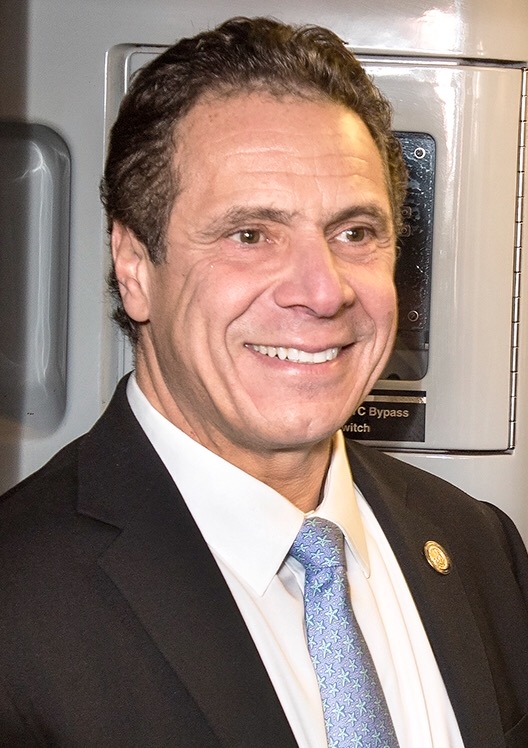
Andrew Cuomo is an American politician and lawyer A Democrat...

Jamaica is an island country located in the Caribbean It...
Spain officially the Kingdom of Spain is a large country...
Manhattan the most densely populated and smallest of New York...
Trending
15 minutes ago Banksy's art market faces test, Girl and Balloon sold for $18M at auction.

1 hour ago Adam Scott Gains Exemption for U.S. Open; Major Record Celebrated

1 hour ago Scottie Scheffler and CJ Cup Byron Nelson: Odds, Picks, and Betting Tips
2 hours ago Shelton: Missing boy found safe, Amber Alert canceled, father arrested after search.
3 hours ago Car Explodes Near Charging Bull in NYC: Fireball Engulfs Lower Manhattan
4 hours ago SpaceX Starship V3 faces delays, fueling tests completed, crucial for Elon Musk.
Popular

Thomas Massie is a Republican politician and engineer representing Kentucky's...

Ken Paxton is an American politician and lawyer serving as...

William Franklin Graham III known as Franklin Graham is an...

Michael Joseph Jackson the King of Pop was a highly...

Sir David Attenborough is a highly acclaimed English broadcaster natural...

Paula White-Cain is a prominent American televangelist and key figure...