


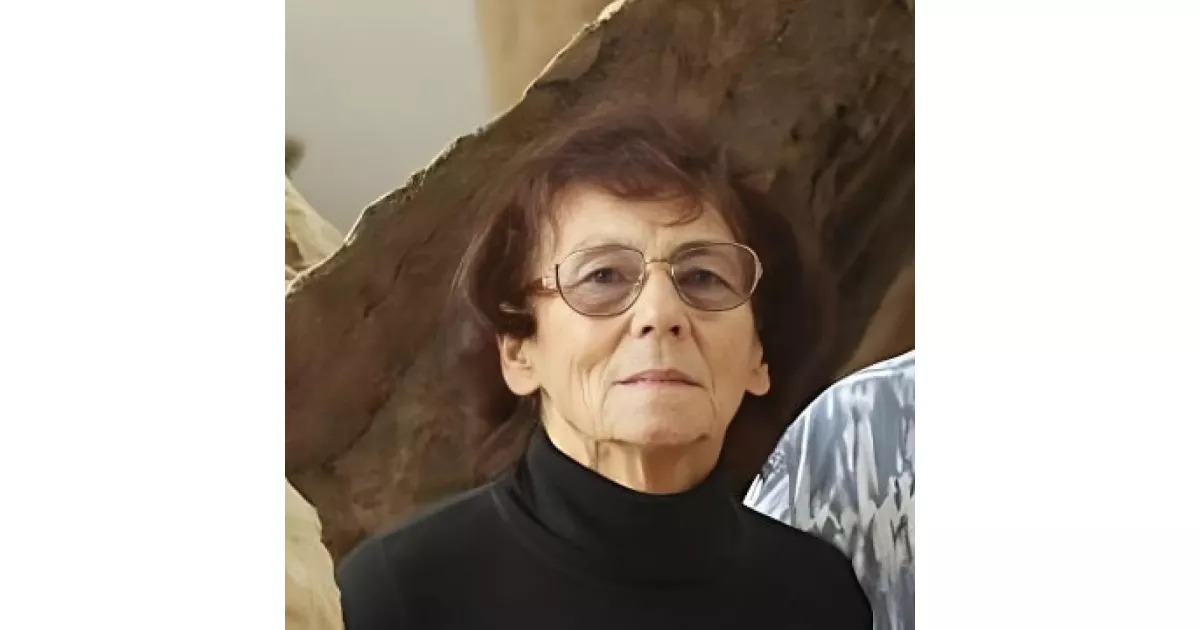
Magdalena Abakanowicz was a renowned Polish sculptor and fiber artist known for her innovative use of textiles in sculptures and outdoor installations. Considered a leading figure in postwar Polish art, she taught at the University of Fine Arts in Poznań and was a visiting professor at UCLA. Her distinctive style significantly impacted the art world.
June 1930: Birth of Magdalena Abakanowicz
Magdalena Abakanowicz was born in June 1930 in Falenty, near Warsaw, Poland.


1945: Start of High School in Tczew
Abakanowicz began her high school education in Tczew in 1945.
1947: Completion of High School in Tczew
Abakanowicz completed her high school education in Tczew in 1947.
1949: Graduation from Liceum Sztuk Plastycznych
In 1949, Abakanowicz graduated from the Liceum Sztuk Plastycznych in Gdynia, where she had been studying art for two years.
1950: Start of Studies at the Academy of Fine Arts in Warsaw
In 1950, Abakanowicz began her studies at the Academy of Fine Arts in Warsaw. To secure a place in the academy, she had to conceal her noble background and pose as the daughter of a clerk, as her family's status could have hindered her acceptance.
1953: Death of Stalin and Easing of Political Pressures
The death of Joseph Stalin in 1953 marked a turning point in the political landscape of the Eastern Bloc. In Poland, this led to a gradual easing of the heavy political pressures imposed by the Soviet Union.
1954: Completion of Studies at the Academy of Fine Arts in Warsaw
Abakanowicz completed her studies at the Academy of Fine Arts in Warsaw in 1954.
1954: End of Studies and the Impact of Socialist Realism
During her time at the Academy of Fine Arts in Warsaw, which ended in 1954, Abakanowicz's education coincided with a period of intense artistic repression under the Eastern Bloc's socialist realism doctrine. This doctrine severely restricted artistic expression, limiting artists to realist depictions that served the state's agenda. The Warsaw Academy of Fine Arts, being a prominent artistic institution, faced particularly strict scrutiny from the Ministry of Art and Culture.
1956: Early Artistic Works and the Thaw of Artistic Restrictions
Following her academic years, Abakanowicz embarked on her artistic career, though much of her early work was lost due to her frequent relocations. Between 1956 and 1959, she produced a series of gouaches, watercolors, and sewn-together linen sheets, characterized by their biomorphic forms and depictions of imaginary plants, birds, and other organic shapes. These early works reflected Abakanowicz's fascination with the natural world. This period coincided with a relaxation of Soviet-imposed political pressures in Poland, particularly after Stalin's death in 1953. The Polish October of 1956 brought about a significant shift in the country's social and cultural landscape, leading to a liberalization of art and the rejection of strict Stalinistic artistic doctrines.
1956: The Polish October and a Turning Point
The Polish October of 1956 marked a significant turning point in Abakanowicz's career, ushering in a period of political and cultural thawing. This period led to the liberalization of art, allowing artists greater freedom of expression.
1959: Continued Exploration of Biomorphic Forms
Abakanowicz continued to produce her distinctive biomorphic works, further exploring themes of nature and organic life.
1960: First Solo Exhibition at Kordegarda Gallery
In 1960, Abakanowicz held her first solo exhibition at the Kordegarda Gallery in Warsaw, showcasing a series of four weavings alongside gouaches and watercolors. This exhibition marked her emergence in the Polish textile and fiber design movement.
1962: International Recognition at the Biennale Internationale de le Tapisserie
Abakanowicz gained her first taste of international recognition in 1962 when she participated in the first Biennale Internationale de le Tapisserie in Lausanne, Switzerland.
1965: Professorship at University of Fine Arts in Poznań
In 1965, Abakanowicz began her tenure as a professor of studio art at the University of Fine Arts in Poznań, Poland.
1966: Emergence of Postminimalism
The art world witnessed the emergence of Postminimalism in 1966, a movement that challenged the austere aesthetics of Minimalism. Abakanowicz's Abakan series, with its use of soft yet structured fiber forms, aligned with the principles of Postminimalism.
1967: Creation of Three-Dimensional Fiber Works: Abakans
In 1967, Abakanowicz embarked on a new phase in her artistic journey, beginning to create her renowned three-dimensional fiber works known as Abakans.
1969: Exhibition at the Museum of Modern Art in New York
Abakanowicz's Abakans were featured in the groundbreaking exhibition "Wall Hangings" at the Museum of Modern Art in New York in 1969. This exhibition, organized by Mildred Constantine and Jack Lenor Larsen, challenged traditional art categories and highlighted the use of unconventional materials in contemporary art.
1973: Start of the "Heads" Series
Abakanowicz began working on her series of sculptures called "Heads" in 1973. These sculptures were characterized by their large size, solid forms, and resemblance to human heads without faces.
1974: Creation of "Alterations" Sculptures
Abakanowicz shifted her artistic focus in the 1970s, transitioning to figurative and non-figurative sculptures crafted from coarse sackcloth, resin, and other materials. In 1974, she produced a series called "Alterations," consisting of twelve hollow, headless human figures seated in a row.
1975: Completion of "Alterations" and Beginning of "Heads" Series
Abakanowicz completed her "Alterations" series in 1975. That same year, she embarked on a new sculptural series titled "Heads," featuring large, solid forms evoking human heads without faces.
1976: Commencement of the "Backs" Series
In 1976, Abakanowicz initiated her "Backs" series, which would eventually comprise eighty distinct sculptures of the human torso.
1980: Completion of the "Backs" Series
Abakanowicz completed her impactful "Backs" series in 1980, concluding her exploration of the human form through these eighty unique torso sculptures.
1980: Presentation of "Embryology" at the Vienna Biennial
In 1980, Abakanowicz presented her "Embryology" series at the Vienna Biennial. This series, featuring numerous soft, egg-shaped forms, exemplified her ongoing exploration of organic structures in her art.
1984: Visiting Professor at UCLA
Abakanowicz took on the role of visiting professor at the University of California, Los Angeles in 1984.
1986: Creation of "Crowd I" and Continued Exploration of Organic Forms
In 1986, Magdalena Abakanowicz created "Crowd I," a series of fifty standing figures. This period also marked her return to exploring organic structures with works like the "Embryology" series, featuring soft, egg-like forms of varying sizes, which were displayed at the Vienna Biennial in 1980.
1989: Creation of "Crowd III"
Magdalena Abakanowicz created "Crowd III" in 1989, a significant piece in her artistic journey that would later gain recognition and break auction records in 2021.
1990: End of Professorship at University of Fine Arts in Poznań
In 1990, Abakanowicz's time as a professor of studio art at the University of Fine Arts in Poznań came to an end.
1990: Exploration of New Materials and Creation of "Bronze Crowd"
In the late 1980s and into the 1990s, Abakanowicz expanded her repertoire of materials to include bronze, wood, stone, and clay. One notable work from this period, "Bronze Crowd" (1990–91), is displayed in the garden of the Nasher Sculpture Center.
1992: Completion of "Puellae" and Recognition by the National Gallery of Art
In 1992, Abakanowicz completed "Puellae," a sculpture that became part of the National Gallery of Art's collection. This recognition solidified her standing as a significant figure in the art world.
1999: Creation of "Bambini"
In 1999, Abakanowicz created the "Bambini" sculpture set, a work that would later set auction records in 2021, highlighting the enduring appeal and significance of her art.
2004: Commencement of Casting for "Agora"
In 2004, the casting process began for Abakanowicz's ambitious project, "Agora," a permanent installation in Chicago's Grant Park. This marked a significant step in bringing her vision of 106 cast iron figures to life.
2006: Completion of Casting for "Agora"
By 2006, the casting of all 106 figures for "Agora" was finished, marking the culmination of years of work. The installation, with its figures resembling tree bark or wrinkled skin, aimed to evoke a sense of crowdedness and anonymity.
April 2017: Death of Magdalena Abakanowicz
Magdalena Abakanowicz passed away in April 2017.
2019: Auction Record for "Caminando"
In 2019, Abakanowicz's artwork "Caminando," featuring humanoid sculptures, set a new auction record in Poland, fetching approximately US$2.1 million. This sale highlighted the increasing value and recognition of her work.
2021: Breaking Auction Records with "Crowd III" and "Bambini"
Abakanowicz's artwork continued to reach new heights in 2021. In October, "Crowd III" (1989) sold for around US$3.3 million, and in December, her "Bambini" (1999) sculpture set fetched even more, further solidifying her legacy and the impact of her art.
June 2023: Honored with a Google Doodle
In June 2023, Magdalena Abakanowicz's legacy was honored with a Google Doodle, celebrating her life, contributions to art, and global impact.
October 2023: Alexander McQueen Collection Inspired by Abakanowicz
In October 2023, the Alexander McQueen fashion house, under the creative direction of Sarah Burton, unveiled a collection inspired by Abakanowicz's groundbreaking textile art. The designs, presented alongside two Abakans from the Central Textile Museum in Łódź, were met with critical acclaim at Paris Fashion Week, solidifying Abakanowicz's enduring legacy in the world of art and fashion.
Mentioned in this timeline

Google LLC is a multinational technology corporation specializing in a...

California is a U S state on the Pacific Coast...
Texas is the second-largest U S state by area and...

The Union of Soviet Socialist Republics USSR existed from to...

Los Angeles California's most populous city and Southern California's hub...

Dallas Texas is the ninth-most populous city in the U...
Trending
3 hours ago Jacob Misiorowski Takes the Mound for Brewers in World Series Game 1
3 hours ago Broadcaster Joe Davis Receives Support Amidst Dodgers Bias Allegations

3 hours ago The Family Stone Sequel Begins Filming in New York Featuring Original Cast Members

3 hours ago Jon Hamm Series Becomes Number One Streaming Sensation on MGM Plus

3 hours ago Aaron Wiggins Secures Significant Role and Trust Within Atlanta Hawks Rotation

3 hours ago Charlotte Hornets Defeat Brooklyn Nets in NBA Season Opener
Popular

Ilhan Omar is a prominent American politician currently serving as...

Ken Paxton is an American politician and lawyer serving as...

Elon Musk is a visionary entrepreneur and engineer known for...

Michael Joseph Jackson the King of Pop was a highly...

Cristiano Ronaldo widely considered one of the greatest footballers captains...

Elizabeth Holmes is an American entrepreneur and the founder of...