


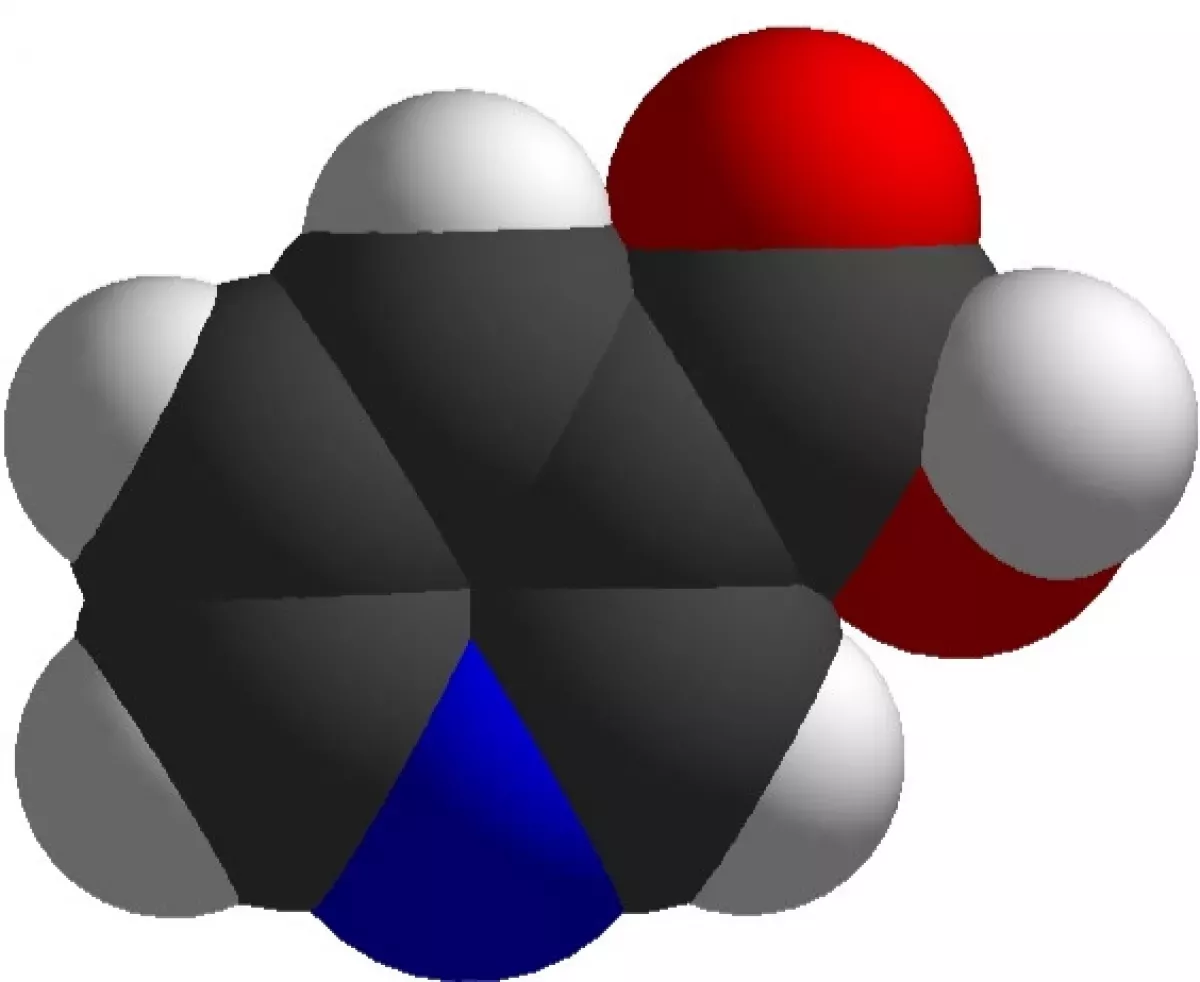
Niacin, or nicotinic acid, is an organic compound and a vitamer of vitamin B3, which is essential for human health. It is synthesized by plants and animals from the amino acid tryptophan. Dietary sources of niacin include fortified packaged foods, meat, poultry, tuna, salmon, nuts, legumes, and seeds. Niacin supplements are used to treat pellagra, a condition caused by niacin deficiency that manifests as skin and mouth lesions, anemia, headaches, and fatigue. To prevent pellagra, many countries require the fortification of wheat flour or other food grains with niacin.
1937: Discovery of Niacin's Role in Preventing Pellagra
In 1937, Conrad Elvehjem extracted nicotinic acid from liver and identified it as the 'pellagra-preventing factor,' significantly reducing the prevalence of pellagra.


1942: Naming of Niacin
In 1942, to avoid confusion with nicotine, the name 'niacin' was adopted for nicotinic acid. This coincided with the beginning of flour enrichment with nicotinic acid.
1951: Niacin Availability in Corn
In 1951, Carpenter found that niacin in corn is biologically unavailable unless treated with very alkaline lime water, explaining why Latin-American cultures using this method were not at risk for niacin deficiency.
1955: Niacin's Lipid-Lowering Property
In 1955, Altschul and colleagues described niacin's lipid-lowering properties, establishing it as the oldest known lipid-lowering drug.
1987: Introduction of Lovastatin
In 1987, lovastatin, the first 'statin' drug, was first marketed.
1998: 1998 Update of Niacin Recommendations
In 1998, the U.S. Institute of Medicine updated the Estimated Average Requirements (EARs) and Recommended Dietary Allowances (RDAs) for niacin, also establishing Tolerable Upper Intake Levels (ULs).
2001: Approval of Niacin-Lovastatin Combination
In 2001, the U.S. FDA approved the combination drug niacin/lovastatin (Advicor).
2008: Approval of Niacin-Simvastatin Combination
In 2008, the U.S. FDA approved the combination drug niacin/simvastatin (Simcor).
2009: Peak of Niacin Prescriptions
Niacin prescriptions in the U.S. peaked in 2009, reaching 9.4 million prescriptions.
2010: 2010 Review on Niacin
In 2010, a review concluded that niacin was effective as a mono-therapy for affecting lipid levels. However, its usefulness in reducing cardiovascular risk in patients already on statins was not established.
2014: Global Sales of Nicotinamide
In 2014, worldwide sales of nicotinamide reached 31,000 tons, primarily driven by demand for animal feed and food fortification.
2015: Institute of Medicine Renamed
In 2015, the U.S. Institute of Medicine was renamed the National Academy of Medicine.
May 2016: Niacin Daily Value Revision
On 27 May 2016, the Daily Value for niacin on U.S. food and dietary supplement labeling was revised from 20 mg to 16 mg to align with the Recommended Dietary Allowance (RDA).
2016: Withdrawal of Niacin-Statin Combinations
In 2016, the U.S. FDA withdrew approval for the combination drugs niacin/lovastatin and niacin/simvastatin, citing lack of incremental cardiovascular benefits.
2017: 2017 Review on Niacin
A 2017 review, which included twice as many trials as previous reviews, concluded that while prescription niacin affects lipid levels, it does not reduce all-cause mortality, cardiovascular mortality, myocardial infarctions, nor fatal or non-fatal strokes.
2018: Niacin Factory Emissions Discovery
In 2018, it was discovered that a niacin factory in Visp, Switzerland, was responsible for around one percent of the country's greenhouse gas emissions due to nitrous oxide production.
January 2020: Compliance Date for Niacin Labeling
By 1 January 2020, manufacturers with annual food sales over $10 million were required to comply with the updated niacin labeling regulations.
2020: Global Niacin Fortification
As of 2020, 54 countries required the fortification of wheat flour with niacin or niacinamide; 14 countries also mandated the fortification of maize flour, and 6 mandated the fortification of rice.
2020: Decline of Niacin Prescriptions
By 2020, niacin prescriptions in the U.S. had declined significantly to 800 thousand from their peak in 2009.
January 2021: Extended Compliance Date for Niacin Labeling
By 1 January 2021, manufacturers with lower volume food sales were required to comply with the updated niacin labeling regulations.
2021: Emission Control Implementation
In 2021, catalytic scrubbing technology was installed at a niacin factory in Visp, Switzerland, to eliminate most of the nitrous oxide emissions.
Mentioned in this timeline

Gas is a state of matter characterized by the absence...
Trending

4 hours ago American Idol 2027 Judges Revealed Amid Lionel Richie Health Updates
4 hours ago Legendary Swimming Coach Frank Busch Passes Away at 75

4 hours ago Deadly Russian Drone Strikes Target Ukraine Amid Increasing Conflict Tensions

4 hours ago 2026 MLB Postseason Preview and World Series Championship Odds Analysis

5 hours ago Arthur Fils Faces Martin Damm in Tokyo ATP 500 Qualification Round
4 hours ago Rams vs. Broncos Sunday Night Football Betting Analysis and Predictions
Popular

Jameis Winston is an American football quarterback currently playing for...

Ken Paxton is an American politician and lawyer serving as...

Shakira Isabel Mebarak Ripoll the Queen of Latin Music is...

Michael Joseph Jackson the King of Pop was a highly...

Sylvester Stallone is an iconic American actor screenwriter and filmmaker...

Dolly Parton is a celebrated American singer-songwriter actress philanthropist and...