History of Oklahoma City bombing in Timeline


On April 19, 1995, Timothy McVeigh and Terry Nichols committed an act of domestic terrorism by detonating a truck bomb in front of the Alfred P. Murrah Federal Building in Oklahoma City. The explosion resulted in 168 deaths (plus one rescue worker killed by falling debris), 684 injuries, and widespread destruction, including over a third of the building itself. Numerous surrounding buildings and vehicles were also damaged or destroyed, with overall damages estimated at $652 million. The Oklahoma City bombing remains the deadliest act of domestic terrorism in United States history.
4 hours ago : Oklahoma City bombing: Survivor Tree saplings bring hope, firefighter shares struggles.
Saplings from the Survivor Tree in Oklahoma City are spreading hope. A firefighter in iconic Pulitzer photo shares his struggles after the bombing and offers advice.


1977: McVeigh's vehicle
In 1977, McVeigh owned a yellow 1977 Mercury Marquis.
1977: Murrah Building Built
In 1977, the nine-story Alfred P. Murrah Federal Building was built and later housed 14 federal agencies.
1988: McVeigh and Nichols Meet
In 1988, Timothy McVeigh and Terry Nichols met during basic training for the U.S. Army at Fort Benning.
1989: Publication of Hunter
In 1989, William Luther Pierce published the novel Hunter.
1992: Ruby Ridge FBI Standoff
In 1992, the FBI standoff with Randy Weaver at Ruby Ridge, along with the Waco siege in 1993, contributed to McVeigh and Nichols' radicalization and anger towards the federal government.
March 1993: McVeigh Visits Waco Site
In March 1993, Timothy McVeigh visited the Waco site during the standoff between the FBI and Branch Davidian members, and again after the siege ended, influencing his decision to bomb a federal building.
1993: 1993 World Trade Center bombing
The 1993 World Trade Center bombing was referenced.
August 1994: McVeigh Obtains Kinestiks
In August 1994, Timothy McVeigh obtained nine binary-explosive Kinestiks from gun collector Roger E. Moore in Arkansas, and with Nichols ignited the devices outside Nichols's home in Herington, Kansas.
October 1994: McVeigh Shows Bomb Diagram
In October 1994, Timothy McVeigh showed Michael and Lori Fortier a diagram of the bomb he planned to build, containing over 5,000 pounds of ammonium nitrate fertilizer and other explosives.
October 18, 1994: Nichols Buys Additional Fertilizer
On October 18, 1994, Terry Nichols bought an additional 50-pound bag of ammonium nitrate fertilizer, adding to the supply used for the Oklahoma City bombing.
December 1994: McVeigh Scouted the Murrah Building
In December 1994, McVeigh scouted the interior of the Murrah Federal Building and likely knew of the day-care center before the bombing.
December 1994: McVeigh and Fortier Visit Oklahoma City
In December 1994, Timothy McVeigh and Michael Fortier visited Oklahoma City to inspect the Alfred P. Murrah Federal Building, which would later become the target of the Oklahoma City bombing.
April 14, 1995: McVeigh Pays for Motel Room
On April 14, 1995, Timothy McVeigh paid for a room at the Dreamland Motel in Junction City, Kansas, in preparation for the Oklahoma City bombing.
April 19, 1995: Oklahoma City Bombing
On April 19, 1995, Timothy McVeigh and Terry Nichols bombed the Alfred P. Murrah Federal Building in Oklahoma City, resulting in 169 deaths and 684 injuries. The attack also caused extensive damage to surrounding buildings and vehicles, totaling an estimated $652 million in damages.
April 21, 1995: McVeigh's Arrest and Transfer
On April 21, 1995, after a court hearing on gun charges, federal agents took McVeigh into custody amidst a growing crowd outside the jail. His requests for a bulletproof vest or helicopter were denied, but he was eventually transported from Perry to Oklahoma City by helicopter.
April 22, 1995: Clintons Address the Nation
On April 22, 1995, President Clinton and his wife Hillary spoke in the White House with over 40 federal agency employees and their children, and in a live nationwide television and radio broadcast, addressed their concerns regarding the Oklahoma City bombing.
April 23, 1995: Clinton's Speech in Oklahoma City
On April 23, 1995, four days after the bombing, President Clinton spoke from Oklahoma City.
April 25, 1995: Arrest of James Nichols
On April 25, 1995, James Nichols was arrested in connection to the Oklahoma City bombing, but he was later released after 32 days due to lack of evidence.
May 1995: Snell's IRS Revenge Plot
In May 1995, federal prosecutor Steven Snyder told the FBI that Richard Snell, a white supremacist, wanted to blow up the Oklahoma City building as revenge for the IRS raiding his home.
June 1995: Congress Enacts Legislation for Chemical Taggants
In June 1995, Congress passed legislation mandating the incorporation of chemical taggants into dynamite and other explosives. This measure aimed to enable tracing bombs back to their manufacturers.
June 1995: DOJ Issues Vulnerability Assessment of Federal Facilities
In June 1995, the Department of Justice (DOJ) released the Vulnerability Assessment of Federal Facilities, also known as The Marshals Report. This assessment led to a thorough security evaluation and a risk classification system for over 1,300 federal facilities, with the Alfred P. Murrah Building being deemed a Level 4 security risk.
1995: McVeigh and Nichols Load Truck
On April 17-18, 1995, McVeigh and Nichols loaded bomb supplies into the Ryder rental truck at Herington, Kansas, and drove to Geary Lake State Park to assemble the bomb, using a Glock 21 pistol for detonation if needed.
1995: Federal Offices Resume Operations
Within 48 hours of the Oklahoma City attack in 1995, the targeted federal offices were able to resume operations in other parts of the city.
1996: Pulitzer Prize for Spot News Photography
In 1996, Charles H. Porter IV won the Pulitzer Prize for Spot News Photography for his photograph of firefighter Chris Fields emerging from the rubble with infant Baylee Almon, who later died in a nearby hospital. The photo became a symbol of the attack.
1996: Antiterrorism and Effective Death Penalty Act Passed
In 1996, in response to the Oklahoma City bombing, the U.S. Congress passed the Antiterrorism and Effective Death Penalty Act, which included provisions limiting access to habeas corpus in the United States.
1996: Enactment of Antiterrorism and Effective Death Penalty Act
In 1996, the U.S. government enacted several pieces of legislation including the Antiterrorism and Effective Death Penalty Act in response to the Oklahoma City bombing.
1996: Domestic Militias
In 1996, there were approximately 858 domestic militias and other antigovernment groups.
1996: Murrah Federal Building Memorial Task Force Established
In early 1996, the Murrah Federal Building Memorial Task Force, comprising 350 members, was formed to develop plans for a memorial commemorating the victims of the Oklahoma City bombing.
March 20, 1997: Victim Allocution Clarification Act Signed
On March 20, 1997, President Clinton signed the Victim Allocution Clarification Act of 1997, allowing victims of the Oklahoma City bombing (and other future acts of violence) the right to observe trials and offer impact testimony in sentencing hearings.
April 24, 1997: Opening Statements in McVeigh's Trial
On April 24, 1997, opening statements in McVeigh's trial began, with the prosecution, led by Joseph Hartzler, outlining McVeigh's motivations and the evidence against him, including his hatred of the government fueled by The Turner Diaries and events like Waco and Ruby Ridge.
May 1, 1997: Tipton Testifies About McVeigh's Attempts
On May 1, 1997, Glynn Tipton of VP Racing Fuels testified about McVeigh's attempts to buy nitromethane and hydrazine, raising suspicions and leading to the refusal to sell him the fuel.
May 1997: Dedication of 'And Jesus Wept' Statue
In May 1997, the statue and sculpture entitled 'And Jesus Wept' was dedicated adjacent to the Oklahoma City National Memorial to commemorate the event.
June 2, 1997: McVeigh Found Guilty
On June 2, 1997, McVeigh was found guilty on 11 counts of murder and conspiracy in connection to the Oklahoma City Bombing.
July 1, 1997: Winning Memorial Design Chosen
On July 1, 1997, a 15-member panel unanimously selected the winning design for the Oklahoma City National Memorial from 624 submissions.
1997: Federal Trial of Nichols
In 1997, Terry Nichols was tried by the federal government and found guilty of conspiring to build a weapon of mass destruction and of eight counts of involuntary manslaughter of federal officers.
1997: Bombers Tried and Convicted
In 1997, the bombers involved in the Oklahoma City bombing were tried and convicted. McVeigh was sentenced to death, while Nichols received a life sentence without parole.
May 27, 1998: Fortier Sentenced
On May 27, 1998, Michael Fortier was sentenced to 12 years in prison and fined $75,000 for failing to warn authorities about the Oklahoma City bombing.
June 4, 1998: Nichols Sentenced to Life Without Parole
On June 4, 1998, Terry Nichols was sentenced to life without parole after being found guilty in his federal trial.
April 2000: Bill Clinton regrets decision to storm Branch Davidian compound
In April 2000, McVeigh cited statements by Bill Clinton regretting his decision to storm the Branch Davidian compound as evidence that the Oklahoma City Bombing had a positive impact on government policy.
April 19, 2000: Oklahoma City National Memorial Dedicated
On April 19, 2000, President Clinton dedicated the Oklahoma City National Memorial, exactly five years after the bombing.
2000: State of Oklahoma Seeks Death Penalty
In 2000, the State of Oklahoma sought a death-penalty conviction for Terry Nichols on 161 counts of first-degree murder.
May 2001: Justice Department Announces Document Oversight
In May 2001, the Justice Department announced that the FBI had mistakenly failed to provide over 3,000 documents to McVeigh's defense counsel, leading to a one-month postponement of the execution.
June 11, 2001: Timothy McVeigh's Execution
On June 11, 2001, Timothy McVeigh was executed via lethal injection at the U.S. federal penitentiary in Terre Haute, Indiana, for his role in the Oklahoma City bombing.
2001: Political Dignitaries Attend Memorial Service
In 2001, Vice President Dick Cheney, former President Clinton, Oklahoma Governor Brad Henry, Frank Keating, and other political dignitaries attended a memorial service. President George W. Bush issued a written statement echoing his remarks on Timothy McVeigh's execution.
2001: Federal Highway Administration Proposes Evacuation Routes
In 2001, following the September 11 attacks and considering events like the Oklahoma City bombing, the Federal Highway Administration proposed that major metropolitan areas establish evacuation routes to facilitate emergency response and reduce casualties.
May 26, 2004: Nichols Found Guilty in State Trial
On May 26, 2004, Terry Nichols was found guilty on all charges in his state trial, but the jury deadlocked on the death penalty, resulting in a sentence of 161 consecutive life terms without parole.
2004: Domestic Militias
By 2004, the number of domestic militias and other antigovernment groups had dropped to 152.
March 2005: Additional Explosives Found at Nichols' Former House
In March 2005, FBI investigators found additional explosives in a buried crawl space in Nichols's former house, which had been missed in the initial search after his arrest.
2005: FBI Report on Right-Wing Terrorism
A 2005 Federal Bureau of Investigation report said the Oklahoma City bombing "brought the threat of right-wing terrorism to the forefront of American law enforcement attention."
2005: Remaining Donations Earmarked for Education
By 2005, $18 million of the donations collected after the Oklahoma City bombing remained, some of which was earmarked to provide a college education for each of the 219 children who lost one or both parents in the bombing.
2005: Tenth Anniversary Observances of the Oklahoma City Bombing
In 2005, the tenth anniversary of the Oklahoma City bombing was marked by 24 days of activities, including a week-long series of events known as the National Week of Hope from April 17 to 24. A service was held at 9:02 a.m., marking the moment the bomb went off, with 168 seconds of silence and the reading of the names by children.
January 20, 2006: Fortier Released and Enters Witness Protection
On January 20, 2006, Michael Fortier was released from prison, transferred into the Witness Protection Program, and given a new identity.
April 6, 2010: House Bill 2750 Signed
On April 6, 2010, Governor Brad Henry signed House Bill 2750, which mandated the inclusion of the Oklahoma City bombing in the school curriculum for Oklahoma, U.S., and world history classes.
April 2010: Prosecutor Hartzler's Questioning
In April 2010, Joseph Hartzler, the prosecutor at McVeigh's trial, questioned how McVeigh could have decided to pass over a prior target building because of a florist shop but at the Murrah building, not "... notice that there's a child day-care center there, that there was a credit union there and a Social Security office?"
2025: VP Racing Fuel becomes NHRA's Fuel Supplier
In 2025, the NHRA mandates that VP Racing Fuel stores and dispenses nitromethane fuel, logging each team's purchases to ensure compliance with regulations. Competitors are not allowed to store nitromethane at official events.
2025: Bomb Cost in 2025
The bomb that McVeigh constructed for the Oklahoma City Bombing cost about $5,000 to make which is equivalent to about $11,000 in 2025.
Mentioned in this timeline
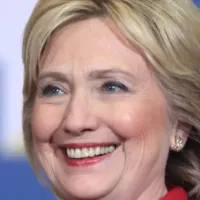
Hillary Diane Rodham Clinton is a prominent American politician lawyer...
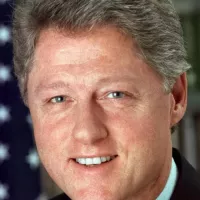
Bill Clinton served as the nd U S President from...
The United States of America is a federal republic of...
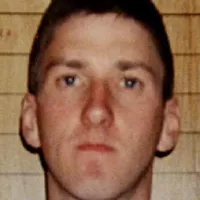
Timothy James McVeigh was a domestic terrorist from the United...
Inflation in economics signifies a rise in the average price...
Sears a renowned American department store chain was established in...
Trending
25 minutes ago Fantasy Baseball Week 6: Connelly Early highlighted as potential sleeper pitcher.
25 minutes ago Tina battles her teacher in Bob's Burgers Season 16, available on Sling TV.

25 minutes ago Spencer Torkelson on a Home Run Streak, Nearing Detroit Tigers History

6 days ago Quickley misses Game 1, ruled out Game 2 due to hamstring injury.

26 minutes ago Andrada punches Pulido after expulsion in Aragones derby, causing historical fight.

26 minutes ago Jermaine Burton joins Bills rookie minicamp after stint with Bengals.
Popular

Kash Patel is an American lawyer who currently serves as...
Lindsey Graham is an American politician and attorney who has...
William Franklin Graham III known as Franklin Graham is an...

Michael Joseph Jackson the King of Pop was a highly...

Paula White-Cain is a prominent American televangelist and key figure...

George Soros is a Hungarian-American investor and philanthropist with a...