Rise to Success: Career Highlights of Sewell Avery


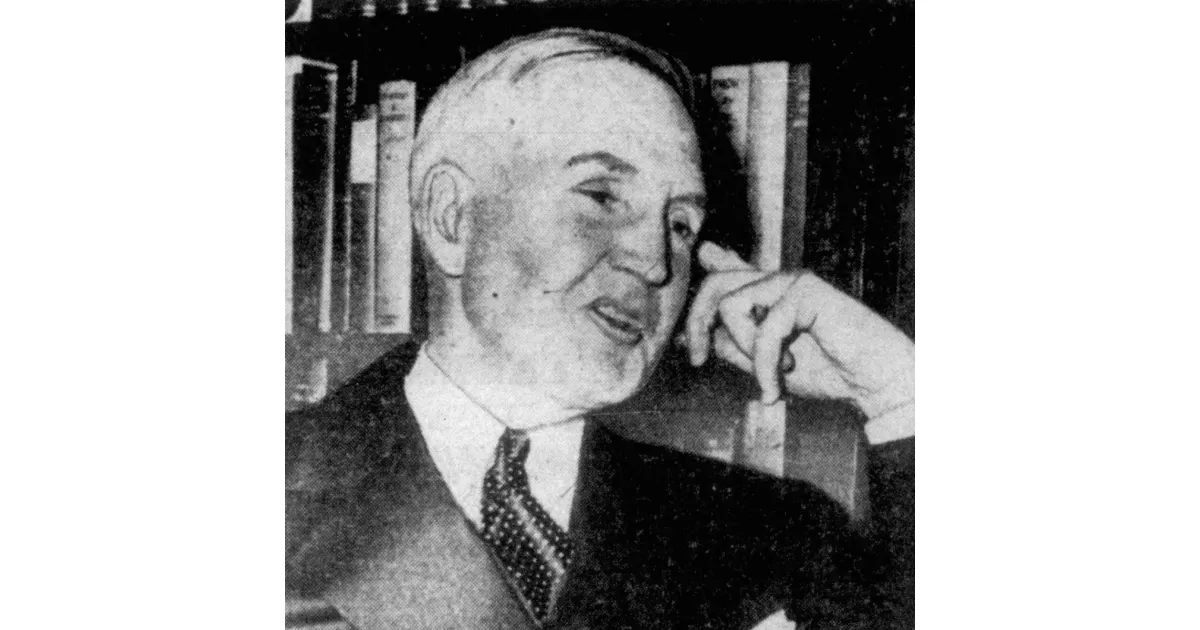
From career breakthroughs to professional milestones, explore how Sewell Avery made an impact.
Sewell Lee Avery was an American businessman renowned for his leadership at United States Gypsum and Montgomery Ward. He served as president of US Gypsum from 1905 to 1936 and was recruited to revitalize the struggling Montgomery Ward during the Great Depression. Avery successfully restored the company's profitability through significant reforms. Despite being considered a leading Chicago businessman in the mid-1930s, his conservative approach in the post-World War II era, marked by a failure to expand and capitalize on consumer demand, ultimately led to Montgomery Ward losing its competitive edge in the retail market.
1901: United States Gypsum Company Formation
In 1901, the Alabaster Company became part of the consolidated gypsum concern, the United States Gypsum Company.


1905: Becomes President of United States Gypsum
In 1905, Avery became president of the United States Gypsum Company, marking a significant career advancement.
1905: President of US Gypsum
In 1905, Avery became president of the United States Gypsum Company, marking a significant career milestone.
1925: Supports Industrial Museum Idea
As president of the Commercial Club of Chicago, Avery supported Julius Rosenwald's idea for an industrial museum in 1925.
1926: Montgomery Ward Expansion
In 1926, Montgomery Ward had expanded to 10 stores.
1930: Montgomery Ward Expansion
In 1930, Montgomery Ward had expanded to 554 stores.
1931: Joins US Steel Board & Invited to Montgomery Ward
In 1931, Avery was invited onto the board of US Steel by J.P. Morgan & Co. and was also asked to revitalize Montgomery Ward, which was experiencing financial difficulties during the Depression.
1936: Steps down as President of US Gypsum
In 1936, Avery stepped down as president but continued to serve as chairman of United States Gypsum.
1936: Fortune Magazine Feature
In 1936, Fortune magazine recognized Avery as "generally held to be the No. 1 Chicago businessman,".
1946: Copyrights of Rudolph Returned to May
In late 1946 or early 1947, Avery relinquished the copyrights of "Rudolph the Red-Nosed Reindeer" back to its author, Robert Lewis May.
1947: Copyrights of Rudolph Returned to May
In late 1946 or early 1947, Avery relinquished the copyrights of "Rudolph the Red-Nosed Reindeer" back to its author, Robert Lewis May.
1951: Sears Outperforms Montgomery Ward
By 1951, Sears had more than double the business volume and had surpassed Montgomery Ward in retail stores.
1951: Leaves US Gypsum Company
In 1951, Sewell Avery left US Gypsum Company, where he had served as chairman since 1936.
1954: Resignation as President
In 1954, Avery resigned as president of Montgomery Ward, though the company never regained its former prominence.
1955: Retirement
In 1955, Sewell Avery retired with a fortune estimated at $327 million.
Mentioned in this timeline
The United States of America is a federal republic primarily...

Sears a renowned American department store chain was established in...
Chicago situated on Lake Michigan's western shore is the most...
The letter S or s is the th letter in...
Red is a color at the long wavelength end of...
A gun is a device designed to launch projectiles by...
Trending

3 hours ago Zendaya Launches Dune 3 Oscar Campaign for Best Actress Category

3 hours ago Ann Li Faces Ashlyn Krueger in WTA Osaka Semifinal Match

3 hours ago Walter Clayton Jr. Joins Dallas Mavericks After Being Waived by Grizzlies

4 hours ago Precious Achiuwa Challenges De'Andre Hunter for Sacramento Kings Starting Lineup Position
4 hours ago Toumani Camara Shines with Career-High Performance for Portland Trail Blazers
4 hours ago Stephen Curry Highlighted in NBA Fantasy and Betting Picks for October 23 Matchups
Popular

Ilhan Omar is a prominent American politician currently serving as...

Ken Paxton is an American politician and lawyer serving as...

Elon Musk is a visionary entrepreneur and engineer known for...

Michael Joseph Jackson the King of Pop was a highly...

Cristiano Ronaldo widely considered one of the greatest footballers captains...

Elizabeth Holmes is an American entrepreneur and the founder of...