Major Controversies Surrounding Volodymyr Zelenskyy: A Detailed Timeline


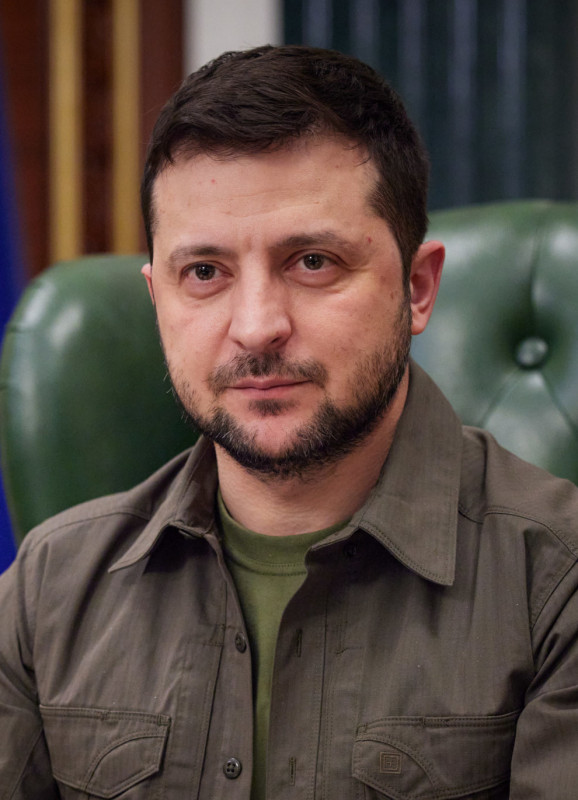
Public opinion and media debates around Volodymyr Zelenskyy—discover key moments of controversy.
Volodymyr Zelenskyy is the current president of Ukraine, serving since 2019. Prior to his political career, he was a successful entertainer. His presidency has been largely defined by the Russo-Ukrainian war, including the annexation of Crimea and invasion of Donbas which started five years before he took office, and the full-scale Russian invasion of Ukraine beginning in 2022. He has become a prominent figure on the world stage due to his leadership during the ongoing conflict.
5 hours ago : Zelenskyy Condemns Fatal Russian Drone Strike on Grain Ship in Black Sea
Volodymyr Zelenskyy denounced a deadly Russian drone attack on a civilian grain ship in the Black Sea, resulting in fatalities and injuries near Romanian waters. Ukraine holds Russia responsible for the assault on the maritime vessel transporting cargo.


2003: Zelenskyy and Kvartal 95 Left KVN
In 2003, Zelenskyy and Kvartal 95 left KVN due to disputes over money, political censorship, and an antisemitic insult against Zelenskyy.
August 2014: Spoke Out Against Banning Russian Artists
In August 2014, Zelenskyy spoke out against the intention of the Ukrainian Ministry of Culture to ban Russian artists from Ukraine.
2015: Blacklisting Russian Artists
Since 2015, Ukraine has blacklisted some Russian artists and media deemed part of "information warfare", barring them from entering Ukraine.
April 2019: Views on Language and Artists
In April 2019, Zelenskyy expressed his opposition to targeting the Russian language in Ukraine and banning artists for their political opinions. He also stated that he was not against a Ukrainian language quota on radio and TV, while suggesting potential adjustments.
June 2019: Zelenskyy Representative Clarifies Tariff Promises
In June 2019, a representative of Volodymyr Zelenskyy clarified that Zelenskyy never directly promised to lower communal tariffs, stating that campaign statements were "half-hinting" and "joking."
January 2020: Foreign Affairs Minister Unable to Answer Questions
On January 17, 2020, Minister of Foreign Affairs Prystaiko was unable to answer questions in parliament about the official agenda of the visit to Oman. On January 20, 2020, Prystaiko gave a briefing saying that he would explain everything about the visit when the time came.
January 2020: Shortened Trip to Oman and Plane Crash
On January 8, 2020, the Presidential Office announced that Volodymyr Zelenskyy was cutting short his trip to Oman owing to the Ukraine International Airlines Flight 752 plane crash in nearby Iran the same day. Rumors emerged regarding potential meetings with Russian representatives during the Oman visit, which were later dismissed as baseless.
November 2021: Accusations of Coup Plot
On November 26, 2021, Zelenskyy accused Russia and Ukrainian oligarch Rinat Akhmetov of backing a plan to overthrow his government.
February 2022: General Mobilization and Travel Ban
In February 2022, Zelenskyy ordered a general military mobilization and banned men aged 18 to 60 from leaving Ukraine.
March 2022: Calls for Russians to Emigrate and Suspension of Political Parties
In March 2022, Zelenskyy called on Russians to emigrate from Russia and supported the suspension of 11 Ukrainian political parties with ties to Russia.
May 2022: Zelenskyy Criticizes EU Leaders for Being Soft on Russia
In May 2022, Volodymyr Zelenskyy criticized EU leaders for their lenient stance on Russia, questioning how Russia could still earn almost a billion euros daily from energy sales despite the ongoing conflict.
May 2022: Duty to Remain in Ukraine
In May 2022, Zelenskyy said that Ukrainian men of conscription age had a duty to remain in Ukraine.
September 2022: Zelenskyy Warns of Putin's Nuclear Threats and Discusses Future Relations with Russia
On 25 September 2022, Volodymyr Zelenskyy stated that Putin's threats to use nuclear weapons "could be a reality." He warned of nuclear blackmail and stated that society would not forgive Russia for the lives taken.
December 2022: Bill to ban religious organizations affiliated with Russia
On 2 December 2022, Zelenskyy announced that his administration would submit a bill to the Verkhovna Rada to ban "religious organizations affiliated with centers of influence in the Russian Federation", referring to the Ukrainian Orthodox Church (Moscow Patriarchate), from operating in Ukraine.
2022: Zelenskyy Calls on Russians to Resist Mobilization and Halts Peace Talks with Russia
In 2022, Volodymyr Zelenskyy urged Russians to resist "criminal mobilization," citing disregard for Russian lives by commanders. Following Russia's annexation of Ukrainian regions, Zelenskyy also declared that Ukraine would not engage in peace talks with Russia while Vladimir Putin remained president.
October 2023: Zelenskyy Criticizes Countries Supporting Russia After Hroza Missile Attack
In October 2023, following the Hroza missile attack, Volodymyr Zelenskyy criticized countries supporting Russia, condemning those who help Russia circumvent sanctions as criminals.
2023: Zelenskyy Signs Law Imposing Prison Terms for Desertion
In early 2023, Volodymyr Zelenskyy signed a new law prescribing up to 12 years in prison for desertion or failure to report for duty without a valid reason.
April 2024: Zelenskyy Signs New Mobilization Law and Lowers Army Mobilization Age
In April 2024, Volodymyr Zelenskyy signed a new mobilization law aimed at increasing troop numbers and also signed into law a measure lowering Ukraine's army mobilization age from 27 to 25.
June 2024: Zelenskyy Accuses China of Supporting Russia and Undermining Peace Efforts
In June 2024, Volodymyr Zelenskyy stated that China's support for Russia would prolong the war in Ukraine. He also claimed that Russia used Chinese diplomats to undermine the Ukraine peace summit in Switzerland.
July 2024: Zelenskyy Criticizes Modi's Meeting with Putin Amidst Russian Missile Strikes
In July 2024, Volodymyr Zelenskyy criticized Narendra Modi's meeting with Putin on the same day that Russian missile strikes hit the children's hospital Okhmatdyt in Kyiv. He expressed disappointment, calling it a "devastating blow to peace efforts".
August 2024: Bill passed to ban religious organizations affiliated with Russia
In August 2024, the bill from December 2022, was passed by parliament and signed by Zelenskyy, after opposition parties protested the bill's delay. The law treats each parish individually and gives it nine months to cut ties with the UOC-MP, following which a special commission will inspect individual parishes and file lawsuits against non-compliant ones; the court can then decide on a ban in each case.
August 2024: Zelenskyy Decommissions Lt Gen Mykola Oleshchuk After Pilot's Death
On 30 August 2024, Volodymyr Zelenskyy decommissioned Lt Gen Mykola Oleshchuk, head of the Ukrainian Air Force since 2021, following the death of F-16 pilot Col Oleksiy Mes during a Russian missile attack.
December 2024: Zelenskyy Resists Pressure to Lower Conscription Age
In December 2024, Volodymyr Zelenskyy resisted pressure from the Biden administration to lower the conscription age to 18 to replace Ukraine's battlefield losses.
February 2025: Zelenskyy's contentions meeting with President Trump ends in cancellation
In February 2025, Volodymyr Zelenskyy met with U.S. President Trump at the White House to discuss an agreement for US mineral extraction rights in Ukraine. The meeting became heated, resulting in cancellations and Zelenskyy being evicted from the White House.
July 2025: Zelenskyy Signs Controversial Law Weakening Anti-Corruption Bodies
On 22 July 2025, Volodymyr Zelenskyy signed a controversial law that diminished the independence of Ukrainian anti-corruption bodies, the National Anti-Corruption Bureau of Ukraine (NABU) and Specialized Anti-Corruption Prosecutor's Office (SAPO), and increased the power of the government's Prosecutor General. Critics voiced concerns it might hinder Ukraine's EU efforts.
Mentioned in this timeline
Donald John Trump is an American politician media personality and...
Vladimir Putin is a prominent Russian politician who has significantly...
Joe Biden served as the th President of the United...

Founded in by Mark Zuckerberg and his Harvard roommates Facebook...
Ukraine is a country in Eastern Europe the second-largest on...
The United States of America is a federal republic primarily...
Trending
3 hours ago Dave Ramsey Warns Workers Against Holding Excessive Company Stock for Retirement
3 hours ago Trump Releases Senator Tom Cotton's Phone Number Over Daylight Saving Bill Dispute
3 hours ago Michele Tafoya Defends Holly Rowe Following Arch Manning and Steve Sarkisian Incident
4 hours ago Hunter Wins Florida Python Challenge by Removing 96 Invasive Burmese Pythons
3 hours ago NFL Reviews Heated Collision Between Referee Adrian Hill and Vikings Linebacker Eric Wilson

21 hours ago Terrion Arnold Faces NFL Hearing With Return Status Currently on Hold
Popular

Ken Paxton is an American politician and lawyer serving as...

Shakira Isabel Mebarak Ripoll the Queen of Latin Music is...

Jameis Winston is an American football quarterback currently playing for...

Elon Musk is a visionary entrepreneur and engineer known for...
Bernie Sanders is a prominent American politician and the senior...

Michael Joseph Jackson the King of Pop was a highly...