


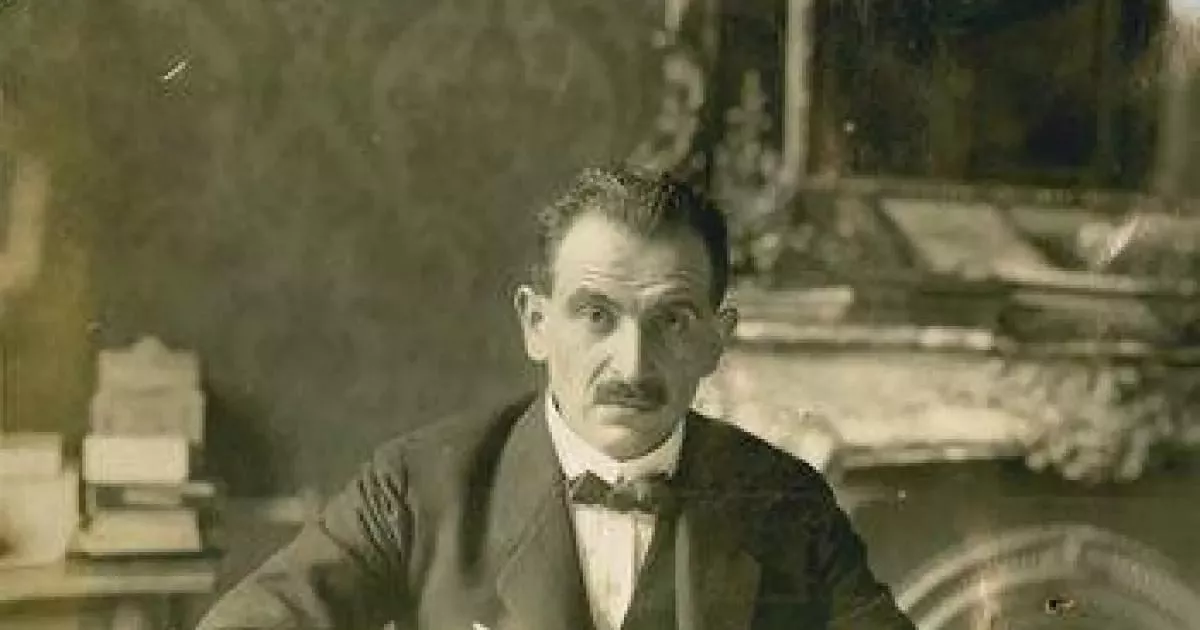
Austromarxism was a current within the Social Democratic Workers' Party of Austria, prominent in Austria-Hungary and the First Austrian Republic. Key figures included Victor Adler, Otto Bauer, Karl Renner, Max Adler, Rudolf Hilferding and Friedrich Adler. It's distinguished by its unique approach to nationality, nationalism, and socialism, particularly within an imperial context. Austromarxists aimed to synthesize social democracy and revolutionary socialism. Unlike orthodox Marxists, they believed class consciousness could develop organically through national autonomy, contrasting with the internationalist view and the party vanguard concept prevalent elsewhere.
1900: Origin of Austromarxism
From 1900, Austrian socialists' thoughts and publications are considered as "Austromarxism", more of an Austrian school of scientific socialism rather than a clear common school of thought.


1904: Austromarxist group organized around magazines
In 1904, the Austromarxist group began organizing around magazines such as 'Blätter zur Theorie und Politik des wissenschaftlichen Sozialismus' and 'Marx-Studien'. The movement included diverse thinkers like Max Adler and Rudolf Hilferding.
1907: Publication of Social Democracy and the Nationalities Question
In 1907, Bauer's treatise 'Social Democracy and the Nationalities Question' was published. He defined the nation as "the totality of men bound together through a common destiny into a community of character."
1907: Personal principle
In 1907, in 'Social Democracy and the Nationalities Question', Bauer resurrected Karl Renner's notion of the "personal principle" to gather geographically divided members of the same nation.
1918: Bolshevik-style revolutions in Germany
Between 1918 and 1920, Bolshevik-style revolutions and governments were staged in Germany (both the German revolution and the Bavarian Soviet Republic).
1919: Establishment of the Third International
In 1919, the Third International was established with support from the Bolsheviks in Russia.
1920: Bolshevik-style revolutions in Hungary
Between 1918 and 1920, Bolshevik-style revolutions and governments were staged in Béla Kun's Hungarian Soviet Republic.
1920: SDAP loses parliamentary majority
In 1920, the SDAP-CSP coalition in the Austrian Nationalrat dissolved, leading to the SDAP losing its parliamentary majority in the 1920 Austrian legislative election.
1921: Founding of the '2 1⁄2 International'
In 1921, Friedrich Adler helped found the '2 1⁄2 International', formally named the International Working Union of Socialist Parties, as the IWUSP's first secretary.
1921: Austromarxists formed the International Working Union of Socialist Parties
In 1921, the Austromarxists established the International Working Union of Socialist Parties (IWUSP), also known as the 2 1⁄2 International or the Vienna International, with Friedrich Adler as its first secretary. The goal was to unite the Second and Third Internationals.
1923: IWUSP merged with the Second International
In 1923, the IWUSP merged with what remained of the Second International to form the Labour and Socialist International, with Friedrich Adler leading as secretary.
1932: Engelbert Dollfuss awarded the Chancellorship
In 1932, Engelbert Dollfuss was awarded the Chancellorship.
1933: Political landscape transformation by Engelbert Dollfuß
In 1933, CSP politician Engelbert Dollfuß radically transformed Austria's political landscape, changing the government from a conservative parliamentary democracy into a clericofascist single-party dictatorship.
1934: SDAP banned and Civil War ensues
In 1934, the SDAP was banned along with the Austrian branch of the NSDAP. A brief Civil War ensued, resulting in a defeat for the socialists.
1945: End of Austromarxism
Until 1945, Austrian socialists' thoughts and publications are considered as "Austromarxism", more of an Austrian school of scientific socialism rather than a clear common school of thought.
1989: Adoption of national personal autonomy
After 1989, the Austro-Marxist principle of national personal autonomy was adopted by the Democratic Union of Hungarians in Romania.
Mentioned in this timeline
Germany officially the Federal Republic of Germany is located in...
Vienna the capital and most populous city of Austria boasts...
Russia is the world's largest country spanning Eastern Europe and...
War is defined as an armed conflict involving the armed...

A school is an educational institution that provides learning environments...

An election is a structured decision-making process where a population...
Trending

3 hours ago Sydney Sweeney Discovered to Be Distant Cousin of Marilyn Monroe

3 hours ago Miguel Vargas Becomes Key Steady Presence for Chicago White Sox During Playoff Run

3 hours ago Golden State Warriors Focus on Fast-Tracked Development for Rookie Yaxel Lendeborg

3 hours ago Comedian Matt Rife Set to Perform Historic Arena Show in Boise Amid Personal Faith Journey

3 hours ago Sean Newcomb Featured as Potential Opener for Guardians in Critical ALDS Game 3

23 hours ago Mark Zuckerberg Launches Meta's New Muse AI Assistant
Popular

Ken Paxton is an American politician and lawyer serving as...

Cristiano Ronaldo widely considered one of the greatest footballers captains...

Michael Joseph Jackson the King of Pop was a highly...

Elon Musk is a visionary entrepreneur and engineer known for...

Shakira Isabel Mebarak Ripoll the Queen of Latin Music is...

Bernie Sanders is a prominent American politician and the senior...