History of Babe Ruth in Timeline


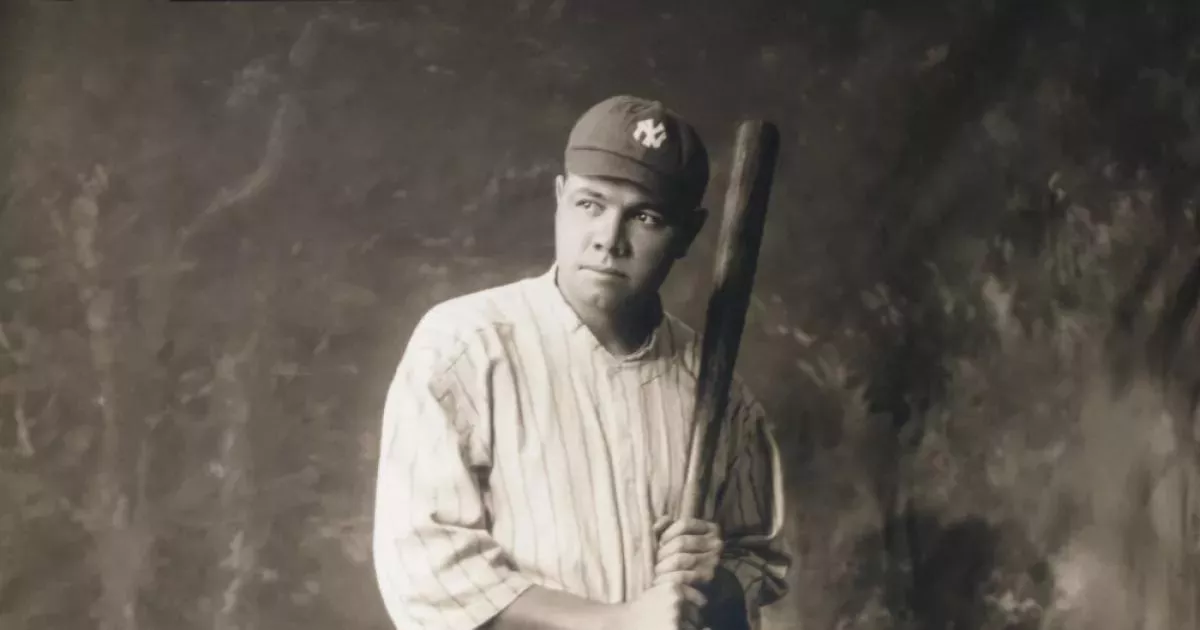
Babe Ruth, an American professional baseball player (1914-1935), is widely considered the greatest baseball player ever. Initially a star left-handed pitcher for the Boston Red Sox, he achieved legendary status as a slugging outfielder for the New York Yankees. Known as "the Bambino" and "the Sultan of Swat," Ruth revolutionized baseball with his powerful hitting. He was among the first five players inducted into the Baseball Hall of Fame in 1936, cementing his place as an American sports icon.
3 hours ago : Aaron Judge emulates Babe Ruth's achievement with a record-equalling home run for Yankees.
Aaron Judge, playing for the Yankees, matched Babe Ruth's record in MLB history with a significant home run. He launched his 14th homer of the season against the Orioles, contributing to the Yankees' victory.


June 13, 1902: Entered St. Mary's Industrial School for Boys
On June 13, 1902, Babe Ruth entered St. Mary's Industrial School for Boys at the age of seven and was recorded as "incorrigible." He spent much of the next 12 years there.
1902: Baltimore Restored to Major Leagues
In 1902, Baltimore was restored to the major leagues with the local franchise, the Baltimore Terrapins, which was the first time the city had a major league team since 1902. This event provides context for Babe Ruth's early career with the Baltimore Orioles.
1902: Ralph "Socks" Seybold's AL Single-Season Mark
In 1902, Ralph "Socks" Seybold set the AL single-season home run mark of 16.
1903: Red Sox first World Series win
In 1903, the Red Sox won one of the first World Series.
1904: Death of Ruth Cleveland
Ruth Cleveland, daughter of President Grover Cleveland, died in 1904. The Baby Ruth candy bar was named after her.
1909: Babe Adams' World Series Heroics
In 1909, Pittsburgh Pirates pitcher Babe Adams was a World Series hero. He was mentioned as another player with the nickname "Babe," who appeared younger than his actual age. This context provides background to how Babe Ruth got his famous nickname.
1912: Renovation of St. Mary's
In 1912, the boys at St. Mary's, aged 5 to 21, renovated the facility as part of their education in work skills. Babe Ruth, as a student there, participated in this renovation.
1913: Played Weekend Games on Community Teams
In 1913, at the age of 18, Babe Ruth was allowed to leave St. Mary's to play weekend games on community teams. He was noted in newspaper articles for both his pitching and home run abilities.
March 7, 1914: First Appearance as Professional Ballplayer
On March 7, 1914, Babe Ruth made his first appearance as a professional ballplayer in an inter-squad game. He played shortstop, pitched the last two innings, and hit a long home run.
July 30, 1914: Purchase of Providence Grays
On July 30, 1914, Boston Red Sox owner Joseph Lannin purchased the minor-league Providence Grays. Initially, Babe Ruth's departure for Providence was delayed due to a waiver claim by the Cincinnati Reds.
August 18, 1914: Ruth joined the Grays
On August 18, 1914, Babe Ruth joined the Grays baseball team.
1914: Signed to Minor League and Sold to Red Sox
In 1914, Babe Ruth was signed to play Minor League baseball for the Baltimore Orioles but was soon sold to the Boston Red Sox, starting his professional baseball career.
1914: Signed with Baltimore Orioles
In early 1914, Babe Ruth signed a professional baseball contract with Jack Dunn, who owned and managed the minor-league Baltimore Orioles, an International League team. There are varying accounts of how Dunn came to sign Ruth.
March 1915: Spring Training
In March 1915, Babe Ruth reported to Hot Springs, Arkansas, for his first major league spring training with the Red Sox.
August 1915: Jack Warhop's Career Conclusion
In August 1915, pitcher Jack Warhop concluded his major league career. He is noted for being the first major league pitcher to give up a home run to Babe Ruth.
1915: Pinstriped Uniforms
The Yankees had been wearing pinstriped uniforms since 1915.
1916: Reputation as an Outstanding Pitcher
By 1916, Babe Ruth had built a reputation as an outstanding pitcher for the Boston Red Sox. He also hit long home runs, which was unusual for the dead-ball era.
1916: Pitching Duels with Walter Johnson
In 1916, Babe Ruth engaged in repeated pitching duels with Washington Senators' ace Walter Johnson, winning four of their five meetings. He went 23–12 for the season with a 1.75 ERA and nine shutouts. The Red Sox won the pennant and World Series.
1916: Carrigan Retired as Manager
In 1916, Carrigan retired as player and manager, and the Red Sox organization was sold to a group headed by Harry Frazee. Jack Barry was hired as manager.
September 1917: Conscription Introduced
In September 1917, conscription was introduced in the United States, impacting baseball as most players were of draft age. Barry joined the Naval Reserve to avoid the draft.
1917: Season Summary
In 1917, Babe Ruth led the league with 35 complete games, finishing 24–13 with a 2.01 ERA and six shutouts. He was also suspended for ten days and fined $100 for punching an umpire.
1918: Season Summary
In 1918, Babe Ruth primarily played as an outfielder due to the war-shortened season. He hit .300 with 11 home runs, tying for the major league home run title. He was also a pitcher with a 13–7 record and a 2.22 ERA.
1918: Yankees player purchases
In 1918, Ruppert and Huston aggressively purchased and traded for players to build a winning team.
1918: Red Sox Secured Title
In 1918, the Red Sox secured the title due to Frazee's willingness to spend for players, resulting in a championship win.
1918: World Series Victory
In 1918, the Red Sox won the World Series against the Chicago Cubs. Babe Ruth won Game One and contributed to the Game Four win, marking his last World Series pitching victory.
1918: War and flu pandemic
In 1918, the country had been hit hard by both the war and the flu pandemic.
March 1919: Ruth's Contract
In March 1919, Babe Ruth accepted a three-year contract for a total of $27,000.
December 26, 1919: Ruth Sold to Yankees
On December 26, 1919, Harry Frazee sold Babe Ruth's contract to the New York Yankees.
1919: Broke MLB Single-Season Home Run Record
In 1919, Babe Ruth broke the MLB single-season home run record with 29 home runs, showcasing his talent as an outfielder.
1919: Babe Ruth Pitching Innings
In 1919, Babe Ruth pitched 133 innings that season
1919: Ruth's Home Run Season
In 1919, Babe Ruth transitioned from pitching to focusing on hitting, leading to an unprecedented spell of home runs. Despite this, the Red Sox finished sixth.
1919: My Lady Friends Play
In 1919, Frazee produced the play 'My Lady Friends,' which later became the basis for the musical 'No, No, Nanette'.
1919: Yankees player purchases
In 1919, Ruppert and Huston aggressively purchased and traded for players to build a winning team.
1919: Red Sox fifth World Series win
In 1919, the Red Sox won one of the first World Series.
January 6, 1920: Babe Ruth's sale announced
On January 6, 1920, the deal to sell Babe Ruth was announced. As part of the transaction, Ruth agreed to fulfill the remaining two years on his contract but was given a $20,000 bonus, payable over two seasons. Reaction in Boston was mixed.
April 1920: Yankees early season record
At the end of April 1920, the Yankees had a 4-7 record.
August 1920: Ray Chapman's death
In August 1920, Ray Chapman died after being struck by a pitched ball thrown by Mays.
1920: Yankees jersey sold for $4.4 million
A Babe Ruth 1920 Yankees jersey sold for $4.4 million in 2012, becoming one of the most expensive pieces of sports memorabilia ever sold.
1920: Barrow hired as Yankees business manager
In 1920, Barrow was hired as the Yankees' business manager.
1920: Cleveland World Series Win
In 1920, Cleveland won the World Series.
1920: Sale of Babe Ruth agreement
In 1920, Frazee sold the rights to Babe Ruth for $100,000, which also involved a $350,000 loan from Ruppert to Frazee, secured by a mortgage on Fenway Park.
1920: Ruth's breakout performance alters baseball play
Prior to 1920, home runs were unusual in baseball. In 1920, Babe Ruth had a breakout performance that season. After the 1920 season, Ruth's performance settled, for all time to come, that the American public is nuttier over the Home Run than the Clever Fielding or the Hitless Pitching.
1921: Ruth's barnstorming tour
After the 1921 World Series, Ruth participated in a barnstorming tour in the Northeast.
1921: Ruth's home run pace
As of September 6, 1927, Ruth was still several games off his 1921 pace in terms of home runs.
1921: Sale of Babe Ruth agreement
In 1921, Frazee sold the rights to Babe Ruth for $100,000, which also involved a $350,000 loan from Ruppert to Frazee, secured by a mortgage on Fenway Park.
1921: Ruth breaks single season home run record
In 1921, Ruth hit his 55th home run, breaking his year-old single-season record. Ruth finished the regular season with 59 home runs, batting .378 and with a slugging percentage of .846.
1921: Ruth's contract negotiations
In 1921, Ruth wanted to renegotiate his contract, which was signed before the 1919 season for $10,000 per year through 1921. He demanded that his salary be doubled, or he would sit out the season.
1921: Baby Ruth candy bar first marketed
In 1921, at the height of the craze over Babe Ruth, the Baby Ruth candy bar was first marketed by the Curtiss Candy Company.
1921: Yankees in the World Series
In 1921, the Yankees played the New York Giants in the World Series, losing five games to three. Ruth hit .316, drove in five runs, and hit his first World Series home run.
March 4, 1922: Ruth signs new contract
On March 4, 1922, Ruth signed a new three-year contract for $52,000 a year.
May 20, 1922: Suspension of Ruth lifted
On May 20, 1922, Baseball Commissioner Kenesaw Mountain Landis lifted the suspension of Ruth.
August 1922: Barnstorming rule changed
In August 1922, the rule against barnstorming for World Series participants was changed to allow limited participation with permission.
November 11, 1922: Ruth and Ruppert sign contract addendum with morals clause
On November 11, 1922, Babe Ruth and Yankees co-owner Ruppert signed a contract addendum that included a morals clause. This required Ruth to abstain from alcohol and adhere to a 1:00 a.m. curfew during the baseball season, and avoid any behavior that would compromise his ability to play.
1922: Sale of Babe Ruth agreement
In 1922, Frazee sold the rights to Babe Ruth for $100,000, which also involved a $350,000 loan from Ruppert to Frazee, secured by a mortgage on Fenway Park.
1922: Giants refuse to renew Yankees lease
In 1922, Giants owner Charles Stoneham said the Yankees' lease, expiring after that season, would not be renewed.
1922: Ruth's suspension and captaincy loss
In 1922, Ruth was suspended, fined, and stripped of his position as team captain after an incident with an umpire and a heckler. Despite appearing in 110 games, batting .315 with 35 home runs, the season was considered a disappointment.
April 18, 1923: Yankee Stadium Opens
On April 18, 1923, Yankee Stadium was completed in time for the home opener, with Ruth hitting the first home run.
1923: Ruth celebrates with teammates in Yankee Stadium
In 1923, Babe Ruth celebrated with his surviving teammates during the 25th-anniversary celebrations of "The House that Ruth Built" at the Yankee stadium.
1923: Efforts to stay in shape
In 1923, Babe Ruth tried to stay in shape, but he was described as having a large upper body with thin wrists and legs, resembling "toothpicks attached to a piano".
1923: Ruppert Bought Huston
In 1923, Ruppert bought out Huston's share of the Yankees.
1923: Yankees win World Series
In 1923, the Yankees won the AL pennant by 17 games and went on to win the World Series against the Giants, four games to two. Ruth batted .368 with three home runs during the series. He also had a career-high .393 batting average and tied for the most home runs in the major-leagues that year.
1924: Continuing fitness efforts
Babe Ruth continued his efforts to stay in shape in 1924.
1924: Ruth wins AL batting title
In 1924, Ruth won his only AL batting title, hitting .378, with a league-leading 46 home runs.
1925: Offseason workout and team rebuilding
During the offseason of 1925-26, Babe Ruth worked out at Artie McGovern's gym to get back into shape. The Yankees' Barrow and Huggins rebuilt the team with young players like Tony Lazzeri and Lou Gehrig.
1925: No, No, Nanette Play
In 1925, the musical 'No, No, Nanette', reportedly financed by the sale of Babe Ruth, opened.
1925: Illness and poor performance
In early 1925, Babe Ruth weighed nearly 260 pounds (120 kg) and became ill during his annual visit to Hot Springs, Arkansas. He collapsed in Asheville, North Carolina, and was hospitalized in New York. A rumor of his death circulated, and the cause of his illness, known as "the bellyache heard 'round the world", was attributed to binging on hot dogs and soda pop. He played only 98 games and had his worst season as a Yankee, with a .290 average and 25 home runs. The Yankees finished next to last in the AL.
1926: Normal Production and World Series Loss
In 1926, Babe Ruth batted .372 with 47 home runs and 146 RBIs, leading the Yankees to win the pennant. In Game Four of the World Series, Ruth hit three home runs, a first in World Series history. However, the Yankees lost the series to the St. Louis Cardinals in Game Seven, with Ruth getting thrown out while attempting to steal second base.
1926: Gift to Brother Matthias
In 1926, Babe Ruth donated money and his presence at fundraisers, and spent $5,000 to buy Brother Matthias a Cadillac - later replacing it when it was destroyed in an accident.
1926: Promise to Johnny Sylvester and Income
In 1926, during the World Series, Babe Ruth promised a hospitalized 11-year-old boy named Johnny Sylvester that he would hit a home run for him. Ruth also earned a significant income, with a salary of $52,000 from baseball and at least twice as much from other ventures, including $100,000 from vaudeville.
1927: Home Run Against Tom Zachary
In 1927, Babe Ruth faced Tom Zachary on a September afternoon.
1927: 60 Home Runs in a Season
In 1927, as part of the Yankees' "Murderers' Row" lineup, Babe Ruth hit 60 home runs, extending his own MLB single-season record. This feat occurred during his time with the New York Yankees.
1927: Record-Breaking Season and World Series Victory
In 1927, the New York Yankees, known as Murderers' Row, dominated the season, winning a then-AL-record 110 games. Babe Ruth pursued his single-season home run record, ultimately hitting his 60th homer on September 30th off Tom Zachary. The Yankees swept the Pittsburgh Pirates in the World Series.
1927: Ruth's World Series ring sold for $2 million
In 2017, Charlie Sheen sold Babe Ruth's 1927 World Series ring for $2 million, a record for a championship ring.
1928: Ruth campaigns for Al Smith
In 1928, Babe Ruth, a self-described Democrat, actively campaigned for Al Smith, who was the Democratic nominee for U.S. President.
1928: Inconsistent Performance and World Series Victory
In 1928, the Yankees experienced injuries and inconsistent play, but managed to clinch the pennant. Babe Ruth started strong but slumped later in the season, ending with 54 home runs. The Yankees swept the Cardinals in the World Series, with Ruth batting .625 and hitting three home runs in Game Four.
1928: Home runs after 1928
In 1930, Ruth had 49 home runs, his best in his years after 1928.
1929: Uniform Numbers Introduced
Before the 1929 season, the Yankees introduced uniform numbers, with Babe Ruth assigned number 3.
1929: Yankees Losing Season and Huggins' Death
In 1929, the Yankees started well but ultimately finished second behind the Athletics. Manager Huggins died of erysipelas on September 25, only ten days after he last directed the team.
January 7, 1930: Salary Negotiations Breakdown
On January 7, 1930, salary negotiations between Babe Ruth and the Yankees broke down after Ruth rejected the Yankees' offers and demanded at least $85,000 for three years.
1930: Solid Performance and Coaching Aspirations
In 1930, Babe Ruth hit .359 with 49 home runs and 153 RBIs and pitched his first game in nine years. The Yankees finished third, and Ruth unsuccessfully sought the manager job after Shawkey was fired.
1931: Improved Performance but No Championship
In 1931, the Yankees improved, but the Athletics won 107 games, with the Yankees falling short. Ruth hit .373 with 46 home runs and 163 RBIs.
1932: World Series Called Shot
In the 1932 World Series against the Cubs, marked by animosity and hostile crowds, Babe Ruth allegedly made a "called shot" by gesturing towards center field before hitting a home run off Charlie Root in Game Three. The Yankees won the game and clinched the series the following day.
1932: Pennant Win and Injury Sidelines
In the 1932 season, the Yankees had a 107–47 record and won the pennant. Although Ruth's effectiveness had decreased somewhat, he still hit .341 with 41 home runs and 137 RBIs, but was sidelined twice because of injuries during the season.
1932: Jersey from "called shot" home run sold
The jersey Babe Ruth wore when hitting his "called shot" home run in the 1932 World Series sold in 2024 for a record $24 million.
July 6, 1933: Played in first MLB All-Star Game, hit first home run
On July 6, 1933, Babe Ruth played right field in the first Major League Baseball All-Star Game at Comiskey Park in Chicago. He hit the first home run in All-Star Game history, a two-run shot in the third inning against Bill Hallahan, contributing to the American League's 4-2 victory.
1933: Braves finished fourth
In 1933, the Boston Braves enjoyed modest recent success, finishing fourth in the National League.
July 13, 1934: Hit 700th career home run
On July 13, 1934, Babe Ruth hit his 700th career home run while playing his last full season with the Yankees. Despite a .288 batting average and 22 home runs, these numbers were considered "merely mortal" compared to his previous standards.
1934: Last Season with Yankees
1934 marked Babe Ruth's last season with the New York Yankees, after which he briefly played for the Boston Braves before retiring.
1934: Ruth's hat sets record for baseball cap
A hat of Babe Ruth's from the 1934 season set a record for a baseball cap when David Wells sold it at auction for $537 thousand in 2012.
1934: Braves Owner Judge Emil Fuchs expressed interest
In 1934, Boston Braves owner Judge Emil Fuchs showed interest in Babe Ruth as a gate attraction because the team had low performance. Ruth made no secret of his desire to manage the Yankees.
February 26, 1935: Traded to the Boston Braves
On February 26, 1935, the Yankees traded Babe Ruth to the Boston Braves, where he was to become a team vice president, be consulted on club transactions, and serve as assistant manager to Bill McKechnie. He was also promised a share in the Braves' profits and the possibility of becoming co-owner, with a potential to succeed McKechnie as manager.
1936: Election to Baseball Hall of Fame
In 1936, Babe Ruth was elected to the Baseball Hall of Fame as one of its "first five" members, solidifying his place as one of the greatest sports heroes in American culture.
1936: Possibility of Ruth succeeding McKechnie as manager
In 1936, there was a possibility of Babe Ruth succeeding Bill McKechnie as manager of the Boston Braves, perhaps as early as that year.
November 1946: Ruth diagnosed with inoperable malignant tumor
In November 1946, Babe Ruth was diagnosed with an inoperable malignant tumor at the base of his skull and in his neck, identified as nasopharyngeal carcinoma, after undergoing tests at French Hospital in New York.
1946: Illness with Nasopharyngeal Cancer
In 1946, Babe Ruth became ill with nasopharyngeal cancer, which ultimately led to his death two years later.
April 27, 1947: Babe Ruth Day observed in major leagues
On April 27, 1947, Babe Ruth Day was celebrated throughout the major leagues. A significant observance occurred at Yankee Stadium, where Ruth addressed a crowd of nearly 60,000, his voice weakened by his illness.
1947: Ruth unable to help write autobiography
By late 1947, Babe Ruth was unable to assist with the writing of his autobiography, "The Babe Ruth Story", which was almost entirely ghostwritten.
1947: Ruth treated with Teropterin and shows improvement
In 1947, Babe Ruth was treated with pterolyl triglutamate (Teropterin) and showed significant improvement during the summer. His case was presented at a scientific meeting, and he was able to do promotional work for Ford Motor Company on American Legion Baseball.
February 1948: Ruth travels to Florida and returns to New York
In February 1948, Babe Ruth left for Florida. After six weeks, he returned to New York to attend a book-signing party for his autobiography.
June 5, 1948: Ruth donates manuscript to Yale University
On June 5, 1948, a frail Babe Ruth visited Yale University to donate a manuscript of "The Babe Ruth Story" to its library and met George H. W. Bush.
June 13, 1948: Ruth's final visit to Yankee Stadium
On June 13, 1948, Babe Ruth made his final appearance at Yankee Stadium for the 25th-anniversary celebrations of "The House that Ruth Built". A famous photo of him from behind was taken at this event, which later won the Pulitzer Prize.
July 26, 1948: Ruth attends premiere of "The Babe Ruth Story" film
On July 26, 1948, Babe Ruth left the hospital to attend the premiere of the film "The Babe Ruth Story", before returning to the hospital for the final time.
August 16, 1948: Death of Babe Ruth
On August 16, 1948, George Herman "Babe" Ruth passed away after battling nasopharyngeal cancer. He was a celebrated American professional baseball player, known as "the Bambino" and "the Sultan of Swat".
1948: Release of "The Babe Ruth Story"
In 1948, the film "The Babe Ruth Story" was released, incorporating legends about Babe Ruth, such as his habit of signaling his intent to throw a curveball, which allegedly made him easy to hit initially.
April 19, 1949: Yankees unveil monument in Ruth's honor
On April 19, 1949, the Yankees unveiled a granite monument in Babe Ruth's honor in center field of Yankee Stadium, located in the field of play next to tributes to Huggins and Gehrig.
1961: World Series Record Broken
In 1961, Whitey Ford broke Babe Ruth's World Series record of 29+2⁄3 consecutive scoreless innings, which had stood for more than 40 years.
1965: Yankees Losing Record
In 1965, the Yankees experienced their first season with a losing record since 1925.
1968: Special Baseball Records Committee Ruled
In 1968, the Special Baseball Records Committee unanimously ruled a hit by Babe Ruth in 1918 as a home run, along with 36 other hits.
1969: Ruth named baseball's Greatest Player Ever
In 1969, Babe Ruth was named baseball's Greatest Player Ever in a ballot.
1969: Committee Reversed Decision
In 1969, the Special Baseball Records Committee reversed its 1968 decision, due to the importance of preserving Babe Ruth's home run total at 714.
1974: Babe Ruth Birthplace and Museum opens
In 1974, Babe Ruth's birthplace in Baltimore was renovated and opened to the public as the Babe Ruth Birthplace and Museum, housing artifacts from his life.
1974: Remodeling of Yankee Stadium begins
In 1974, remodeling began on Yankee Stadium resulting in the outfield fences moving inward and enclosing the monuments from the playing field.
1975: Remodeling of Yankee Stadium completed
In 1975, remodeling completed on Yankee Stadium resulting in the outfield fences moving inward and enclosing the monuments from the playing field.
1978: Ron Guidry ties Ruth's Shutout Record
In 1978, Ron Guidry tied Babe Ruth's league record for shutouts by a left-hander, with nine shutouts in a single season.
1983: Ruth honored with US Postal Service stamp
In 1983, the United States Postal Service honored Babe Ruth with a twenty-cent stamp.
1991: Shore's Game Amended
In 1991, MLB's Committee on Statistical Accuracy amended Ernie Shore's 1917 game, originally listed as a perfect game, to be listed as a combined no-hitter.
1993: Ali tied with Ruth as most recognized athlete in America
In 1993, The Associated Press reported that Muhammad Ali was tied with Babe Ruth as the most recognized athlete in America.
1995: Ruth estate licenses likeness for Baby Ruth ads
In 1995, the Ruth estate licensed his likeness for use in an advertising campaign for the Baby Ruth candy bar.
1998: The Sporting News ranks Ruth as number one
In 1998, The Sporting News ranked Babe Ruth number one on the list of "Baseball's 100 Greatest Players".
1998: Review of Ruth's autopsy suggests tobacco use contributed to cancer
In 1998, a physician reviewing Babe Ruth's autopsy concluded that his lifelong use of tobacco "probably played a part" in his cancer.
1999: Interview with Charlie Devens
In 1999, Charlie Devens, who was Ruth's surviving teammate in the 1932 World Series game, did not believe that Ruth had called his shot.
1999: Julia Ruth Stevens' Recount
In 1999, Julia Ruth Stevens recounted that George Ruth Sr., Babe Ruth's father, was a saloon owner who gave Ruth little supervision, leading him to become a delinquent.
1999: Ruth named to Major League Baseball All-Century Team
In 1999, baseball fans named Babe Ruth to the Major League Baseball All-Century Team.
2004: Red Sox World Series win
In 2004, the Red Sox won another World Series.
2004: Bat sold for over $1 million
The bat with which Babe Ruth hit the first home run at Yankee Stadium sold at auction for $1.265 million in 2004.
2005: Baby Ruth becomes official candy bar of MLB
In 2005, Baby Ruth became the official candy bar of Major League Baseball.
2005: Longest World Series Game
Until 2005, Babe Ruth's 14-inning complete game victory in the 1916 World Series was the longest World Series game ever played.
2006: More books written about Ruth than any other Hall of Famer
In 2006, it was stated that more books have been written about Babe Ruth than any other member of the Baseball Hall of Fame.
2008: Replacement of Yankee Stadium
In 2008, Yankee Stadium, "the House that Ruth Built", was replaced with a new Yankee Stadium across the street from the old one; Monument Park was subsequently moved to the new venue behind the center field fence.
2012: Yankees jersey sold for $4.4 million
A Babe Ruth 1920 Yankees jersey sold for $4.4 million in 2012, becoming one of the most expensive pieces of sports memorabilia ever sold.
2017: Ruth's World Series ring sold for $2 million
In 2017, Charlie Sheen sold Babe Ruth's 1927 World Series ring for $2 million, a record for a championship ring.
2018: Ruth posthumously awarded Presidential Medal of Freedom
In 2018, Babe Ruth was posthumously awarded the Presidential Medal of Freedom by President Donald Trump, with his grandson Tom Stevens accepting the award on his behalf.
2022: Bat sold for $1.6 million
A bat used by Babe Ruth sold for $1.6 million in 2022.
2022: Ruth named on NY Mount Rushmore of Sports
In 2022, The Sporting News named Babe Ruth on their "New York Mount Rushmore of Sports", and ESPN ranked him as the greatest baseball player ever.
2023: Bat sold for $1.85 million
A bat used by Babe Ruth sold for $1.85 million in 2023.
2024: Ruth's records still standing
As of 2024, Ruth's 177 runs scored, 119 extra-base hits, and 457 total bases still stand as modern-era records.
2024: Jersey from "called shot" home run sold
The jersey Babe Ruth wore when hitting his "called shot" home run in the 1932 World Series sold in 2024 for a record $24 million.
2025: Ruth's salary margin record
As of 2025, Ruth's 1930 salary was more than 2.4 times greater than the next-highest salary that season, which was a record margin.
Mentioned in this timeline

Donald John Trump is an American politician media personality and...
Muhammad Ali nicknamed The Greatest was an iconic American professional...

Elvis Presley the King of Rock and Roll was a...
Diego Maradona was an Argentine professional football player and manager...

The Catholic Church the largest Christian church globally with over...
News encompasses current events communicated through various media including word...
Trending
25 minutes ago Carlos Correa's Season Ends: Ankle Surgery Sidelines Astros Star in 2026

1 hour ago Hayden Panettiere Publicly Comes Out as Bisexual, Discussing Past Relationships with Women

1 hour ago Semaglutide: Fighting drug cravings, alcohol addiction, and heavy drinking explored.
2 hours ago IonQ's Q1 Earnings Report and Bullish Stock Forecast: Quantum Computing Sector Overview
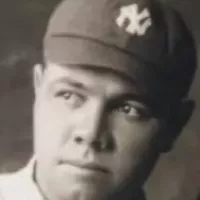
3 hours ago Aaron Judge emulates Babe Ruth's achievement with a record-equalling home run for Yankees.

4 hours ago Pluto TV Evolves into Premium Streamer, Relaunching on Paramount Plus This Summer.
Popular

Michael Joseph Jackson the King of Pop was a highly...
Graham Cunningham Platner is an American oyster farmer and Marine...

Rudy Giuliani is an American politician and disbarred lawyer best...

Melania Trump is a Slovenian-American former model who served as...

Elizabeth Warren is a prominent American politician currently serving as...

Ted Turner is an American entrepreneur and media mogul best...