


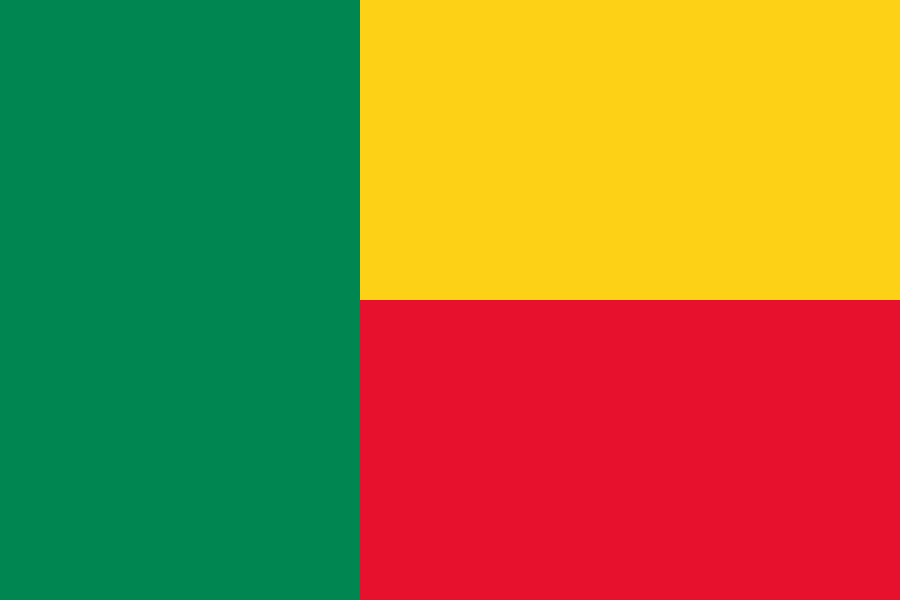
Benin, located in West Africa, is a nation with a rich and complex history, formerly known as the Kingdom of Dahomey. It played a significant role in the transatlantic slave trade, which left a lasting cultural impact. Gaining independence from France in 1960, the country transitioned through periods of military rule and Marxist-Leninist governance before establishing a stable multi-party democracy in the early 1990s. Economically, Benin relies heavily on agriculture, particularly cotton production, and trade facilitated by the port of Cotonou. Culturally, it is recognized as the birthplace of Voodoo, which remains an officially recognized religion and a deep part of the national identity. Benin's landscape ranges from the coastal lagoons in the south to the savannahs and highlands of the north. Today, the nation focuses on sustainable development and promoting its unique heritage, including the Royal Palaces of Abomey, as a means to foster tourism and economic growth.
1920: Conclusion of Post-Slavery Land and Labor Redistribution Struggles
By 1920, the period of intensive struggle among Dahomeans regarding the redistribution of control over land, labor, and commerce—triggered by the French prohibition of slavery—came to an end. This era, spanning from 1895 to 1920, involved villages redefining boundaries and factions competing for leadership within prominent families under the guise of religious or commercial disputes.


1958: Granting of Autonomy to the Republic of Dahomey
In 1958, France officially granted autonomy to the Republic of Dahomey, marking a significant step toward self-governance for the territory.
August 1960: Independence of the Republic of Dahomey
On 1 August 1960, the Republic of Dahomey achieved full independence from France, an event now commemorated annually as a national holiday known as Independence Day.
August 1960: Independence of Dahomey
On August 1960, the country officially gained its independence from French colonial rule and adopted the name Dahomey, a title derived from the historic Kingdom of Dahomey.
1960: Post-Independence Political Instability
Following 1960, the nation experienced a period of significant political volatility characterized by multiple coups and regime changes, dominated by leaders including Hubert Maga, Sourou Migan Apithy, Justin Ahomadégbé, and Émile Derlin Zinsou.
1960: Independence of Dahomey
In 1960, Dahomey achieved full sovereign independence from French colonial rule, marking a new chapter in its political history.
1970: Formation of the Presidential Council
In 1970, after widespread violence broke out during the election cycle, political leaders Hubert Maga, Sourou Migan Apithy, and Justin Ahomadégbé reached an agreement to establish a Presidential Council to stabilize the country.
May 1972: Transfer of Power from Maga to Ahomadégbé
On 7 May 1972, Maga officially ceded his leadership and power to Ahomadégbé as part of the country's ongoing political transition.
October 1972: Kérékou Coup d'état
On 26 October 1972, Lt. Col. Mathieu Kérékou led a military coup to overthrow the ruling triumvirate, declaring his intent to lead the nation without strictly adhering to Capitalism, Communism, or Socialism.
1972: Dahomeyan Coup d'état
In 1972, a military coup d'état occurred, which served as the precursor to the subsequent establishment of a Marxist–Leninist government in the country.
November 1974: Adoption of Marxism
On 30 November 1974, Mathieu Kérékou announced that the state would officially adopt Marxism under the direction of the Military Council of the Revolution, which proceeded to nationalize the banking and petroleum sectors.
1974: Nationalization and Reform Program
In 1974, the government launched a major initiative to nationalize key economic sectors, overhaul the national education system, and create agricultural cooperatives. During this time, the regime also implemented new local government structures and launched a campaign to eliminate tribalism and other perceived feudal forces, while simultaneously banning all political opposition.
November 1975: Renaming to the People's Republic of Benin
On 30 November 1975, the nation was officially renamed the People's Republic of Benin as part of its transition under the Kérékou regime.
November 1975: Renaming of Dahomey to Benin
On November 1975, following the earlier Marxist-Leninist military coup, the nation was officially renamed Benin to better represent the entire country rather than just the Fon-inhabited southern region associated with the name Dahomey.
1975: Establishment of the People's Republic of Benin
Starting in 1975, the country adopted a Marxist-Leninist ideology and transitioned into the People's Republic of Benin, a state that would remain in place until 1990.
1980: Election of Mathieu Kérékou
In 1980, the National Revolutionary Assembly elected Mathieu Kérékou as president. During his administration, he sought to align with nations such as China, North Korea, and Libya, while moving to place almost all domestic business activity under state control, a policy shift that ultimately discouraged foreign investment.
1982: Shift to Economic Liberalism
Beginning in 1982, the regime entered a new phase characterized by an opening to Western nations and the adoption of economic liberalism, moving away from its previous strict socialist phase.
1982: Economic Growth Peak
In 1982, Benin experienced a notable economic expansion, achieving a growth rate of 15.6%.
1983: Economic Deceleration
The economic growth rate in Benin slowed significantly to 4.6% during the year 1983.
1984: Economic Fluctuation
By 1984, Benin's economy saw a partial recovery with a growth rate reaching 8.2% before border issues impacted revenues.
1984: Re-election of Mathieu Kérékou
In 1984, Mathieu Kérékou was re-elected as president. Throughout this period, the regime continued its efforts to centralize control over the economy, reform the education system—often promoting the president's personal slogans like 'Poverty is not a fatality'—and financed state operations through controversial contracts to store nuclear waste from foreign powers like the Soviet Union and France.
1989: Political and Financial Collapse
In 1989, Benin faced a severe crisis characterized by riots due to unpaid military salaries, the collapse of the banking sector, and the subsequent abandonment of Marxism-Leninism by Kérékou following forced political reforms.
March 1990: Official Renaming to the Republic of Benin
On 1 March 1990, following the completion of the newly formed government's constitution, the country officially adopted the name Republic of Benin.
1990: Historical Forest Baseline
As of 1990, Benin recorded a significantly higher forest cover of 4,835,150 hectares, serving as the historical baseline before the land area experienced substantial reduction by 2020.
1990: End of the Marxist-Leninist State
By 1990, the period of the People's Republic of Benin concluded, leading to significant political restructuring within the nation.
1990: Conclusion of the Socialist Regime Phase
By 1990, the regime concluded its final phase of transformation that began in 1982, marking the end of the era characterized by the People's Republic of Benin.
1990: Establishment of the Constitution of Benin
In 1990, the Constitution of Benin was established, serving as the foundational legal framework that defines the nation's presidential representative democratic republic structure.
1991: Transition to Democracy
Following the adoption of the new constitution, Benin underwent a significant transition to democracy in 1991, which formalized the multi-party political system still referenced today.
1991: Democratic Transfer of Power
In 1991, Kérékou was defeated by Nicéphore Soglo in an election, marking a historic moment as he became the first president on the African mainland to peacefully relinquish power through a democratic electoral process.
1991: Formation of the Republic of Benin
In 1991, the previous political system was replaced by the multi-party Republic of Benin, formalizing the country's transition toward democratic governance.
1991: Restoration of Democracy in Benin
The year 1991 marked the restoration of democracy in Benin, establishing a benchmark for electoral processes that Thomas Boni Yayi would later build upon during his 2011 reelection victory.
1996: Kérékou Returns to Power
After a period out of office, Kérékou successfully returned to the presidency in 1996 by winning the national election.
1999: National Apology for Atlantic Slave Trade
During 1999, Kérékou issued a formal national apology acknowledging the significant role that Africans had played in the historical Atlantic slave trade.
20 February 2022: Inauguration of Returned Sacred Art
On 20 February 2022, President Patrice Talon officially inaugurated an exhibition in Benin featuring 26 sacred artifacts that were repatriated from France, marking the return of items looted by colonial forces 129 years prior.
2001: Controversial Election Victory
In 2001, Kérékou won another term as president; however, the victory was marred by claims of election irregularities raised by his political opponents.
2005: Corruption Analysis Rating
In a 2005 analytical study regarding the state of police, business, and political corruption, Benin received a rating that placed it equal-88th out of 159 countries.
2006: 2006 Beninese Presidential Election
In 2006, Benin held a presidential election in which former leaders Kérékou and Soglo were constitutionally barred from running. The election culminated in a runoff on 19 March 2006, which Thomas Boni Yayi won, subsequently taking office on 6 April 2006.
2007: Reporters Without Borders Press Freedom Ranking
In the 2007 Worldwide Press Freedom Index released by Reporters Without Borders, Benin was ranked 53rd out of 169 countries globally.
2010: Baseline Religious Statistics
The year 2010 served as the base year for statistical data collection used by the Pew Research Group to formulate future religious demographic projections for Benin.
2011: 2011 Presidential Reelection of Thomas Boni Yayi
In 2011, Thomas Boni Yayi secured reelection by winning 53.18% of the vote in the first round, becoming the first president since the 1991 restoration of democracy to win without a runoff.
March 2016: Patrice Talon wins the 2016 presidential election
In March 2016, businessman Patrice Talon secured victory in the second round of the Beninese presidential election with 65.37% of the vote, defeating his opponent, Lionel Zinsou, following a constitutional restriction that prevented incumbent Boni Yayi from seeking a third term.
April 2016: Inauguration and constitutional reform plans of Patrice Talon
On April 6, 2016, Patrice Talon was officially sworn in as President of Benin. On the same day, he outlined his administration's goals, specifically prioritizing constitutional reform to enforce a single five-year presidential term and announcing a reduction in the size of the government from 28 members down to 16.
2016: Decline in Press Freedom Ranking
By the year 2016, when Patrice Talon took office as President, Benin's position in the Worldwide Press Freedom Index had dropped to 78th place.
2018: Forest Landscape Integrity Index Assessment
In 2018, Benin was evaluated for the Forest Landscape Integrity Index, receiving a mean score of 5.86 out of 10. This performance resulted in the country being ranked 93rd out of 172 nations globally regarding the integrity of its forest landscapes.
2020: Forest Cover Statistics in Benin
In 2020, Benin's forest cover reached approximately 3,135,150 hectares, which constitutes about 28% of the country's total land area, consisting of both naturally regenerating and planted forests.
2020: Pew Research Group Religious Projection
In 2020, the Pew Research Group projected the religious demographics of Benin, estimating that 52.2% of the population practiced Christianity, 24.6% practiced Islam, and 17.9% practiced African traditional religions.
April 2021: Re-election of President Patrice Talon
In April 2021, President Patrice Talon won re-election to a second term with over 86.3% of the vote. Following controversial changes to national election laws, this victory solidified complete control over the parliament by the president's supporters.
2021: Population Estimation of Benin
In 2021, the total population of Benin was estimated to be approximately 13 million people.
February 2022: W National Park Massacre
In February 2022, Benin experienced the most significant terrorist attack in its history, which took place at the W National Park.
March 2025: Institutionalization of Traditional Chieftaincy in Benin
In March 2025, the government of Benin enacted legislation to officially recognize 16 kingdoms, 80 senior chiefs, and 10 traditional chiefs. This bill uses the pre-colonial historical context—specifically 1894 for southern regions and 1897 for northern regions—to define traditional territories and establish formal rules for the institutionalization of the chieftaincy system within the modern state.
July 2025: Enactment of the My Afro Origins Law
In July 2025, the Beninese government officially implemented the My Afro Origins law, a legislative act that provides provisional citizenship to individuals of the African diaspora whose lineage was historically affected by the transatlantic slave trade.
December 2025: Attempted Coup in Benin
On 7 December 2025, an army faction commanded by Pascal Tigri initiated a coup attempt, declaring the ousting of President Talon and the dissolution of political parties. The administration subsequently stated that the uprising was defeated and control was restored, despite ongoing uncertainty regarding the President's location.
Mentioned in this timeline
The Union of Soviet Socialist Republics USSR existed from to...
China officially the People's Republic of China PRC is located...
North Korea officially the Democratic People's Republic of Korea DPRK...
France officially the French Republic is primarily in Western Europe...
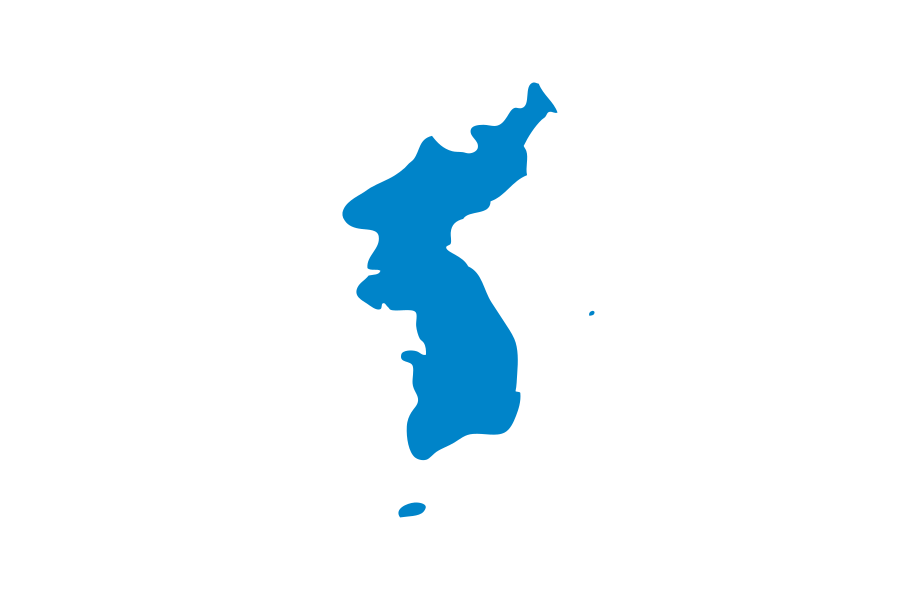
Korea is a peninsular region in East Asia comprised of...
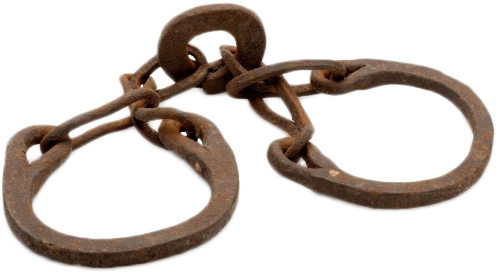
Slavery is a systemic practice in which individuals are owned...
Trending

3 hours ago Anthony Gordon Prepares for Highly Anticipated El Clasico Debut with Barcelona
3 hours ago Harrison Smith Confirms Retirement Plans After 15 Seasons with Minnesota Vikings

21 days ago Kyle Juszczyk Discusses NFL Celebrations and Family Friendships

3 hours ago Mario Andretti Shares His Perspective on Kimi Antonelli Potential Ferrari Move

3 hours ago Raphinha Transforms Into Barcelona's Star Striker, Matching Neymar's Legendary Record
1 month ago Eddy Piñeiro Shows Exceptional Accuracy as 49ers Kicker
Popular
Ilhan Omar is a prominent American politician currently serving as...

Ken Paxton is an American politician and lawyer serving as...

Elon Musk is a visionary entrepreneur and engineer known for...
Michael Joseph Jackson the King of Pop was a highly...
Barack Obama the th U S President - was the...
Greg Abbott is the current and th Governor of Texas...