


Bogdan Raditsa was a Croatian-American historian, journalist, diplomat, writer, and translator. His diverse career spanned multiple fields, reflecting his intellectual breadth and engagement with the world around him. As a historian, he likely contributed to the understanding of historical events and contexts. His work as a journalist suggests an involvement in contemporary affairs and public discourse. Furthermore, his role as a diplomat indicates engagement with international relations and political processes. His writing and translating activities rounded out a career marked by communication and cultural exchange.
August 1904: Bogdan Raditsa Born
In August 1904, Bogdan Raditsa was born. He later became a Croatian-American historian, journalist, diplomat, writer, and translator.


1904: Birth of Bogdan Raditsa
In 1904, Bogdan Raditsa was born in Split, Austro-Hungarian Empire.
1923: Studies in Ljubljana
Between 1923 and 1924, Bogdan Raditsa studied in Ljubljana after his initial studies in his home town.
1924: Studies in Florence
In 1924, Bogdan Raditsa moved to Florence to continue his studies.
1928: Correspondent in Paris
In 1928, Bogdan Raditsa went to Paris to work as a correspondent.
1933: Press Representative in Athens
From 1933 to 1939, Bogdan Raditsa lived in Athens, working as the Press representative for the Yugoslavian embassy.
1935: Marriage to Nina Ferrero
In 1935, Bogdan Raditsa married Nina Ferrero, daughter of Guglielmo Ferrero and granddaughter of Cesare Lombroso.
1939: Work in Belgrade Office
Following the Cvetković–Maček Agreement of 1939, Bogdan Raditsa went to work in the office for external printing in Belgrade.
1939: Diplomat in Geneva
From 1933 to 1939, Bogdan Raditsa worked as a diplomat and a member of the Yugoslavian delegation in the League of Nations in Geneva.
1940: Transfer to Washington, D.C.
In 1940, Bogdan Raditsa was transferred to Washington, D.C.
1941: Work in New York City Press Office
With the fall of Yugoslavia to the Germans in 1941, Bogdan Raditsa began working in the press office in New York City.
1943: Collaboration with Louis Adamič
From 1943 on, Bogdan Raditsa worked with Louis Adamič in the campaign against the Yugoslav government-in-exile in London and the recognition of Tito and his movement.
October 1944: Travel to London
In October 1944, Bogdan Raditsa went to London where Ivan Šubašić was working on the creation of a new Yugoslavian government.
1945: Departure from Yugoslavia
Around Christmas 1945, after returning to Belgrade, Bogdan Raditsa travelled to Bari and sent a telegram to his wife Nina stating he had "Left Tito's paradise forever".
1945: Work in Belgrade Ministry of Information
In 1945, Bogdan Raditsa briefly worked in the Ministry of Information in Belgrade.
1946: Publication of Reader's Digest Article
In 1946, after returning to the U.S., Bogdan Raditsa wrote his famous Reader's Digest article, 'Yugoslavia's Tragic Lesson to the World' in New York, enumerating his disappointments with Tito's Yugoslavia and urging Americans not to fall for false slogans.
1950: Professor at Fairleigh Dickinson University
From 1950 to 1974, Bogdan Raditsa was a professor of History at the Fairleigh Dickinson University.
1974: End of Professorship
In 1974, Bogdan Raditsa ended his time as professor of History at the Fairleigh Dickinson University, a position he had held since 1950.
December 1993: Bogdan Raditsa Died
In December 1993, Bogdan Raditsa died. He was a Croatian-American historian, journalist, diplomat, writer, and translator.
1993: Death in New York City
In 1993, Bogdan Raditsa died in New York City at the St. Luke's-Roosevelt Hospital Center; his remains were later transferred to Strada in Chianti near Florence.
Mentioned in this timeline

Christmas is an annual festival celebrated on December th commemorating...
Washington D C the capital of the United States is...
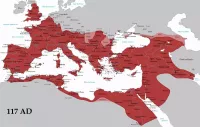
An empire is a political structure consisting of a dominant...

Travel involves the movement of people between geographical locations using...
Paris is the capital and largest city of France situated...
Trending
3 days ago Microsoft Pivots AI Strategy to Prioritize Business Solutions Over Consumer Focus

4 hours ago Scott Speedman Discusses R.J. Decker Role and Beau Bridges Reunion

5 hours ago Jennifer Connelly Attends Louis Vuitton Spring 2027 Runway Show at the Louvre

5 hours ago Jennifer Hudson Discusses Her Divine Relationship and Future Marriage Plans With Common

5 hours ago Marvel's VisionQuest Series Details and Release Updates Emerge
5 hours ago Granit Xhaka Receives Probation Over Fake COVID-19 Vaccination Certificate
Popular

Ken Paxton is an American politician and lawyer serving as...

Cristiano Ronaldo widely considered one of the greatest footballers captains...

Elon Musk is a visionary entrepreneur and engineer known for...

Shakira Isabel Mebarak Ripoll the Queen of Latin Music is...

Jameis Winston is an American football quarterback currently playing for...

Michael Joseph Jackson the King of Pop was a highly...