


CalPERS is a California state agency administering pension and health benefits for over 1.5 million public employees, retirees, and their families. In fiscal year 2020-21, it disbursed over $27.4 billion in retirement benefits and over $9.74 billion in health benefits, making it a significant player in California's financial landscape.
1961: Meyer-Geddes Act Passage
In 1961, the Meyer-Geddes Hospital and Medical Health Care Act was passed, leading to SERS' offering health insurance for state employees.


1962: Health Insurance Offered
In 1962, SERS started offering health insurance for state employees following the passage of the Meyer-Geddes Hospital and Medical Health Care Act in 1961.
1973: HMO Act and PERS Involvement
After the Health Maintenance Organization (HMO) Act of 1973, PERS began to deal with HMOs to create more unified and standardized health care benefit rates.
1978: Meyer-Geddes Act Renamed
In 1978, the Meyer-Geddes Act was renamed the "Public Employees' Medical and Hospital Care Act".
1980: State Law on Public Safety Officers' Disability Benefits
In 1980, a state law tied public safety officers' disability benefits to the age at which they were hired.
1987: Establishment of the Focus List
In 1987, CalPERS began placing companies with concerns about stock and financial underperformance and corporate governance practices on a "Focus List," also known as a "name and shame" list.
1990: Passage of Public Employees' Long-Term Care Act
California's "Public Employees' Long-Term Care Act," was passed in 1990 leading to CalPERS' administering a Long-Term Care Program.
1992: EEOC Age Discrimination Complaint
In 1992, an age discrimination complaint was filed with the Equal Employment Opportunity Commission (EEOC) due to a state law that tied public safety officers' disability benefits to the age at which they were hired.
1993: Historical Factors Impact Funded Status
According to the CalPERS chart Historical Factors Impact Funded Status (1993-2018), the chart starts from 1993.
1993: Health Alliances Proposed in Clinton Health Care Plan
CalPERS was called a model for the so-called health alliances proposed in the 1993 Clinton health care plan.
1994: Implementation of Managed Competition
By the early 1990s, CalPERS received national attention for implementing "managed competition." As of 1994–1995, CalPERS contracted with 24 health plans for its members and reduced health insurance premiums by 1% compared with 1993–1994.
1994: Nesbitt Study and the "CalPERS effect"
In 1994, Nesbitt published a study that found that companies on the Focus List trailed the S&P 500 prior to being put on the list but outperformed it after being put on the list, naming this phenomenon the "CalPERS effect".
1995: Health Plan Contracts
As of 1994–1995, CalPERS contracted with 24 health plans for its members and reduced health insurance premiums by 1% compared with 1993–1994.
1995: Class Action Lawsuit
In 1995, a class action lawsuit was filed against CalPERS and other state and local agencies due to an age discrimination complaint.
1995: LTC program inception
In 1995, the CalPERS Long-Term Care (LTC) program was established, and from its inception to June 30, 2013, it paid approximately $1.3 billion in benefits.
1996: Amendment of Public Employees' Long-Term Care Act
California's "Public Employees' Long-Term Care Act," was amended in 1996 leading to CalPERS' administering a Long-Term Care Program.
1996: Premium Rate Decrease
In 1996, CalPERS health insurance rates continued to decline by 5.3%.
1997: Comparison of Premium Growth
A 2006 study by the Government Accountability Office determined that from 1997 through 2002 the average annual growth in CalPERS premiums (6.5%) was lower than that of the Federal Employees Health Benefits Program (FEHBP, 8.5%).
1997: Premium Rate Decrease
In 1997, CalPERS health insurance rates continued to decline by 1.4%.
1998: Investment Fluctuation
Between 1998–99 and 2007–08, CalPERS' investment income or loss fluctuated, with the highest income in 2006-07 and the greatest loss in 2007–08.
1998: Premium Rate Increase
In 1998, CalPERS health insurance rates rose by 2.7%.
1999: Premium Rate Increase
In 1999, CalPERS health insurance rates rose by 5.1%.
2000: NAER Recognition Champion Awards
In 2000, two CalPERS employees received National Association for Employee Recognition (NAER) Recognition Champion Awards for the employee recognition program.
2002: Comparison of Premium Growth
A 2006 study by the Government Accountability Office determined that from 1997 through 2002 the average annual growth in CalPERS premiums (6.5%) was lower than that of the Federal Employees Health Benefits Program (FEHBP, 8.5%).
2002: Premium Increase and Investment Losses
During an economic downturn in 2002, premiums for the CalPERS Long-Term Care program rose an average of 9% and investment losses were $99 million.
2002: NAER Best Practices Award
In 2002, CalPERS itself won a Best Practices award from the National Association for Employee Recognition (NAER) for its employee recognition program.
2002: Unfunded Liabilities Increase
In 2002, CalPERS' unfunded liabilities were approximately $22 billion, which contributed to concerns about the fund's long-term financial stability.
January 2003: Settlement of Age Discrimination Lawsuit
In January 2003, CalPERS settled an age discrimination class action lawsuit by agreeing to pay $50 million in retroactive benefits and $200 million in future benefits to 1,700 officers, and agreed to not use an age-based formula in the future.
2003: Comparison of Premium Growth
A 2006 study by the Government Accountability Office determined that between 2003 and 2006–7, the average annual growth rate in CalPERS premiums (14.2%) was higher than that of FEHBP (7.3%).
2003: Participating Plans Dropped
As of 2003, the number of participating plans dropped to seven.
2004: Cities, Counties, and School Districts Left CalPERS
As of 2004, "more than two dozen cities, counties and school districts" (representing 4% of membership) left CalPERS because of high medical insurance rates.
2005: HMO Rate Increases
CalPERS attracted national attention in the mid-2000s for health maintenance organization rate increases of 25% in 2004 and 18% in 2005.
2006: Government Accountability Office Study
A 2006 study by the Government Accountability Office determined that from 1997 through 2002 the average annual growth in CalPERS premiums (6.5%) was lower than that of the Federal Employees Health Benefits Program (FEHBP, 8.5%). Between 2003 and 2006–7, the average annual growth rate in CalPERS premiums (14.2%) was higher than that of FEHBP (7.3%).
2006: Highest Income
In 2006-07, CalPERS achieved its highest income from investments, totaling $40.7 billion.
March 2007: Establishment of the CERBT Fund
In March 2007, CalPERS established the California Employers’ Retiree Benefit Trust Fund (CERBT) to provide California public agencies with a cost-efficient, professionally managed investment vehicle for prefunding other post-employment benefits (OPEB).
2007: Most Recent Year with No Unfunded Liabilities
According to the CalPERS chart Historical Factors Impact Funded Status (1993-2018), FY 2007 was the most recent year with no unfunded liabilities.
2007: Start of the Financial Crisis
After the start of the financial crisis of 2007–2008, many cities in California experienced financial stress, leading to municipal bankruptcy filings.
2007: Premium Increase Due to Program Shortfall
Another premium increase of an average of 33.6% occurred in 2007 due to "a projected $600 million shortfall in the program over the next 50 to 60 years".
2007: Greatest Loss
In 2007-08, CalPERS experienced its greatest investment loss, amounting to $12.5 billion.
2007: Commissioned Studies
In 2007-2008, CalPERS commissioned three studies that were released about economic impacts.
October 2008: CalPERS Asset Allocation
In October 2008, CalPERS had $186.7 billion in assets invested across various categories: $104.9 billion in equities, $41.0 billion in fixed income, $20.9 billion in real estate, $16.2 billion in cash equivalents, and $3.7 billion in inflation linked assets.
2008: Escalation of the Financial Crisis
After the financial crisis of 2007–2008, many cities in California experienced financial stress, leading to municipal bankruptcy filings.
2008: Cost Reduction Measures
As of 2008, CalPERS eliminated copayments for preventive care visits, raised copayments for other types of office visits, and took other measures in an attempt to reduce costs.
2008: Commissioned Studies
In 2007-2008, CalPERS commissioned three studies that were released about economic impacts.
2008: Warning of Potential Contribution Increases
In 2008, CalPERS warned that it might ask for more money from the state starting in July 2010 and from local-government employers starting in July 2011 if CalPERS' investments performed poorly as of June 30, 2009.
June 30, 2009: Investment Performance Monitoring
CalPERS monitored investment performance as of June 30, 2009, to determine if contribution increases from the state (starting July 2010) and local-government employers (starting July 2011) would be necessary.
July 2010: Potential State Contribution Increase
CalPERS warned in 2008 that it might ask for more money from the state starting in July 2010 if investments performed poorly as of June 30, 2009.
December 15, 2010: CalPERS Member Home Loan Program Suspended
On December 15, 2010, the CalPERS Board of Administration approved the suspension of the CalPERS Member Home Loan Program and stopped accepting new applications.
2010: Integrated Health Management Program
In 2010, Blue Shield of California, Dignity Health, and Hill Physicians Medical Group initiated an integrated health management program (similar to an Accountable Care Organization) that covered 41,000 CalPERS members.
2010: Strategic Asset Allocation Revision
In 2010, CalPERS revised its strategic asset allocation mix using its Asset Liability Management process.
2010: End of Public Naming on Focus List
In 2010, CalPERS stopped publicly naming companies on the Focus List and began dealing with them privately.
July 2011: Potential Local Government Employer Contribution Increase
CalPERS warned in 2008 that it might ask for more money from local-government employers starting in July 2011 if investments performed poorly as of June 30, 2009.
2011: CalPERS Funding Status
According to 2011 state figures, the CalPERS system was 78% funded with unfunded future liabilities of $133 billion.
2011: Governor Brown's Ponzi Scheme Allegation
At a 2011 legislative hearing, Governor Jerry Brown called CalPERS' asserted reliance on bringing in new members "a Ponzi scheme".
June 30, 2012: Economic Impacts Report Findings
Key findings of the CalPERS Economic Impacts in California Report for the fiscal year ending June 30, 2012, were released.
2012: Focus List Monetization Program
In 2012, CalPERS initiated a program to monetize the Focus List, increasing investments in those companies after the Board approves staff recommendations.
January 1, 2013: Pension Reform Implementation
With the passage of Assembly Bill 340 (AB 340), CalPERS members hired after January 1, 2013, are expected to pay 50 percent of the Total Normal Cost of their benefit plan.
June 30, 2013: Asset Allocation Update
By June 30, 2013, CalPERS' assets totaled $257.9 billion, invested as follows: $166.3 billion in equities, $40.2 billion in fixed income, $25.8 billion in real assets, $10.6 billion in cash equivalents, $9.2 billion in inflation-linked assets, $5.2 billion in hedge funds, and $0.5 billion in multi-asset class and other.
July 1, 2013: Long-Term Care Program Premiums
From July 1, 2013, through December 31, 2013, CalPERS Long-Term Care program participants paid annual premiums of more than $168 million.
December 31, 2013: Long-Term Care Program Premiums
From July 1, 2013, through December 31, 2013, CalPERS Long-Term Care program participants paid annual premiums of more than $168 million.
December 2014: Deferred Compensation Retirement Plan
As of December 2014, CalPERS is responsible for a deferred compensation retirement plan (457 plan) and two other plans to supplement income after retirement or permanent separation from State employment.
December 2014: LTC Program Enrollment and Premiums
As of December 2014, the CalPERS Long-Term Care (LTC) program had 144,936 enrolled participants.
2014: Wilshire Associates Study
In 2014, a study by Wilshire Associates showed that companies engaged by CalPERS significantly outperformed the Russell 1000.
2018: Historical Factors Impact Funded Status
According to the CalPERS chart Historical Factors Impact Funded Status (1993-2018), the chart ends in 2018.
2018: Criticism for High Pension Payouts
In 2018, CalPERS received criticism for the number of retirees (26,000) who collect over $100,000 a year in pension, representing less than 4 percent of total retirees but collecting 17 percent of yearly pension payouts.
2019: Health Benefits Provision
In 2019, CalPERS provided more than $9.2 billion in health benefits for 1.5 million active and retired state, public agency, and school workers and their dependents, making it the nation's second largest public purchaser of health benefits.
2019: Benefit Payments
In the fiscal year 2019-20, CalPERS paid $25.8 billion in benefits.
2020: Monthly Allowances Paid
As of 2020, CalPERS paid monthly allowances to 732,529 retirees, survivors, and beneficiaries.
2020: LTC Program Membership and Benefits
As of 2020, the CalPERS Long-Term Care program had 116,832 members who paid annual premiums of $278.5 million and who collectively received $337.3 million in benefits annually.
2020: Pension Plan's Expected Rate of Return Lowered
In 2020, the California Public Employees' Retirement System board voted to lower the pension plan's expected rate of return from investment to 7 percent, after failing to meet its 7.5 percent target the past two years.
Mentioned in this timeline

California is a U S state on the Pacific Coast...
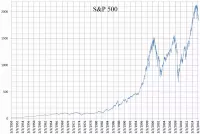
The S P is a stock market index that tracks...
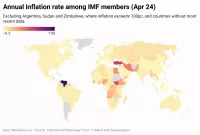
Inflation in economics signifies a rise in the average price...

Money functions as a fundamental social and economic tool serving...

Stocks represent ownership in a corporation divided into shares A...
Trending

3 hours ago Hugh Jackman Celebrates 58th Birthday and Reflects on Iconic Career and Philanthropic Impact

3 hours ago Josh Brolin Discusses Sicario 3 Development Without Taylor Sheridan
3 hours ago Oman Faces Nepal in ICC CWC League 2 Cricket Match
24 days ago Trabzonspor vs Galatasaray Süper Lig Match Preview and Starting XI Details

4 hours ago Alex de Minaur Proposes Significant Rule Changes to Tennis Serve Clock Procedures

17 days ago Sylvester Stallone Opens Up About Personal Struggles and Childhood Trauma in New Memoir
Popular

Ken Paxton is an American politician and lawyer serving as...

Cristiano Ronaldo widely considered one of the greatest footballers captains...

Jameis Winston is an American football quarterback currently playing for...

Michael Joseph Jackson the King of Pop was a highly...

Elon Musk is a visionary entrepreneur and engineer known for...

Ilhan Omar is a prominent American politician currently serving as...