


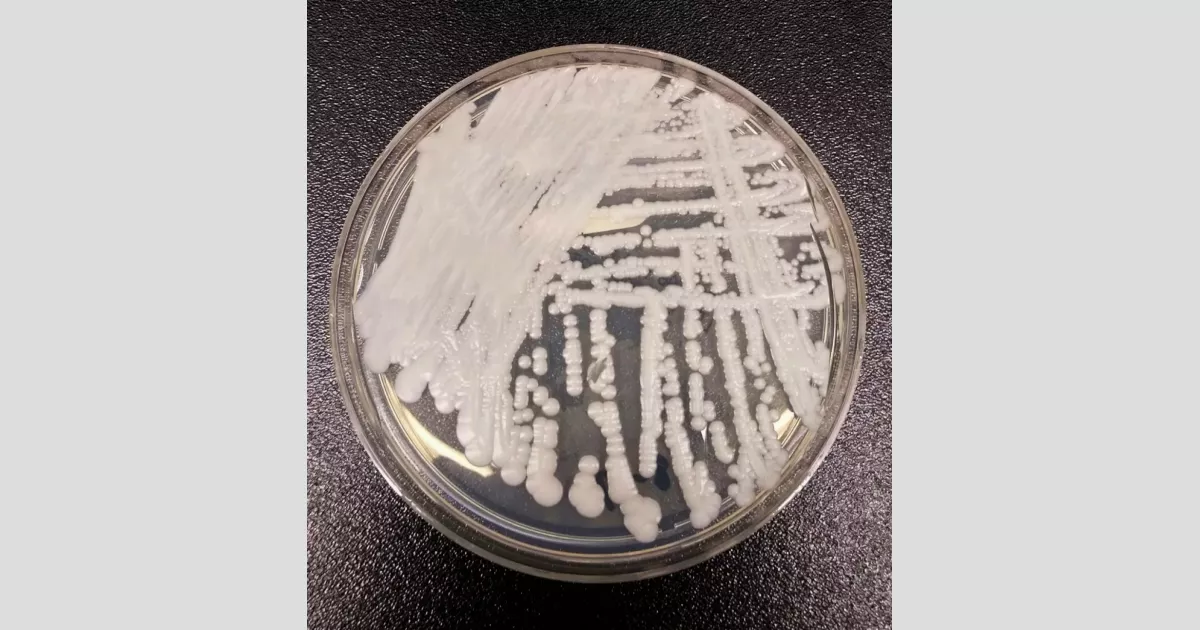
"Candida auris" is a type of yeast that can cause serious infections, particularly in people with weakened immune systems. It's often found in hospitals and is difficult to treat because it's resistant to many antifungal drugs. Making treatment even harder, it's frequently misidentified as other types of Candida.
1996: Early Sample Reveals Presence of C. auris
A sample stored in 1996 unexpectedly revealed the presence of C. auris, pushing back the timeline of its existence and highlighting the importance of accurate identification.


2009: Study on C. auris Isolates Begins in Delhi, India
A study tracking C. auris isolates began in 2009 in Delhi, India.
2009: Initial Identification of Candida auris
Candida auris, a yeast-growing fungus, was first identified in 2009. It is named after the Latin word for ear, "auris."
2009: Isolation and Characterization of Candida auris
In 2009, Candida auris was isolated and characterized as a new strain of the Candida genus. It was found to grow in the presence of the fungicide micafungin.
2009: Isolates from 2009 Study Contribute to Understanding C. auris
Two isolates of Candida auris obtained during a 2009 study played a crucial role in understanding this emerging pathogen, as they were linked to the first reported cases of disease in South Korea in 2011.
2010: Rising Antimicrobial Resistance and its Impact on Global Health
Antimicrobial resistance, a growing global concern, was highlighted in a 2010 report. In the United States alone, two million people contracted resistant infections, leading to a significant number of deaths. C. auris is one of the many contributors to this global health challenge.
2011: Study on C. auris Isolates Concludes in Delhi, India
A study tracking C. auris isolates in Delhi, India, concluded after two years of data collection. The study found 12 isolates from patients at two hospitals.
2011: First Cases of Disease-Causing C. auris in South Korea
In 2011, South Korea reported its first cases of disease-causing C. auris.
2011: Early Research on Mortality Rates of C. auris Bloodstream Infections
Research from 2011 to 2016 indicated that mortality rates for people with C. auris bloodstream infections ranged from 30 to 60%.
2013: Appearance of C. auris in the U.S.
After spreading across Asia and Europe, C. auris first appeared in the U.S. in 2013.
2013: Researchers in India Highlight Prevalence of C. auris
Researchers in India published findings in 2013 indicating that C. auris was more prevalent than reported due to limitations in diagnostic methods. They discovered that the same strain was present in various hospital wards, suggesting potential for widespread transmission.
2015: Genetic Differences and Misidentification of C. auris
In 2015, it was discovered that strains of C. auris from Israel were genetically distinct from those found in Asia, South Africa, and Kuwait. The actual global distribution remains unclear due to misidentification as C. haemulonii by clinical diagnostic methods.
October 2016: First C. auris Outbreak in Europe
The first outbreak of C. auris in Europe was reported in October 2016 at Royal Brompton Hospital in London.
2016: Discovery of Multi-Drug-Resistant C. auris in Southeast Asia
A multi-drug-resistant strain of C. auris was discovered in Southeast Asian countries in early 2016.
2016: Clinical Relevance of C. auris and Publication of a Public Brief
In 2016, the Center for Infectious Disease Research and Policy at the University of Minnesota published a public brief on the clinical relevance of C. auris. Treatment is complicated by the fact that it is easily misidentified as other Candida species.
2016: Conclusion of Research on C. auris Mortality Rates
Research on C. auris bloodstream infections that began in 2011 concluded in 2016, revealing a high mortality rate linked to the infections. Many patients also had other serious illnesses.
April 2017: CDC Director Labels C. auris a "Catastrophic Threat"
In April 2017, CDC director Anne Schuchat labeled C. auris a "catastrophic threat" due to its resistance and spread.
May 2017: CDC Reports 77 Cases of C. auris in the United States
By May 2017, the CDC had reported 77 cases of C. auris in the United States, with a majority concentrated in New York and New Jersey.
April 2019: CDC Documents Global Spread of C. auris
By April 2019, the CDC had documented cases of C. auris in numerous countries across various continents, highlighting the global reach of this emerging fungal threat.
August 2019: CDC Reports 806 Cases of C. auris in the United States
The number of reported C. auris cases in the United States rose to 806 by August 2019, according to the CDC. New York, New Jersey, and Illinois were particularly affected.
2019: Research Tracks Rapid Spread of C. auris Across the U.S.
Research published in the Annals of Internal Medicine revealed the alarming spread of Candida auris across the United States between 2019 and 2021, highlighting its emergence as a significant public health threat.
2021: Emergence of Pan-Resistant C. auris and Widespread Presence in the U.S.
In 2021, the CDC identified strains of Candida auris that were resistant to all existing antifungal medications. Research revealed that the fungus was present in over half of American states by 2021. The COVID-19 pandemic exacerbated the situation.
February 2024: Experiments with NDV-3A Vaccine Show Promise in Mice
As of February 2024, there is no human vaccine for Candida auris. However, experiments with the NDV-3A vaccine have successfully immunized mice against the fungus and improved the effectiveness of antifungal drugs.
Mentioned in this timeline

India officially the Republic of India is a South Asian...

Japan is an East Asian island country located in the...
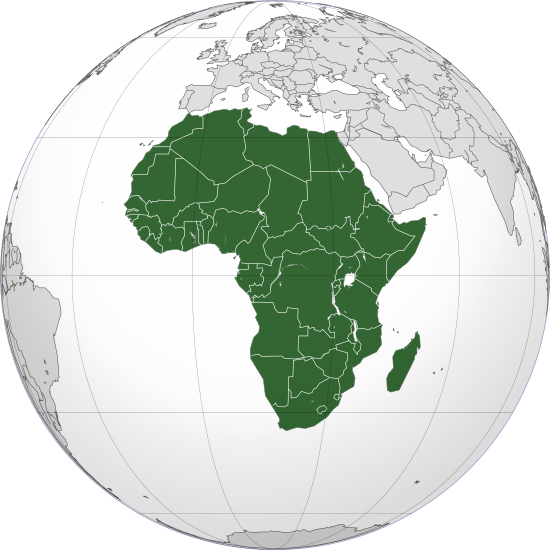
Africa is the second-largest and second-most populous continent home to...
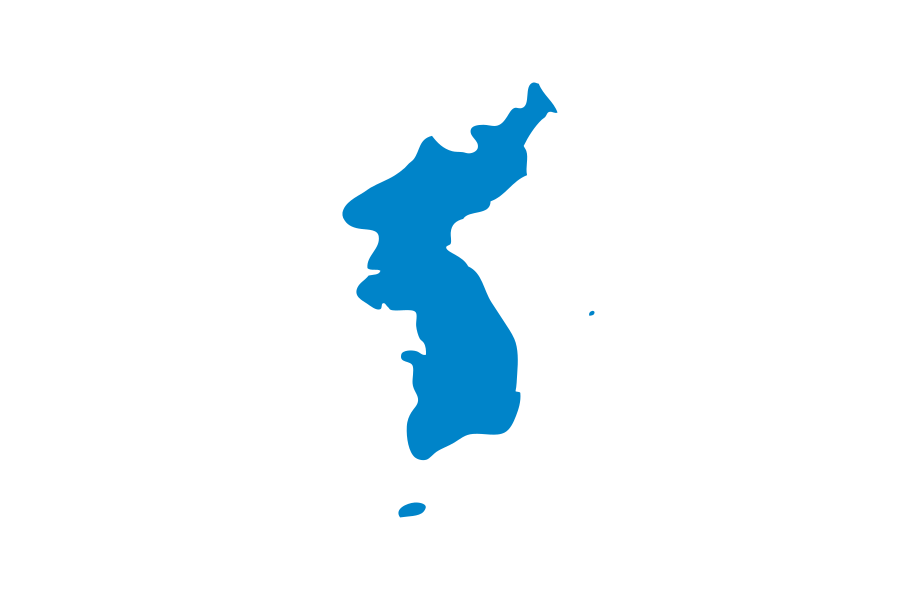
Korea is a peninsular region in East Asia comprised of...

Illinois is a Midwestern state in the United States bordered...

Israel is a Middle Eastern nation located on the eastern...
Trending
3 hours ago Reid Scott's Chase Scene Strategy Revealed on Law & Order

3 hours ago Corey Seager Undergoes Elbow Surgery Following Challenging Season with Texas Rangers

4 hours ago Jake Bauers Delivers Key RBI Double for Brewers Against Dodgers

4 hours ago Deion Sanders Prepares Colorado Buffaloes for Challenging Upcoming Football Game Against Utah Utes

4 hours ago Andre Drummond Makes Impact With Knicks Through Scoring And Communication

4 hours ago Selena Gomez Honors Martin Short's Late Daughter at Rare Impact Fund Gala
Popular

Ilhan Omar is a prominent American politician currently serving as...

Ken Paxton is an American politician and lawyer serving as...

Jameis Winston is an American football quarterback currently playing for...

Elon Musk is a visionary entrepreneur and engineer known for...

Michael Joseph Jackson the King of Pop was a highly...

Cristiano Ronaldo widely considered one of the greatest footballers captains...