


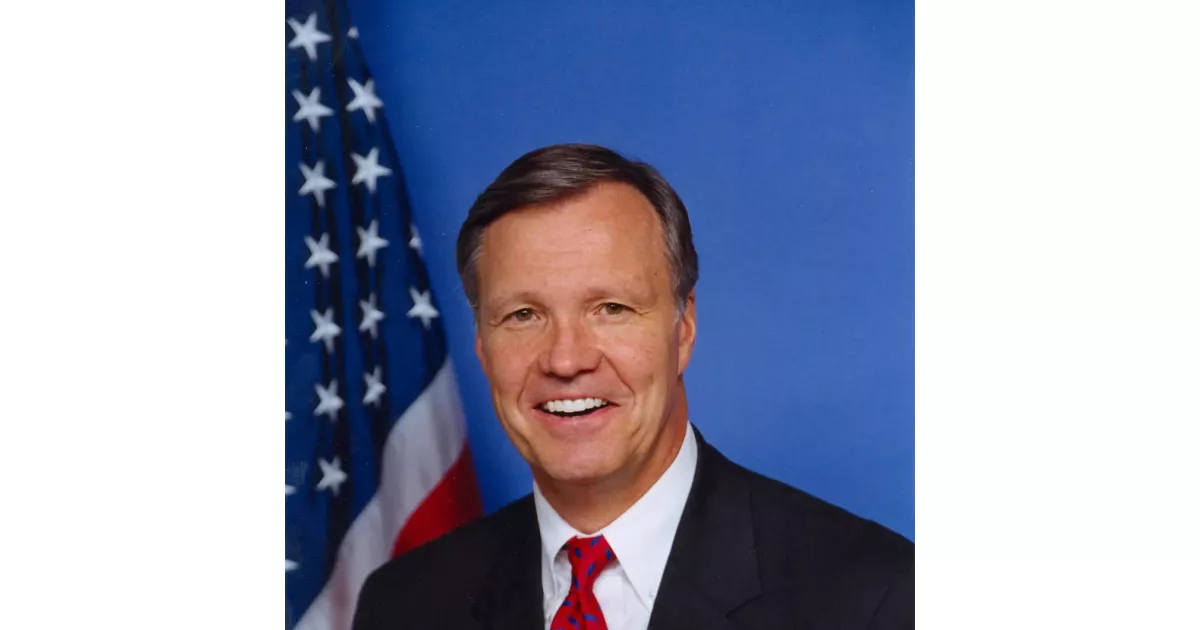
The Cox Report, released in redacted form in 1999, detailed the People's Republic of China's espionage activities targeting the United States during the 1980s and 1990s. Led by Representative Christopher Cox, the report investigated Chinese efforts to acquire sensitive U.S. military and commercial technology. It revealed that China had obtained classified information on nuclear weapon designs, missile technology, and other defense-related technologies through espionage, compromising U.S. national security. The report spurred debate and concern about U.S.-China relations, technology transfer policies, and security protocols, leading to increased scrutiny of China's activities within the U.S.
1947: Gas-boosted primary concept
In 1947, Edward Teller proposed the idea of a gas-boosted primary which later Chinese scientists mastered.


1977: Start of China's Neutron Bomb Program
In response to the allegations contained in the Cox report that it had stolen information on an American neutron bomb, China revealed that it had already fully developed neutron bomb technology in the 1980s, having started its neutron bomb program in 1977.
1978: Yu Min determines the technical approach to neutron design
By 1978, Yu Min had determined the technical approach to neutron design, predating what the Cox Report regarded as key evidence.
1984: Start of Alleged W-88 Information Theft
According to the Cox Report, the alleged theft of information related to the W-88 warhead occurred between 1984 and 1992.
1992: End of Alleged W-88 Information Theft
According to the Cox Report, the alleged theft of information related to the W-88 warhead occurred between 1984 and 1992.
1995: Theft of Information Allegations
The Cox Report alleged that the theft of information pertaining to the W-62, W-76, W-78, and W-87 warheads occurred before 1995.
1996: China's influence in US elections
In 1996, China allegedly interfered in the US elections.
June 18, 1998: Creation of the Select Committee
On June 18, 1998, the U.S. House of Representatives voted 409-10 to create the Select Committee on U.S. National Security and Military/Commercial Concerns with the People's Republic of China. The committee was tasked with investigating the transfer of technology or information to China that could enhance its nuclear-armed intercontinental ballistic missiles or weapons of mass destruction.
April 1999: Jeremiah Report Backs Cox Report
In April 1999, Admiral David E. Jeremiah released a report backing the main allegation of the Cox Report, stating that stolen information was used to develop or modernize Chinese missiles and/or warheads.
April 1999: Release of Damage Assessment Report
In April 1999, the United States released an unclassified version of the intelligence bodies' Damage Assessment Report, ordered by President Bill Clinton in anticipation of the Cox Report. The Damage Assessment Report was more cautious in its allegations regarding Chinese nuclear espionage than the Cox Report.
May 25, 1999: Public Release of Redacted Cox Report
On May 25, 1999, the redacted version of the Cox Report, which details alleged Chinese espionage operations within the United States during the 1980s and 1990s, was released to the public.
2003: Hughes Fined for Export Control Violations
In 2003, Hughes Electronics Corp. paid a $32 million fine for violations of U.S. export control law, as a result of being named in the Cox Report.
2025: Academic Analysis on Walk-in Intentions
In 2025, academic Hui Zhang wrote that the intentions of a Chinese walk-in who provided classified PRC documents related to the W-88 warhead to the American Institute in Taiwan had never been explained.
Mentioned in this timeline
Bill Clinton served as the nd U S President from...
The United States of America is a federal republic primarily...

China officially the People's Republic of China PRC is located...

Taiwan officially the Republic of China ROC is an East...

A house is a single-unit residential building ranging from simple...
The letter S or s is the th letter in...
Trending

4 hours ago Vivek Ramaswamy's Nuclear Startup Atlas Atomics Reaches $1.9 Billion Valuation

4 hours ago José Mourinho Defends Kylian Mbappé Against Ridiculous Criticism at Real Madrid
4 hours ago Oregon QB Dante Moore Ruled Out Against UCLA; Dylan Raiola Named Starter

4 hours ago Robert Lewandowski's Team Secures Remarkable Comeback Win in Major League Soccer
4 hours ago Jimmy Kimmel Live Announces Star-Studded Guest Lineup for October 12-16

5 hours ago Marshall Manning Receives Multiple College Football Scholarship Offers
Popular

Ken Paxton is an American politician and lawyer serving as...

Cristiano Ronaldo widely considered one of the greatest footballers captains...

Michael Joseph Jackson the King of Pop was a highly...

Elon Musk is a visionary entrepreneur and engineer known for...

Shakira Isabel Mebarak Ripoll the Queen of Latin Music is...

Bernie Sanders is a prominent American politician and the senior...