


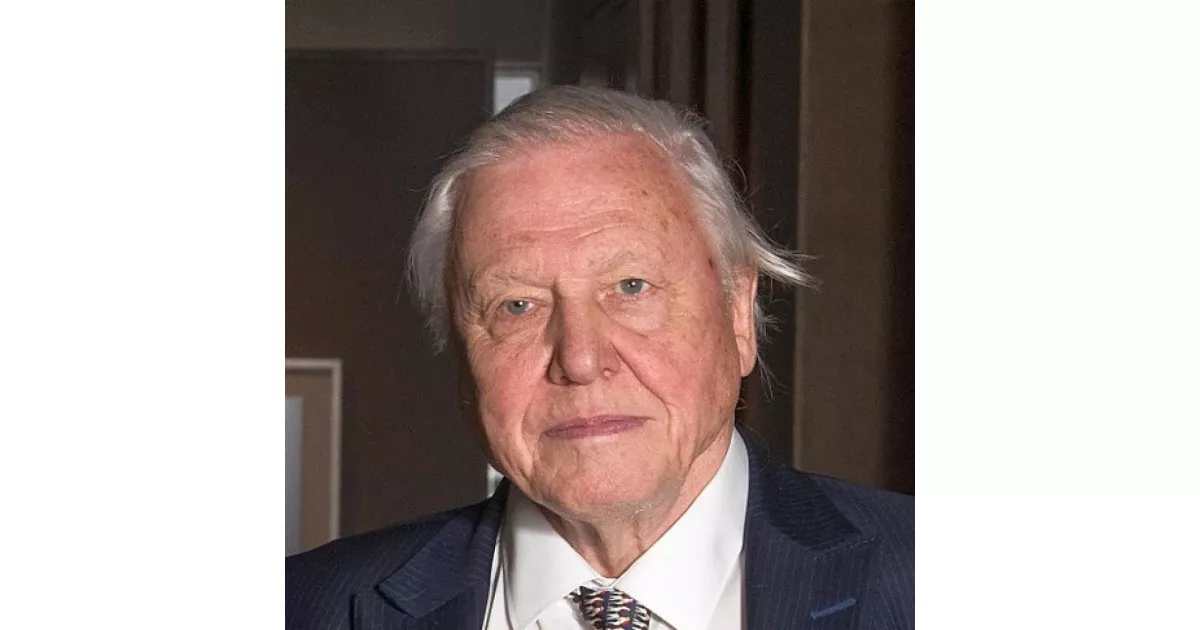
Sir David Attenborough is a highly acclaimed English broadcaster, natural historian, and writer, renowned for his extensive career in wildlife documentary filmmaking. Beginning with Zoo Quest in 1954, he created influential documentary series like The Life Collection, Planet Earth, and The Blue Planet, significantly impacting public understanding of the natural world. Attenborough's work is recognized with numerous awards, including multiple BAFTA and Emmy Awards. He is also known for his environmental activism, advocating for conservation and raising awareness about the impacts of climate change on Earth's biodiversity.
May 1926: David Attenborough born
In May 1926, David Frederick Attenborough was born.


1936: Attenborough attends Grey Owl lecture
In 1936, David Attenborough and his brother Richard attended a lecture by Grey Owl (Archibald Belaney) at De Montfort Hall in Leicester. They were influenced by his advocacy of conservation.
1945: Attenborough wins scholarship to Clare College
In 1945, Attenborough won a scholarship to Clare College, Cambridge, to study geology and zoology.
1947: Attenborough called up for national service
In 1947, Attenborough was called up for national service in the Royal Navy and spent two years stationed in North Wales and the Firth of Forth.
1950: Attenborough applies for a job with the BBC
In 1950, Attenborough applied for a job as a radio talk producer with the BBC, though he was initially rejected. His CV later attracted the attention of Mary Adams, who offered him a training course at the BBC's television service.
1952: Attenborough joins the BBC full-time
In 1952, Attenborough joined the BBC full-time as a producer for the Talks department, working on shows like "Animal, Vegetable, Mineral?" and "Song Hunter".
1954: Attenborough presents Zoo Quest
In 1954, Attenborough became the presenter of Zoo Quest at short notice.
1954: Host of Zoo Quest
In 1954, David Attenborough's presenting career began as host of Zoo Quest.
1957: First filmed at Great Barrier Reef
In 1957, David Attenborough first filmed at the location of the Great Barrier Reef, which he returned to in 2015 for a new series.
1964: BBC Two launched
In 1964, BBC Two was launched and struggled to capture the public's imagination. When Attenborough arrived as controller, he shook up the schedule and introduced diverse programming including "Man Alive", "Call My Bluff", "Chronicle", "The Old Grey Whistle Test", "Monty Python's Flying Circus" and "The Money Programme".
March 1965: Attenborough becomes Controller of BBC Two
In March 1965, Attenborough became Controller of BBC Two, succeeding Michael Peacock. His contract included a clause allowing him to continue making occasional programmes.
1969: Attenborough films elephants in Tanzania
In 1969, Attenborough filmed elephants in Tanzania and made a three-part series on the cultural history of Bali.
1969: Attenborough promoted to director of programmes
In 1969, Attenborough was promoted to director of programmes, making him responsible for the output of both BBC channels.
1969: Civilisation Broadcast
In 1969, Civilisation, presented by Sir Kenneth Clark, was broadcast to universal acclaim.
1969: Created The World About Us
In 1969, David Attenborough created "The World About Us", a forerunner to "Natural World", as a vehicle for colour television.
1971: Attenborough films A Blank on the Map
In 1971, Attenborough filmed 'A Blank on the Map', where he joined the first Western expedition to a remote highland valley in New Guinea.
1972: Attenborough considers Director-General position
In 1972, when Attenborough's name was suggested as a candidate for Director-General of the BBC, he confessed he had no appetite for the job.
1973: Attenborough films Eastwards with Attenborough
In 1973, Attenborough worked on his next project, a trip to Indonesia with a crew from the Natural History Unit, which resulted in the series Eastwards with Attenborough.
1975: Attenborough presents The Tribal Eye
In 1975, Attenborough presented a series on tribal art called "The Tribal Eye" and another on the voyages of discovery called "The Explorers". He also presented a children's series about cryptozoology entitled "Fabulous Animals".
1975: First appearance on Face the Music
In 1975, David Attenborough first appeared on "Face the Music". He was in 14 episodes until 1983.
1977: Narrated Wildlife on One
In 1977, David Attenborough started narrating every episode of "Wildlife on One", a BBC One wildlife series that ran for 253 episodes until 2005.
1979: Life on Earth released
Beginning in 1979 with the release of Life on Earth, Attenborough established a high standard for wildlife film-making, influencing many documentary filmmakers.
1979: Attenborough reports on the Chinese one-child policy
In 1979, Attenborough visited the People's Republic of China and reported to the West for the first time about the Chinese one-child policy.
1983: Final appearance on Face the Music
In 1983, David Attenborough made his final appearance on "Face the Music". He was in 14 episodes from 1975 to 1983.
1987: The First Eden series
In 1987, David Attenborough wrote and presented "The First Eden", a series on man's influence on the natural history of the Mediterranean Basin.
1987: "Meerkats United" episode
In 1987, the "Meerkats United" episode of Wildlife on One was aired and later voted as the best wildlife documentary of all time by BBC viewers.
1990: Prisoners of Conscience series
In 1990, David Attenborough worked on the BBC's "Prisoners of Conscience" series and highlighted the case of Sudanese poet Mahjoub Sharif.
1990: The Trials of Life released
In 1990, The Trials of Life was released.
1993: Attenborough presents Life in the Freezer
In 1993, Attenborough presented "Life in the Freezer", the first television series to survey the natural history of Antarctica.
1995: Attenborough presents The Private Life of Plants
In 1995, Attenborough presented "The Private Life of Plants", showcasing plants as dynamic organisms through time-lapse photography.
1997: Narrated BBC Wildlife Specials
In 1997, David Attenborough narrated the BBC Wildlife Specials, which focused on charismatic species and were screened to mark the Natural History Unit's 40th anniversary.
1998: The Life of Birds released
In 1998, Attenborough created "The Life of Birds" on the theme of behaviour, which won a second Peabody Award the following year.
1999: Richard Attenborough directs Grey Owl
In 1999, Richard Attenborough directed a biographical film of Belaney entitled "Grey Owl".
2000: State of the Planet Documentary
In 2000, David Attenborough released "State of the Planet", a documentary assessing the impact of human activities on the natural world.
2001: Narrated The Blue Planet
In 2001, David Attenborough narrated "The Blue Planet", the Natural History Unit's first comprehensive series on marine life, after Alastair Fothergill decided not to use an on-screen presenter.
2002: The Life of Mammals released
In 2002, Attenborough released "The Life of Mammals", which used low-light and infrared cameras to reveal the behavior of nocturnal mammals.
2002: Life on Air
In 2002, David Attenborough's autobiography, Life on Air, was published.

2003: Launched World Land Trust appeal
In 2003, David Attenborough launched an appeal on behalf of the World Land Trust to create a rainforest reserve in Ecuador in memory of Christopher Parsons.
2005: BirdLife International project
In 2005, David Attenborough backed a BirdLife International project to stop the killing of albatross by longline fishing boats.
2005: Last Narrated Wildlife on One
In 2005, David Attenborough narrated the final episode of "Wildlife on One", a BBC One wildlife series that ran for 253 episodes between 1977 and 2005.
2005: Life in the Undergrowth released
In 2005, Life in the Undergrowth introduced audiences to the world of invertebrates using advances in macro photography.
2006: The Truth about Climate Change Documentary
In 2006, David Attenborough released "The Truth about Climate Change", focusing on the issues of global warming.
2006: WWF campaign
In 2006, David Attenborough supported WWF's campaign to have 220,000 square kilometres of Borneo's rainforest designated a protected area.
2008: Life in Cold Blood broadcast
In 2008, David Attenborough released "Life in Cold Blood", completing his collection of programmes on major groups of terrestrial animals and plants, and compiling them in a DVD encyclopaedia called "Life on Land".
January 2009: David Attenborough's Life Stories broadcast
In January 2009, the BBC commissioned David Attenborough to provide a series of 20 ten-minute monologues covering the history of nature. Entitled "David Attenborough's Life Stories", they were broadcast on Radio 4 on Friday nights.
2009: How Many People Can Live on Planet Earth?
In 2009, David Attenborough released "How Many People Can Live on Planet Earth?", focusing on the issues of human population growth.
2009: Life on Air revised
In 2009, David Attenborough's autobiography, Life on Air, was revised.
2010: First Life included in the Life series
In 2010, David Attenborough asserted that his "First Life" documentary, which deals with evolutionary history before Life on Earth, should be included within the "Life" series, thereby completing the set.
2010: Flying Monsters
In 2010, David Attenborough became a pioneer in the 3D documentary format with Flying Monsters.
2010: Sky 3D documentaries
In 2010, David Attenborough partnered with Sky to work on documentaries for their new 3D network, starting with "Flying Monsters 3D" which debuted on Christmas Day.
2011: Appeared in Frozen Planet
In 2011, David Attenborough played a prominent role in "Frozen Planet", appearing on screen, authoring the final episode, and performing voiceover duties.
September 2014: BBC Radio 4's Tweet of the Day
In September 2014, David Attenborough continued as one of the presenters of BBC Radio 4's "Tweet of the Day", which began a second series.
October 2014: Announced new documentaries
In October 2014, the BBC announced a trio of new one-off David Attenborough documentaries, including "Attenborough's Paradise Birds", "Attenborough's Big Birds", and "Waking Giants".
2014: BAFTA Awards for programmes
In 2014, David Attenborough became the only person to have won BAFTA Awards for programmes in black and white, colour, high-definition and 3D.
2015: David Attenborough's Natural Curiosities series 3
In 2015, David Attenborough narrated the third series of "David Attenborough's Natural Curiosities" for the UKTV channel Watch.
2015: Great Barrier Reef Series
In 2015, the three-part series Great Barrier Reef fronted by David Attenborough was aired, marking the 10th project for Attenborough and Atlantic Productions.
2016: Narrated and presented Planet Earth II
In 2016, David Attenborough returned as narrator and presenter for "Planet Earth II", with the main theme music composed by Hans Zimmer.
2017: Blue Planet II broadcast
In 2017, "Blue Planet II" was broadcast, with David Attenborough returning as presenter. The series gained the highest UK viewing figure for 2017 of 14.1 million and is thought to have triggered a long-lasting increase in public, media, and political attention to plastic pollution.
2018: Dynasties series broadcast
In 2018, David Attenborough narrated the five-part series "Dynasties", with each episode focusing on one species in particular.
2018: Promotion of Dynasties
In 2018, while promoting Dynasties, David Attenborough said that repeated messages on threats to wildlife in programming could be a turn-off to viewers.
2019: Extinction: The Facts
In 2019, "Extinction: The Facts" received praise for its increased urgency of environmental messaging.
2019: Our Planet documentary on Netflix
In 2019, David Attenborough narrated "Our Planet", an eight-part documentary series for Netflix, which emphasized the destructive role of human activities.
October 2020: David Attenborough: A Life on Our Planet
In October 2020, David Attenborough's documentary film "David Attenborough: A Life on Our Planet" was released on Netflix. The film acts as Attenborough's witness statement, reflecting on his career and hopes for the future. Also in October 2020, filming began in Cambridge for "The Green Planet".
2020: ZSL conservation efforts
During the COVID-19 pandemic, David Attenborough advocated on behalf of the Zoological Society of London (ZSL) and its conservation efforts. In 2020 he was named as a member of the Earthshot Prize Council.
2020: A Life on Our Planet
In 2020, "A Life on Our Planet" received praise for its increased urgency of environmental messaging.
2020: Global moratorium on deep sea mining
In 2020, David Attenborough backed a Fauna and Flora International campaign calling for a global moratorium on deep sea mining for its impact on marine life.
June 2021: Breaking Boundaries: The Science of Our Planet
In June 2021, David Attenborough's documentary "Breaking Boundaries: The Science of Our Planet" was released on Netflix.
2021: Attenborough's Life in Colour and The Mating Game
In 2021, David Attenborough presented the three-part series "Attenborough's Life in Colour", and "The Mating Game", a five-part series.
2021: Speech at COP26 opening ceremony
In 2021, David Attenborough was a key figure in the build-up to the United Nations Climate Change Conference (COP26) and gave a speech at the opening ceremony, expressing optimism for the future.
May 2022: Prehistoric Planet aired
In May 2022, David Attenborough's "Prehistoric Planet" was aired.
2022: Champion of the Earth
In 2022, David Attenborough was recognized by the United Nations Environment Programme as a Champion of the Earth for his dedication to research, documentation, and advocacy for the protection of nature and its restoration.
2025: Ocean With David Attenborough
In 2025, David Attenborough released "Ocean With David Attenborough" in cinema.
Mentioned in this timeline
Elizabeth II reigned as Queen of the United Kingdom and...
The lion Panthera leo is a large cat species native...

India officially the Republic of India is a South Asian...

The Guardian is a British daily newspaper founded in as...
Brian May is an English musician songwriter record producer animal...

Christmas is an annual festival celebrated on December th commemorating...
Trending
4 hours ago Lil Kev Season 2 Starring Kevin Hart and Wanda Sykes Coming to Paramount+

20 hours ago Waymo Announces Plans to Launch First Canadian Robotaxi Service in Toronto by 2028

4 hours ago Grady Jarrett Shows Promising Form Returning To Atlanta With Chicago Bears
4 hours ago Cris Collinsworth Analyzes Bengals Struggles and Sparks Controversy with SNF Comments

4 hours ago Dallas Cowboys Consider Strategic Role Changes for Caleb Downs Ahead of Packers Matchup

4 hours ago KaVontae Turpin Suffers Injury During Dallas Cowboys Game Against The Green Bay Packers
Popular

Ilhan Omar is a prominent American politician currently serving as...

Ken Paxton is an American politician and lawyer serving as...

Elon Musk is a visionary entrepreneur and engineer known for...

Michael Joseph Jackson the King of Pop was a highly...

Cristiano Ronaldo widely considered one of the greatest footballers captains...

Greta Thunberg is a Swedish climate activist who gained international...