


Parma is a city located in the Emilia-Romagna region of Northern Italy. With a population of over 200,000, it's the second-largest city in the region after Bologna. Parma is notable for its rich culture, including its architecture, music, and art. It is also renowned for its culinary contributions, specifically prosciutto and cheese. Furthermore, Parma houses the University of Parma, one of the world's oldest universities. The city is geographically divided by the Parma stream, with the western district known as Oltretorrente. The city's name is derived from the Etruscan era and was later used by the Romans to name a type of round shield.
June 1908: General Strike
From 1 May to 6 June 1908, a notable General Strike was declared in Parma.


August 1922: Resistance Against Fascism
In August 1922, regime officer Italo Balbo attempted to enter the popular quarter of Oltretorrente. The citizens organized into the Arditi del Popolo and pushed back the squadristi, marking the first example of Resistance in Italy.
1926: End of duché grand-fief de l'Empire
In 1926, the title of duché grand-fief de l'Empire, created for Charles-François Lebrun during the Napoleonic era, was extinguished.
1943: Italian Social Republic
In 1943, Parma was part of the Italian Social Republic.
1944: Allied Bombing
In the spring of 1944, Parma's train station and marshalling yards were targeted by Allied bombing, causing damage to the Palazzo della Pilotta, Teatro Farnese, and Biblioteca Palatina, resulting in the loss of 21,000 volumes from the library's collection.
April 1945: Liberation of Parma
On 26 April 1945, Parma was liberated from German occupation by the partisan resistance and the Brazilian Expeditionary Force.
1945: End of Italian Social Republic
In 1945, the Italian Social Republic ended.
1946: Italian Republic
In 1946, Parma became part of the Italian Republic.
1953: Trolleybus System in Operation
Since 1953, the Parma trolleybus system has been in operation, replacing an earlier tramway network.
1998: Election of Elvio Ubaldi
In 1998, Elvio Ubaldi, a centre-right candidate, was elected as mayor of Parma.
2002: Re-election of Elvio Ubaldi
In 2002, Elvio Ubaldi was re-elected as mayor of Parma.
2007: Election of Pietro Vignali
In 2007, Pietro Vignali, a centre-right candidate, was elected as mayor of Parma.
2011: Fiscal Mismanagement
In 2011, Pietro Vignali left office with Parma's debts amounting to over 600 million euros.
2012: Election of Federico Pizzarotti
In 2012, Federico Pizzarotti was elected as mayor of Parma, becoming the first mayor of a provincial capital from the Five Star Movement.
2015: Parma Calcio 1913 founded
In 2015, Parma Calcio 1913 was founded after Parma F.C. went bankrupt.
January 2016: Population Demographics
As of 1 January 2016, 84.09% of Parma's population was Italian, with the largest foreign group coming from other parts of Europe (6.45%).
2021: Foreign-Born Residents Increase
Between 2011 and 2021, foreign-born residents in Parma experienced +385.02% growth.
2025: Parma Population Statistics
As of 2025, Parma has a population of 198,986, with 48.7% male and 51.3% female. Minors constitute 15.2% of the population, while pensioners account for 22.6%.
Mentioned in this timeline
A star is a self-gravitating luminous plasma spheroid exemplified by...
Fascism is a far-right authoritarian ultranationalist ideology prominent in early...
Italy officially the Italian Republic is a country in Southern...
Trains are a connected series of vehicles traveling on railway...
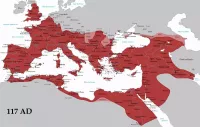
An empire is a political structure consisting of a dominant...
UNESCO is a specialized agency of the United Nations UN...
Trending
3 hours ago Erin Andrews Pulled Over by Airport Security Following Rams and Eagles Game
4 hours ago Oregon Quarterback Dylan Raiola Benched Following Performance Struggles Against UCLA
5 hours ago Ryan Day Supports Son RJ Day at High School Senior Night
6 hours ago Vivek Ramaswamy's Nuclear Startup Atlas Atomics Reaches $1.9 Billion Valuation
6 hours ago José Mourinho Defends Kylian Mbappé Against Ridiculous Criticism at Real Madrid
6 hours ago Oregon QB Dante Moore Ruled Out Against UCLA; Dylan Raiola Named Starter
Popular

Ken Paxton is an American politician and lawyer serving as...
Cristiano Ronaldo widely considered one of the greatest footballers captains...

Michael Joseph Jackson the King of Pop was a highly...
Elon Musk is a visionary entrepreneur and engineer known for...
Shakira Isabel Mebarak Ripoll the Queen of Latin Music is...
Bernie Sanders is a prominent American politician and the senior...