


Diarrhea is characterized by the passage of three or more loose or liquid stools per day. It is a common symptom usually resulting from viral, bacterial, or parasitic infections caused by contaminated food or water. Other potential triggers include digestive disorders, food intolerances, or adverse reactions to medications. The primary health risk associated with diarrhea is dehydration, which occurs due to the rapid loss of water and essential electrolytes. Management focuses on preventing dehydration through oral rehydration therapy, which involves replenishing lost fluids and salts. While most cases are acute and resolve within a few days, persistent diarrhea can indicate underlying chronic conditions requiring medical investigation. Maintaining proper hygiene, consuming safe drinking water, and practicing effective sanitation are the most critical preventive measures against infectious causes of the condition.
1973: Study on the Efficacy of Lomotil in Shigella Treatment
In 1973, research was published demonstrating that patients treated for Shigella with the anti-diarrhea medication Co-phenotrope, also known as Lomotil, experienced fever symptoms for twice as long as untreated patients, suggesting that diarrhea could serve as an evolved defense mechanism.


1980: Historical Gastroenteritis Mortality Rate
In 1980, the global death rate attributed to gastroenteritis was 4.5 million, marking a significant figure compared to subsequent data.
1985: Rotavirus and Cholera Vaccine Trials
In 1985, clinical trials for a Rotavirus vaccine demonstrated a 2-3% decrease in total diarrheal disease incidence and a 6-10% reduction in mortality among children in developing nations, while Cholera vaccine tests showed significant morbidity and mortality reduction but limited overall impact on global diarrheal disease rates.
1990: Global Diarrhea Mortality Estimate 1990
In 1990, the total number of deaths worldwide attributed to diarrhea was estimated to be 2.9 million, serving as a baseline for the later decline observed in 2019.
2000: Diarrheal disease as a leading cause of death
In the year 2000, diarrheal diseases were identified as the sixth leading cause of mortality globally.
2004: Global Diarrhea Morbidity and Mortality Report
In 2004, there were approximately 2.5 billion global cases of diarrhea, leading to 1.5 million deaths in children under five, with the highest concentrations occurring in Africa and South Asia.
2011: Global Impact of Infectious Diarrhea in Children
In 2011, infectious diarrhea was responsible for approximately 0.7 million deaths in children under the age of five and caused the loss of 250 million school days globally.
2012: Childhood Mortality Statistics 2012
During 2012, diarrhea was identified as the second leading cause of death for children under the age of five, accounting for 0.76 million deaths, or roughly 11% of all deaths in that age group.
2019: 2019 Clinical Guideline Recommendations for Diarrhea Testing
In 2019, new medical guidelines were established suggesting that testing for ova and parasites should be limited to high-risk individuals, while maintaining a recommendation for routine Giardia testing. Additionally, the 2019 guidelines advised against using Erythrocyte sedimentation rate (ESR) and C-reactive protein (CRP) as standard diagnostic tests for diarrhea.
2019: Global Diarrhea Mortality Estimate 2019
In 2019, the total number of deaths worldwide attributed to diarrhea was estimated to be approximately 1.53 million.
2020: Cochrane Review Findings on Probiotics for Diarrhea
In 2020, a Cochrane Review was published concluding that probiotics offer little to no benefit for individuals suffering from diarrhea lasting at least two days, noting a lack of evidence regarding their ability to shorten the duration of the condition.
2021: Reduction in diarrheal disease mortality
By the year 2021, the World Health Organization reported a 45% decrease in deaths caused by diarrheal diseases, moving it to the thirteenth leading cause of death.
Mentioned in this timeline
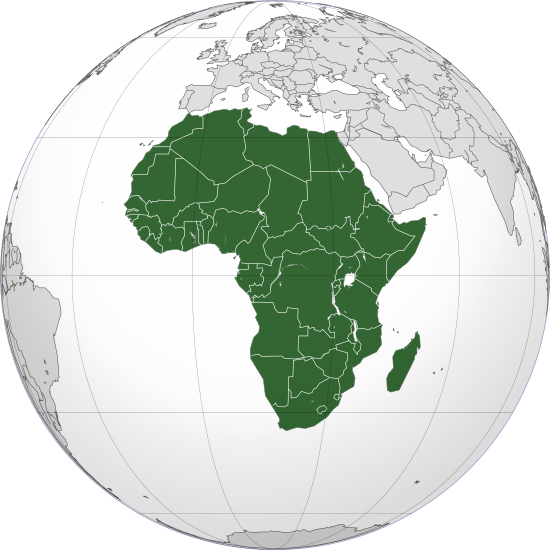
Africa is the second-largest and second-most populous continent home to...

The World Health Organization WHO is a specialized agency of...

A school is an educational institution that provides learning environments...

A vaccine is a biological preparation that provides active acquired...
Twice is a highly successful South Korean girl group formed...
Trending
4 hours ago Atlanta Hawks Dominate Charlotte Hornets in Record-Breaking 128-81 Season Opener Victory

5 hours ago Paul Bettany and Owen Wilson to Guest Star on Jimmy Kimmel Live

5 hours ago Robert Griffin III Attends UCF Event Amidst Ongoing NFL Injury Updates
5 hours ago Military Boards Quietly Defy Hegseth's Ban on Transgender Troops

1 year ago Aljamain Sterling questions Sean O'Malley's stardom, personality deemed 'a little dry'.
7 hours ago Scott Frost Seeks Five Million Dollars in Legal Dispute Over Nebraska Contract Termination
Popular

Ilhan Omar is a prominent American politician currently serving as...

Ken Paxton is an American politician and lawyer serving as...

Elon Musk is a visionary entrepreneur and engineer known for...

Michael Joseph Jackson the King of Pop was a highly...

Elizabeth Holmes is an American entrepreneur and the founder of...

Barack Obama the th U S President - was the...