


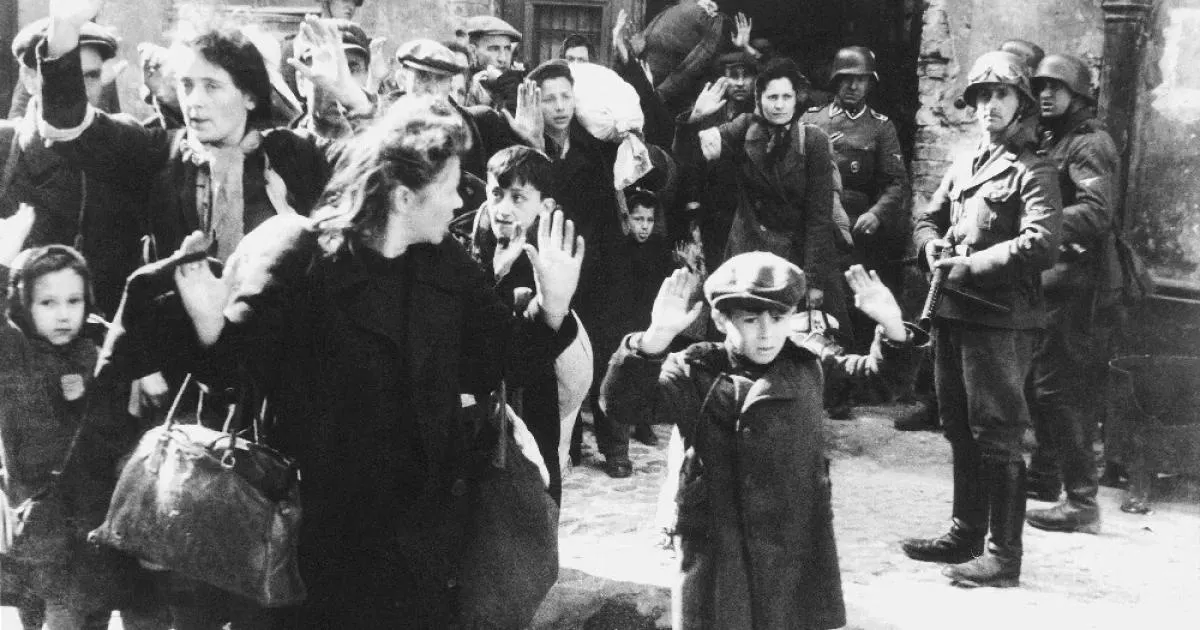
Genocide is the intentional destruction, in whole or in part, of a human group. While often associated with mass killings, the legal and scholarly definition extends beyond lethal acts to include actions targeting the group's existence, such as preventing births, forcibly transferring children, and cultural destruction. The focus is on the targeting of the group itself, aiming to eliminate its identity or future.
1941: Raphael Lemkin coins the term genocide
In 1941, Polish-Jewish lawyer Raphael Lemkin began coining the term 'genocide', combining the Greek word 'genos' ('race, people') with the Latin suffix '-caedo' ('act of killing').


1942: Lemkin Submits 'Axis Rule in Occupied Europe'
In early 1942, Raphael Lemkin submitted the manuscript for his book 'Axis Rule in Occupied Europe'.
1943: Raphael Lemkin coins the term genocide
Between 1941 and 1943, Polish-Jewish lawyer Raphael Lemkin coined the term 'genocide', combining the Greek word 'genos' ('race, people') with the Latin suffix '-caedo' ('act of killing').
1944: 'Axis Rule in Occupied Europe' Published
In 1944, Raphael Lemkin's book 'Axis Rule in Occupied Europe' was published as the Holocaust was coming to light outside Europe.
1946: Lemkin brings criminalize genocide proposal to the UN
In 1946, Lemkin brought his proposal to criminalize genocide to the newly established United Nations.
1946: Term 'genocide' mentioned in verdict.
In 1946, the Polish court that convicted SS official Arthur Greiser was the first to mention the term 'genocide' in a verdict, using Lemkin's original definition.
December 1948: UN Adopts the Genocide Convention
On December 9, 1948, the United Nations General Assembly adopted the Genocide Convention.
January 1951: Genocide Convention Comes Into Effect
On January 12, 1951, the Genocide Convention came into effect after 20 countries ratified it without reservations.
1951: The Genocide Convention does not allow retroactive prosecution
The Genocide Convention does not allow the retroactive prosecution of events that took place before 1951.
2000: Responsibility to protect doctrine emerges
Around 2000, the responsibility to protect doctrine emerged in the aftermath of several genocides around the world.
2002: The International Criminal Court was established.
In 2002, the International Criminal Court (ICC) was established.
2018: Khieu Samphan convicted of genocide
In 2018, Khieu Samphan became the first former head of state to be convicted of genocide for the Cambodian genocide.
Mentioned in this timeline

Books are a means of storing information as text or...
The letter S or s is the th letter in...
The United Nations UN is an intergovernmental organization founded in...
Trending

3 hours ago Taco Bell Launches $4 Celebrity Meals Featuring Paris Hilton

3 hours ago Cooper Pratt Shines During Milwaukee Brewers MLB Postseason Run

3 hours ago Corey Seager Faces Offseason Trade Speculation Amidst Rangers Roster Planning

3 hours ago Mary Peltola Raises $17 Million for Competitive Alaska Senate Campaign
3 hours ago Joe Davis Faces Fan Backlash Over Bias Accusations and Commentary During NLCS Broadcast
4 hours ago Trevor Megill Secures Crucial Scoreless Save for Milwaukee Brewers in NLCS Game 1
Popular

Ilhan Omar is a prominent American politician currently serving as...

Ken Paxton is an American politician and lawyer serving as...

Jameis Winston is an American football quarterback currently playing for...

Elon Musk is a visionary entrepreneur and engineer known for...

Michael Joseph Jackson the King of Pop was a highly...

Kimberly Guilfoyle is an American television personality and former prosecutor...