History of Georgia–Israel relations in Timeline


Georgia and Israel established diplomatic relations on June 1, 1992. Georgia maintains an embassy in Tel Aviv and a consulate in Jerusalem, while Israel has an embassy in Tbilisi. These relations encompass diplomatic, commercial, and cultural ties, signifying cooperation and engagement between the two nations.
1922: Georgian Speakers in Mandatory Palestine
In 1922, the census of Palestine recorded 4 Georgian speakers in Mandatory Palestine, specifically in the Jerusalem-Jaffa area. However, municipal areas listed 6 Georgian speakers, 4 in Jerusalem and 2 in Hebron, the reason for this discrepancy is unknown.


1979: Iranian Revolution Anniversary
On February 11, 2026, the Tbilisi TV Tower was illuminated with the colors of the Iranian flag to mark the anniversary of the 1979 Islamic Revolution, and a reception dedicated to the national day of the Islamic Republic of Iran was held at the Paragraph Hotel in Tbilisi, owned by Georgian oligarch Bidzina Ivanishvili.
June 1, 1992: Establishment of Diplomatic Relations
On June 1, 1992, Georgia and Israel formally established diplomatic relations, marking a significant step in their bilateral relationship. This occurred alongside the establishment of diplomatic relations with the United States.
1996: Establishment of Israel-Georgia Chamber of Commerce
In 1996, the Israel-Georgia Chamber of Commerce, a non-governmental organization, was established. It aimed to bolster bilateral commercial, tourism, and cultural relations between the two countries.
February 2008: Ban on Weapons Sales to Georgia
In February 2008, the Israeli government banned the sale of weapons and offensive equipment to Georgia, including a sale of Merkava tanks, fearing retaliation from Russia. This ban was implemented due to concerns that military sales would anger Russia and prompt it to supply advanced systems to its allies, such as Iran and Syria.
August 2008: Israeli Support for Georgia During Russo-Georgian War
During August 2008, amidst the Russo-Georgian war, the Israeli Ministry of Foreign Affairs affirmed Israel's recognition of Georgia's territorial integrity, advocating for a peaceful resolution. On August 15, 2008, Israelis in Tel Aviv demonstrated their solidarity with Georgia, forming a human chain to urge increased governmental support.
August 2008: Reported Halt of Arms Sales
On 5 August 2008, it was reported that Israel planned to halt all arms sales to Georgia due to Russian threats. This was denied at the time by Georgian State Minister for Reintegration Temur Iakobashvili. Israel continued to train Georgian security forces, though on a more limited scale.
January 2009: Israeli Investment in Georgian Infrastructure
In January 2009, following the war, Israeli entrepreneurs represented the largest share of investors helping to rebuild destroyed infrastructure. They received 35% of all Georgian government contracts, demonstrating significant involvement in the country's recovery efforts.
November 2012: Demonstration in Tbilisi Supporting Israel
On 20 November 2012, during the IDF's Operation Pillar of Defense in the Gaza Strip, a large demonstration was held in Tbilisi, the Georgian capital, in support of Israel.
2012: Appointment of Georgian Ambassador to Israel
In 2012, Archil (Abesalom) Kekelia was appointed as the Georgian ambassador to Israel. His major objectives include regaining a foothold in the Monastery of the Cross in Jerusalem, which was taken over by the Greek Orthodox church 300 years prior, and promoting economic ties with Israel.
June 2013: Georgian Delegation Visits Israel
In June 2013, a Georgian delegation, including Prime Minister Bidzina Ivanishvili, visited Israel. The apparent intention of the visit was to renew military cooperation and acquire defensive weapons like drones, anti-tank, and anti-aircraft missiles.
2017: Increased Tourism to Georgia
In 2017, over 115,000 Israelis visited Georgia. Georgia has become a popular destination for Israelis due to its proximity, cultural ties and relative inexpensiveness. Israeli backpackers began visiting Georgia in the 1990s.
2018: Agreements on Counterterrorism and Cybersecurity
In 2018, Georgia and Israel signed agreements focusing on counterterrorism and cybersecurity cooperation, strengthening their collaborative efforts in these critical areas.
2023: Israeli Tourists in Georgia
In 2023, Israeli tourists were the fourth largest tourist group in Georgia, totaling 217,000 visitors. This makes them the largest tourist group from a country that doesn't share a border with Georgia.
February 2026: Tbilisi TV Tower Illuminated for Iranian Revolution Anniversary
On February 11, 2026, the Tbilisi TV Tower was illuminated with the colors of the Iranian flag. This event marked the anniversary of the 1979 Islamic Revolution. A reception was also held at the Paragraph Hotel in Tbilisi, owned by Bidzina Ivanishvili, dedicated to Iran's national day.
Mentioned in this timeline
The United States of America is a federal republic primarily...
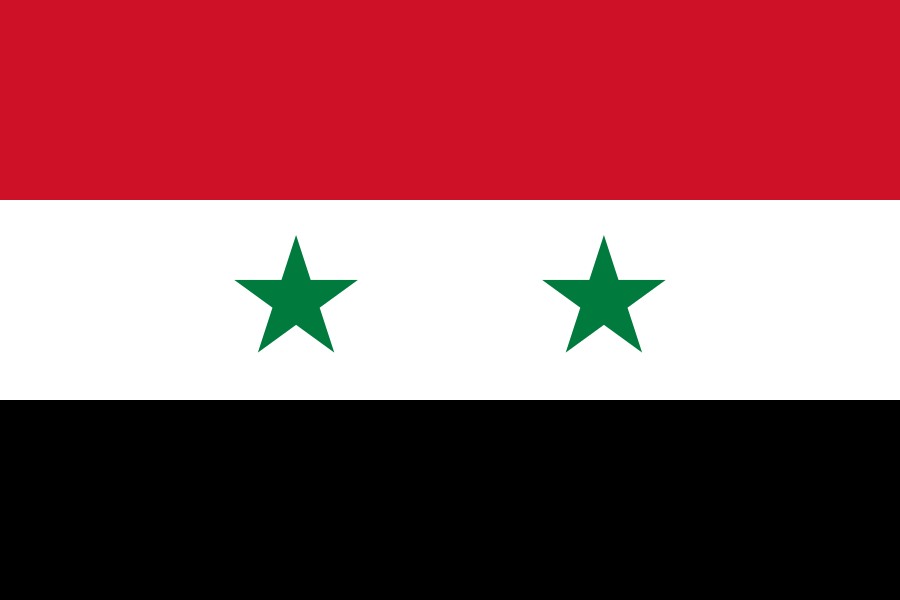
Syria officially the Syrian Arab Republic is a West Asian...
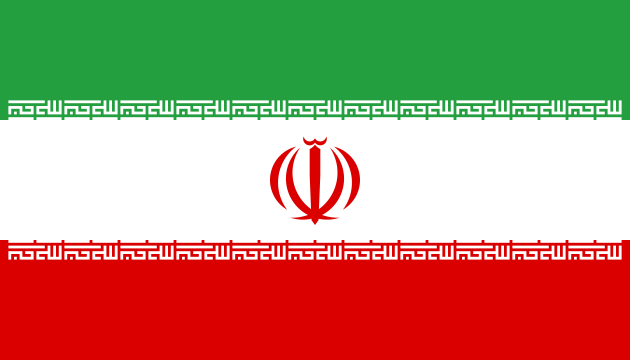
Iran formerly known as Persia is a sovereign state in...
A tank is an armored fighting vehicle designed for front-line...
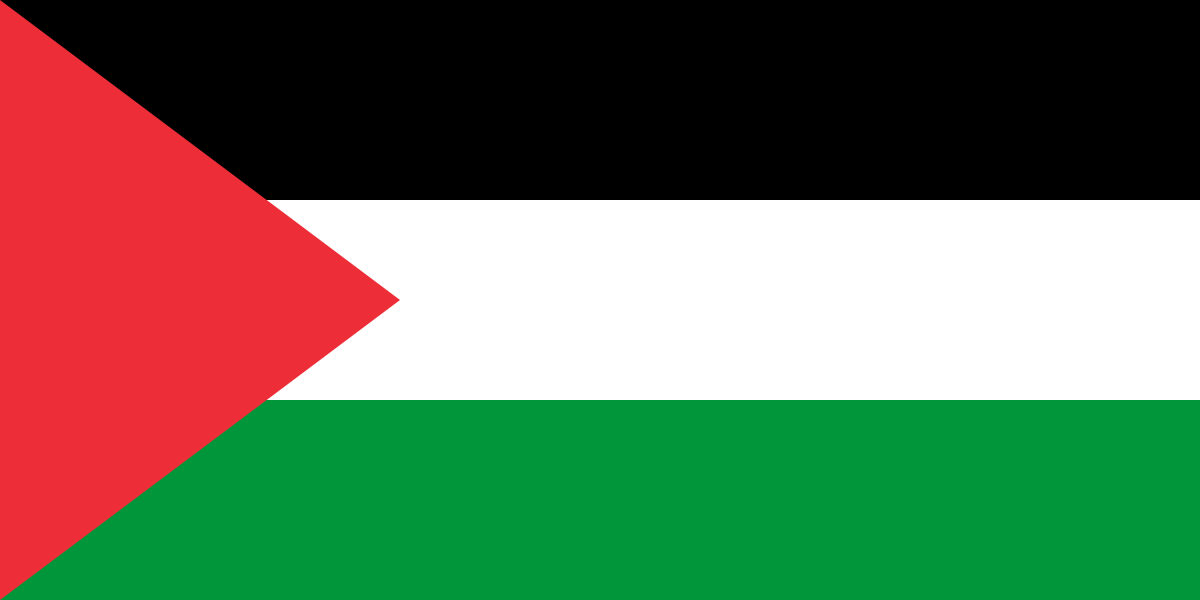
Palestine officially the State of Palestine is a country in...
Russia is the world's largest country spanning Eastern Europe and...
Trending

3 hours ago Anthony Gordon Prepares for Highly Anticipated El Clasico Debut with Barcelona
3 hours ago Harrison Smith Confirms Retirement Plans After 15 Seasons with Minnesota Vikings

21 days ago Kyle Juszczyk Discusses NFL Celebrations and Family Friendships
3 hours ago Mario Andretti Shares His Perspective on Kimi Antonelli Potential Ferrari Move

3 hours ago Raphinha Transforms Into Barcelona's Star Striker, Matching Neymar's Legendary Record
1 month ago Eddy Piñeiro Shows Exceptional Accuracy as 49ers Kicker
Popular
Ilhan Omar is a prominent American politician currently serving as...

Ken Paxton is an American politician and lawyer serving as...

Elon Musk is a visionary entrepreneur and engineer known for...
Michael Joseph Jackson the King of Pop was a highly...
Barack Obama the th U S President - was the...

Greg Abbott is the current and th Governor of Texas...