Jackie Robinson's Success and Achievements in Timeline


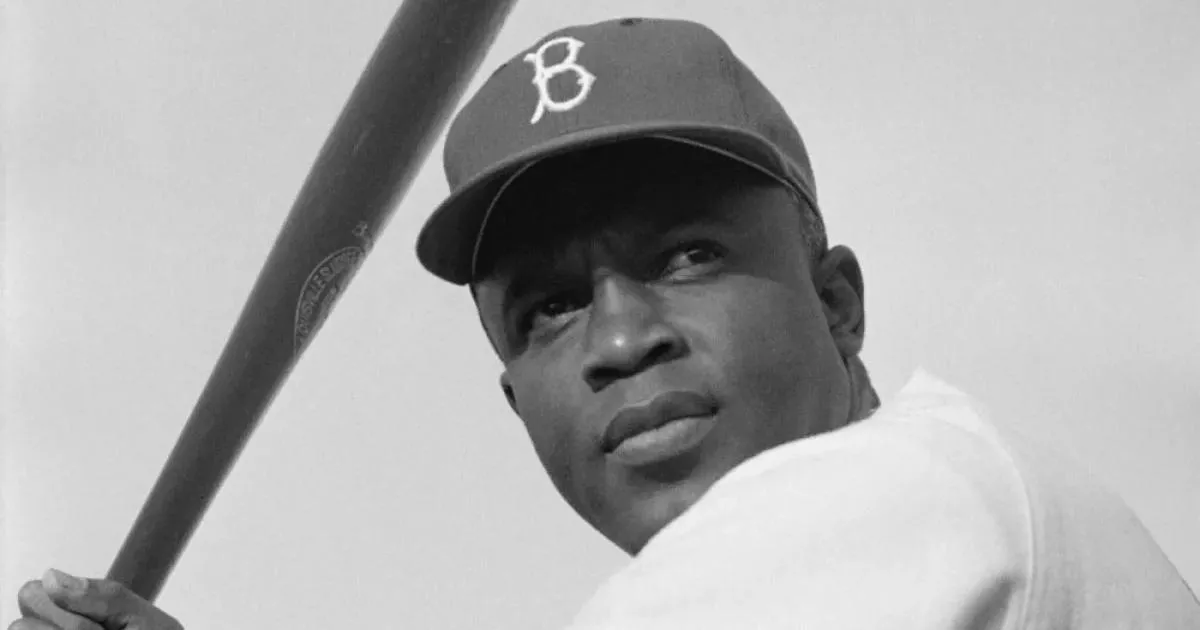
A success timeline featuring the most significant achievements of Jackie Robinson.
Jackie Robinson was a pivotal figure in American history as the first African American to play Major League Baseball in the modern era. On April 15, 1947, he broke the color barrier by starting at first base for the Brooklyn Dodgers, ending racial segregation in professional baseball that had persisted since the 1880s. His courageous act paved the way for other Black athletes and marked a significant moment in the Civil Rights Movement.


1940: NCAA Championship
In 1940, Jackie Robinson won the NCAA championship in the long jump at 24 ft 10+1⁄4 in (7.58 m).
August 1944: Acquittal by Court-Martial
In August 1944, Jackie Robinson was acquitted by an all-white panel of nine officers on charges of insubordination during questioning.
August 28, 1945: Rickey's Interview with Robinson
On August 28, 1945, Branch Rickey interviewed Jackie Robinson for a potential spot on the Brooklyn Dodgers' farm team, the Montreal Royals. Rickey questioned Robinson about his ability to withstand racial abuse without reacting angrily, concerned about Robinson's past altercations with law enforcement. After a three-hour discussion, Robinson committed to "turn the other cheek" to racial antagonism, leading Rickey to offer him a contract for $600 per month.
March 17, 1946: Robinson's Royals Debut
On March 17, 1946, Jackie Robinson made his debut with the Montreal Royals at Daytona Beach's City Island Ballpark in an exhibition game against the Brooklyn Dodgers. This marked him as the first black player to openly play for a minor league team against a major league team since the implementation of the baseball color line in the 1880s.
April 18, 1946: Robinson's professional debut
On April 18, 1946, Jackie Robinson made his professional debut for the Montreal Royals against the Jersey City Giants at Roosevelt Stadium. He had four hits in five at bats, including a three-run home run, scored four runs, drove in three, and stole two bases, marking the first time the color barrier was broken in a game between two minor league clubs.
April 15, 1947: Robinson Breaks the Color Barrier
On April 15, 1947, Jackie Robinson started at first base for the Brooklyn Dodgers, breaking the color barrier in Major League Baseball and ending racial segregation in professional baseball.
July 5, 1947: Doby breaks AL color barrier
On July 5, 1947, Larry Doby broke the color barrier in the American League, just 11 weeks after Jackie Robinson did in the National League.
1947: World Series Appearance
In 1947, Jackie Robinson became the first black player to play in the World Series as the Brooklyn Dodgers faced the New York Yankees. The Dodgers lost in Game 7.
1947: Encouragement from other players
In 1947, Jackie Robinson received encouragement from several major league players, including Lee "Jeep" Handley, Pee Wee Reese, and Hank Greenberg, all of whom offered support and advice as he faced racial challenges.
1947: Major League Rookie of the Year Award
In 1947, Jackie Robinson wins the Major League Rookie of the Year Award, encompassing both leagues. This award was later renamed to the "Jackie Robinson Award" in 1987.
1947: Rookie of the Year Award
In 1947, Jackie Robinson won the inaugural Rookie of the Year Award, marking the beginning of his celebrated career in Major League Baseball.
August 29, 1948: Hitting for the cycle
On August 29, 1948, Jackie Robinson hit for the cycle in a 12–7 win against the St. Louis Cardinals, achieving a home run, a triple, a double, and a single in the same game.
1948: Reese's show of support
In either 1947 or 1948, during a game in either Boston or Cincinnati, Pee Wee Reese put his arm around Jackie Robinson in response to fans shouting racial slurs at Robinson.
1949: Batting Help from George Sisler and MVP Award
In 1949, Jackie Robinson sought batting advice from Hall of Famer George Sisler, leading to significant improvements in his hitting. He raised his batting average to .342, stole 37 bases, and achieved high rankings in doubles and triples. His outstanding performance led to him winning the Most Valuable Player Award for the National League, and he was voted as the starting second baseman for the 1949 All-Star Game.
1949: National League Most Valuable Player Award
In 1949, Jackie Robinson was honored with the National League (NL) Most Valuable Player Award, becoming the first Black player to receive this recognition.
1949: Separate Rookie of the Year Awards
In 1949, Major League Baseball began awarding separate Rookie of the Year honors for the National and American Leagues.
1954: All-Star Season
From 1949 through 1954, Jackie Robinson was an All-Star for six consecutive seasons, showcasing his consistent excellence in baseball.
1955: World Series Championship
In 1955, Jackie Robinson contributed to the Brooklyn Dodgers' World Series championship, marking a pinnacle in his baseball career.
1955: Dodgers win the World Series
In 1955, the Dodgers won the World Series against the New York Yankees, marking Robinson's only championship. However, 1955 was the worst year of Robinson's individual career. He hit .256 and stole only 12 bases.
December 1956: NAACP Spingarn Medal
In December 1956, Jackie Robinson was recognized by the NAACP with the Spingarn Medal, awarded annually for the highest achievement by an African-American.
October 1959: Robinson Protests Segregation at Greenville Airport
In October 1959, Jackie Robinson protested segregation by entering the whites-only waiting room at Greenville Municipal Airport, refusing to leave when asked. He then gave a speech in Greenville, South Carolina, urging black citizens to vote and protest their second-class citizenship.
1962: Induction into the Baseball Hall of Fame
In 1962, Jackie Robinson was inducted into the Baseball Hall of Fame in his first year of eligibility, solidifying his place among baseball's legends.
1962: Elected to Baseball Hall of Fame
In 1962, during his first year of eligibility, Jackie Robinson was elected to the Baseball Hall of Fame, becoming the first Black American player inducted into the Cooperstown museum. He encouraged voters to consider only his on-field qualifications.
June 4, 1972: Dodgers Retired Robinson's Jersey Number
On June 4, 1972, the Dodgers retired Jackie Robinson's uniform number, 42, alongside those of Roy Campanella (39) and Sandy Koufax (32).
1972: Posthumous Awards
After his death in 1972, Jackie Robinson was posthumously awarded the Congressional Gold Medal and Presidential Medal of Freedom for his achievements on and off the baseball field.
1974: Frank Robinson as First Black Manager
Following the 1974 season, after Jackie Robinson's death, the Cleveland Indians gave their managerial post to Frank Robinson, marking the fulfillment of Jackie's wish to see a Black face managing in baseball.
1982: United States Postal Service Honors Jackie Robinson
In 1982, Jackie Robinson was honored by the United States Postal Service on a postage stamp.
March 26, 1984: Presidential Medal of Freedom
On March 26, 1984, President Ronald Reagan posthumously awarded Jackie Robinson the Presidential Medal of Freedom.
1984: Inducted into UCLA's Athletics Hall of Fame
In 1984, Jackie Robinson was among the 25 charter members of UCLA's Athletics Hall of Fame.
1987: Rookie of the Year Awards Renamed
In 1987, both the National and American League Rookie of the Year Awards were renamed the "Jackie Robinson Award" in honor of Jackie Robinson.
1993: Inducted into National High School Hall of Fame
In 1993, Jackie Robinson was inducted into the National High School Hall of Fame.
April 15, 1997: Jersey Number 42 Retired Throughout MLB
On April 15, 1997, Jackie Robinson's jersey number, 42, was retired throughout Major League Baseball, the first time any jersey number had been retired throughout one of the four major American sports leagues.
1997: Jersey Number Retired
In 1997, MLB retired Jackie Robinson's uniform number, 42, across all Major League teams, an unprecedented honor for a professional athlete in any sport.
1997: Pasadena Robinson Memorial Erected
In 1997, a $325,000 bronze sculpture called the Pasadena Robinson Memorial by artists Ralph Helmick, Stu Schecter, and John Outterbridge depicting oversized nine-foot busts of Robinson and his brother Mack was erected at Garfield Avenue in Pasadena.
1997: Jackie Robinson Commemorative Coin Issued
In 1997, the United States Mint issued a Jackie Robinson commemorative silver dollar and a five-dollar gold coin.
1999: United States Postal Service Honors Jackie Robinson Again
In 1999, Jackie Robinson was honored by the United States Postal Service on a postage stamp.
1999: Named One of Time's 100 Most Influential People
In 1999, Jackie Robinson was named by Time on its list of the 100 most influential people of the 20th century. That same year, he was elected to the Major League Baseball All-Century Team, and ranked No. 44 on The Sporting News list of "Baseball's 100 Greatest Players".
1999: Named to the MLB All-Century Team
In 1999, Jackie Robinson was named to the Major League Baseball All-Century Team.
2000: United States Postal Service Honors Jackie Robinson Once More
In 2000, Jackie Robinson was honored by the United States Postal Service on a postage stamp.
2002: Included on List of 100 Greatest African Americans
In 2002, Molefi Kete Asante included Jackie Robinson on his list of 100 Greatest African Americans.
April 15, 2004: "Jackie Robinson Day" Inauguration
On April 15, 2004, MLB adopted a new annual tradition, "Jackie Robinson Day", where every player on every team wears the number 42.
2004: Aflac National High School Baseball Player of the Year Award
Since 2004, the "Jackie Robinson Award" has been presented to the Aflac National High School Baseball Player of the Year.
March 2, 2005: Congressional Gold Medal
On March 2, 2005, President George W. Bush gave Jackie Robinson's widow the Congressional Gold Medal; Robinson was only the second baseball player to receive the award, after Roberto Clemente.
November 2006: Announcement of Jackie Robinson Rotunda
In November 2006, at the groundbreaking for Citi Field, it was announced that the main entrance would be called the Jackie Robinson Rotunda.
August 20, 2007: Induction into the California Hall of Fame
On August 20, 2007, California Governor Arnold Schwarzenegger and his wife, Maria Shriver, announced that Jackie Robinson was inducted into the California Hall of Fame, located at The California Museum for History, Women and the Arts in Sacramento.
June 25, 2008: New Plaque for Robinson at Baseball Hall of Fame
On June 25, 2008, MLB installed a new plaque for Jackie Robinson at the Baseball Hall of Fame commemorating his off-the-field impact.
April 16, 2009: Dedication of Jackie Robinson Rotunda
On April 16, 2009, the Jackie Robinson Rotunda was dedicated at the opening of Citi Field, the new ballpark for the New York Mets.
November 22, 2014: UCLA Retires Number 42 Across All Sports
On November 22, 2014, UCLA announced that it would officially retire the number 42 across all university sports, effective immediately, because it had become indelibly identified with him.
2017: Statue Unveiled at Dodger Stadium
In 2017, a statue of Jackie Robinson, created by sculptor Branly Cadet, was unveiled at Dodger Stadium. It was the first statue the Dodgers ever unveiled.
2020: Ranked on The Athletic's "Baseball 100" List
In 2020, The Athletic ranked Jackie Robinson at number 42 on its "Baseball 100" list, compiled by sportswriter Joe Posnanski.
2022: Opening of the Jackie Robinson Museum
The Jackie Robinson Museum opened in 2022, located at the headquarters of the Jackie Robinson Foundation in Lower Manhattan.
Mentioned in this timeline
Basketball is a team sport played on a rectangular court...
John F Kennedy JFK was the th U S President...
George W Bush the rd U S President - is...
Bill Russell was a dominant center for the Boston Celtics...
California is a U S state on the Pacific Coast...

Wayne Gretzky nicknamed The Great One is widely considered the...
Trending
3 hours ago Nasdaq Drops Amid AI Spending Concerns and Rising Oil Prices
3 hours ago Josh O'Connor Delivers Knockout Performance in Highly Acclaimed London West End Production
3 hours ago JJ Watt Named New CBS Lead NFL Analyst Replacing Tony Romo
3 hours ago Trump Rallies for South Carolina Senate Seat Amidst Protests
4 hours ago Harrison Ford and Calista Flockhart to Receive Prestigious Joint Icon Award
4 hours ago Callum Turner Attends Met Opera Lincoln in the Bardo Premiere
Popular
Ilhan Omar is a prominent American politician currently serving as...

Ken Paxton is an American politician and lawyer serving as...

Michael Joseph Jackson the King of Pop was a highly...
Elon Musk is a visionary entrepreneur and engineer known for...
Cristiano Ronaldo widely considered one of the greatest footballers captains...
Linda Ronstadt is a versatile American singer renowned for her...