Career Timeline of Mamata Banerjee: Major Achievements and Milestones


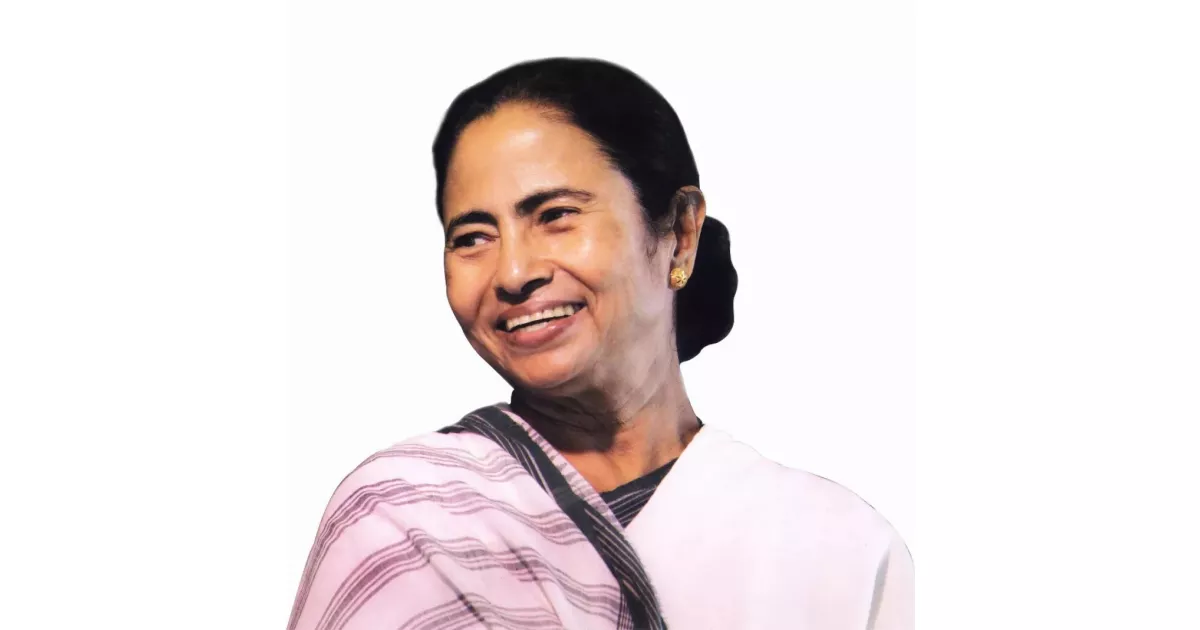
How Mamata Banerjee built a successful career. Explore key moments that defined the journey.
Mamata Banerjee is an Indian politician and lawyer, currently serving as the Chief Minister of West Bengal since 2011, the first woman to hold the position. She is the founder and president of the All India Trinamool Congress. Previously, she served as a Union Cabinet Minister and is the current leader of the house in West Bengal's Legislative Assembly. She is a prominent figure in Indian politics.
1976: General Secretary of Mahila Congress
From 1976 to 1980, Mamata Banerjee served as the general secretary of Mahila Congress (Indira), West Bengal.


1980: Continued as General Secretary of Mahila Congress
In 1980, Mamata Banerjee was the general secretary of Mahila Congress (Indira), West Bengal.
1984: Elected as Parliamentarian
In the 1984 general election, Mamata Banerjee became one of India's youngest parliamentarians, defeating Somnath Chatterjee to win the Jadavpur parliamentary Constituency in West Bengal. She also became the general secretary of the Indian Youth Congress in 1984.
1989: Lost Parliamentary Seat
In the 1989 general elections, Mamata Banerjee lost her seat to Malini Bhattacharya of the Communist Party of India (Marxist) amidst an anti-Congress wave.
1991: Appointed Union Minister of State
In 1991, Mamata Banerjee was appointed the Union Minister of State for Human Resources Development, Youth Affairs and Sports, and Women and Child Development by Prime Minister P. V. Narasimha Rao.
1991: Re-elected in General Elections
In the 1991 general elections, Mamata Banerjee was re-elected, securing the Calcutta South constituency.
1993: Discharged of portfolios
In 1993, Mamata Banerjee was discharged of her portfolios.
1996: Retained Kolkata South Seat
In the 1996 general elections, Mamata Banerjee retained the Kolkata South seat.
1997: Left Congress (I) Party
In 1997, Mamata Banerjee left the Congress (I) Party in West Bengal due to differences with Somendra Nath Mitra. She became a founding member of the All India Trinamool Congress.
1998: Founded All India Trinamool Congress
In 1998, Mamata Banerjee founded the All India Trinamool Congress (AITC) after separating from the Indian National Congress (I).
1998: Retained Kolkata South Seat
In the 1998 general elections, Mamata Banerjee retained the Kolkata South seat.
1999: Joined NDA Government as Railways Minister
In 1999, Mamata Banerjee joined the BJP-led National Democratic Alliance (NDA) government and became Railways Minister.
1999: Retained Kolkata South Seat
In the 1999 general elections, Mamata Banerjee retained the Kolkata South seat.
2000: Resignation and Withdrawal
In 2000, Mamata Banerjee and Ajit Kumar Panja resigned to protest the hike in petroleum prices, and then withdrew their resignations without providing any reasons.
2000: Focused on developing tourism
In 2000, Mamata Banerjee focused on developing tourism, enabling the Darjeeling Himalayan Railway section to obtain two additional locomotives and proposing the Indian Railway Catering and Tourism Corporation Limited.
2000: Presented First Railway Budget
In 2000, Mamata Banerjee presented her first Railway Budget as Railways Minister, fulfilling promises to West Bengal. She introduced new trains such as the New Delhi-Sealdah Rajdhani Express, Howrah-Purulia Rupasi Bangla Express, Sealdah-New Jalpaiguri Padatik Express, Shalimar-Adra Aranyak Express, Sealdah-Ajmer Ananya Superfast Express, and Sealdah-Amritsar Akal Takht Superfast Express. She also increased the frequency of the Pune-Howrah Azad Hind Express.
2001: Became President of AITC
In 2001, Mamata Banerjee became the second president of the All India Trinamool Congress (AITC).
2001: Introduced new trains
In 2001, Mamata Banerjee introduced 19 new trains for the 2000-2001 fiscal year, focusing on India's role in the Trans-Asian Railway and rail links between Bangladesh and Nepal.
2001: Walked out of NDA cabinet
In early 2001, Mamata Banerjee walked out of the NDA cabinet and allied with the Congress Party for West Bengal's 2001 elections, to protest the corruption charges levelled by Tehelka's exposure of Operation West End against senior ministers of the government.
September 2003: Returned to NDA government
In September 2003, Mamata Banerjee returned to the NDA government as a cabinet minister without any portfolio, along with her party colleague Sudip Banerjee.
January 2004: Took Charge as Minister of Coal and Mines
On 9 January 2004, Mamata Banerjee took charge as Minister of Coal and Mines.
May 2004: Held Coal and Mines Portfolios
Mamata Banerjee held the Coal and Mines portfolios until 22 May 2004.
2004: Retained Kolkata South Seat
In the 2004 general elections, Mamata Banerjee retained the Kolkata South seat.
2004: Alliance Lost Election
In the Indian general election of 2004, Mamata Banerjee's party aligned with the Bharatiya Janata Party. However, the alliance lost the election, and she was the only Trinamool Congress member to be elected from a parliamentary seat from West Bengal.
2005: Party Lost Control of Kolkata Municipal Corporation
In 2005, Mamata Banerjee suffered setbacks when her party lost control of the Kolkata Municipal Corporation, and the sitting mayor Subrata Mukherjee defected from her party.
2009: Alliance with UPA and Railway Minister
In 2009, Mamata Banerjee allied with the United Progressive Alliance (UPA) for the parliamentary elections, securing 26 seats. She then joined the central cabinet as the railway minister for her second tenure.
2009: Second Term as Railway Minister
In 2009, Mamata Banerjee became the railway minister for the second time, focusing again on West Bengal.
2009: Strong Performance in Parliamentary Election
In 2009, Trinamool Congress had a strong performance in the parliamentary election, winning 19 seats. Allies in Congress and SUCI also won, marking the best performance by any opposition party in West Bengal since the Left's regime.
2009: Retained Kolkata South Seat
In the 2009 general elections, Mamata Banerjee retained the Kolkata South seat.
2010: TMC Wins Municipal Elections
In 2010, Trinamool Congress (TMC) won the Kolkata Municipal Corporation by a margin of 62 seats and also secured Bidhan Nagar Corporation by a seven-seat margin.
May 2011: Became Chief Minister of West Bengal
In May 2011, Mamata Banerjee became the chief minister of West Bengal, the first woman to hold the office.
May 2011: Swearing-in as Chief Minister and Land Return to Farmers
On May 20, 2011, Mamata Banerjee was sworn in as the first female chief minister of West Bengal, and one of her first decisions was to return 400 acres of land to Singur farmers.
2011: Landslide victory in West Bengal
In 2011, Mamata Banerjee and the AITC alliance secured a landslide victory in West Bengal, defeating the 34-year-old Communist Party of India (Marxist)-led Left Front government.
2011: Elected to West Bengal Legislative Assembly
In 2011, Mamata Banerjee served as a member of the West Bengal Legislative Assembly from Bhabanipur.
2011: Victory and Chief Minister Position
In 2011, Mamata Banerjee's party achieved a sweeping majority, leading her to assume the position of chief minister of West Bengal, effectively ending the 34-year rule of the Left Front.
2011: Political Activism and Victory
In 2011, Mamata Banerjee's political activism, including writing letters to the Prime Minister and Home Minister to stop the violence in Nandigram, contributed to her landslide victory in the elections.
2011: Victory in West Bengal Assembly Election
In 2011, the All India Trinamool Congress, along with SUCI and the INC, won the West Bengal legislative assembly election against the Left Alliance by securing 227 seats, marking the end of the 34-year-long Left Front government.
September 2012: Named one of the 50 most influential people in finance
In September 2012, Bloomberg Markets magazine listed Mamata Banerjee among the 50 most influential people in the world of finance.
April 2015: Nadia declared Open Defecation Free district
On April 30, 2015, UNICEF India congratulated the government for making Nadia the first Open Defecation Free district in the country.
2016: All India Trinamool Congress landslide victory
In 2016, All India Trinamool Congress won a landslide two-thirds majority under Mamata Banerjee, winning 211 seats out of total 293. She has been elected as Chief Minister West Bengal for the second term.
2017: Kanyashree Prakalpa Ranked Best by United Nations
In 2017, Kanyashree Prakalpa, a scheme launched by Mamata Banerjee's government, was ranked the best by the United Nations among 552 social sector schemes from across 62 countries.
2018: Skoch Chief Minister of the Year Award
In 2018, Mamata Banerjee was conferred the Skoch Chief Minister of the Year Award.
May 2021: AITC Victory and Third Term as Chief Minister
In May 2021, AITC won the assembly elections with a landslide majority, leading to Mamata Banerjee's election as Chief Minister of West Bengal for the third term. She took oath as Chief Minister on May 5, 2021.
September 2021: Included in TIME's 100 Most Influential People
On 15 September 2021, TIME magazine published its annual list of 'The 100 Most Influential People of 2021', which included Mamata Banerjee.
November 2021: Surpassed predecessor as third-longest-serving Chief Minister
On November 30, 2021, Mamata Banerjee surpassed her immediate predecessor Buddhadeb Bhattacharjee to become the third-longest-serving Chief Minister of West Bengal.
2021: Contested and Lost Nandigram Assembly Seat
In 2021, Mamata Banerjee contested the Nandigram assembly seat and lost to Suvendu Adhikari of BJP, although her party won a majority of seats. She challenged the result in Calcutta High Court.
August 2025: Launch of Shramashree Scheme
On August 18, 2025, Chief Minister Mamata Banerjee launched the Shramashree scheme, a rehabilitation initiative aimed at Bengali-speaking migrant workers returning to West Bengal following alleged harassment in certain other states. The scheme provides financial aid, food security, health insurance, and educational support.
November 2025: Enrollment in Shramashree Scheme
Enrollment for the Shramashree scheme will be encouraged through state outreach camps (Duare Sarkar and Amader Para Amader Samadhan-APAS) until early November 2025.
Mentioned in this timeline

Bill Gates an American businessman and philanthropist revolutionized personal computing...

Founded in by Mark Zuckerberg and his Harvard roommates Facebook...
Poliomyelitis or polio is an infectious disease caused by the...
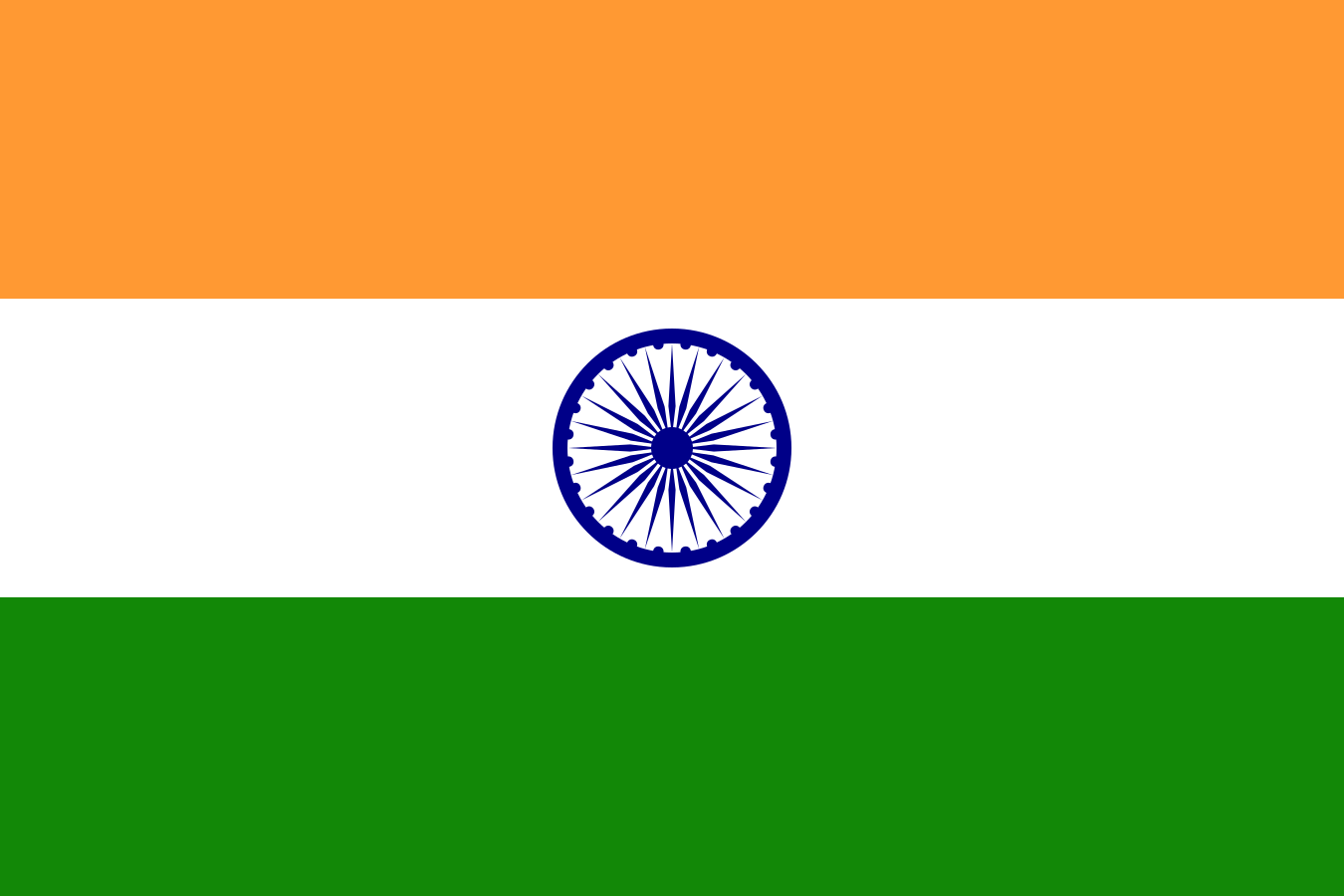
India officially the Republic of India is a South Asian...

A car also known as an automobile is a wheeled...

Money functions as a fundamental social and economic tool serving...
Trending
3 hours ago Gina Hinojosa Emerges as Formidable Challenger Against Governor Greg Abbott in Texas Gubernatorial Race
4 hours ago Real Madrid Demands La Liga President Resignation Over Nazi Comparison
4 hours ago Jon Sumrall Addresses Administrative Control Rumors Amid Mounting Florida Gators Football Pressure
11 months ago Shanahan looms over Purdy; Stefanski braces for weather; Saleh praises Sanders.
5 hours ago Ina Garten Shares Fall Recipes and Insights Into Her Marriage With Jeffrey

8 days ago Michael J. Fox Delivers Emotional Emmys Moment and Inspiring Message on Gratitude
Popular
Ilhan Omar is a prominent American politician currently serving as...

Ken Paxton is an American politician and lawyer serving as...

Elon Musk is a visionary entrepreneur and engineer known for...

Michael Joseph Jackson the King of Pop was a highly...

Jameis Winston is an American football quarterback currently playing for...

Cristiano Ronaldo widely considered one of the greatest footballers captains...