History of Miracle on Ice in Timeline


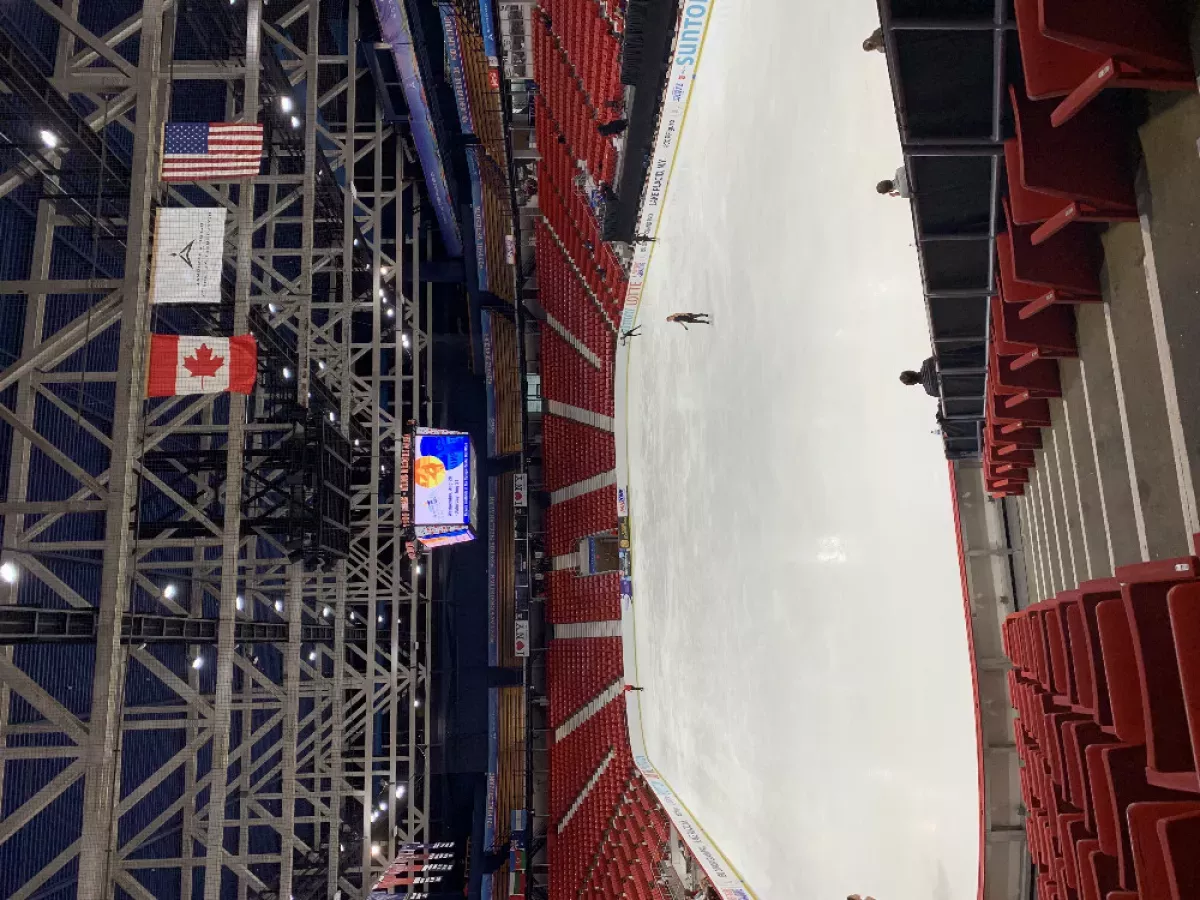
The "Miracle on Ice" was a stunning upset in the 1980 Winter Olympics ice hockey tournament. The United States team, composed of amateur and collegiate players, defeated the seemingly invincible Soviet Union team, who were four-time defending gold medalists. The game took place on February 22, 1980, in Lake Placid, New York, during the medal round. The US victory, with a final score of 4-3, is considered one of the greatest upsets in sports history.
1960: Soviet Union wins bronze medal at Squaw Valley
In 1960, prior to their period of dominance, the Soviet Union finished with a bronze medal in ice hockey at the Squaw Valley Winter Olympics.


1964: Soviet Union wins gold medal at the Olympics
In 1964, the Soviet Union won one of four consecutive gold medals in ice hockey at the Olympic Games, establishing their dominance in the sport.
1967: Craig Patrick had played with Brooks on the 1967 U.S. national team
In 1967, assistant coach Craig Patrick had played with Brooks on the 1967 U.S. national team.
1968: Soviet Union lost a game in Olympic play
Prior to 1968, the Soviet team had not lost a game in Olympic play.
1972: Canada withdraws from the Olympics
In 1972, Canada withdrew from the Olympics, due to the International Olympic Committee's (IOC) amateur-only policy.
1976: Buzz Schneider returns from the 1976 Olympic team.
In 1976, Buzz Schneider was the only player returning from the Olympics.
1976: Canada withdraws from the Olympics
In 1976, Canada again withdrew from the Olympics, due to the International Olympic Committee's (IOC) amateur-only policy.
September 1979: American team starts exhibition play and skates Herbies
In September 1979, the American team began exhibition play, and after a 3-3 tie in Norway on September 17, coach Herb Brooks made them skate long wind sprints, called "Herbies", as punishment for a perceived lack of effort.
December 1979: Soviet invasion of Afghanistan
In December 1979, the Soviet Union invaded Afghanistan, leading U.S. President Jimmy Carter to consider boycotting the 1980 Summer Olympics in Moscow.
1979: Craig played in the 1979 World Championship tournament
In 1979, Craig had been the goalie for him in the 1979 World Championship tournament.
1979: Soviet national team wins Challenge Cup
In 1979, the Soviet national team defeated a team of NHL All-Stars to win the Challenge Cup, demonstrating their strength against top North American players.
1979: ESPN declared the Miracle on Ice to be the top sports headline moment of the period 1979–2004
In 2004, ESPN declared the Miracle on Ice to be the top sports headline moment and game of the period 1979–2004 as part of its 25th-anniversary celebration.
1979: U.S. Olympic team tryouts held in Colorado Springs
In the summer of 1979, Herb Brooks held tryouts for the U.S. Olympic team in Colorado Springs, ultimately selecting 20 players for the final roster.
February 22, 1980: "Miracle on Ice" game
On February 22, 1980, the United States achieved a significant upset victory against the heavily favored Soviet Union in the ice hockey game dubbed the "Miracle on Ice" during the 1980 Winter Olympics held in Lake Placid, New York. The United States won the game 4-3.
March 3, 1980: Sports Illustrated cover features American team
On March 3, 1980, the cover of Sports Illustrated featured a photograph of the American players celebrating, without any captions or headlines, symbolizing the widespread recognition of their victory.
1980: Soviet club teams' performance against NHL teams
In 1980, Soviet club teams had a record of 5–3–1 against National Hockey League (NHL) teams, indicating the high level of Soviet hockey.
1980: Carter considers boycotting Moscow Olympics
In 1980, due to the Soviet invasion of Afghanistan, U.S. President Jimmy Carter considered boycotting the Summer Olympics in Moscow and eventually decided in favor of the boycott.
1980: Team USA honored as Sportsmen of the Year
In 1980, the "Miracle on Ice" team was honored as Sports Illustrated's Sportsmen of the Year and the Associated Press Athlete of the Year, recognizing their achievement in the Winter Olympics.
1980: U.S. team youngest in Olympic tournament
In 1980, the average age of the U.S. team was 21 years, making it the youngest team in U.S. history to play in the Olympics, and the youngest team in the 1980 Olympic tournament.
1980: Medal round format in the 1980 Olympics
In 1980, the medal round at the Olympics was a round-robin format, meaning the game against Sweden counted along with the games versus the Soviet Union and Finland.
1980: United States face Soviet Union in Canada Cup
In 1981, with seven players from the 1980 Olympic team, the United States faced the Soviet Union again at the Canada Cup, losing the opening round encounter 4–1 in Edmonton.
1980: U.S. and Soviet Union meet at Winter Olympics
In 1988, as in 1980, the U.S. and the Soviet Union met again at the Winter Olympics, with the Soviets winning 7–5 and ultimately taking the gold medal.
1980: Soviet authorities permit Olympians to join NHL clubs
In the 1989 season, Soviet authorities permitted six 1980 Olympians to join NHL clubs after they agreed to play in their final World Championship.
1980: Team USA defeats Finland 4-2
On February 24, 1980, Team USA faced a 2-1 deficit against Finland after the second period. They then scored three goals in the third period to defeat Finland 4-2, which secured them a gold medal.
1980: 1980 Winter Olympics
The 1980 Winter Games' original commentary and game footage were incorporated into the "Miracle on Ice" movie.
1981: Miracle on Ice Movie Aired
In 1981, ABC television aired the made-for-TV movie "Miracle on Ice", starring Karl Malden, Steve Guttenberg, Peter Horton and Andrew Stevens. The movie incorporated original commentary and game footage from the 1980 Winter Games.
1981: United States faces Soviet Union in Canada Cup
In 1981, with seven players from the 1980 Olympic team, the United States faced the Soviet Union again at the Canada Cup, losing the opening round encounter 4–1 in Edmonton.
1982: Soviet team the pre-eminent power in international ice hockey.
Despite the loss in 1982, the USSR remained the pre-eminent power in international ice hockey.
1982: United States meets Soviet Union at World Championship
In 1982, featuring Mike Ramsey, Mark Johnson, Buzz Schneider, and John Harrington, the Americans again met the Soviets at the World Championship in Finland, but lost 8–4.
1985: Soviet team did not lose a World Championship game
Until 1985 the Soviet team did not lose a World Championship game.
1988: Sergei Pryakhin joins the Calgary Flames
During the 1988 season, the Soviet Ice Hockey Federation agreed to let veteran Sergei Pryakhin join the Calgary Flames
1988: U.S. and Soviet Union meet at Winter Olympics
In 1988, the U.S. and the Soviet Union met again at the Winter Olympics, with the Soviets winning 7–5 and ultimately taking the gold medal.
1989: Soviet authorities permit Olympians to join NHL clubs
In the 1989 season, Soviet authorities permitted six 1980 Olympians to join NHL clubs after they agreed to play in their final World Championship.
1991: Dissolution of the Soviet Union
The dissolution of the Soviet Union occurred in 1991, marking the end of its pre-eminent power in international ice hockey.
1992: Unified Team defeats U.S. in Olympic semi-final
In 1992, the Unified Team (successor to the Soviet Union) defeated the U.S. 5–2 in the Olympic semi-final, eventually winning the gold medal.
1995: Detroit Red Wings lose Stanley Cup Finals
In 1995, Fetisov was a teammate of Mike Ramsey on the Detroit Red Wings team that lost the Stanley Cup Finals to Neal Broten and the New Jersey Devils.
1997: Red Wings win Stanley Cup
In 1997, Fetisov completed his career by winning Cups with the Red Wings .
1998: Red Wings win Stanley Cup
In 1998, Fetisov completed his career by winning Cups with the Red Wings.
1999: "Miracle on Ice" named top sports moment of the 20th century
In 1999, Sports Illustrated named the "Miracle on Ice" the top sports moment of the 20th century, cementing its place in sports history.
2002: U.S. and Russia meet at Winter Olympics in Salt Lake City
In 2002, the U.S., coached by Herb Brooks, and Russia, coached by Viacheslav Fetisov, met twice at the Winter Olympics in Salt Lake City, including a 2–2 draw and a 3–2 semi-final win for the Americans.
2004: Miracle on Ice named top sports headline moment by ESPN
In 2004, ESPN declared the Miracle on Ice to be the top sports headline moment and game of the period 1979–2004 as part of its 25th-anniversary celebration.
2004: Release of the movie "Miracle"
In 2004, Walt Disney Pictures released the film "Miracle", directed by Gavin O'Connor and starring Kurt Russell as Brooks. Al Michaels recreated his commentary for most of the games and the original broadcast of his "Do you believe in miracles? YES!" call was used. The film was dedicated to Brooks, who passed away soon after the photography completed.
2008: "Miracle on Ice" named top international ice hockey story
In 2008, as part of its centennial celebration, the International Ice Hockey Federation (IIHF) named the "Miracle on Ice" as the top international ice hockey story of the past 100 years, further recognizing the game's significance.
2014: U.S. and Russia play at Winter Olympics in Sochi
In 2014, the U.S. and Russia played each other in a round-robin game at the Winter Olympics in Sochi, with the Americans prevailing in an eight-round shootout after a 2–2 tie.
December 12, 2025: Congressional Gold Medal awarded to the team
On December 12, 2025, the "Miracle on Ice" team was awarded the Congressional Gold Medal by President Donald Trump, honoring their historic achievement.
Mentioned in this timeline

Home Box Office HBO is an American pay television service...
Walter Elias Disney was a highly influential American animator film...

The Union of Soviet Socialist Republics USSR existed from to...

Sports Illustrated SI is an American sports magazine launched in...
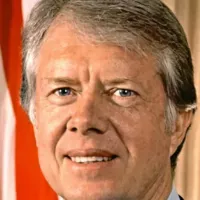
Jimmy Carter the th U S President - was a...

Canada is a North American country the second largest in...
Trending
15 minutes ago Cavs' Health Improves: Wade's Return Boosts Playoff Hopes; Mobley's Status Questionable

16 minutes ago Estonia Buys Bunkers: Fortifying Border Amidst Russia Tensions, Bolstering Baltic Defenses

16 minutes ago Zion Williamson to play against Bucks, securing $16.8 million guarantee.

16 minutes ago Rudy Gobert Suspended for Flagrant Foul in Game Against 76ers

16 minutes ago Tirante vs. Tabilo: Rio Open 2026 Prediction and Highlights of Garin Match
17 minutes ago Fritz and Paul Advance to Delray Beach Quarterfinals: Predictions and Schedule
Popular

Jesse Jackson is an American civil rights activist politician and...
Randall Adam Fine is an American politician a Republican who...
Barack Obama the th U S President - was the...

Ken Paxton is an American politician and lawyer serving as...

Bernie Sanders is a prominent American politician currently serving as...

Pam Bondi is an American attorney lobbyist and politician currently...