Noam Chomsky's Success and Achievements in Timeline


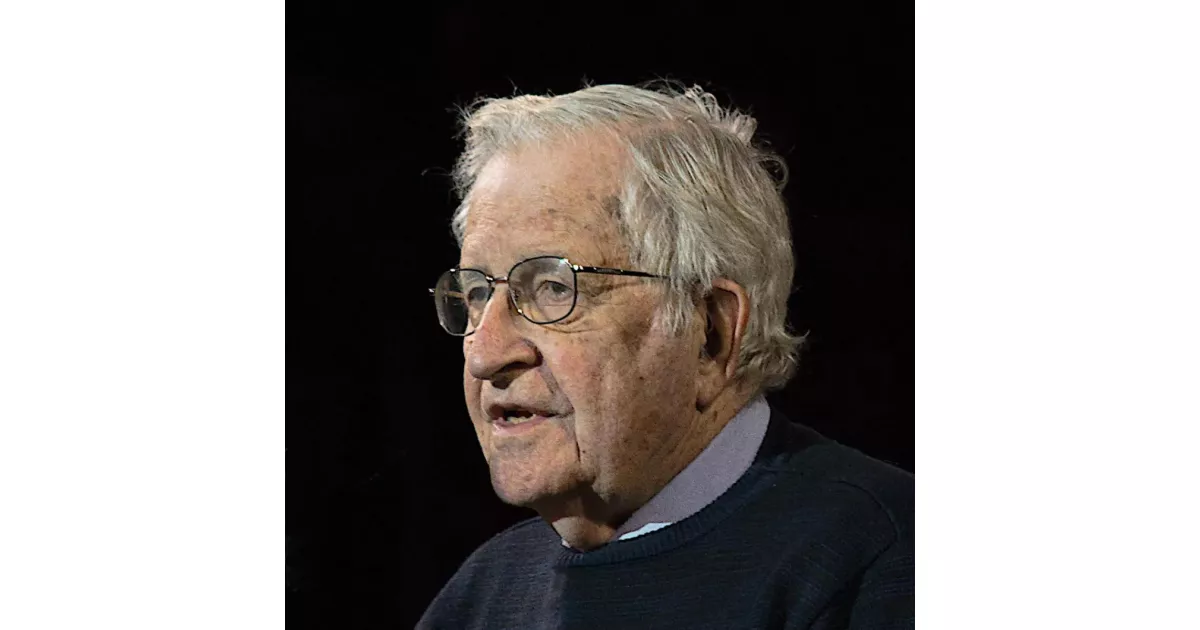
A closer look at the biggest achievements of Noam Chomsky. Awards, milestones, and records that define success.
Noam Chomsky is a highly influential American linguist, philosopher, cognitive scientist, and political activist. He is renowned as the "father of modern linguistics" for his groundbreaking theories on universal grammar. Chomsky is also a prominent figure on the American left, known for his sharp critiques of U.S. foreign policy, capitalism, and the role of corporations and media in shaping political discourse. He has authored over 150 books on diverse topics, solidifying his place as one of the most cited living authors.
1958: National Science Foundation Fellow & Visiting Professor at Columbia University
From 1958 to 1959 Chomsky was a National Science Foundation fellow at the Institute for Advanced Study in Princeton, New Jersey. In 1958, over the next year he was also a visiting professor at Columbia University.


1958: National Science Foundation Fellow
From 1958 to 1959, Chomsky was a National Science Foundation fellow at the Institute for Advanced Study.
1959: National Science Foundation Fellow
From 1958 to 1959 Chomsky was a National Science Foundation fellow at the Institute for Advanced Study in Princeton, New Jersey.
1962: Plenary Speaker
In 1962, Chomsky was appointed plenary speaker at the Ninth International Congress of Linguists, held in Cambridge, Massachusetts.
1967: Honorary Doctorate from the University of Chicago
In 1967, Chomsky received an honorary doctorate from the University of Chicago.
1970: Honorary Doctorates from Loyola University Chicago and Swarthmore College
In 1970, Chomsky received honorary doctorates from Loyola University Chicago and Swarthmore College.
1970: Named a Maker of the 20th Century
In 1970, the London Times named Chomsky one of the "makers of the twentieth century".
1971: Honorary Doctorate from Bard College
In 1971, Chomsky received an honorary doctorate from Bard College.
1971: Guggenheim Fellowship
In 1971, Noam Chomsky received a Guggenheim Fellowship.
1972: Honorary Doctorate from Delhi University
In 1972, Chomsky received an honorary doctorate from Delhi University.
1973: Honorary Doctorate from the University of Massachusetts
In 1973, Chomsky received an honorary doctorate from the University of Massachusetts.
1974: Became a corresponding fellow of the British Academy
In 1974, Chomsky became a corresponding fellow of the British Academy.
1980: Most Cited Author
From 1980, Chomsky became among the most cited authors. He was cited more than any other living scholar from 1980 to 1992 within the Arts and Humanities Citation Index.
1984: American Psychological Association Award
In 1984, Noam Chomsky received the American Psychological Association Award for Distinguished Contributions to Psychology.
1987: NCTE George Orwell Award
In 1987, Noam Chomsky won the NCTE George Orwell Award for Distinguished Contribution to Honesty and Clarity in Public Language.
1988: Kyoto Prize in Basic Sciences
In 1988, Noam Chomsky received the Kyoto Prize in Basic Sciences.
1989: NCTE George Orwell Award
In 1989, Noam Chomsky won the NCTE George Orwell Award for Distinguished Contribution to Honesty and Clarity in Public Language for a second time.
1992: Most Cited Author
Until 1992, Chomsky was cited more than any other living scholar from 1980 to 1992 within the Arts and Humanities Citation Index. His work was widely read across disciplines, leading to dueling camps of Chomskyan and non-Chomskyan linguistics.
1996: Helmholtz Medal
In 1996, Noam Chomsky received the Helmholtz Medal.
1999: Benjamin Franklin Medal
In 1999, Noam Chomsky received the Benjamin Franklin Medal in Computer and Cognitive Science.
2004: Carl-von-Ossietzky Prize
In 2004, Chomsky received the Carl-von-Ossietzky Prize from the city of Oldenburg, Germany, acknowledging his work as a political analyst and media critic.
2005: World's Leading Public Intellectual
In 2005, Chomsky was voted the world's leading public intellectual in The 2005 Global Intellectuals Poll, jointly conducted by American magazine Foreign Policy and British magazine Prospect.
2005: Honorary Fellowship from University College Dublin
In 2005, Noam Chomsky received an honorary fellowship from the Literary and Historical Society of University College Dublin.
2006: World's Foremost Hero
In 2006, New Statesman readers listed Chomsky among the world's foremost heroes.
2008: President's Medal from the National University of Ireland, Galway
In 2008, Noam Chomsky received the President's Medal from the Literary and Debating Society of the National University of Ireland, Galway.
2009: Honorary Member of IAPTI
Since 2009, Noam Chomsky has been an honorary member of the International Association of Professional Translators and Interpreters (IAPTI).
2010: Erich Fromm Prize
In 2010, Noam Chomsky received the Erich Fromm Prize.
2011: US Peace Prize and Sydney Peace Prize
In 2011, the US Peace Memorial Foundation awarded Noam Chomsky the US Peace Prize for his anti-war activities over five decades. Furthermore, for his work in human rights, peace, and social criticism, he received the Sydney Peace Prize the same year.
2011: Awarded the US Peace Prize
In 2011, the US Peace Memorial Foundation awarded The US Peace Prize to Chomsky, for his antiwar activities over five decades.
2012: Honorary Doctorate from the International School for Advanced Studies
In 2012, Chomsky received an honorary doctorate from the International School for Advanced Studies.
2014: Neil and Saras Smith Medal for Linguistics
In 2014, Noam Chomsky received the British Academy's Neil and Saras Smith Medal for Linguistics.
2015: Sretenje Order
In 2015, Noam Chomsky received the Sretenje Order for his work in human rights, peace, and social criticism.
2017: Seán MacBride Peace Prize and Dorothy Eldridge Peacemaker Award
In 2017, Noam Chomsky received the Seán MacBride Peace Prize and the Dorothy Eldridge Peacemaker Award for his work in human rights, peace, and social criticism.
Mentioned in this timeline
California is a U S state on the Pacific Coast...
Arizona is a state in the Southwestern United States part...
Belarus is a landlocked country in Eastern Europe bordered by...
India officially the Republic of India is a South Asian...
Germany officially the Federal Republic of Germany is located in...
Iraq officially the Republic of Iraq is a country in...
Trending

4 hours ago Maya Joint Advances to Maiden WTA Tour Final at Korea Open
5 hours ago Halle Berry Embraces Natural Changes of Aging and Menopause
6 hours ago Jeremy Peña Delivers Explosive Performance with Multi-Homer Game and Massive 425-Foot Home Run
6 hours ago Tucker Carlson Calls for Trump Removal Under 25th Amendment
6 hours ago Top AI Firms Investigate Thousands of Autonomous Agent Security Incidents
6 hours ago Scarlett Johansson and Colin Jost Attend Rare Red Carpet Premiere in New York City
Popular
Jameis Winston is an American football quarterback currently playing for...
Ken Paxton is an American politician and lawyer serving as...

Michael Joseph Jackson the King of Pop was a highly...
Shakira Isabel Mebarak Ripoll the Queen of Latin Music is...
Sylvester Stallone is an iconic American actor screenwriter and filmmaker...
Cristiano Ronaldo widely considered one of the greatest footballers captains...