


Powerball is a multi-jurisdictional American lottery game offered by 45 states, the District of Columbia, Puerto Rico, and the U.S. Virgin Islands. To play, participants select five numbers from a set of 69 white balls and one Powerball number from a set of 26 red balls. Drawings are held three times weekly, on Monday, Wednesday, and Saturday evenings. The jackpot begins at $20 million and increases with each draw if no ticket matches all six numbers, frequently reaching hundreds of millions or even billions of dollars. Players can opt for the 'Power Play' multiplier to increase non-jackpot prizes. Winners may choose between an annuity paid over 30 years or a lump-sum cash payment. Due to the astronomical odds of winning the grand prize—approximately 1 in 292.2 million—the game is considered a form of high-stakes entertainment rather than a reliable investment.
1987: WFLD Takes Over Lottery Rights from WGN-TV
During 1987, the television station WFLD assumed the rights to broadcast Illinois Lottery drawings, effectively taking them away from WGN-TV.


1988: Beginning of MUSL Drawings
In 1988, radio personality Mike Pace began hosting drawings for the Multi-State Lottery Association (MUSL) when the game Lotto America was first introduced.
1988: WFLD Secures Lottery Broadcast Rights
In 1988, the Fox owned-and-operated station WFLD acquired the broadcast rights for Illinois Lottery drawings, taking over the responsibility from WGN-TV.
1988: Inception of Lotto America
In 1988, the lottery game known as Lotto America was launched, serving as the predecessor to the modern Powerball game.
1990: Maine Joins and Leaves MUSL
In 1990, Maine joined the Multi-State Lottery Association, but the state chose to exit the association later when the Powerball game was launched.
April 19, 1992: Rebranding of Lotto America to Powerball
On April 19, 1992, the multi-state lottery game previously known as Lotto America was officially renamed Powerball.
1992: Launch of the Two-Drum Powerball Format
In 1992, the Powerball lottery was launched, marking the first time a game utilized a two-drum system for drawing numbers. This innovative design, suggested by Steve Caputo of the Oregon Lottery, allowed for a unique balance of jackpot odds and multiple prize levels, and has since been adopted by various international lottery games.
1992: WGN-TV Begins National Broadcast of Illinois Lottery
Starting in 1992, the Chicago cable superstation WGN-TV began airing Illinois Lottery drawings on a national scale, a practice that continued until 2015.
August 1996: Georgia Exits MUSL for The Big Game
In August 1996, the state of Georgia left the Multi-State Lottery Association to join the competing lottery group known as The Big Game, resulting in its prompt removal from MUSL.
November 2, 1997: Powerball Annuity and Cash Option Reform
On November 2, 1997, the Powerball lottery underwent significant structural changes, specifically transitioning its annuity payout period from 20 to 25 yearly payments while simultaneously introducing a cash option for winners.
1998: Florida Approved for Multi-State Lottery Participation
In 1998, the Florida government granted official permission for the state to begin participating in multi-state lottery games.
March 7, 2001: Introduction of Power Play Multiplier
On March 7, 2001, the Powerball lottery introduced the Power Play feature, an optional add-on costing $1 that allowed players to increase non-jackpot prizes by up to five times. To determine the multiplier, a wheel was implemented for each drawing.
2005: Mega Millions Launch in California
In 2005, the Mega Millions lottery game was made available to residents of California, allowing them to participate in the multi-state drawing.
2008: End of Drawing Residency at Screenscape Studios
Through 2008, Powerball lottery drawings were consistently held at the Screenscape Studios located in West Des Moines, Iowa, before the practice was eventually moved.
March 2009: New Jersey seeks to join Powerball
In March 2009, reports emerged that the state of New Jersey, which was already participating in the Mega Millions lottery, officially requested permission to also begin offering the Powerball game to its residents.
October 31, 2009: Arkansas joins the Multi-State Lottery Association
On October 31, 2009, Arkansas officially became the 33rd member of the Multi-State Lottery Association (MUSL), marking the final state to join prior to the major cross-sell expansion scheduled for 2010.
January 31, 2010: Cross-sell expansion initiation
On January 31, 2010, Mega Millions and the Multi-State Lottery Association (MUSL) officially began a cross-sell expansion, allowing member lotteries to add each other's games.
March 1, 2010: Montana Lottery joins Mega Millions
The Montana Lottery officially became a participant in the Mega Millions game on March 1, 2010.
March 13, 2010: New Jersey Produces First Cross-Selling Powerball Winner
On March 13, 2010, New Jersey made history by becoming the first state previously exclusive to Mega Millions to sell a jackpot-winning Powerball ticket, which was valued at over $211 million in annuity payments and purchased in Morris Plains.
March 20, 2010: Nebraska joins Mega Millions
Nebraska expanded its lottery offerings by adding the Mega Millions game on March 20, 2010.
March 28, 2010: Oregon joins Mega Millions
Oregon officially integrated the Mega Millions game into its lottery offerings on March 28, 2010.
April 18, 2010: Arizona joins Mega Millions
On April 18, 2010, the state of Arizona joined the Mega Millions multi-state lottery game.
May 9, 2010: Maine joins Mega Millions
Maine became a participant in the Mega Millions lottery game on May 9, 2010.
May 16, 2010: Colorado and South Dakota join Mega Millions
On May 16, 2010, both Colorado and South Dakota added the Mega Millions game to their state lottery portfolios.
May 28, 2010: North Carolina Produces First Cross-Selling Mega Millions Winner
On May 28, 2010, North Carolina became the first state previously exclusive to the Multi-State Lottery Association (MUSL) to produce a jackpot-winning Mega Millions ticket, awarding a $12 million annuity prize.
June 2, 2010: Ohio Wins First Powerball Jackpot Post-Expansion
On June 2, 2010, Ohio became the first state lottery that previously sold only Mega Millions or Powerball at the start of 2010 to produce a jackpot-winning ticket for its newer game, awarding a $261 million annuity prize to a ticket sold in Sunbury.
June 23, 2010: First Shared Powerball Jackpot Between Historically Competing Lotteries
On June 23, 2010, a Powerball jackpot was split between Ohio and Montana, marking the first time a jackpot was shared by lotteries that had previously sold competing games before the cross-selling expansion.
October 2010: U.S. Virgin Islands join Mega Millions
In October 2010, the U.S. Virgin Islands joined the Mega Millions lottery game.
2010: Georgia Returns to Powerball
Following a multi-year absence, the state of Georgia rejoined the Powerball lottery in 2010 as part of a significant cross-sell expansion initiative.
January 15, 2012: Powerball Major Rule and Format Overhaul
On January 15, 2012, Powerball implemented significant changes to its game structure, including raising the price of a basic play to $2 and a PowerPlay game to $3. Additionally, the minimum jackpot was increased to $40 million with a $10 million rollover increment, the secondary prize for matching five white balls was set at $1 million, the red ball pool was reduced from 39 to 35, and the production of drawings relocated from Universal Studios Orlando to Tallahassee.
2012: Powerball 2012 Format Change
In 2012, Powerball implemented significant structural changes, including raising the starting jackpot to $20 million with $5 million minimum rollovers and increasing the jackpot contribution to 32.5% of total sales. The update also modified the Power Play option to guarantee a $1 million cash prize for the second-tier win and eliminated the bonus second prize previously awarded when jackpots broke records by $25 million.
2012: Powerball Format Change and Retirement of RNG
In 2012, Powerball underwent a major format change which coincided with the discontinuation of the random number generator (RNG) that had been utilized to determine the Power Play multiplier following the move of drawings to Florida.
2012: Powerball's Billion-Dollar Prediction Window
In 2012, it was noted that while a Powerball spokesperson had predicted the first $1 billion jackpot in U.S. history would be reached by 2012, that milestone did not actually occur until four years later.
April 8, 2013: California Joins Powerball
On April 8, 2013, the state of California officially began participating in the Powerball lottery, though it opted not to include the Power Play multiplier feature due to state laws regarding parimutuel payouts.
January 22, 2014: Return of the Variable Power Play Option
On January 22, 2014, the Powerball lottery officially brought back the variable Power Play feature, allowing players to multiply non-jackpot prizes by factors ranging from 2x to 5x.
October 2014: Puerto Rico Joins Powerball
In October 2014, Puerto Rico officially became part of the Powerball lottery network, marking the first time a primarily Spanish-speaking jurisdiction began offering the game.
October 4, 2015: Powerball Game Format Revision
On October 4, 2015, the Powerball lottery underwent a significant structural change, increasing the white-ball pool to 69 while reducing the Powerball pool to 26. This adjustment updated the overall odds of winning any prize to 1 in 24 and lengthened the jackpot odds to 1 in 292,201,338. Additionally, the 4+1 prize was increased to $50,000, and a 10x PowerPlay multiplier was introduced for drawings where the jackpot is under $150 million.
2015: End of WGN-TV Lottery Broadcasts
The year 2015 marked the conclusion of WGN-TV's national broadcast of Illinois Lottery drawings, ending a tenure that began back in 1992.
2016: Mega Millions Status in Puerto Rico
As of 2016, Puerto Rico had not yet joined the Mega Millions lottery game, maintaining its exclusive participation in the Powerball lottery among the major multi-state games.
April 2, 2020: Powerball Jackpot Reset Due to Pandemic
On April 2, 2020, the Powerball lottery temporarily reduced its starting jackpot from $40 million to $20 million. This change was implemented in response to the COVID-19 pandemic to promote social distancing by discouraging large crowds at ticket retail locations and to adjust for falling interest rates, while also establishing a $2 million minimum rollover increment for drawings without a winner.
March 10, 2021: Idaho Legislature Votes to Exit Powerball
On March 10, 2021, the Idaho Legislature voted decisively to end the state's three-decade participation in the Powerball lottery. This decision was driven by concerns from Republican lawmakers regarding how potential international revenue could be utilized by foreign governments.
May 23, 2021: Powerball Announces Expansion of Drawing Schedule
On May 23, 2021, Powerball officials announced an upcoming update to the lottery format, which included adding a Monday drawing to the existing Wednesday and Saturday schedule, effective August 23, 2021.
August 2021: Planned Expansion of Powerball to Non-US Jurisdictions
In August 2021, the expansion of the Powerball lottery to include non-US jurisdictions was originally scheduled to take effect, though the plans were ultimately put on hold, rendering the Idaho Legislature's withdrawal vote moot.
August 23, 2021: Launch of Monday Drawings and Double Play Option
Effective August 23, 2021, Powerball officially began conducting drawings on Mondays in addition to the standard schedule. This update also introduced the Double Play add-on feature in specific jurisdictions, allowing participants to enter their Powerball numbers into a secondary drawing held 30 minutes later for an additional fee.
2022: Proposed Powerball Expansion to the United Kingdom
In 2022, Powerball had intended to expand its operations into the United Kingdom, a move that prompted legislative debate in the United States regarding the internationalization of domestic lottery games.
2022: Record-Breaking Powerball Jackpot Win
In 2022, a single ticket purchased in Altadena, California, won a historic Powerball jackpot valued at $2.04 billion, marking the largest lottery jackpot ever recorded.
2024: Retirement and Personnel Changes for Powerball Hosting
In 2024, long-time host Arlen officially retired from his duties with the Florida Lottery and Powerball. Consequently, Randy Traynor, who had previously served as a substitute host for the lottery drawings, was promoted to the position of a regular host.
Mentioned in this timeline
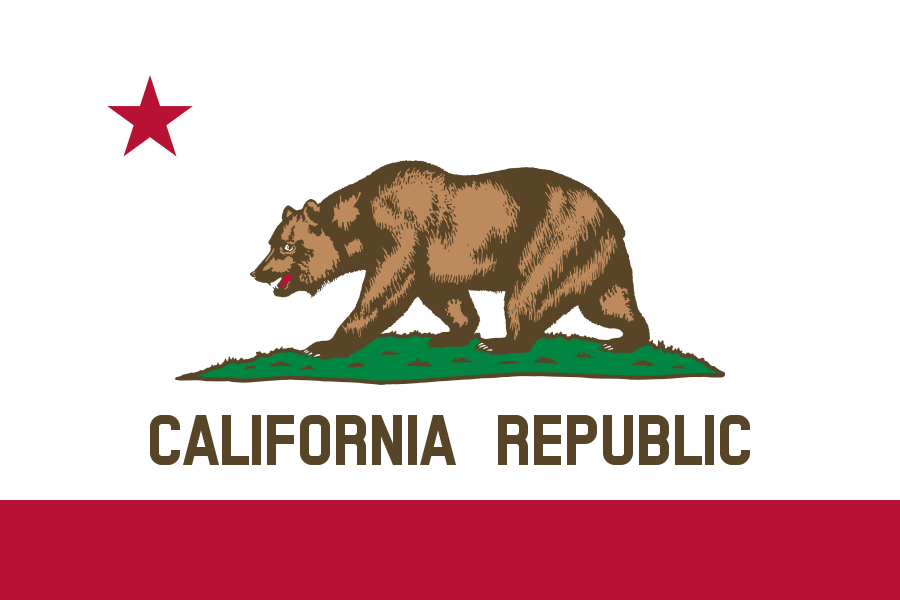
California is a U S state on the Pacific Coast...

Los Angeles California's most populous city and Southern California's hub...
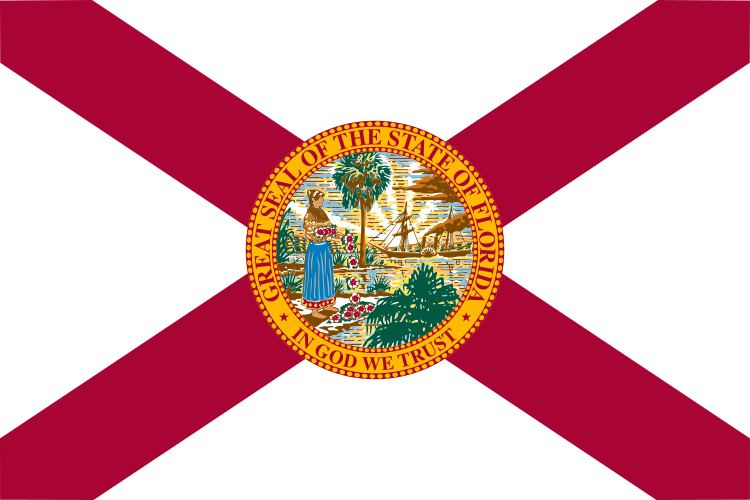
Florida the southernmost state in the contiguous United States is...
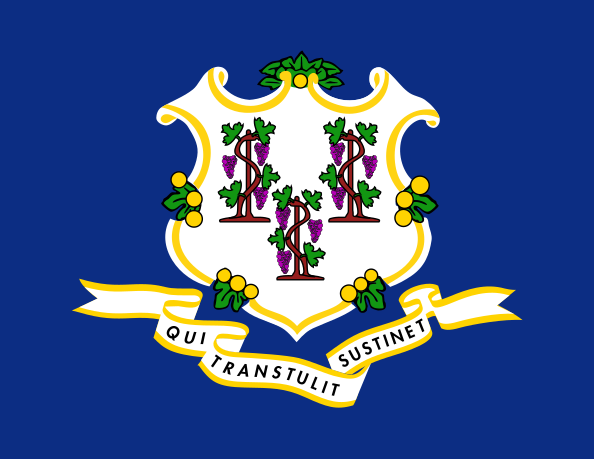
Connecticut is a state in the New England region of...
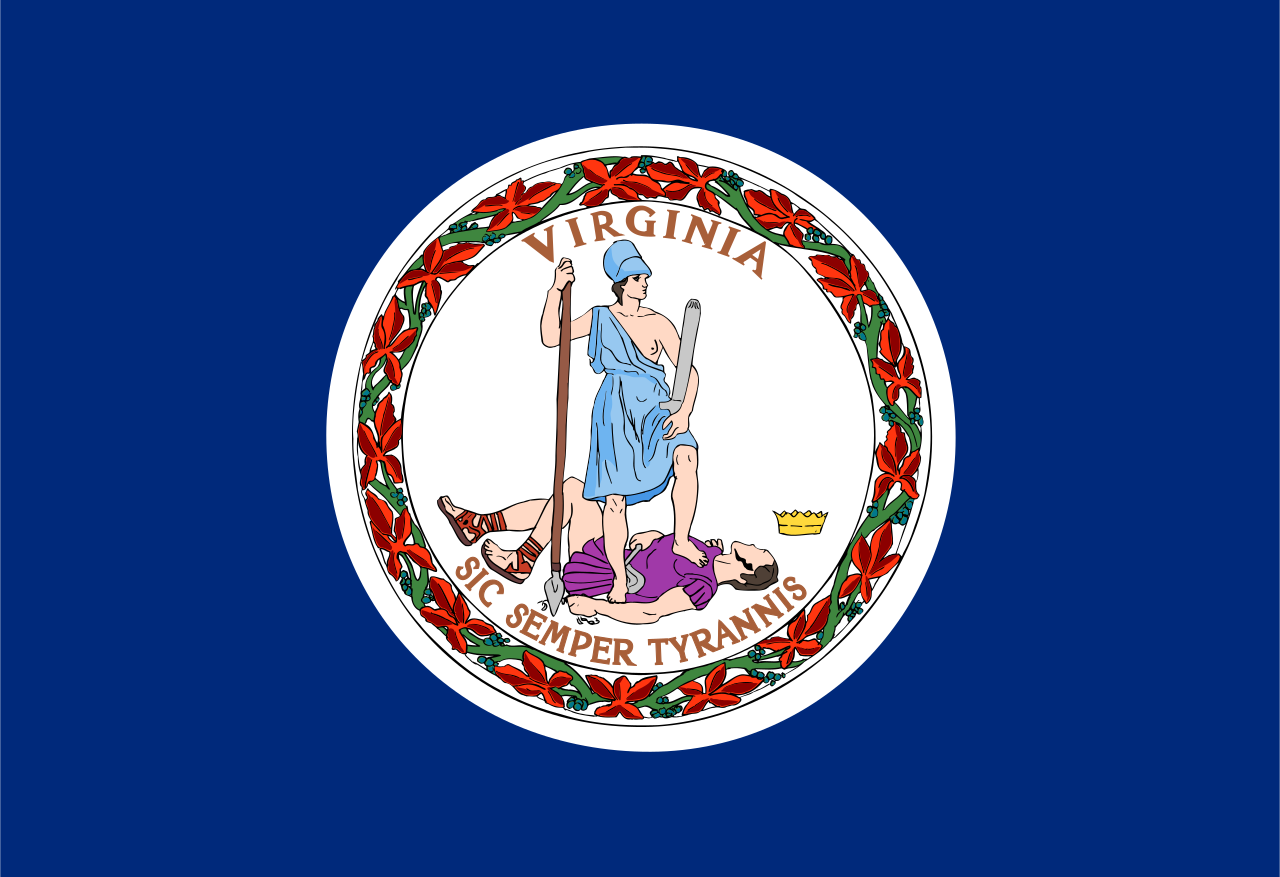
Virginia a state in the Southeastern and Mid-Atlantic regions of...
Massachusetts officially the Commonwealth of Massachusetts is a state located...
Trending

3 hours ago Packers Defensive Lineman Javon Hargrave Out for Season With Torn Achilles

4 hours ago Supreme Court Reassesses Religious Rights and LGBTIQ Protections in Forthcoming Legal Battles

4 hours ago Danny Trejo defends Daily Wire movie role amid production suspension in Montana

5 hours ago Bubba Wallace Involved in Major Multi-Car Racing Wreck at Charlotte Motor Speedway

4 hours ago Democrats Demand Apology From Chuck Grassley Regarding Jack Smith Basketball Remarks
5 hours ago IBM Market Outlook: Quantum Milestones and SAP Partnership Shape Earnings Expectations
Popular

Ken Paxton is an American politician and lawyer serving as...

Jameis Winston is an American football quarterback currently playing for...

Cristiano Ronaldo widely considered one of the greatest footballers captains...

Michael Joseph Jackson the King of Pop was a highly...

Elon Musk is a visionary entrepreneur and engineer known for...
Marco Rubio is a prominent American politician serving as the...