History of Restaurant industry in Guangzhou in Timeline


The restaurant industry in Guangzhou has a rich history, originating in the late Qing dynasty and experiencing significant growth during the early Republican era. The Second Sino-Japanese War in 1938 caused widespread disruption, with many restaurants closing or being destroyed. However, the industry rebounded after China's victory in 1945, benefiting from the city's population and economic growth.
1920: Establishment of Equal Rights Women's Teahouse
In 1920, the establishment of the Equal Rights Women's Teahouse marked the first time women joined the restaurant workforce in Guangzhou.


1926: Restaurant Bankrupt
In 1926, following Huang Dengbo's death, Taotao Ju restaurant went bankrupt.
May 1927: Restaurant Resurrected
In May 1927, Taotao Ju restaurant was resurrected by five notable figures in Guangzhou's restaurant industry: Tan Huanzhang, Tan Jienan, Chen Boyi, Zhao Guiyuan and Guan Lemin.
1927: Opening of Second Taiping Guan Location
In 1927, Xu Laogao opened a second location of the Taiping Guan restaurant, which later became the main location.
1938: Japanese Invasion and Restaurant Closures
In 1938, Japanese forces invaded Guangzhou, leading to the destruction or closure of many restaurants as owners fled the war.
1938: Restaurant Closed Due to Japanese Siege
In 1938, Taiping Guan restaurant closed its doors as Guangzhou was under siege by the Japanese army during the Second Sino-Japanese War.
1938: Siege of Guangzhou during Second Sino-Japanese War
In 1938, during the Second Sino-Japanese War, Guangzhou came under siege, causing many restaurants to cease operation or be destroyed due to the warfare.
1938: Original Store Destroyed
In 1938, the original Shewangman store was destroyed in the Second Sino-Japanese War, following the siege of Guangzhou.
1942: Restaurant Sold and Renamed
In 1942, Guangzhouyuan Restaurant was sold to Hong Kong restaurateur Feng Jiansheng, who renamed the establishment Datong Restaurant.
1945: Restaurant Re-opened After the War
In 1945, after the end of the war, Taiping Guan restaurant briefly re-opened.
1945: Re-opening of Major Establishments
In 1945, many major restaurant establishments in Guangzhou re-opened, though with partial capacity, after the Second Sino-Japanese War.
1947: Panxi Restaurant Established
In 1947, Panxi Restaurant was established in Guangzhou's western suburbs.
1947: Pancake Shared with Family Back Home
In 1947, a Vietnamese Chinese who sampled Dechang's savory pancake was so impressed that he sealed a few fresh pancakes in a metal container and shared it with his family back home.
1948: High number of restaurants
In 1948, the number of food and drink establishments was 12,000 in Guangzhou.
1948: Peak in Restaurant Numbers and Increased Competition
In 1948, the number of restaurants, teahouses, and eateries in Guangzhou reached 12,000, resulting in increased competition. Restaurants like Zhongyang Dining Hall and Tao Tao Ju sought ways to attract patrons.
1949: Stabilization of Market Condition
During the New Democracy period between 1949 and 1952, market conditions stabilized, and the restaurant industry in Guangzhou began to recover.
1949: Restaurant Briefly Re-opened After the War
In 1949, Taiping Guan restaurant briefly re-opened after the war, only to face new challenges.
1949: Communist Takeover Impact on Restaurants
In late 1949, with the communist takeover, many restaurateurs fled Guangzhou, leading to many restaurants operating at limited capacity.
1949: Decline in Restaurant Industry After Power Transition
The power transition in 1949 caused a significant decline in Guangzhou's restaurant industry. The number of food and drink establishments dropped sharply from 12,000 in 1948 to 1,380 in 1949.
1952: Restaurant Industry Recovery
By 1952, registered food and drink establishments in Guangzhou rose to 4,861, with a workforce of 17,059, and the industry recorded a retail revenue of 49.66 million Yuan, taking up 12.8% of the city's total retail revenue.
1952: Gastronomic Establishments Registered
By the end of 1956, the number of registered gastronomic establishments dropped by almost half, from 1952's 4,861 to 2,801.
1953: Restaurant Industry Retail Revenue
In 1953, during the First Five Year Plan, Guangzhou's restaurant industry retail revenue reached 78.52 million Yuan, taking up 15.3% of the city's total retail revenue.
1955: Revenue Drop and Establishment of Joint Venture Restaurant
In 1955, the municipal government prioritized material supply to publicly owned dining establishments, leading to a revenue drop of almost 14 million Yuan for privately owned restaurants. The first joint venture restaurant was also established that year.
1955: First Experimental Joint Venture
In early 1955, Datong Restaurant became the city's first experimental joint venture establishment.
1955: Compare to 1956 retail revenue
Retail revenue in 1956 only represented marginal growth in relation to the city's total retail revenue compared to the preceding year (13.5% in 1956, versus 12.2% in 1955).
1956: Exhibition for Famous Dishes and Professional Certification
In 1956, Guangzhou made its first attempts to professionalize and promote local culinary practices. The Food and Drinks Company held an exhibition for famous dishes and delicate dim sums, and professional certification took place for the first time.
1956: Restaurant Transitioned into a Joint Venture
In 1956, Shewangman was transitioned into a joint venture and merged with Guangxinlin and Lianchuntang.
1956: Restaurant Became a Joint Venture
In 1956, Taotao Ju transitioned into a joint venture following an industry-wide mobilization in the city.
1956: Renovation of Major Establishments and Increased Revenue
In 1956, major establishments like Datong Restaurant, Guangzhou Restaurant, Taiping Guan, and Beiyuan Restaurant saw repairs and expansion, Retail revenue grew to 97.11 million Yuan.
1956: Classification of Gastronomic Establishments
In 1956, the Food and Drinks Company began classifying gastronomic establishments in Guangzhou into seven categories based on goods and services.
1956: Establishment of Guangzhou Food and Drinks Company and Ownership Transition
In 1956, the Guangzhou Food and Drinks Company was established, marking the beginning of unified management. Wholesale ownership transition occurred, forming joint ventures through official purchases.
1957: Decline in Number of Establishments
By 1965, the number of registered restaurant establishments in Guangzhou dropped sharply from 5,728 in 1957 to 1,529.
1957: Lowest retail revenue since 1957
By 1970, the restaurant industry's retail revenue reached the lowest point since 1957, at 78.18 million Yuan, making up less than 9% of the city's retail revenues.
1957: Savory Pancakes Ranked Number One
In 1957, Dechang's savory pancakes was ranked number one in the official competition for Guangzhou's famous dishes and dim sums.
1957: End of the First Five Year plan
The restaurant industry in Guangzhou during the First Five Year Plan, which lasted until 1957, experienced a general decline.
1958: Restaurant Construction Began
Construction of Nanyuan Restaurant began in 1958.
1958: Nationalization of Gastronomic Establishments
In 1958, during the Great Leap Forward, Guangzhou's restaurant industry experienced a significant decline. The city government enacted a mandate to nationalize all gastronomic establishments. The retail revenue in the restaurant industry declined.
1958: Restaurant Renovation and Expansion Funded
In 1958, the central government funded Panxi's renovation and expansion into a garden-style restaurant.
1959: Reversal of Great Leap Forward Policies
Between 1959 and 1963, the Guangzhou municipal government reversed nationalization of the smaller establishments and encouraged formation of collective enterprises.
1959: Expansion Suggested by Zhou Enlai and Chen Yi
In 1959, Zhou Enlai and Chen Yi suggested that Taiping Guan restaurant should expand to accommodate foreign envoys.
1960: Restaurant Resumed Operation
In 1960, Panxi Restaurant resumed operation after renovation and expansion.
1960: Soaring Retail Revenue Due to Food Shortages
In 1960, due to dwindling supply of non-staple produce, urban residents turned to restaurants for meals, causing the retail revenue in the city's restaurant industry to soar to 118.72 million Yuan.
July 1963: Business Operations Commenced
In July 1963, Nanyuan Restaurant commenced business operations.
1963: Reversal of Great Leap Forward Policies
Between 1959 and 1963, the Guangzhou municipal government reversed nationalization of the smaller establishments and encouraged formation of collective enterprises.
1963: Restaurant Expansion
By 1963, Taiping Guan restaurant had expanded to accommodate 500 seats, increased from 200 before the expansion.
1963: Reconstruction and Expansion of Establishments
In 1963, a wave of reconstruction and expansion of older establishments such as Dasanyuan and Nanyuan took place, along with the establishment of new restaurants. A policy to eliminate high-end items and produce refined food items was also implemented.
1964: Decline in Retail Revenue
In 1964, Guangzhou restaurant industry's retail revenue dropped to 78.93 million Yuan, only taking up 9.5% of the city's total retail revenue.
1964: Resumption of Culinary Competition
In 1964, the Food and Drinks Company resumed culinary competition among establishments in an effort to promote competition and improve service standards.
1965: Radical Closure and Combination of Establishments
By 1965, the number of registered restaurant establishments in Guangzhou dropped sharply from 5,728 in 1957 to 1,529 due to renewed closure and combining of establishments.
1965: Dish Originally Created
In 1965, Qingping Chicken was originally created by Guangzhou's Qingping Restaurant.
1965: Comparision to 1975 merger of establishments
The decade also saw radical push to merge smaller establishments, despite a slowly growing workforce, radical merger resulted in a registered establishment count of only 502 in 1975, less than a third of the 1965 figure.
1966: Decline in Service and Food Standards
In the decade since 1966, service and food standards continued to decline in Guangzhou restaurants. Shortages led to the use of substitute ingredients, and meat rations were severely limited.
1966: Reversal of Great Leap Forward Policies
Leading up to, and into, the post-famine period between 1963 and 1966, the municipal government reversed numerous Great Leap Forward policies in regard to the restaurant industry.
1966: Disruption from Cultural Revolution
The Cultural Revolution of 1966 brought significant disruption to Guangzhou's restaurant industry, leading to cancellation of dim sum and tea meals and a push for "self service."
1970: Lowest Retail Revenue Since 1957
By 1970, the restaurant industry's retail revenue reached the lowest point since 1957, at 78.18 million Yuan, making up less than 9% of the city's retail revenues.
1970: Restaurant Renamed and Repurposed
In 1970, during the Cultural Revolution, Lianxianglou was renamed Dongshenglou (Hall of the Rising Sun) and repurposed as a pastry factory, ceasing all dining service.
March 1973: Restaurant Regained Original Name
In March 1973, Taotao Ju regained its original name after being renamed during the Cultural Revolution.
1973: Restaurant Regained Original Name
In 1973, Lianxianglou regained its original name after being renamed during the Cultural Revolution.
1975: Radical Merger of Establishments
The decade also saw radical push to merge smaller establishments, despite a slowly growing workforce, radical merger resulted in a registered establishment count of only 502 in 1975, less than a third of the 1965 figure.
1978: High point restaurant revenue comparison
In 1960, the retail revenue in the city's restaurant industry soared to 118.72 million Yuan, the highest point before 1978.
1980: Jiu's Dai Pai Dong Resurrected
In 1980, Jiu's Dai Pai Dong was resurrected by Tan Yi's grandson Tan Ruijian at its original location.
1983: Dish Reappeared with Improved Recipe
In 1983, Qingping Chicken reappeared with improved recipe and ingredient standards.
1984: Business Operation Resumed
In the fall of 1984, Lianxianglou resumed its business operation following a renovation project.
1986: Largest Pastry Exporter in the City
In 1986, Lianxianglou exported 150,000 boxes of mooncakes, along with other dim sum and pastry varieties, becoming the largest pastry exporter in the city.
1987: Record Sales
By 1987, the two locations of Qingping Restaurant made record sales of 5,080 chicken per day.
1988: Restaurant Closed for Renovation
In 1988, the restaurant closed for renovation.
November 18, 1990: Restaurant Reopened
On November 18, 1990, the restaurant reopened after renovation.
1996: Record of increase in registered establishments
According to the 1996 Gazetteer, for reasons unspecified, the number of registered establishments more than doubled in 1956, reaching 5,728.
1996: Guangzhou Gazetteer's Record of Food and Drink Establishments
According to the 1996 Guangzhou Gazetteer, the registered number of food and drink establishments sharply declined from 12,000 in 1948 to 1,380, due to the Communist takeover.
Mentioned in this timeline
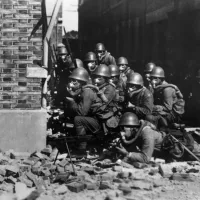
The Second Sino-Japanese War fought between China and Japan from...
Hong Kong is a densely populated special administrative region of...

War is defined as an armed conflict involving the armed...

The Sun the star at the center of our Solar...
Recipes are essentially instructions for preparing food often presented as...
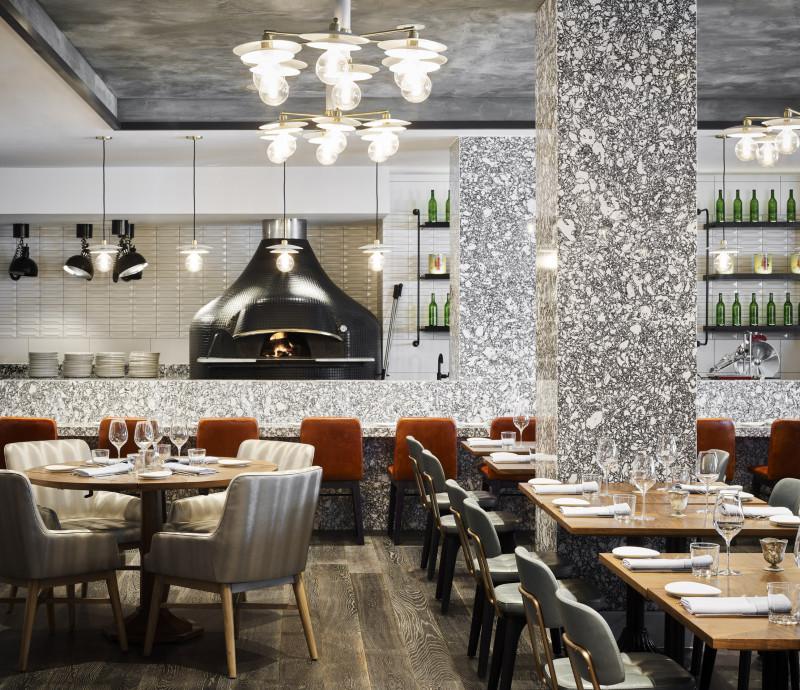
A restaurant is a business that prepares and serves food...
Trending

4 hours ago Nicolas Cage Refuses Amazon AI Waiver and Teases True Detective Season 5 Role

4 hours ago Casper Ruud Competes at the 2026 ATP Shanghai Masters Tournament
2 months ago Canal+ Secures Exclusive UEFA Club Competition Broadcasting Rights in Sub-Saharan Africa Until 2031

4 hours ago Breaking Bad Named Greatest Television Show of the 21st Century
4 hours ago Learner Tien Faces Casper Ruud at Rolex Shanghai Masters
4 hours ago Alex Eala Prepares for Wuhan Open First Round Match Against Shi Han
Popular

Ken Paxton is an American politician and lawyer serving as...

Jameis Winston is an American football quarterback currently playing for...

Cristiano Ronaldo widely considered one of the greatest footballers captains...

Michael Joseph Jackson the King of Pop was a highly...

Elon Musk is a visionary entrepreneur and engineer known for...

Bernie Sanders is a prominent American politician and the senior...