


Rome, Open City, a 1945 Italian neorealist film directed by Roberto Rossellini, depicts life in Rome under Nazi occupation in 1944. It centers on a Resistance fighter attempting to flee the city with the aid of a Catholic priest. The film portrays the struggles of various characters amidst the war. It's the first film in Rossellini's "Neorealist Trilogy".
1942: Start of time period for films to be saved
The list of 100 Italian films to be saved includes films that "have changed the collective memory of the country between 1942 and 1978".


August 1943: Rome Declared an Open City
On August 14, 1943, Rome was declared an open city.
1943: Allied Invasion of Italy
In 1943, the Allied Invasion of Italy took place, but the movie makes no reference to Allied presence, and instead references that it is only the beginning of a long struggle ahead.
June 4, 1944: Nazis Abandon Rome
On June 4, 1944, the Nazis abandoned Rome.
1944: Rossellini Begins Planning Documentary
By 1944, Rossellini began planning a documentary titled Storie di ieri on the subject of Don Pietro Morosini, and meeting with screenwriters including Federico Fellini.
1944: Events in Occupied Rome
In 1944, in occupied Rome, German SS troops attempt to arrest Luigi Ferraris, a communist Resistance leader. He seeks refuge and assistance from fellow fighters and a Catholic priest.
1944: Setting of Rome, Open City
In 1944, the film Rome, Open City is set in Rome during the Nazi occupation, focusing on characters coping with the occupation and a Resistance fighter attempting to escape the city.
January 1945: Filming Begins for Rome, Open City
In January 1945, shooting for Rome, Open City began under difficult conditions, developing its style from circumstance. Cinecittà Studios were unavailable due to war damage and use by Allied forces.
June 1945: Production Ends
In June 1945, production of Rome, Open City ended, having relied on non-professional actors and improvisation due to the wartime conditions.
September 1945: Rome, Open City Opens in Italy
On September 27, 1945, Rome, Open City opened in Italy, with the war damage to Rome still unrepaired.
1945: Release of Rome, Open City
In 1945, Rome, Open City, an Italian neorealist war drama film directed by Roberto Rossellini, was released.
February 1946: US Premiere of Rome, Open City
On February 25, 1946, Rome, Open City premiered in the United States in New York, with approximately 15 minutes cut due to censorship.
1946: Desiderio Finished by Marcello Pagliero
In 1946, Marcello Pagliero completed the film Desiderio, which Rossellini had abandoned due to conditions during World War II. Rossellini disowned the finished product.
1946: Release of Paisan
In 1946, Paisan was released, being the second film in Rossellini's "Neorealist Trilogy", following Rome, Open City.
1946: Rome, Open City Wins Palme d'Or at Cannes
In 1946, Rome, Open City won the Palme d'Or at the Cannes Film Festival.
1946: James Agee's Review
In 1946, critic James Agee stated that "Open City lacks the depth of characterization, thought, and feeling which might have made it a definitively great film...you seldom see as pure freshness and vitality in a film".
1947: Withdrawal in Argentina
In 1947, Rome, Open City was inexplicably withdrawn in Argentina following an anonymous government order.
1948: Release of Germany, Year Zero
In 1948, Germany, Year Zero was released, completing Rossellini's "Neorealist Trilogy", following Rome, Open City and Paisan.
1951: Ban in West Germany
From 1951 to 1960, Rome, Open City was banned in West Germany.
1960: End of Ban in West Germany
From 1951 to 1960, Rome, Open City was banned in West Germany.
1978: End of time period for films to be saved
The list of 100 Italian films to be saved includes films that "have changed the collective memory of the country between 1942 and 1978".
1983: Defamation Lawsuit Against Fellini
In 1983, Rod E. Geiger brought an unsuccessful defamation lawsuit against Federico Fellini regarding Fellini's account of Geiger's involvement in the film.
1995: Inclusion in Vatican's List of Important Films
In 1995, Rome, Open City was included by the Vatican in a list of important films compiled, under the category of "Values".
1995: Restoration of Print
In 1995, during the restoration of the print by Cineteca Nazionale, it was revealed that the original negative consisted of different types of film stocks: Ferrania C6 for outdoor scenes, and Agfa Super Pan and Agfa Ultra Rapid for interiors. The change in image brightness was attributed to inadequate processing.
1996: Sweet Beginnings Published
In 1996, Federico Fellini's autobiographical essay "Sweet Beginnings" was published, recounting the film's journey to the United States.
1996: Release of Celluloide
In 1996, the film Celluloide by Carlo Lizzani was released, dramatizing the difficulties encountered during the shooting of Rome, Open City.
2004: Release of The Children of Rome Open City
In 2004, The Children of Rome Open City, a documentary directed by Laura Muscardin, was released.
2008: Inclusion on 100 Italian Films to be Saved
In 2008, Rome, Open City was included on the Italian Ministry of Cultural Heritage’s 100 Italian films to be saved, a list of films that "have changed the collective memory of the country between 1942 and 1978".
July 2019: Rotten Tomatoes Rating
As of July 2019, Rome, Open City had a 100% approval rating on Rotten Tomatoes, based on 42 reviews.
Mentioned in this timeline
The United States of America is a federal republic primarily...

Germany officially the Federal Republic of Germany is located in...
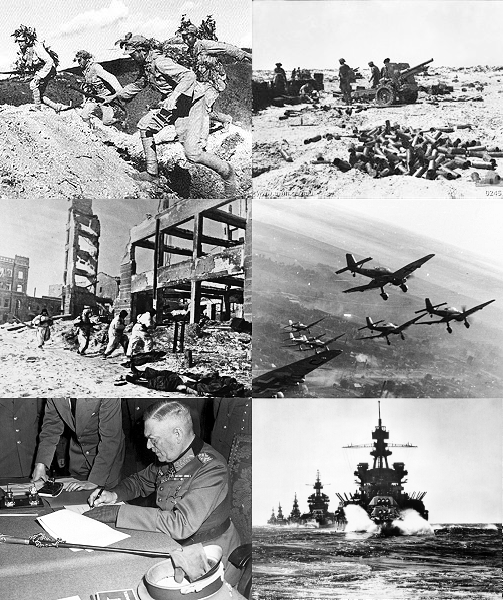
World War II - was a global conflict between the...
Argentina is a country located in the southern cone of...
Italy officially the Italian Republic is a country in Southern...
War is defined as an armed conflict involving the armed...
Trending

4 hours ago Skeet Ulrich Discusses Scream Franchise Future Following Melissa Barrera’s Departure

4 hours ago Stephanie Vaquer Defends Women's World Title At WWE Money in the Bank Event
4 hours ago Dameon Pierce Emerges as Potential Replacement Amidst Philadelphia Eagles Running Back Injury Crisis
4 hours ago Kamil Majchrzak Faces Yannick Hanfmann at the 2026 ATP Shanghai Masters Tournament

6 hours ago Coco Gauff Faces Elise Mertens in WTA China Open Round of 16 Match

6 hours ago Tennis Prediction Markets for Upcoming October 2026 Matches
Popular
Ken Paxton is an American politician and lawyer serving as...

Elon Musk is a visionary entrepreneur and engineer known for...

Cristiano Ronaldo widely considered one of the greatest footballers captains...

Shakira Isabel Mebarak Ripoll the Queen of Latin Music is...

Jameis Winston is an American football quarterback currently playing for...

Bernie Sanders is a prominent American politician and the senior...