


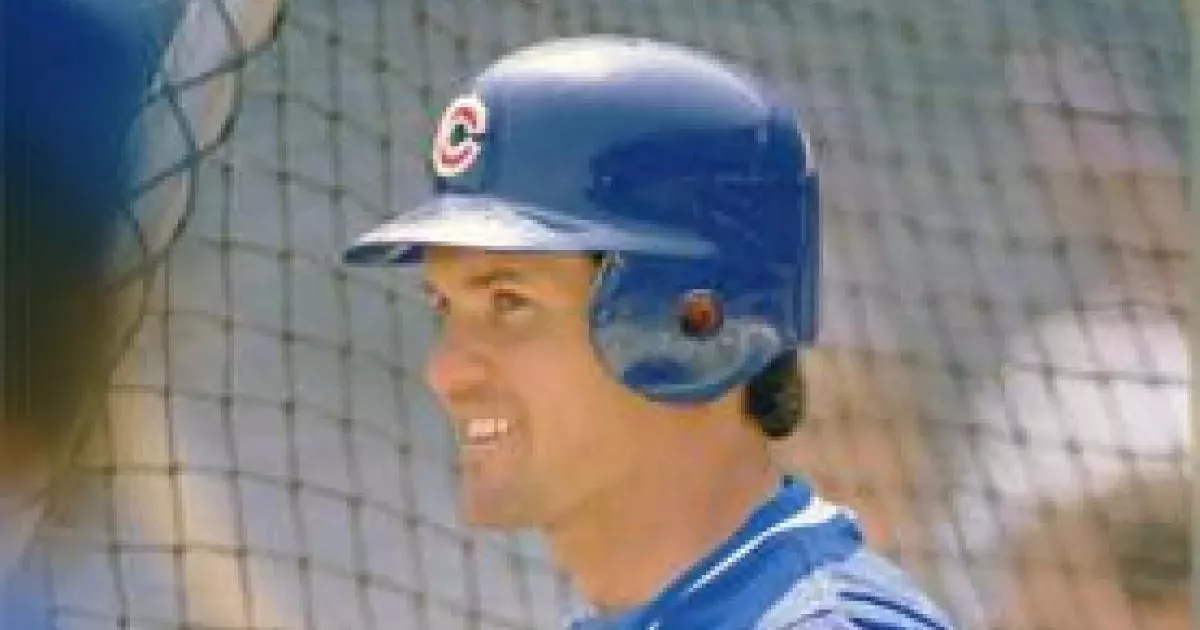
Ryne Sandberg is a legendary former professional baseball player, primarily known for his Hall of Fame career as a second baseman for the Chicago Cubs. A ten-time All-Star, Sandberg was renowned for his exceptional defensive skills and offensive prowess, earning nine Gold Glove Awards and seven Silver Slugger Awards. In 1984, he was named the National League Most Valuable Player, a season that solidified his status as one of the game's premier players. His career, spanning from 1981 to 1997, defined an era of Cubs baseball and cemented his reputation as a model of consistency and professionalism. Following his retirement, Sandberg was inducted into the Baseball Hall of Fame in 2005. Beyond his playing days, he has served as a coach and manager, continuing his long-standing association with the sport.
1945: Last Cubs Playoff Appearance Prior to 1984
The year 1945 marked the last time the Chicago Cubs made a playoff appearance before Ryne Sandberg helped lead the team to the National League's Eastern Division title in 1984.


1958: Ernie Banks MVP Honor
In 1958, Chicago Cubs player Ernie Banks earned the National League Most Valuable Player award, setting a historical benchmark that Ryne Sandberg would eventually be compared to in 1984.
September 18, 1959: Birth of Ryne Sandberg
Ryne Dee Sandberg, who would later become a renowned Major League Baseball player, was born on September 18, 1959.
1959: Ernie Banks Back-to-Back MVP
Ernie Banks secured his second consecutive National League Most Valuable Player award in 1959, remaining the last Cub to hold the honor until Sandberg's achievement in 1984.
1976: Joe Morgan MVP Season
In 1976, Joe Morgan was named the National League Most Valuable Player, serving as the last second baseman to win the award before Ryne Sandberg claimed the honor in 1984.
1977: Parade High School All-America Selection
During the fall of 1977, Ryne Sandberg was recognized for his athletic prowess when he was named to the Parade High School All-America football team as one of only eight quarterbacks selected.
1978: High School Graduation
In 1978, Ryne Sandberg successfully graduated from North Central High School, where he had established himself as a standout three-sport athlete.
1978: Drafting of Ryne Sandberg
In 1978, Ryne Sandberg was drafted into professional baseball by the Philadelphia Phillies organization, a move heavily influenced by Dallas Green, who was working in the Phillies front office at the time.
1978: 1978 Amateur Draft Selection
In 1978, Ryne Sandberg was selected by the Philadelphia Phillies in the 20th round of the baseball amateur draft, though he ultimately chose not to attend the associated event or sign immediately.
1978: Beginning of Professional Baseball Career
In 1978, at the age of 18, Ryne Sandberg embarked on his professional baseball career by playing shortstop for the Helena Phillies in the rookie-level Pioneer League. Throughout his debut season of 56 games, he achieved a batting average of .311 and successfully moved up through the Philadelphia Phillies organization alongside future teammates George Bell and Bob Dernier.
1979: Early Minor League Season with Spartanburg Phillies
During the 1979 season, Ryne Sandberg played shortstop for the Class A Spartanburg Phillies in the Western Carolinas League, appearing in 138 games where he recorded a .247 batting average, seven triples, four home runs, 21 stolen bases, and 47 RBIs.
1980: Breakout Season with Reading Phillies
In 1980, Sandberg played for the Class AA Reading Phillies, batting .310 with 11 home runs and 79 RBIs over 129 games, which earned him a selection to the Eastern League All-Star team for his performance.
1981: Advancement to Oklahoma City 89ers
In 1981, Ryne Sandberg advanced to the Class AAA level to play for the Oklahoma City 89ers, where he appeared in 133 games as a shortstop and second baseman before earning a call-up to the Philadelphia Phillies. During this 1981 stint, he recorded a .293 batting average, a .352 on-base percentage, 32 stolen bases, 9 home runs, and 62 RBIs.
1981: MLB Debut with Philadelphia Phillies
In 1981, Ryne Sandberg began his professional Major League Baseball career as a shortstop playing for the Philadelphia Phillies.
1981: Major League Debut with the Phillies
In 1981, Ryne Sandberg made his major-league debut as a shortstop for the Philadelphia Phillies. During this 13-game stint, he recorded his first career hit at Wrigley Field while using a bat borrowed from teammate Larry Bowa, finishing his brief time with the team with a .167 batting average.
1982: Positional Transition to Second Base
Following the acquisition of veteran Ron Cey after the 1982 season, Ryne Sandberg was transitioned to play second base as his full-time position for the Chicago Cubs.
1982: Trade to the Chicago Cubs
In 1982, Ryne Sandberg was traded from the Philadelphia Phillies to the Chicago Cubs along with Larry Bowa in exchange for Iván DeJesús, following the Phillies' decision that Sandberg would not replace Bowa at the shortstop position.
1983: Beginning of Gold Glove Streak
In 1983, Ryne Sandberg began an impressive defensive run, marking the start of a streak that would see him win nine consecutive Gold Glove awards.
1983: Phillies 1983 World Series Appearance
In 1983, the Philadelphia Phillies reached the World Series, aided by the contributions of Iván DeJesús, who had been acquired in the trade that sent Ryne Sandberg to the Chicago Cubs.
June 23, 1984: The Sandberg Game
On June 23, 1984, Ryne Sandberg cemented his reputation in Major League Baseball by delivering an iconic performance against the St. Louis Cardinals, which included hitting two home runs in a contest that became famously known as the Sandberg Game.
1984: Ryne Sandberg's Breakout MVP Season
In 1984, Ryne Sandberg achieved a career-defining season, batting .314 and leading the National League in runs and triples, which earned him the National League Most Valuable Player award after receiving 22 of 24 first-place votes.
1985: Ryne Sandberg joins the 20-50 club
During the 1985 season, Ryne Sandberg demonstrated exceptional athleticism by batting .305 and achieving 26 home runs, 83 RBIs, and 113 runs scored. Additionally, he reached a career-high of 54 stolen bases, officially earning him a spot in the 20-50 club due to his impressive combination of power and speed.
1985: Naming of Ryne Sandberg Field
In 1985, North Central High School honored Ryne Sandberg by naming their baseball field 'Ryne Sandberg Field' and retiring his varsity jersey numbers in both baseball and football.
1990: 1990 MLB All-Star Game Success
During the 1990 MLB All-Star Game held at Wrigley Field, Ryne Sandberg performed in front of his hometown crowd and secured a victory in the Home Run Derby by hitting three home runs.
1990: Record-Breaking Power Season
During the 1990 season, Ryne Sandberg demonstrated exceptional offensive performance by leading the National League with 40 home runs and driving in 100 runs. This achievement made him only the third second baseman in history to reach the 40-home run milestone, all while maintaining a .306 batting average.
1991: 1991 Performance and Gold Glove Record
During the 1991 season, Ryne Sandberg achieved a .291 batting average, hit 26 home runs, and recorded 100 RBIs for the second year in a row. Furthermore, in 1991, he secured his ninth consecutive Gold Glove Award at second base, setting a new record for the most Gold Gloves at that position at the time.
1991: Conclusion of Gold Glove Streak
The year 1991 marked the final year of Ryne Sandberg's streak of nine consecutive Gold Glove awards, solidifying his status as a perennial defensive standout.
March 2, 1992: Ryne Sandberg signs record-breaking contract extension
On March 2, 1992, Ryne Sandberg became the highest-paid player in Major League Baseball history by signing a four-year contract extension worth $28.4 million, which equated to $7.1 million per season.
June 13, 1994: Ryne Sandberg Announces Retirement
On June 13, 1994, Ryne Sandberg made the decision to retire from professional baseball after struggling with a career-low batting average of .238 and recording only 53 hits in 57 games during the early portion of the 1994 season.
1994: End of First Tenure with the Cubs
The year 1994 marked the conclusion of the first significant stretch of Ryne Sandberg's career with the Chicago Cubs.
1996: Return to the Chicago Cubs
In 1996, Ryne Sandberg made his return to the Chicago Cubs after a brief retirement, resuming his professional baseball career with the team.
September 21, 1997: Ryne Sandberg's Final Wrigley Field Appearance
On September 21, 1997, Ryne Sandberg played his final game at Wrigley Field and recorded the final hit of his professional baseball career.
1997: Contract Renewal with the Cubs
During the 1997 season, Ryne Sandberg signed a contract to continue playing for the Chicago Cubs, marking another year of his tenure with the franchise.
1997: Final Season in MLB
Ryne Sandberg concluded his playing career in Major League Baseball following the 1997 season with the Chicago Cubs.
1997: Retirement and Fielding Record
Upon his retirement in 1997, Ryne Sandberg held the major-league record for the highest career fielding percentage by a second baseman at .989.
2003: First National Baseball Hall of Fame Ballot Appearance
In 2003, Ryne Sandberg made his debut appearance on the National Baseball Hall of Fame ballot, receiving 49.2% of the vote, which was insufficient for the 75% threshold required for induction.
2004: ESPN Radio 1000 Analyst Role
During the 2004 baseball season, Ryne Sandberg began a new chapter in his career by working as an analyst for ESPN Radio 1000.
2004: Increase in Hall of Fame Voting Support
During the 2004 voting cycle, Ryne Sandberg saw an increase in support for his National Baseball Hall of Fame candidacy, with his vote percentage rising to 61.1%.
2004: Record for Home Runs by a Second Baseman Surpassed
In 2004, Ryne Sandberg's long-standing record of 277 home runs as a second baseman was surpassed by Jeff Kent.
August 2005: National Baseball Hall of Fame Induction
In August 2005, Ryne Sandberg delivered his formal induction speech at the National Baseball Hall of Fame and Museum, emphasizing the importance of fundamentally sound baseball and advocating for the future induction of his teammates Andre Dawson and Ron Santo.
August 28, 2005: Retirement of Number 23 at Wrigley Field
On August 28, 2005, Ryne Sandberg received the high honor of having his jersey number 23 officially retired by the Chicago Cubs during a special ceremony held at Wrigley Field, making him the fourth player in franchise history to receive this distinction.
2005: Spokesman for National City Bank
In 2005, Ryne Sandberg emerged from his post-retirement low profile to sign his first marketing agreement, becoming the official spokesman for National City Bank.
2005: Election to the National Baseball Hall of Fame
In 2005, the baseball world recognized Ryne Sandberg's distinguished career by electing him into the National Baseball Hall of Fame.
December 5, 2006: Named Manager of the Peoria Chiefs
On December 5, 2006, Ryne Sandberg began his professional coaching career by being appointed as the manager for the Peoria Chiefs, a Class-A affiliate of the Chicago Cubs competing in the Midwest League.
2007: Record Broken by Luis Castillo
In 2007, the major league record for consecutive errorless games at second base, previously held by Ryne Sandberg at 123 games, was surpassed by Luis Castillo of the Minnesota Twins.
December 2008: Promoted to Manager of the Tennessee Smokies
In December 2008, Sandberg continued his progression through the minor league coaching ranks by accepting a promotion to manage the Tennessee Smokies, the Cubs' Double-A team in the Southern League.
2010: Named Pacific Coast League Manager of the Year
During the 2010 season, Sandberg led the Iowa Cubs to an impressive 82–62 record, earning him the prestigious Pacific Coast League Manager of the Year award.
2010: Andre Dawson Elected to Hall of Fame
Following advocacy from Ryne Sandberg, Andre Dawson was elected to the National Baseball Hall of Fame by voters in 2010.
2012: Ron Santo Enshrined in Hall of Fame
In 2012, Ron Santo was officially enshrined into the National Baseball Hall of Fame by the Veterans' Committee, completing the goals Sandberg had set out in his 2005 speech.
2013: Appointed Manager of the Philadelphia Phillies
In 2013, Ryne Sandberg transitioned from his role as a base coach to become the manager of the Philadelphia Phillies during the middle of the MLB season.
2015: Resignation as Phillies Manager
During the 2015 season, Ryne Sandberg officially stepped down from his position as the manager of the Philadelphia Phillies.
2015: Todd Frazier Wins Home Run Derby
In 2015, Todd Frazier of the Cincinnati Reds became the first player to win the Home Run Derby in his own home stadium since Ryne Sandberg achieved the feat in 1990.
2016: Dozier Matches Sandberg's Milestone
In 2016, Brian Dozier became the first American League second baseman to reach the 40-home run mark, an accomplishment that had previously been achieved by only a few National League players, including Ryne Sandberg in 1990.
July 28, 2025: Death of Ryne Sandberg
The baseball legend Ryne Sandberg passed away on July 28, 2025.
Mentioned in this timeline
Oklahoma is a U S state located in the South...
The Los Angeles Dodgers are a Major League Baseball team...
Los Angeles California's most populous city and Southern California's hub...
A bank is a regulated financial institution licensed to accept...

A star is a self-gravitating luminous plasma spheroid exemplified by...

Dallas Texas is the ninth-most populous city in the U...
Trending
4 hours ago Michael Strahan Updates on Daughter Isabella's Brain Cancer Recovery Journey
4 hours ago Rob Gronkowski Discusses NFL Analysis and Reflects on Chad O'Shea's Impact
4 hours ago Marvin Harrison Jr. Faces Uncertain Future Amidst Cardinals Trade Rumors and Career Struggles

22 days ago UNC Shooter Found Not Guilty by Reason of Insanity and Local Car Accident Reported
5 hours ago Enzo Fernández and Mac Allister Ahead of Liverpool vs Manchester City Clash
5 hours ago Erling Haaland Urges Manchester City Positivity Amid Ongoing Premier League Legal Charges
Popular
Ken Paxton is an American politician and lawyer serving as...

Cristiano Ronaldo widely considered one of the greatest footballers captains...

Michael Joseph Jackson the King of Pop was a highly...

Elon Musk is a visionary entrepreneur and engineer known for...

Shakira Isabel Mebarak Ripoll the Queen of Latin Music is...

Bernie Sanders is a prominent American politician and the senior...