Early Life and Education of Sam Hughes: A Complete Timeline


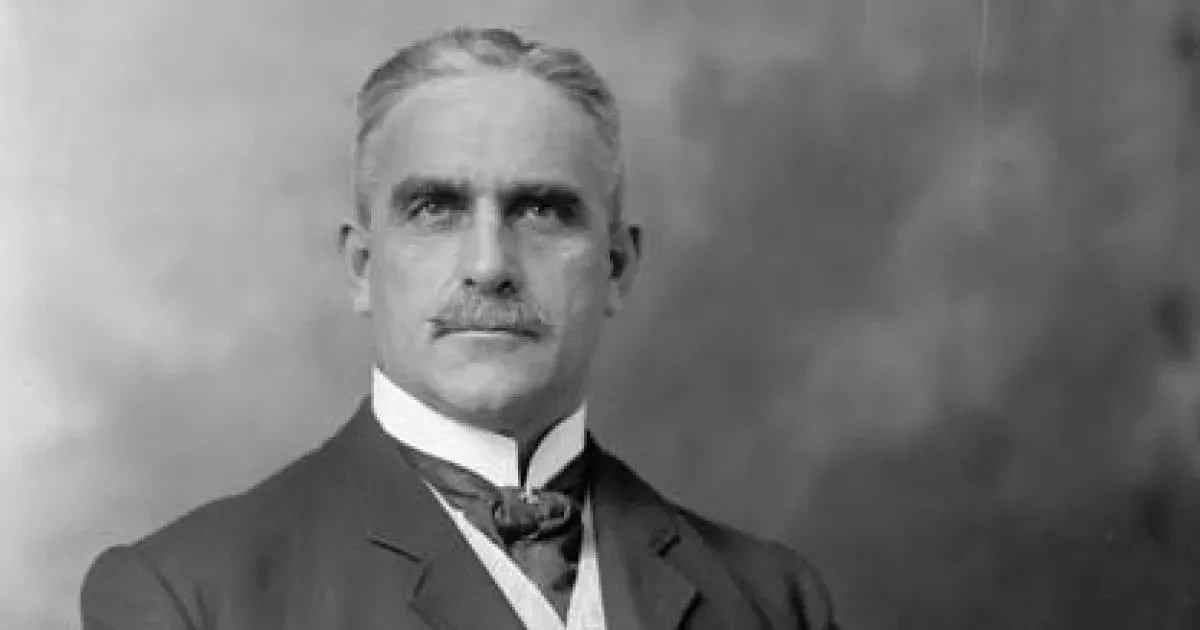
An overview of the childhood and early education of Sam Hughes, highlighting the experiences that shaped the journey.
Sir Samuel Hughes was the Canadian Minister of Militia and Defence during World War I. His time in this role was marked by controversy and disagreements. Ultimately, his contentious leadership and disagreements with Prime Minister Sir Robert Borden led to his dismissal from the position in 1916.
1910: Royal Canadian Navy Foundation
In 1910, Laurier founded the Royal Canadian Navy (RCN), Hughes had little interest in the Navy.


August 1914: Hughes's reaction to Britain's potential inaction
In August 1914, upon hearing about the German invasion of Belgium and the British cabinet's emergency meeting, Hughes expressed outrage and disbelief, even ordering the removal of the Union Jack from the Defence Department. Only when Britain declared war on Germany did he relent.
October 1914: Hughes Announces Chum's Battalion Campaign
In August 1915, Hughes announced that any individual or group could form a "chum's battalion" for the CEF. Between October 1914 and September 1915, 71 battalions had been raised for the CEF by existing militia regiments. Only 40 reached full strength, with many volunteers being underage, unfit, or too old.
December 1914: Princess Patricia's Canadian Light Infantry Arrives
In December 1914, Princess Patricia's Canadian Light Infantry, a privately raised regiment, arrived on the Western Front. Also that month, Alderson replaced the Shield Shovels invented by Hughes's secretary, Ena MacAdam, with the standard British Army shovel.
April 1915: Second Battle of Ypres
In April 1915, during the Second Battle of Ypres, the German Army attacked with chlorine gas, causing heavy casualties among French and Algerian troops. The 1st Canadian Division stepped in to hold the line on the night of April 22-23. On April 23, the Germans unleashed chlorine gas on the Canadian lines. The battle resulted in 6,035 casualties for the 1st Division and 678 deaths for Princess Patricia's battalion.
August 1915: Announcement of Chum's Battalion Campaign
In August 1915, Hughes announced that any individual or group could form a "chum's battalion" for the CEF, leading to the formation of various specialized units. These units included Highland battalions, Irish battalions, sports battalions, American battalions, Orange battalions, and bantam battalions. By 1916, this campaign had raised 170 new battalions, though many were understrength or had unfit recruits.
September 1915: Hughes Announces Chum's Battalion Campaign
In August 1915, Hughes announced that any individual or group could form a "chum's battalion" for the CEF. Between October 1914 and September 1915, 71 battalions had been raised for the CEF by existing militia regiments. Only 40 reached full strength, with many volunteers being underage, unfit, or too old.
September 1915: Second Contingent Arrives, Canadian Corps Created
In September 1915, the Second Contingent arrived on the Western Front as the 2nd Canadian Division. Subsequently, the Canadian Corps was created, with Alderson as the corps commander and Arthur Currie and Richard Turner taking divisional command.
March 1916: Formation of the 3rd Division
In March 1916, a 3rd Division was formed by amalgamating Princess Patricia's Light Infantry, the Royal Canadian Regiment, and various mounted rifle units. These units had been stationed in England since the spring of 1915.
June 1916: 3rd Division Enters Battle of Mount Sorrel
On June 1, 1916, the 3rd Division first saw action in the Battle of Mount Sorrel, which was initially lost to the Germans but then taken back by June 13.
July 1916: Volunteer Numbers Fall Drastically
Between July 1916 and October 1917, the number of volunteers fell drastically, with only 2,810 men volunteering, compared to the earlier period when 60% of Canadians who saw combat had joined by the end of 1915.
September 1916: Canadian Corps Enters the Battle of the Somme
In September 1916, the Canadian Corps entered the Battle of the Somme, fighting until the end of the battle in November and suffering 24,029 casualties.
October 1916: 4th Division Enters Battle of the Somme
On October 10, 1916, the "chum's battalions" raised in 1915 were formed into the 4th Division, which first saw action on the Somme. David Watson, the owner of the Quebec Chronicle newspaper, commanded the division.
November 18, 1916: Presentation of Regimental Colours
On November 18, 1916, Hughes presented the Regimental Colours, donated by the American Bank Note Company, to the 207th (Ottawa-Carleton) Battalion, CEF on Parliament Hill.
1916: Hughes Recruits American Volunteers
In early 1916, Borden became aware that Hughes had been using Defence Department funds to recruit for the American Legion in the United States, violating American neutrality. Hughes had also appointed Reverend C.S. Bullock, an American Unitarian clergyman, as his chief recruiter and given him a colonel's commission, despite Bullock having no military experience.
October 1917: Volunteer Numbers Fall Drastically
Between July 1916 and October 1917, the number of volunteers fell drastically, with only 2,810 men volunteering, compared to the earlier period when 60% of Canadians who saw combat had joined by the end of 1915.
1917: Conscription introduced
In 1917, conscription was introduced in the Canadian Expeditionary Force (CEF), which led to the majority of soldiers in the CEF being Canadian-born.
1918: Composition of Canadian Soldiers
Even in 1918, Canadian-born soldiers comprised 51.4% of the total serving in the CEF, with the majority of the rest being British immigrants.
1921: Hughes informed of terminal illness
In the summer of 1921, Hughes was informed by his doctors that he had only weeks to live.
Mentioned in this timeline
The United States of America is a federal republic primarily...

The rapid advancement of artificial intelligence continues to dominate the...

Germany officially the Federal Republic of Germany is located in...
England a constituent country of the United Kingdom occupies roughly...
A bank is a regulated financial institution licensed to accept...
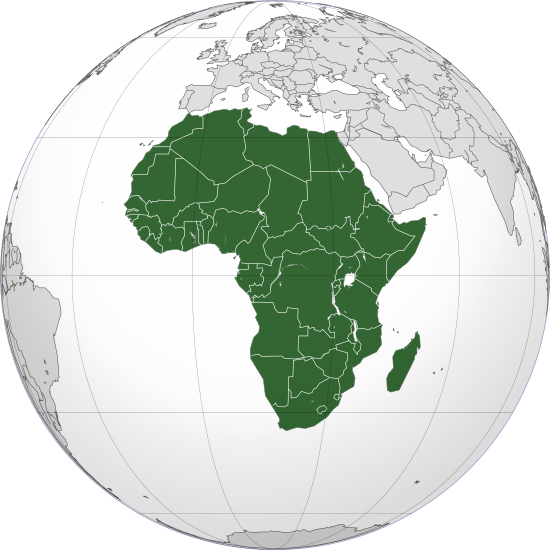
Africa is the second-largest and second-most populous continent home to...
Trending

4 hours ago IonQ and Quantum Computing Stocks Face Market Evaluation and Potential Industry Shakeout

4 hours ago Mariska Hargitay Appears with Son and Advances Sexual Assault Kit Testing Efforts

5 hours ago Julian Sayin Out Indefinitely Due to Injury Impacting Ohio State Football Season
5 hours ago Indian Stock Indices Nifty 50 and Sensex Face Sharp Decline Amid Rising Crude Oil Prices

6 hours ago Iva Jovic Reaches WTA Ningbo Quarterfinals After Defeating Jasmine Paolini
6 hours ago Cornell 7 Op-Ed Sparks Intense Controversy and Campus Outcry at Columbia University
Popular

Ilhan Omar is a prominent American politician currently serving as...

Ken Paxton is an American politician and lawyer serving as...

Elon Musk is a visionary entrepreneur and engineer known for...

Michael Joseph Jackson the King of Pop was a highly...

Cristiano Ronaldo widely considered one of the greatest footballers captains...

Kathy Hochul is an American politician and lawyer who has...