Rise to Success: Career Highlights of Sam Hughes


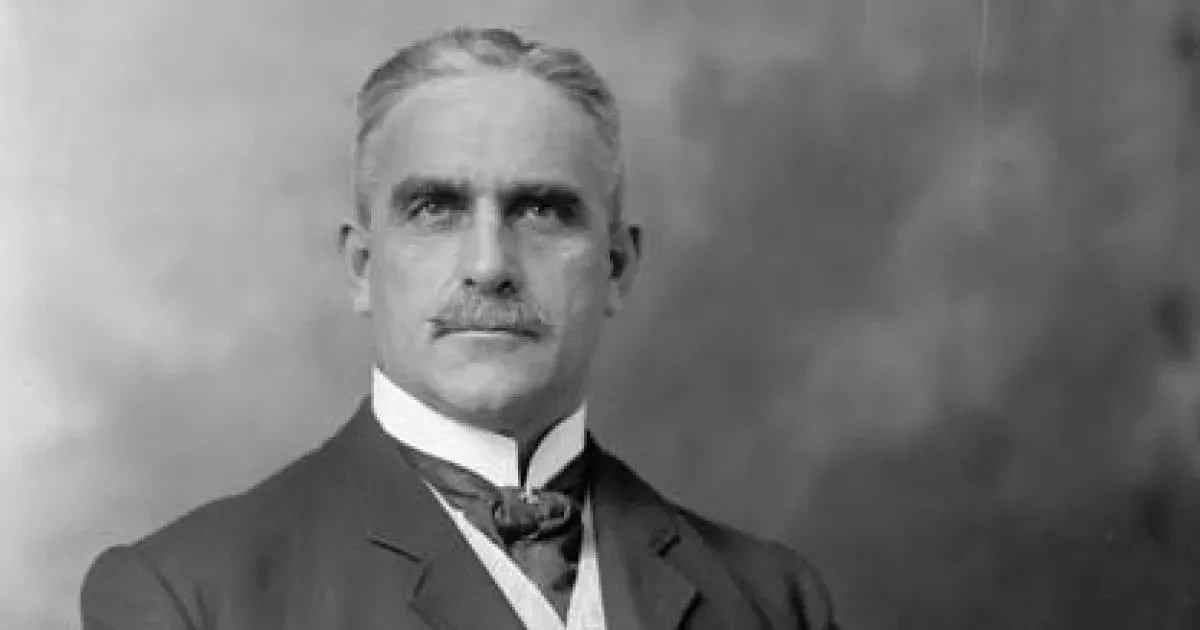
How Sam Hughes built a successful career. Explore key moments that defined the journey.
Sir Samuel Hughes was the Canadian Minister of Militia and Defence during World War I. His time in this role was marked by controversy and disagreements. Ultimately, his contentious leadership and disagreements with Prime Minister Sir Robert Borden led to his dismissal from the position in 1916.
March 1900: Service under Hughes's command
From March 1900 onward, William Hitchens and Lionel Curtis, who were later prominent in Milner's Kindergarten, served under Hughes's command as they advanced across the veld from the Cape Colony into the Orange Free State.


May 1900: Promotion to Intelligence Officer and Involvement in Counterattack
In May 1900, Milner promoted Hughes to the intelligence officer and assistant adjutant general to Warren's Scouts. During the advance, de Villers attacked the British camp at the Faber Pass outside of Campbell on 27 May 1900, and Hughes led the counterattack that drove the Transvaalers back.
1900: Dismissal from Boer War Service
In the summer of 1900, Hughes was dismissed from Boer War service for military indiscipline and sent back to Canada. Letters charging the British military with incompetence had been published in Canada and South Africa.
1901: Rebuilding Relations with the Orange Order
In 1901, after Wallace's death, Hughes tried to rebuild the relationship between the Conservatives and the Orange Order, and his efforts bore fruit. Despite Wallace campaigning against him, Hughes attempted to mend the relationship.
1902: Agent for Canadian Northern Railway
Between 1902 and 1905, Hughes served as an agent for the Canadian Northern Railway headed by his friend, William Mackenzie, traveling twice to the Prairies to select the route for the CNR.
1904: Hughes Loyalty to Borden
In 1904 Hughes was loyal to Borden at a time when many Conservative MPs wanted a new leader after Borden lost two general elections in a row.
1904: Re-election and Offer to Borden
In the 1904 election, Hughes held on to his seat in Victoria County by a narrow margin. The Conservative leader, Robert Borden, lost his own seat in Halifax, and Hughes offered to resign to allow Borden to represent Victoria County.
1905: Agent for Canadian Northern Railway
Between 1902 and 1905, Hughes served as an agent for the Canadian Northern Railway headed by his friend, William Mackenzie, traveling twice to the Prairies to select the route for the CNR.
1905: Imperial Federation Movement
From 1905 onward, Hughes introduced a resolution in the House of Commons calling for an "equal partnership union" of the Dominions with the United Kingdom.
1906: Motion Accepted as Policy
In 1906, Hughes's motion calling for the Canadian government to give preference in handing out land in the Prairie provinces of Alberta, Saskatchewan and Manitoba to veterans of the British Army was accepted as policy.
1908: Hughes Loyalty to Borden
In 1908 Hughes was loyal to Borden at a time when many Conservative MPs wanted a new leader after Borden lost two general elections in a row.
December 1911: Increased militia budget and camp construction
In December 1911, Sam Hughes announced plans to increase the militia budget, construct more camps, and build drill halls. The goal was to bolster the Non-Permanent Active Militia, signaling a shift in defense priorities and funding allocation.
1911: Hughes becomes Minister of Militia and Defence
In 1911, Sam Hughes becomes Minister of Militia and Defence.
1911: Appointed Minister of Militia
In 1911, after the election of Borden, Hughes was appointed Minister of Militia with the aim of creating a distinct Canadian army within the British Empire, to be used in case of war.
April 1912: Controversy over Catholic processions
In April 1912, Hughes sparked controversy by forbidding militia regiments in Quebec from participating in Catholic processions, a long-standing tradition, leading to accusations of anti-Catholic prejudice due to his affiliation with the Loyal Orange Order.
1912: Hughes supports retaining the RCN
During the naval debates in 1912, Hughes supported retaining the "tin-pot navy" as the RCN was often called and helped to ensure its continued existence.
1912: Promotion to Major General
In 1912, Hughes promoted himself to the rank of major general.
1913: European junket with family and militia colonels
In 1913, Hughes took an all-expenses-paid trip to Europe with his family, secretaries, and militia colonels and their families, justified as military observation but perceived by many Canadians as an expensive vacation funded by taxpayers.
1913: Compulsory Militia Service Plan
In 1913, Hughes' intention was to make militia service compulsory for every able-bodied male, a plan that caused considerable public opposition.
August 7, 1914: Camp Valcartier Construction Order
On August 7, 1914, Hughes ordered the construction of Camp Valcartier, demanding its completion by the time the entire force was assembled.
August 1914: Creation of the Canadian Expeditionary Force
In August 1914, Borden announced that the British government accepted the offer of an expeditionary force to Europe. Instead of mobilizing the militia according to the General Staff's plan from 1911, Hughes created the Canadian Expeditionary Force (CEF) and chose to build a new camp at Valcartier.
October 1914: Troops Mobilized and Hughes delivers a speech
By October 1914, the troops were mobilized and ready to leave for England. As the First Contingent embarked for Europe in Quebec City on 3 October 1914, Hughes delivered a speech that was not well received, and his actions were described as flamboyant by Borden.
October 1914: Hughes Announces Chum's Battalion Campaign
In August 1915, Hughes announced that any individual or group could form a "chum's battalion" for the CEF. Between October 1914 and September 1915, 71 battalions had been raised for the CEF by existing militia regiments. Only 40 reached full strength, with many volunteers being underage, unfit, or too old.
October 1914: Hughes Prevents CEF Breakup
In October 1914, Sam Hughes intervened in London to ensure the Canadian Expeditionary Force (CEF) was not broken up by Lord Kitchener and assigned to the British Army. He argued that since Canada paid the costs, it should control the CEF's deployment, and this intervention was considered Hughes's greatest achievement. Hughes also created the Shell Committee to manufacture shells and bullets.
December 1914: Princess Patricia's Canadian Light Infantry Arrives
In December 1914, Princess Patricia's Canadian Light Infantry, a privately raised regiment, arrived on the Western Front. Also that month, Alderson replaced the Shield Shovels invented by Hughes's secretary, Ena MacAdam, with the standard British Army shovel.
1914: Defence budget increase
From 1911 to 1914, the Canadian defence budget rose from $7 million to $11 million per year, showing Hughes' impact on military spending, favoring the militia.
August 1915: Announcement of Chum's Battalion Campaign
In August 1915, Hughes announced that any individual or group could form a "chum's battalion" for the CEF, leading to the formation of various specialized units. These units included Highland battalions, Irish battalions, sports battalions, American battalions, Orange battalions, and bantam battalions. By 1916, this campaign had raised 170 new battalions, though many were understrength or had unfit recruits.
September 1915: Hughes Announces Chum's Battalion Campaign
In August 1915, Hughes announced that any individual or group could form a "chum's battalion" for the CEF. Between October 1914 and September 1915, 71 battalions had been raised for the CEF by existing militia regiments. Only 40 reached full strength, with many volunteers being underage, unfit, or too old.
September 1915: Second Contingent Arrives, Canadian Corps Created
In September 1915, the Second Contingent arrived on the Western Front as the 2nd Canadian Division. Subsequently, the Canadian Corps was created, with Alderson as the corps commander and Arthur Currie and Richard Turner taking divisional command.
May 1916: Byng Replaces Alderson
In May 1916, Lieutenant General Julian Byng replaced Alderson as commander of the CEF.
September 1916: Formation of the Acting Overseas Sub-Militia Council
In September 1916, Hughes, without informing Borden, announced in London the formation of the "Acting Overseas Sub-Militia Council," chaired by Carson, with Hughes's son-in-law as chief secretary.
November 1916: Hughes's Forced Resignation
In November 1916, after the creation of the Ministry of the Overseas Military Forces of Canada, Hughes was forced to resign. On 9 November 1916, Borden dismissed him from the cabinet due to his assumption of powers he did not possess and the problems he created.
1916: Hughes retires from the Cabinet
Disagreements with his colleagues and subordinates forced Sam Hughes's retirement from the Cabinet in 1916.
1916: Dismissal as Minister of Militia and Defence
In 1916, Sir Samuel Hughes was dismissed from his position as the Canadian Minister of Militia and Defence by Prime Minister Sir Robert Borden, following a tumultuous period in office.
May 1917: Borden proposes Union government
In May 1917, Borden proposed a coalition Union government due to mounting casualties, aiming to unite the Conservatives and Liberals. Laurier refused, but many English Canadian Liberal MPs joined the Union government.
November 1917: Currie wins Passchendaele
After Currie won the Battles of Hill 70, Lens, and Passchendaele in November 1917, Hughes requested a meeting with Borden to discuss "Lens and somewhat similar massacres".
January 1918: Hughes demands militia training
In January 1918, Hughes gave a speech at a Masonic Lodge in Toronto demanding that all males in the age group 10–16 undergo militia training.
May 1918: Hughes denounces Ministry of Overseas Forces
On 6 May 1918, Hughes gave a speech before the Commons denouncing the Ministry of Overseas Forces for an excessive number of bureaucrats, and for the first time indirectly attacked Currie as he spoke of officers with a "reckless disregard for life".
October 1918: Hughes accuses Currie of "useless massacres"
In October 1918, Hughes wrote a letter to Borden accusing Currie of "useless massacres of our Canadian boys, as needlessly occurred at Cambrai." Borden ignored Hughes's request that Currie and his "Black-hand Gang" be sacked.
November 1918: Hughes accuses Currie of attacking Mons
In March 1919, Hughes claimed that Currie had only attacked Mons in November 1918 to have the Canadian Corps end the war where it began.
November 1918: Armistice news ill-received by Hughes
The news of the Armistice on 11 November 1918 was not well-received by Hughes, as he felt that Currie had stolen the glory of victory that was rightfully his.
March 1919: Hughes accuses Currie of needlessly sacrificing soldiers
On 4 March 1919, Hughes accused Currie in a speech before the Commons of needlessly sacrificing the lives of Canadian soldiers and made claims about the Second Battle of Mons in November 1918.
September 1919: Hughes accuses Currie of cowardice
In September 1919, Hughes accused Currie in a speech to the Commons of cowardice at the Second Battle of Ypres, claiming he fled from his command post when he saw the chlorine gas.
1921: Sam Hughes represents Lindsay, Ontario
Sam Hughes was a Member of Parliament for Lindsay, Ontario from 1892 to 1921, where he helped to create a distinctively Canadian Army.
1931: Anticipation of the Statute of Westminster
Hughes saw the Dominions as equal partners of the United Kingdom in the management of the British empire, making claims for powers for Ottawa that anticipated the 1931 Statute of Westminster.
June 20: Hughes claims Currie's reputation is propaganda
On 16 June 1920, Hughes said that Currie's military reputation was "propaganda" and that there were dozens of officers who "are regarded throughout the length and breadth of this country as infinitely superior to General Sir Arthur Currie as a general or as a gentleman".
Mentioned in this timeline
The United States of America is a federal republic primarily...

The rapid advancement of artificial intelligence continues to dominate the...

Germany officially the Federal Republic of Germany is located in...
England a constituent country of the United Kingdom occupies roughly...
A bank is a regulated financial institution licensed to accept...
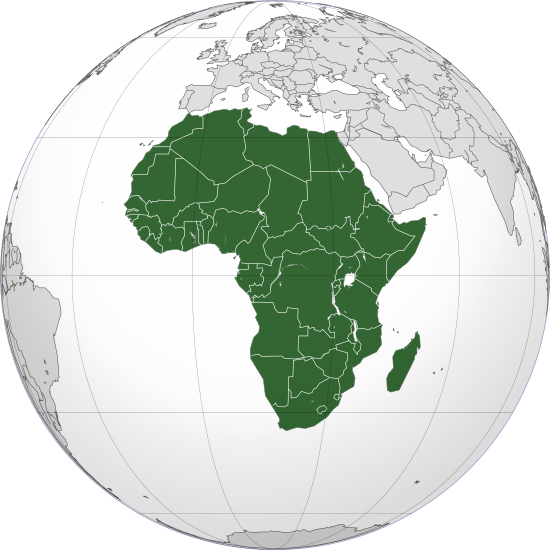
Africa is the second-largest and second-most populous continent home to...
Trending

3 hours ago Jordyn Woods Debuts New Gold Knicks Bag at Season Opener

3 hours ago FAA Certifies Largest Boeing 737 MAX Jet, Enabling Deliveries of 1,555 Ordered Planes

3 hours ago Melania Trump Successfully Negotiates Ceasefire Agreement in Oleshky

3 hours ago NHL Teams Pursue Winnipeg Jets Goaltender Connor Hellebuyck Amid Trade Speculation

4 hours ago Constance Wu Discusses The Terminal List and Career Projects
4 hours ago Marvel Reveals Exciting Teasers and Main Characters for Upcoming Avengers: Doomsday Film
Popular

Ilhan Omar is a prominent American politician currently serving as...

Ken Paxton is an American politician and lawyer serving as...

Elon Musk is a visionary entrepreneur and engineer known for...

Michael Joseph Jackson the King of Pop was a highly...

Cristiano Ronaldo widely considered one of the greatest footballers captains...

Elizabeth Holmes is an American entrepreneur and the founder of...