Challenges Faced by Sam Hughes: Obstacles and Turning Points


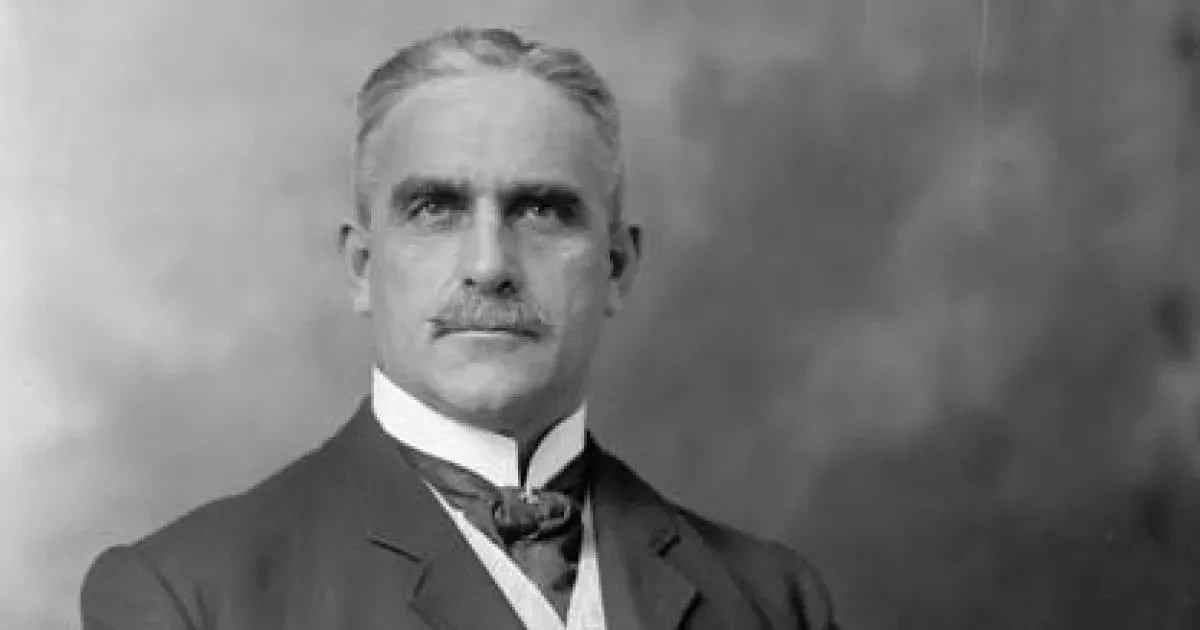
Life is full of challenges, and Sam Hughes faced many. Discover key struggles and how they were overcome.
Sir Samuel Hughes was the Canadian Minister of Militia and Defence during World War I. His time in this role was marked by controversy and disagreements. Ultimately, his contentious leadership and disagreements with Prime Minister Sir Robert Borden led to his dismissal from the position in 1916.
1900: Dismissal from Boer War Service
In the summer of 1900, Hughes was dismissed from Boer War service for military indiscipline and sent back to Canada. Letters charging the British military with incompetence had been published in Canada and South Africa.


1913: Hughes as a controversial minister
By 1913, Hughes' campaign for compulsory militia service made him a controversial figure in the Borden government. Though Borden considered him a liability, he hesitated to dismiss Hughes due to political debts and Hughes' intimidating demeanor.
September 1914: Hughes' chaotic management and perceived insanity
During August-September 1914, Hughes' management of the war effort was characterized by chaos and controversy. He insulted numerous figures, including the Governor General, and his behavior led to widespread perceptions of insanity among colleagues, with Borden noting his eccentric behavior in his memoirs.
1914: Hughes's Hostility and Recruiting Failures
In 1914, Sam Hughes's hostility towards French Canada, combined with his decision not to call out the militia, contributed to the failure of recruiting in Quebec.
April 1915: Second Battle of Ypres
In April 1915, during the Second Battle of Ypres, the German Army attacked with chlorine gas, causing heavy casualties among French and Algerian troops. The 1st Canadian Division stepped in to hold the line on the night of April 22-23. On April 23, the Germans unleashed chlorine gas on the Canadian lines. The battle resulted in 6,035 casualties for the 1st Division and 678 deaths for Princess Patricia's battalion.
1915: Hughes prevents criminal charges against Currie
Cook noted the strangest aspect of the Hughes-Currie affair was that Hughes did not reveal that Currie was an embezzler in March 1919, something that greatly worried Currie at the time. Hughes may have restrained himself as the fact he prevented criminal charges from being laid against Currie in 1915 would have left himself open to charges of obstruction of justice and abuse of his powers as defence minister.
1915: Mounting Criticism of Hughes
From 1915 onward, Hughes faced mounting criticism for his wartime management of the Defence Department, but Prime Minister Borden, politically indebted to Hughes, kept him in his position. Borden sided with Hughes due to his agreement with Hughes's opinions on the British Army's inefficiency.
1915: Exposure of Wasteful Purchasing
In 1915, Scandals continued from the exposure of wasteful purchasing.
1915: War Purchasing Commission Formed
In 1915, the management of spending for supplies was taken away from Hughes and assigned to the newly formed War Purchasing Commission.
June 1916: Criticism from Toronto Globe
On 22 June 1916, The Toronto Globe attacked Hughes for his "swashbuckling" speeches that were damaging relations with Britain.
July 1916: Hughes Booed at Camp Borden
In July 1916, Hughes visited Camp Borden and was booed by "his boys," who blamed him for water shortages.
August 1916: Dinner Confrontation Between Byng and Hughes
On 17 August 1916, Byng and Hughes had a tense dinner where they clashed over promotion powers within the Canadian Corps, leading to Byng threatening to resign if Hughes continued his interference.
September 1916: Canadian Corps Enters the Battle of the Somme
In September 1916, the Canadian Corps entered the Battle of the Somme, fighting until the end of the battle in November and suffering 24,029 casualties.
November 1916: Ross Rifle Abandoned by CEF
In November 1916, after Hughes' resignation, the Ross rifle was fully abandoned by the CEF in favor of the British standard Lee–Enfield rifle.
November 1916: Hughes's Forced Resignation
In November 1916, after the creation of the Ministry of the Overseas Military Forces of Canada, Hughes was forced to resign. On 9 November 1916, Borden dismissed him from the cabinet due to his assumption of powers he did not possess and the problems he created.
1916: Hughes retires from the Cabinet
Disagreements with his colleagues and subordinates forced Sam Hughes's retirement from the Cabinet in 1916.
1916: Dismissal as Minister of Militia and Defence
In 1916, Sir Samuel Hughes was dismissed from his position as the Canadian Minister of Militia and Defence by Prime Minister Sir Robert Borden, following a tumultuous period in office.
1916: Recruiting Campaign and Battalion Losses
In 1916, the Defence Department spent $30,000 in Quebec in a campaign headed by Colonel Arthur Mignault to recruit more volunteers. After the battle of Courcelette in 1916, two CEF battalions from Quebec, the 163rd and 189th, suffered losses and had to be broken up due to lack of replacements. Also in 1916, the Ontario government's attempt to ban schools for the French-Canadian minority caused resentment in Quebec, further hindering recruiting efforts.
January 1917: Hughes's Plans with Beaverbrook and Lloyd George
In January 1917, Hughes floated a plan for Beaverbrook to use his influence with David Lloyd George to have him appointed to the Privy Council. At the same time, Hughes remained frustrated that Garnet Hughes was only commanding the 5th Canadian Division.
January 1917: Hughes Accuses Borden's Government
On 20 January 1917, Hughes accused the finance minister, Sir William Thomas White, of irresponsibly running up the national debt, and his successor Albert Edward Kemp of mismanaging the defence ministry, in his first speech to the Commons after his sacking.
May 1917: Borden proposes Union government
In May 1917, Borden proposed a coalition Union government due to mounting casualties, aiming to unite the Conservatives and Liberals. Laurier refused, but many English Canadian Liberal MPs joined the Union government.
November 1917: Currie wins Passchendaele
After Currie won the Battles of Hill 70, Lens, and Passchendaele in November 1917, Hughes requested a meeting with Borden to discuss "Lens and somewhat similar massacres".
1917: Conscription introduced
In 1917, conscription was introduced in the Canadian Expeditionary Force (CEF), which led to the majority of soldiers in the CEF being Canadian-born.
1917: Imperial Munitions Board Takes Over
In 1917, due to the Shell Committee's failures and accusations of war profiteering, the British Minister of Munitions, David Lloyd George, stopped all orders until Canada created the Imperial Munitions Board, headed by Joseph Flavelle. Flavelle ended the corruption and increased efficiency, leading to a significant increase in shell production. This infuriated Hughes.
1917: Negative Impact on Operational Performance
Previous to 1917, Hughes insistence of the utilization of Canadian manufactured equipment, negatively affected the operational performance of the CEF.
May 1918: Hughes denounces Ministry of Overseas Forces
On 6 May 1918, Hughes gave a speech before the Commons denouncing the Ministry of Overseas Forces for an excessive number of bureaucrats, and for the first time indirectly attacked Currie as he spoke of officers with a "reckless disregard for life".
October 1918: Hughes accuses Currie of "useless massacres"
In October 1918, Hughes wrote a letter to Borden accusing Currie of "useless massacres of our Canadian boys, as needlessly occurred at Cambrai." Borden ignored Hughes's request that Currie and his "Black-hand Gang" be sacked.
November 1918: Hughes accuses Currie of attacking Mons
In March 1919, Hughes claimed that Currie had only attacked Mons in November 1918 to have the Canadian Corps end the war where it began.
November 1918: Armistice news ill-received by Hughes
The news of the Armistice on 11 November 1918 was not well-received by Hughes, as he felt that Currie had stolen the glory of victory that was rightfully his.
December 1918: Hughes calls Currie a murderer
In December 1918, Currie learned that Hughes was telling people that he was "a murderer, a coward, a drunkard and almost everything else that is bad and vile".
March 1919: Hughes accuses Currie of needlessly sacrificing soldiers
On 4 March 1919, Hughes accused Currie in a speech before the Commons of needlessly sacrificing the lives of Canadian soldiers and made claims about the Second Battle of Mons in November 1918.
May 1919: Hughes claims Currie is overshadowing him
In May 1919, Hughes wrote to Garnet claiming that instructions had been issued to writers and correspondents to ensure he was overshadowed by others, especially by Arthur Currie.
September 1919: Hughes accuses Currie of cowardice
In September 1919, Hughes accused Currie in a speech to the Commons of cowardice at the Second Battle of Ypres, claiming he fled from his command post when he saw the chlorine gas.
June 20: Hughes claims Currie's reputation is propaganda
On 16 June 1920, Hughes said that Currie's military reputation was "propaganda" and that there were dozens of officers who "are regarded throughout the length and breadth of this country as infinitely superior to General Sir Arthur Currie as a general or as a gentleman".
Mentioned in this timeline
The United States of America is a federal republic primarily...

The rapid advancement of artificial intelligence continues to dominate the...

Germany officially the Federal Republic of Germany is located in...
England a constituent country of the United Kingdom occupies roughly...
A bank is a regulated financial institution licensed to accept...

Africa is the second-largest and second-most populous continent home to...
Trending

6 months ago Jaime Jaquez Jr. cheers sister Gabriela's WNBA draft to Chicago Sky.

5 hours ago Tampa Bay Rays Face Milwaukee Brewers in World Series Game 1
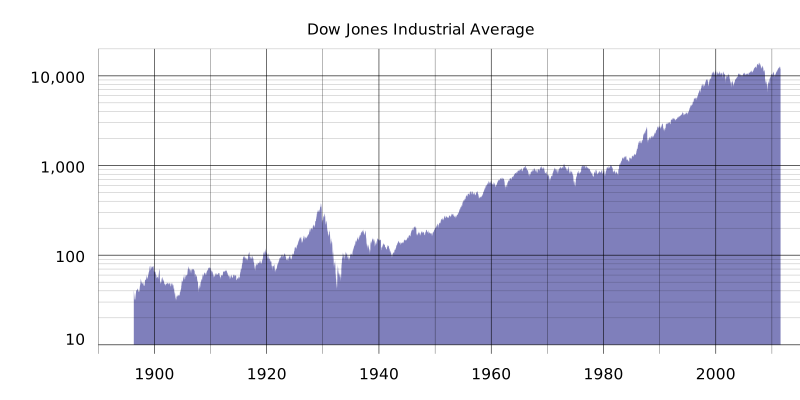
5 hours ago Dow Jones Tumbles Amid Oil Price Surge and Broad Market Sell-off
5 hours ago Jalen Smith Delivers Impactful Performance for the Chicago Bulls

5 hours ago Ryan Rollins Expected to Assume Expanded Leadership Role with the Milwaukee Bucks
6 hours ago Sean Pedulla Signs Two-Way Contract with Sacramento Kings
Popular

Ilhan Omar is a prominent American politician currently serving as...

Ken Paxton is an American politician and lawyer serving as...

Elon Musk is a visionary entrepreneur and engineer known for...

Michael Joseph Jackson the King of Pop was a highly...

Cristiano Ronaldo widely considered one of the greatest footballers captains...

Elizabeth Holmes is an American entrepreneur and the founder of...