


Schedule F is a U.S. federal civil service job classification intended for policy-related positions. Its main purpose is to increase presidential control over the federal career civil service by removing civil service protections, making it easier to dismiss employees. Supporters claimed this would enhance flexibility and accountability. Critics, however, argued that Schedule F could enable political retaliation against federal officials, disrupt government operations, and pose a threat to democracy. Reclassifying employees under this schedule could potentially affect tens of thousands of career employees, significantly increasing the number of political appointments.
1978: Overhaul of Civil Service through the Civil Service Reform Act of 1978
In 1978, legal experts argued that Schedule F would create chaos in the civil service which was last overhauled in the Carter administration through the Civil Service Reform Act of 1978.


1978: Civil Service Reform Act of 1978
In 1978, the Civil Service Reform Act, section 5 U.S.C. § 7511(b)(2), exempted federal employees in confidential, policy-determining, policy-making, or policy-advocating roles from civil service protections. This provision was little used until the Schedule F order.
January 2019: James Sherk's idea for Schedule F
In January 2019, James Sherk, seeking ways to prevent civil service employees from resisting President Donald Trump's agenda, found 5 U.S.C. § 7511, and brought it to the attention of the White House Counsel's Office.
2019: Drafting of the executive order
In 2019, the executive order for Schedule F was drafted secretly over several months and completed by late spring. Issuance was delayed until 2020 due to agency workloads and the COVID-19 pandemic.
February 2020: Trump's motivation after impeachment trial
In February 2020, after his first impeachment trial, President Trump was reportedly motivated to get even with officials.
October 21, 2020: Creation of Schedule F by Executive Order 13957
On October 21, 2020, Schedule F was created by Executive Order 13957, requiring federal agencies to submit lists of positions for reclassification to John D. McEntee by January 19, 2021.
October 26, 2020: Ronald Sanders resigns from Federal Salary Council
On October 26, 2020, Ronald Sanders resigned as chair of the Federal Salary Council, characterizing Executive Order 13957 as an attempt to fill the government with loyalists at the expense of experts.
2020: Schedule F existed briefly during the Trump administration
In 2020, Schedule F was created near the end of the first Trump administration, but it was never fully implemented and no one was appointed to it.
2020: Text of 2020 executive order
In 2020, the executive order was purposed to increase flexibility in hiring and firing to improve performance management and accountability. The Civil Service Rules and Regulations do not cover employees within the Policy/Career classification, including due process and possibly collective bargaining rights, also streamlining hiring.
January 19, 2021: Deadline for preliminary list of positions
On January 19, 2021, heads of all federal agencies were required to submit a preliminary list of positions that could be reclassified as Schedule F, to John D. McEntee, the director of the Presidential Personnel Office.
January 22, 2021: Repeal of Schedule F by President Biden
On January 22, 2021, President Biden repealed Schedule F through Executive Order 14003, before any employees were moved to the new classification.
2021: Saving the Civil Service Act introduced
In 2021, House Democrats introduced the Saving the Civil Service Act to halt the implementation of the executive order and restore any converted or dismissed Schedule F appointees, but no provision regarding Schedule F was included in the Consolidated Appropriations Act, 2021.
2021: Schedule F repealed at the beginning of the Biden administration
In 2021, at the start of the Biden administration, Schedule F was repealed, before anyone was appointed to it.
2022: Reports of plans to reinstate Schedule F
In mid-2022, reports surfaced about plans to reinstate Schedule F if Trump were elected to a second term, including reclassifying around 50,000 workers.
2022: Plans to reinstate Schedule F in the 2024 Trump campaign
Since mid-2022, plans from the 2024 Trump campaign to reinstate Schedule F have attracted attention and commentary.
March 2023: Reinstatement of Schedule F included in Trump's proposals
In March 2023, reinstatement of Schedule F was included at the top of a list of proposals from the Donald Trump 2024 presidential campaign.
2023: Preventing a Patronage System Act introduced
In 2023, The Preventing a Patronage System Act was introduced, but it was removed from the final bill and did not become law. A similar bill, the Saving the Civil Service Act, was introduced in the 118th United States Congress, but did not pass before the end of the Congressional term.
April 2024: Biden administration adopts regulation to prevent Schedule F effects
In April 2024, the Biden administration adopted a regulation intended to prevent most of the effects of reinstating Schedule F, a move expected to take a future administration several months to repeal.
April 2024: Biden administration regulation on civil service protections
In April 2024, the Biden administration put into effect a regulation named "Upholding Civil Service Protections and Merit System Principles", preventing most of the effects of reinstating Schedule F.
2024: Reactions after Trump's victory in the 2024 presidential election
Following Trump's victory in the 2024 presidential election, unions representing federal workers expressed fear and resolution against his policies. Heritage Foundation president Kevin Roberts supported Trump's pledge to dismantle the "deep state."
2024: Project 2025 preparations
In April 2024, it was reported that Project 2025, led by The Heritage Foundation, was preparing a personnel database for up to 20,000 potential Schedule F appointments.
January 20, 2025: Trump reinstates Schedule Policy/Career
On January 20, 2025, Trump signed Executive Order 14171, reinstating the original Executive Order 13957 with amendments, renaming it Schedule Policy/Career. The order removed language exempting positions from the competitive hiring process and moved final decision-making authority to the president. The OPM director was directed to rescind the "Upholding Civil Service Protections and Merit System Principles" regulation.
January 21, 2025: Lawsuit filed by National Treasury Employees Union
On January 21, 2025, the National Treasury Employees Union filed a lawsuit seeking to stop the implementation of Schedule Policy/Career, arguing that it violates the Civil Service Reform Act of 1978 and the Administrative Procedure Act.
2025: Reinstatement as Schedule Policy/Career in the second Trump administration
In 2025, at the beginning of the second Trump administration, Schedule F was reinstated as Schedule Policy/Career.
2025: Project 2025 and Agenda 47 relies on Trump reenacting Schedule F
In 2025, much of Project 2025 and Agenda 47 relies on Trump reenacting Schedule F, which he stated his intent to do.
2025: Text of 2025 executive order
In 2025, the text versions of the executive order were nearly identical, with some minor amendments made by the latter. The stated purpose of the order was to increase flexibility in hiring and firing to improve performance management and accountability. The Civil Service Rules and Regulations do not cover employees within the Policy/Career classification, including due process and possibly collective bargaining rights, also streamlining hiring.
2025: Grounds for dismissal added in 2025 version
In 2025, the version of Schedule F added language making failure to faithfully implement administration policies grounds for dismissal, while stating that appointees "are not required to personally or politically support the current President or the policies of the current administration."
Mentioned in this timeline
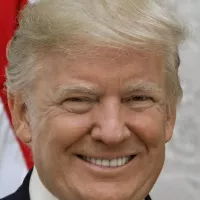
Donald John Trump is an American politician media personality and...
Ron DeSantis is an American politician attorney and former naval...
The United States of America is a federal republic primarily...
The White House located at Pennsylvania Avenue NW in Washington...
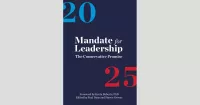
Project spearheaded by the Heritage Foundation is a comprehensive plan...

Impeachment is a formal process where a legislative body brings...
Trending

3 hours ago Alexander Bublik Causes Stir After Racket Meltdown During Tennis Match

3 hours ago Quentin Grimes Contends for Role in Lakers Starting Lineup Under Coach JJ Redick

3 hours ago Burt Reynolds Legacy Revisited Through Box Office History and Modern Film Remakes

3 hours ago Sandro Mamukelashvili Impresses Lakers Organization Following Strategic Signing

3 hours ago Rachel McAdams Joins Voice Cast for New Dwayne Johnson Film Lizard Music

3 hours ago Charles Bassey Prepares to Bolster Golden State Warriors Frontcourt for Upcoming Preseason Games
Popular

Ilhan Omar is a prominent American politician currently serving as...
Ken Paxton is an American politician and lawyer serving as...

Elon Musk is a visionary entrepreneur and engineer known for...

Michael Joseph Jackson the King of Pop was a highly...

Jameis Winston is an American football quarterback currently playing for...

Cristiano Ronaldo widely considered one of the greatest footballers captains...