


The shadow docket pertains to the U.S. Supreme Court's handling of motions and orders in cases before final judgment, without full briefing or oral arguments. It primarily involves emergency applications like stays and injunctions. The term, coined by William Baude in 2015, highlights the expedited and less transparent nature of these decisions compared to standard appellate proceedings. This process has drawn scrutiny due to its increasing use and perceived impact on significant legal and policy issues.


1950: Maryland v. Baltimore Radio Show, Inc.
1953: Stay of executions
In 1953, the shadow docket was used for consequential rulings such as the stay of the executions of Julius and Ethel Rosenberg.
1972: In-chambers opinion denying injunction
In 1972, an influential in-chambers opinion denying an injunction, Communist Party of Indiana v. Whitcomb (Rehnquist, in chambers) was released.
1973: Reinstatement of injunction
In 1973, the shadow docket was used for consequential rulings such as the reinstatement in Schlesinger v. Holtzman of an emergency injunction ordering a halt to the Nixon administration's bombing of Cambodia.
December 1989: Revision of Supreme Court rules
In December 1989, the Supreme Court revised its rules, removing the specific mention of injunctions, including the rule that "a writ of injunction may be granted by any Justice in a case where it might be granted by the Court."
1990: Supreme Court rules update
By 1990, the rules of the Supreme Court did not mention injunctions specifically.
2005: Roberts's confirmation hearing comments
In 2005, during his confirmation hearing, Chief Justice John Roberts expressed his hope that "we haven't gotten to the point where the Supreme Court's opinions are so abstruse that the educated layperson can't pick them up and read them and understand them".
2010: Denial of injunction in Respect Maine PAC v. McKee
In 2010, the full court in Respect Maine PAC v. McKee denied an injunction.
2010: In-chambers opinions cited
Subsequent in-chambers opinions have cited the "indisputably clear" standard, including Lux v. Rodrigues in 2010 (Roberts, in chambers).
2012: In-chambers opinions cited
Subsequent in-chambers opinions have cited the "indisputably clear" standard, including Hobby Lobby v. Sebelius in 2012 (Sotomayor, in chambers).
2014: Adam Liptak criticizes Court's opinions
In 2014, New York Times Supreme Court correspondent Adam Liptak criticized the Court's opinions as "not abstruse. They are absent."
2014: Wheaton College v. Burwell injunction
In 2014, the full court granted an injunction in Wheaton College v. Burwell over a dissent authored by Justice Sotomayor.
January 2015: Publication of "The Supreme Court's Shadow Docket"
In January 2015, William Baude's "Foreword: The Supreme Court's Shadow Docket" was published in the New York University Journal of Law & Liberty.
2015: Criticism of lack of transparency
Criticisms of the lack of transparency of the shadow docket preceded the term's coinage in 2015.
2015: Term "shadow docket" coined
In 2015, William Baude coined the term "shadow docket".
2015: First use of "shadow docket" term
In 2015, the phrase "shadow docket" was first used in the context of Supreme Court motions and orders by University of Chicago law professor William Baude.
2017: Increased use of shadow docket
Since 2017, the shadow docket has been increasingly used for consequential rulings, particularly for requests by the Department of Justice for emergency stays of lower-court rulings.
October 2018: Maxim repeated in court cases
The maxim that it is "a court of final review and not first view" was repeated in 11 of the cases in the October 2018 term.
September 2019: Sotomayor criticizes government's over-reliance on shadow docket
In September 2019, Justice Sonia Sotomayor criticized the government's over-reliance on the shadow docket in a dissent to an unexplained immigration order.
2019: Publication of "The Solicitor General and the Shadow Docket"
In 2019, Harvard Law Review published "The Solicitor General and the Shadow Docket".
August 2020: Court term statistics
During the Court's August 2020 – July 2021 term, the exact vote count was known in 14 cases out of the 73 emergency cases referred to the whole court. There were 56 merits docket rulings during that period.
October 2020: Conservative majority and increased shadow docket use
Since the appointment of Justice Amy Coney Barrett in October 2020, the Supreme Court has had a 6–3 conservative majority, the shadow docket had seen increased use, and the Court treats these orders as precedential despite the lack of opinions attached to the order.
2020: Application of "indisputably clear" standard
In 2020, Chief Justice Roberts, in a lone concurrence in South Bay United Pentecostal Church v. Newsom ("South Bay I"), also applied the "indisputably clear" standard to deny a request for an injunction.
July 2021: Court term statistics
During the Court's August 2020 – July 2021 term, the exact vote count was known in 14 cases out of the 73 emergency cases referred to the whole court. There were 56 merits docket rulings during that period.
September 2021: Prominence of shadow docket increased
In September 2021, the shadow docket gained more prominence after the Court declined to block the Texas Heartbeat Act from being enforced and decided some technical matters concerning how it could be challenged in Whole Woman's Health v. Jackson.
2021: Kagan criticizes shadow-docket decision-making
In 2021, Justice Elena Kagan criticized the Court's "shadow-docket decision-making" as becoming "more unreasoned, inconsistent, and impossible to defend" in a dissent to a denial of an application for injunctive relief in the case Whole Woman's Health v. Jackson.
2021: Congressional hearings on the shadow docket
In 2021, both the United States House Committee on the Judiciary and the United States Senate Committee on the Judiciary held its first hearings on the practice in February and September respectively.
2021: Granting injunctions under lower standard
In 2021, in Tandon v. Newsom, a majority of the court granted injunctions under the lower "likelihood of success" standard of the Winter factors.
2024: Legislation introduced to reform the Supreme Court
In 2024, Senate Democrats introduced legislation aiming to require the Court to provide written explanations of its decision and disclose how the Justices voted, coinciding with other attempts to reform the Supreme Court.
Mentioned in this timeline
The United States of America is a federal republic primarily...
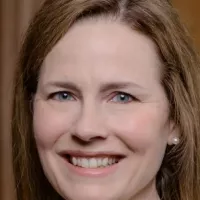
Amy Coney Barrett is an American jurist and Associate Justice...

John Roberts is the th Chief Justice of the United...
Texas is the second-largest U S state by area and...

Chicago situated on Lake Michigan's western shore is the most...

New York University NYU is a private research university located...
Trending

4 hours ago Rudy Gobert Discusses Timberwolves Performance and Aims for Continued Offensive Dominance
4 hours ago MLB Fans Criticize John Smoltz for World Series Broadcasting Errors
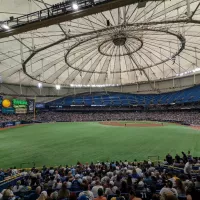
4 hours ago Tropicana Field Hosts High-Stakes World Series Baseball Matchup
4 hours ago Jaden McDaniels Delivers Impressive Two-Way Performance for Minnesota Timberwolves
4 hours ago Derek Jeter Shares Relatable Dad Moment at Zoo and Goes Viral on Social Media
4 hours ago Tiger Woods Plans Full Golf Schedule Including TGL and Hero World Challenge
Popular

Ilhan Omar is a prominent American politician currently serving as...

Ken Paxton is an American politician and lawyer serving as...

Elon Musk is a visionary entrepreneur and engineer known for...

William Franklin Graham III known as Franklin Graham is an...

Barack Obama the th U S President - was the...
Michael Joseph Jackson the King of Pop was a highly...