


1900: Start of the Somaliland Campaign
In 1900, the Somaliland Campaign, also called the Anglo-Somali War or the Dervish War, began between the Dervishes and the British.


1900: Academic Studies of Somali Language
Somali is the mother tongue of the Somali people. It is the best documented of the Cushitic languages, with academic studies of it dating from before 1900.
1905: Administration of British Somaliland
In 1905, British Somaliland was administered by the Colonial Office after being administered by the Foreign Office.
1909: Stone implements from the Jalelo site
In 1909, the stone implements from the Jalelo site in Somaliland were characterized as important artefacts demonstrating the archaeological universality during the Paleolithic between the East and the West.
1913: Minimal Christian Presence in Somali Territories
In 1913, during the early part of the colonial era, there were very few Christians in the Somali territories, with approximately 100–200 followers from Catholic missions in the British Somaliland protectorate.
1914: World War I Start
During the First World War starting in 1914, Hassan also received aid from the Ottomans, Germans, and, for a time, from Emperor Iyasu V of Ethiopia.
1918: World War I End
During the First World War ending in 1918, Hassan also received aid from the Ottomans, Germans, and, for a time, from Emperor Iyasu V of Ethiopia.
November 1919: British forces begin preparations for assault
In November 1919, British troops had begun preparations for the assault of the Fifth Expedition of the Somaliland campaign.
February 1920: British aerially bombed the Dervish capital of Taleh
In February 1920, the conflict between the British and the Dervishes ended when the British aerially bombed the Dervish capital of Taleh.
1920: Defeat of Hassan's Dervishes
In 1920, after three weeks of battle, Hassan's Dervishes were defeated, bringing an effective end to their 20-year resistance.
1922: Clash in Burao and RAF bombing
In 1922, the people of Burao clashed with the British, leading to the death of Captain Allan Gibb and the subsequent bombing of Burao by the RAF.
August 1940: Italian conquest of British Somaliland
In August 1940, the Italian conquest of British Somaliland took place, part of the East African campaign.
July 1945: Sheikh Bashir Rebellion
In July 1945, the Sheikh Bashir Rebellion was waged by tribesmen of the Habr Je'lo clan against British authorities.
1945: British campaign against Sheikh Bashir's troops
In 1945, the British campaign against Sheikh Bashir's troops proved abortive, leading to the abandonment of advance posts and confinement to the coast town of Berbera.
1954: Marriage Patterns in Dhulbahante Clan
A 1954 study observed that in 89 marriages contracted by men of the Dhulbahante clan, 55 (62%) were with women of Dhulbahante sub-clans other than those of their husbands; 30 (33.7%) were with women of surrounding clans of other clan families (Isaaq, 28; Hawiye, 3); and 3 (4.3%) were with women of other clans of the Darod clan family (Majerteen 2, Ogaden 1).
1954: Death of Captain Allan Gibb
In 1954, Captain Allan Gibb was shot dead in Burao during an affray between tribesmen.
1958: First Test Well Dug in Dhagax Shabeel
In 1958, Standard Vacuum (Exxon Mobil and Shell) dug the first test well in Dhagax Shabeel, Saaxil region. Three of the four test wells were successful in producing light crude oil.
April 1960: Resolution requesting independence and union
In April 1960, the Legislative Council of British Somaliland passed a resolution requesting independence and union with the Trust Territory of Somaliland.
May 1960: British government states preparedness to grant independence
In May 1960, the British government stated that it would be prepared to grant independence to the then protectorate of British Somaliland.
June 1960: Approval of bill for union
On 27 June 1960, the Somaliland Legislative Assembly approved a bill formally allowing the union of the State of Somaliland with the Trust Territory of Somaliland.
June 1960: Independence of the State of Somaliland
On June 26, 1960, the State of Somaliland was formally granted independence by the United Kingdom.
June 1960: British Somaliland gains independence
On June 26, 1960, the former British Somaliland protectorate obtained independence as the State of Somaliland.
July 1960: Unification of Somaliland and Italian Somaliland
On 1 July 1960, the State of Somaliland and the Trust Territory of Somaliland (the former Italian Somaliland) united as planned to form the Somali Republic, resulting in initial enthusiasm among northerners inspired by Somali nationalism.
July 1960: Union of the State of Somaliland with the Trust Territory of Somaliland
On 1 July 1960, the union of the State of Somaliland with the Trust Territory of Somaliland was formalized.
July 1960: Somaliland unites with Trust Territory
On July 1, 1960, Somaliland united with the Trust Territory of Somaliland under Italian Administration.
1960: British Population Estimate
Before independence in 1960, a British population estimate on the basis of clan indicated that out of some 650,000 ethnic Somalis in the protectorate, the Isaaq, Darod and Dir made up 66%, 19% and 16% of the population, respectively.
1960: Somaliland claims territory of former British Somaliland
In 1960, Somaliland claimed the entire area of the former British Somaliland, which had gained independence, under the name State of Somaliland. Somaliland is currently in control of the vast majority of the former State of Somaliland.
1960: Reference to Restoration
The Somaliland constitution would ratify Somaliland's self-declared independence and final separation from Somalia, restoring the nation's independence for the first time since 1960.
July 1961: Somali Constitution Referendum
On 20 July 1961, a referendum was held to ratify a new constitution, but it faced opposition in former Somaliland due to perceived favoritism towards the south, leading to boycotts and widespread dissatisfaction.
December 1961: Failed Revolt by Somaliland Officers
In December 1961, British-trained Somaliland officers attempted a revolt to end the union with Somalia, but their uprising failed, leading to continued marginalization of Somaliland.
1962: Application of 1962 Penal Code
The Somaliland government continues to apply the 1962 penal code of the Somali Republic, maintaining legal continuity.
1967: Abdirashid Ali Shermarke becomes President
In 1967, Abdirashid Ali Shermarke became the President of Somalia, succeeding Aden Abdullah Osman Daar, further shaping the political landscape of the Somali Republic.
1967: Muhammad Haji Ibrahim Egal appointed Prime Minister
In 1967, Muhammad Haji Ibrahim Egal was appointed Prime Minister of Somalia by President Shermarke, marking a significant shift in the country's political leadership.
October 1969: Military Coup Following Shermarke's Assassination
On 21 October 1969, a military coup d'état led by Major General Mohamed Siad Barre occurred after President Shermarke's assassination, resulting in the Somalian Army seizing power and establishing a new regime.
1969: Abdirashid Ali Shermarke in power until 1969
Abdirashid Ali Shermarke remained President until 1969, marking a period of political leadership before subsequent events reshaped Somalia's governance.
1975: Somalia Census
There has not been an official census conducted in Somaliland since the Somalia census in 1975.
1986: Census Results Never Released
The results from a census in 1986 were never released into public domain.
May 1988: SNM Offensive Against Hargeisa and Burao
In May 1988, the SNM launched a major offensive, capturing Burao on 27 May within two hours and entering Hargeisa on 29 May, gaining control of most of the city except its airport by 1 June.
1988: Bombardment of Hargeisa
In 1988, as part of punitive measures against perceived supporters of guerrillas, the Barre regime bombed cities, including the northwestern administrative center of Hargeisa, a Somali National Movement (SNM) stronghold, under the leadership of General Mohammed Said Hersi Morgan.
1990: No Bishop of Mogadishu since 1990
Since 1990, there has been no Bishop of Mogadishu, and the Bishop of Djibouti acts as Apostolic Administrator for the Roman Catholic Diocese of Mogadishu, which is designated to serve the Somaliland area as part of Somalia.
January 1991: Collapse of the Barre Regime
In January 1991, the Barre regime collapsed, leading to the stabilization of the political situation in Somaliland, the return of displaced people, demobilization of militias, and reconstruction efforts.
April 1991: Somaliland Declares Independence
Between 27 April 1991 and 15 May 1991, under the leadership of Abdirahman Ahmed Ali Tuur, the local administration declared the northwestern Somali territories independent at a conference held in Burao.
May 1991: Somaliland Declares Independence
Between 27 April 1991 and 15 May 1991, under the leadership of Abdirahman Ahmed Ali Tuur, the local administration declared the northwestern Somali territories independent at a conference held in Burao.
1991: Grand conference in Burao
At the grand conference in Burao in 1991, various names were suggested for Somaliland, including Puntland and Shankaroon.
1991: Declaration of Somaliland's independence
In 1991, Somaliland declared its independence following a 10-year war.
1991: Governance by democratically elected governments
Since 1991, the territory of Somaliland has been governed by democratically elected governments seeking international recognition.
1991: Adoption of the name "Republic of Somaliland"
The name "Republic of Somaliland" was adopted upon the declaration of independence following the Somali Civil War in 1991.
January 1992: Armed Conflict against Tuur's rebels
In January 1992, a brief armed conflict began against rebels opposing Tuur's leadership, continuing until August 1992 when it was resolved by a conference at the town of Sheikh.
August 1992: Resolution of Conflict at Sheikh Conference
In August 1992, the armed conflict against rebels opposing Tuur's leadership, which began in January 1992, was settled by a conference at the town of Sheikh.
September 1992: Hadaaftimo conference
In September 1992, the Warsangali clan held a conference in Hadaaftimo, where they expressed the desire to remain part of Somalia.
May 1993: Boocame I conference
In May 1993, the Dhulbahante clan held the Boocame I conference, where they expressed their desire to remain part of Somalia.
1993: Egal Appointed as Tuur's Successor
In 1993, Muhammad Haji Ibrahim Egal was appointed as Tuur's successor by the Grand Conference of National Reconciliation in Borama, leading to improved security and consolidation of the new territory.
October 1994: Conflict Erupts at Hargeisa Airport
In October 1994, conflict re-erupted when government troops attacked Hargeisa airport to drive out Eidagalley militias, sparking a new war that spread out of Hargeisa.
1994: Tuur Renounces Separatism
In 1994, President Tuur renounced the separatist platform and began advocating for reconciliation with Somalia under a power-sharing federal system.
1994: Establishment of Bank of Somaliland
In 1994, the Bank of Somaliland, the central bank, was established constitutionally to regulate the Somaliland shilling.
April 1995: Rebel Defeat in the War
Around April 1995, the war that began in October 1994 concluded with a rebel defeat, after government troops attacked Hargeisa airport to drive out Eidagalley militias.
1997: Egal Re-Appointed and Remains in Power
In 1997, Egal was re-appointed as president and remained in power until his death on 3 May 2002, continuing to shape Somaliland's political landscape.
1998: Establishment of Puntland
In 1998, northern Darod clans established Puntland, a federal member state of Somalia, which disputes the Harti-inhabited territory in the former British Somaliland protectorate based on kinship. The Dhulbahante and Warsangali clans fully participated in the foundation of Puntland.
August 2000: Distribution of Proposed Constitution
In August 2000, Egal's government distributed thousands of copies of the proposed constitution throughout Somaliland for consideration and review by the people.
March 2001: Date Set for Constitution Referendum
In late March 2001, Egal set the date for the referendum on the Constitution for 31 May 2001.
May 2001: Constitution Referendum
On 31 May 2001, a referendum was held on the Somaliland Constitution, with 99.9% of eligible voters participating and 97.1% voting in favor.
2001: Constitution Designates Somali as Official Language
Article 6 of the Constitution of 2001 designates Somali as the official language of Somaliland, while Arabic is a mandatory subject in schools, and English is spoken and taught in schools and higher education.
May 2002: Dahir Riyale Kahin Becomes President
On 3 May 2002, following Egal's death, Vice-President Dahir Riyale Kahin was sworn in as president, marking a transition in leadership.
2002: Escalation of violence between Puntland and Somaliland
Between 2002 and 2009, tensions between Puntland and Somaliland escalated into violence on several occasions.
2002: Discovery of Laas Geel Rock Art
In 2002, a French archaeological team discovered the rock art and caves at Laas Geel, near Hargeisa. The caves are believed to date back around 5,000 years and have become a popular tourist attraction.
2002: Transition to Multi-Party Democracy
In 2002, after several extensions of the interim government, Somaliland transitioned to a multi-party democracy, limiting the election to three parties to promote ideology-based elections.
2003: Kahin Elected as President
In 2003, Dahir Riyale Kahin became the first elected president of Somaliland, solidifying the region's move towards democratic governance.
October 2004: Clashes near Las Anod
In October 2004, armed forces of Somaliland and Puntland clashed near the town of Las Anod, the capital of Sool region, escalating tensions between the two regions.
2005: Launch of Somaliland National TV
In 2005, Somaliland National TV, the main national public service television channel, was launched. Its radio counterpart is Radio Hargeisa.
2006: Invitation to Senedd Opening
In 2006, the National Assembly for Wales extended an official invitation to the Somaliland government to attend the royal opening of the Senedd building in Cardiff, seen as an act of recognition by the Welsh Assembly.
2006: High Prevalence of FGM
The UNICEF multiple indicator cluster survey (MICS) in 2006 found that 94.8% of women in Somaliland had undergone some form of female genital mutilation.
January 2007: EU Delegation Visits Somaliland
On 17 January 2007, the European Union (EU) sent a delegation for foreign affairs to Somaliland to discuss future cooperation.
October 2007: Somaliland Troops Take Control of Las Anod
In October 2007, Somaliland troops took control of the town of Las Anod, continuing the conflict between Somaliland and Puntland over the Sool region.
2007: Somaliland at Commonwealth Meeting
In 2007, a delegation led by President Kahin attended the Commonwealth Heads of Government Meeting in Kampala, Uganda, with Somaliland's application to join the Commonwealth still pending.
2007: Discovery of rock art sites
In 2007, more rock art sites with Sabaean and Himyarite writings in and around Hargeisa were found, but some were bulldozed by developers.
July 2008: Somaliland Forces Take Control of Las Qorey
On July 10, 2008, Somaliland forces took control of the town of Las Qorey in eastern Sanaag, along with positions 5 km east of the town. The defence forces completed their operations on July 9, 2008 after the Maakhir and Puntland militia in the area left their positions.
August 2009: Puntland Vows to Recapture Las Anod
On August 2, 2009, during Puntland's 11th anniversary celebration, Puntland officials vowed to recapture Las Anod, highlighting the ongoing dispute with Somaliland.
2009: Cooperation with Taiwan Began in 2009
Cooperation between Somaliland and Taiwan on education, maritime security, and medicine began in 2009, marking the start of bilateral relations.
2009: BCIMR Opens Branch in Hargeisa; Launch of ZAAD Mobile Payment System
In 2009, the Banque pour le Commerce et l'Industrie – Mer Rouge (BCIMR) opened a branch in Hargeisa, becoming the first bank in the country since 1990. Also in 2009, the ZAAD service, a mobile money transfer service by Telesom, was launched in Somaliland.
2009: Launch of ZAAD Mobile Money Transfer Service
In 2009, the ZAAD service, a mobile money transfer service, was launched in Somaliland by Telesom, becoming the most popular and used payment system in the country.
September 2010: US Modifies Strategy in Somalia
On 24 September 2010, Johnnie Carson, Assistant Secretary of State for African Affairs, stated that the United States would modify its strategy in Somalia and would seek deeper engagement with the governments of Somaliland and Puntland.
November 2010: UK Minister Meets with President Silanyo
In November 2010, the then-UK Minister for Africa, Henry Bellingham MP, met President Silanyo of Somaliland to discuss ways to increase the UK's engagement with Somaliland.
2011: Kaplan's Assessment of Somaliland's Governance
In 2011, Seth Kaplan argued that Somaliland has built a more democratic mode of governance from the bottom up, with virtually no foreign assistance, making it the most democratic political system in the Horn of Africa.
2011: Memorandum of Understanding with Seychelles
In 2011, Somaliland and the neighboring Puntland region each entered a security-related memorandum of understanding with the Seychelles for the transfer of convicted persons to prisons.
2011: Publication of 'State Formation in Somaliland'
Michael Walls published "State Formation in Somaliland: Bringing Deliberation to Institutionalism" in 2011.
August 2012: Genel Energy Awarded Oil Exploration License
In August 2012, the Somaliland government awarded Genel Energy a license to explore oil within its territory.
2012: Establishment of Khatumo State
In 2012, SSC Movement evolved into Khatumo State, a local administration based in Sanaag. This administration and its constituents do not recognise the Somaliland government's claim to sovereignty or to its territory.
December 2014: Somaliland Political Parties in December 2014
As of December 2014, Somaliland has three political parties: the Peace, Unity, and Development Party, the Justice and Development Party, and Wadani.
2014: Dahabshil Bank International Becomes First Commercial Bank
In 2014, Dahabshil Bank International became the country's first commercial bank, marking a significant development in Somaliland's financial sector.
2014: UNFPA Population Estimate
In 2014, UNFPA conducted a population estimate primarily for distributing United Nations funding, putting the combined population of Somaliland at 3.5 million.
2015: Literacy Rates in Somaliland
According to a 2015 World Bank assessment, Somaliland has an urban literacy rate of 59% and a rural literacy rate of 47%.
2015: UKIP Support for Somaliland
In 2015, The UK Independence Party supported recognition of Somaliland by the UK.
2015: Completion of Surface Seep Study
In early 2015, the results of a surface seep study completed confirmed the potential offered in the SL-10B, SL-13, and Oodweyne blocks, with estimated oil reserves of 1 billion barrels each.
2015: Publication of 'Somaliland: The Strains of Success'
Michael Walls published "Somaliland: The Strains of Success" in 2015.
June 2016: Agreement with DP World to Manage Berbera Port
In June 2016, the Somaliland government signed an agreement with DP World to manage the strategic port of Berbera, aiming to enhance productive capacity and serve as an alternative port for landlocked Ethiopia.
October 2017: Agreement Signed with Somaliland Government
On October 20, 2017, an agreement was signed in Aynabo with the Somaliland government to amend Somaliland's constitution and integrate the Khatumo organisation into the Somaliland government, effectively ending the organization.
2017: Premier Bank Opens Branch in Hargeisa
In 2017, Premier Bank from Mogadishu opened a branch in Hargeisa, further expanding the banking sector in Somaliland.
2018: Planned Exploration Well Drilling by Genel Energy
Genel Energy planned to drill an exploration well for the SL-10B and SL-13 block in Buur-Dhaab, 20 kilometres northwest of Aynaba by the end of 2018.
2018: Somaliland Government Issues Fatwa Condemning FGM
In 2018, the Somaliland government issued a fatwa condemning the two most severe forms of FGM, but no laws are present to punish those responsible for the practice.
2019: Local Government Law Passed
In 2019, the local government law (Lr. 23/2019) was passed, dividing Somaliland into six regions according to Article 9 of the law.
January 2020: Local Government Act Comes Into Force
On January 4, 2020, the 2019 Local Government Act came into force, formalizing the division of Somaliland into six regions.
February 2020: Taiwanese Staff Enters Somaliland
In February 2020, Taiwanese staff entered Somaliland to prepare for the establishment of a representative office, preceding the formal agreement in July 2020.
July 2020: Agreement with Taiwan to Set Up Representative Offices
On 1 July 2020, Somaliland and Taiwan signed an agreement to set up representative offices to promote cooperation between the two countries.
December 2021: Genel Energy Signs Farm-Out Deal with OPIC Somaliland Corporation
In December 2021, Genel Energy signed a farm-out deal with OPIC Somaliland Corporation, backed by Taiwan's CPC Corporation, on the SL10B/13 block neary Aynaba, which according to Genel, the block could contain more than 5 billion barrels of prospective resources.
2021: Government Population Estimate
In 2021, the Somaliland government estimated a population of 5,700,000 residents.
2022: Las Anod conflict emerges
Following the Las Anod conflict that emerged in 2022, Somaliland lost control of a significant portion of its eastern territory to pro-unionist forces who established the SSC-Khatumo administration.
2023: Erosion of Political Rights and Civic Space
According to the 2023 Freedom House report, Somaliland has seen a consistent erosion of political rights and civic space. Public figures and journalists face pressure from authorities. Minority clans are subject to economic and political marginalisation, and violence against women remains a serious problem.
2023: Taiwan Refers to Somaliland as a Country in 2023
As of 2023, Taiwan's Ministry of Foreign Affairs refers to Somaliland as a country, indicating a level of recognition.
2023: Scheduled Drilling in SL-10B and SL-13
Drilling in SL-10B and SL-13 is scheduled to begin in late 2023, or early 2024 according to Genel.
January 2024: Memorandum of Understanding Between Ethiopia and Somaliland
On 1 January 2024, a memorandum of understanding was signed between Ethiopia and Somaliland, where Ethiopia will lease the port of Berbera and a stretch of coastline for 20 years in exchange for eventual recognition of Somaliland as an independent state and a stake in Ethiopian Airlines.
2024: Scheduled Drilling in SL-10B and SL-13
Drilling in SL-10B and SL-13 is scheduled to begin in late 2023, or early 2024 according to Genel.
2024: Government Population Estimate
In 2024, the Somaliland government estimates that there are 6,200,000 residents.
2024: Somaliland Population
In 2024, the population of Somaliland was approximately 6.2 million people.
December 2025: Israel Recognizes Somaliland
In December 2025, Israel formally recognized the Republic of Somaliland as an independent state, making it the first UN member to do so. This recognition followed the signing of a mutual declaration "in the spirit of the Abraham Accords".
January 2026: Israeli Foreign Minister Visits Hargeisa
In January 2026, the Israeli Foreign Minister Gideon Sa'ar visited Hargeisa, Somaliland's capital, marking the first high-level diplomatic visit since Israel's recognition. Discussions were held with senior officials to enhance bilateral relations and explore the establishment of an Israeli embassy.
Mentioned in this timeline
The United States of America is a federal republic primarily...
A bank is a regulated financial institution licensed to accept...
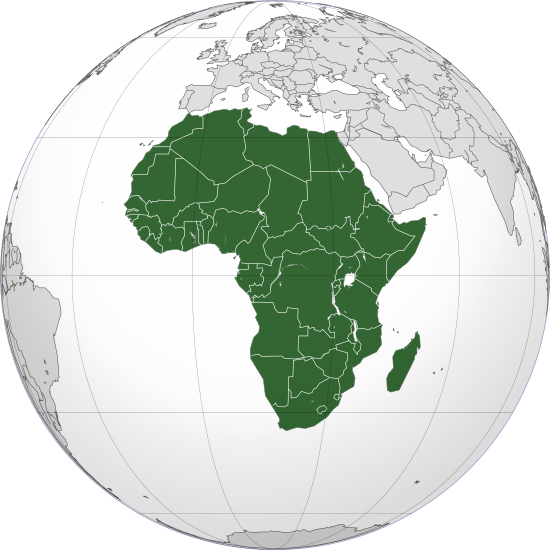
Africa is the second-largest and second-most populous continent home to...

The Abraham Accords are a series of normalization agreements between...
The World Bank is an international financial institution offering loans...
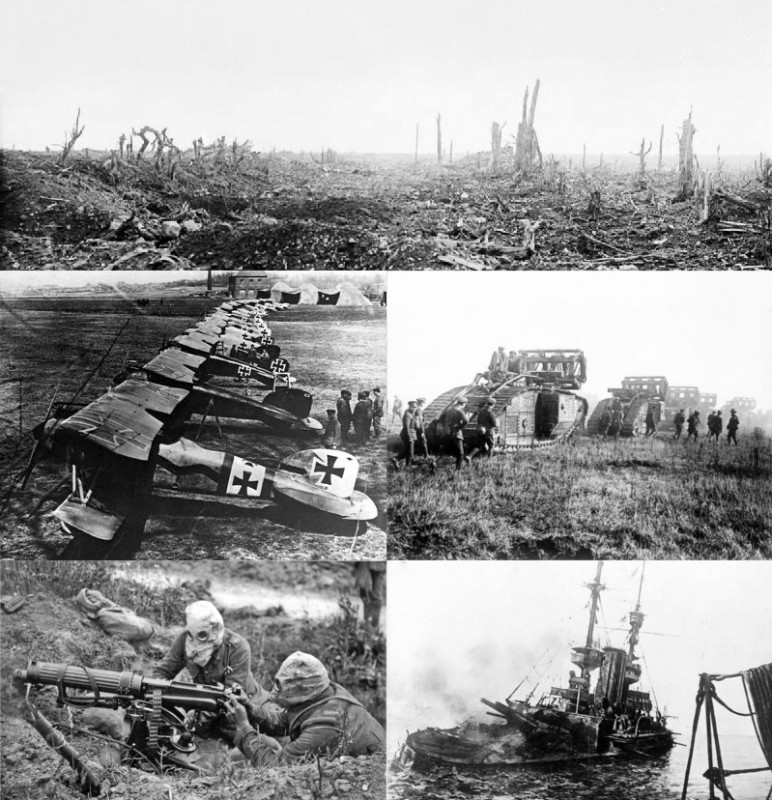
World War I a global conflict between the Allies and...
Trending

3 hours ago Six Kings Slam Faces Security Risks Following Deadly Riyadh Airport Attacks
3 hours ago Quentin Halys Faces Alexander Zverev at Rolex Shanghai Masters

3 hours ago ATP Shanghai Tennis Tournament Day 1 Predictions and Previews

1 month ago R&A Documentary Margins Examines Walker Cup Success and Professional Golf Careers
3 hours ago Controversy Erupts Over Hegseth Plans for Public Execution of Nidal Hasan
4 hours ago Hurricane Isaias Remnants Bring Threat of Heavy Rain and Flooding to East Coast
Popular
Ken Paxton is an American politician and lawyer serving as...

Cristiano Ronaldo widely considered one of the greatest footballers captains...
Michael Joseph Jackson the King of Pop was a highly...

Elon Musk is a visionary entrepreneur and engineer known for...

Shakira Isabel Mebarak Ripoll the Queen of Latin Music is...
Bernie Sanders is a prominent American politician and the senior...