How Stephen Hawking Shaped the Future: A Legacy Timeline


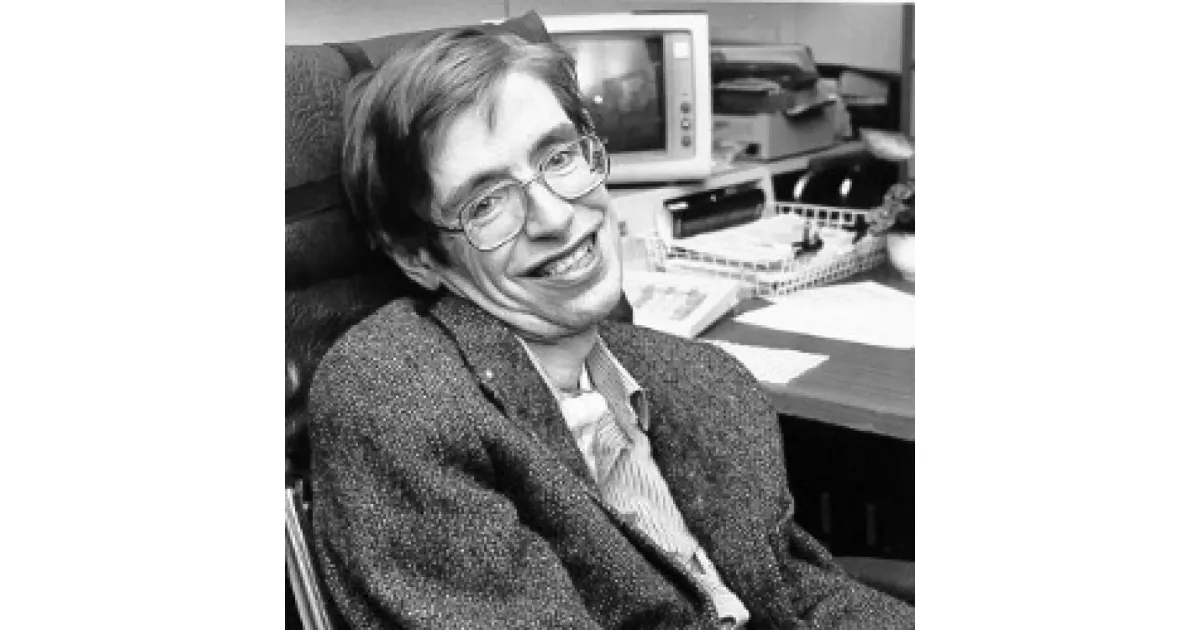
A detailed timeline of the impact and legacy of Stephen Hawking across different fields.
Stephen Hawking was a highly influential English theoretical astrophysicist and cosmologist. He served as the Director of Research at the Centre for Theoretical Cosmology at the University of Cambridge and held the prestigious position of Lucasian Professor of Mathematics at Cambridge from 1979 to 2009. His work significantly contributed to our understanding of black holes, the Big Bang, and the unification of general relativity with quantum mechanics. Despite battling amyotrophic lateral sclerosis (ALS) for most of his adult life, Hawking made groundbreaking contributions to science and became a popular science icon through his books, making complex concepts accessible to a wide audience.
1965: Doctoral Thesis
In 1965, Stephen Hawking's doctoral thesis titled 'Properties of Expanding Universes, PhD thesis, Cambridge University' was completed. In November 2018, his thesis was auctioned for approximately £1.8 million.


1991: Premiere of "A Brief History of Time" Documentary
In 1991, the documentary "A Brief History of Time", directed by Errol Morris, premiered. It contained material from the book and interviews with Hawking and others.
1993: Publication of "Black Holes and Baby Universes and Other Essays"
In 1993, Hawking's popular-level collection of essays, interviews, and talks titled "Black Holes and Baby Universes and Other Essays" was published.
1997: Release of "Stephen Hawking's Universe" TV Series
In 1997, the six-part television series "Stephen Hawking's Universe" and a companion book were released, focusing entirely on science.
1999: Awarded the Julius Edgar Lilienfeld Prize
In 1999, Stephen Hawking was awarded the Julius Edgar Lilienfeld Prize of the American Physical Society, adding to his role as a role model for disabled people and his participation in fundraising activities.
2001: Publication of "The Universe in a Nutshell"
In 2001, Hawking published "The Universe in a Nutshell", a popular science book.
2002: Hawking ranked in BBC's 100 Greatest Britons
In 2002, Stephen Hawking was ranked number 25 in the BBC's poll of the 100 Greatest Britons, recognizing his significant impact and contributions.
2005: Publication of "A Briefer History of Time"
In 2005, Hawking and Leonard Mlodinow published "A Briefer History of Time", an update to his earlier work intended for a wider audience.
2007: Publication of "George's Secret Key to the Universe"
In 2007, Hawking and his daughter Lucy published "George's Secret Key to the Universe", a children's book designed to explain theoretical physics.
September 2008: Unveiled the Corpus Clock
In September 2008, Stephen Hawking unveiled the mechanical "Chronophage" (or time-eating) Corpus Clock at Corpus Christi College, Cambridge.
2009: "A Brief History of Time" Sales
As of 2009, "A Brief History of Time" has sold an estimated 9 million copies worldwide.
2009: Publication of "George's Secret Key to the Universe" sequels
In 2009, Hawking and his daughter Lucy published sequels of "George's Secret Key to the Universe".
2011: Publication of "George's Secret Key to the Universe" sequels
In 2011, Hawking and his daughter Lucy published sequels of "George's Secret Key to the Universe".
2013: Higgs Wins Nobel Prize and Hawking Concedes Bet
In 2013, Peter Higgs won the Nobel Prize for Physics. Hawking conceded that he had lost his bet and said that Higgs should win the Nobel Prize for Physics.
January 2014: Calling Black Hole Information Loss His "Biggest Blunder"
In January 2014, Hawking called the alleged loss of information in black holes his "biggest blunder".
2014: Publication of "George's Secret Key to the Universe" sequels
In 2014, Hawking and his daughter Lucy published sequels of "George's Secret Key to the Universe".
July 2015: Launch of Breakthrough Initiatives
On 20 July 2015, Hawking helped launch Breakthrough Initiatives, an effort to search for extraterrestrial life.
2016: Publication of "George's Secret Key to the Universe" sequels
In 2016, Hawking and his daughter Lucy published sequels of "George's Secret Key to the Universe".
2016: Stephen Hawking Medal for Science Communication Initiated
In 2016, the Stephen Hawking Medal for Science Communication was initiated as an annual award to honor members of the arts community for contributions that help build awareness of science. Recipients receive a medal bearing a portrait of Stephen Hawking by Alexei Leonov, and the other side represents an image of Leonov himself performing the first spacewalk along with an image of the "Red Special", the guitar of Brian May.
2016: Starmus III Festival and Awards
The 2016 Starmus III Festival paid tribute to Stephen Hawking, and the book of all Starmus III lectures, "Beyond the Horizon", was also dedicated to him. The first recipients of the Stephen Hawking Medals, which were awarded at the festival, were chosen by Hawking himself: composer Hans Zimmer, physicist Jim Al-Khalili, and the science documentary film Particle Fever (2013).
October 2017: Final Broadcast Interview
In his final broadcast interview, given October 2017, Hawking spoke of the scientific importance of GW170817, a black hole merger.
2017: Creation of "Stephen Hawking: Expedition New Earth"
In 2017, Hawking created "Stephen Hawking: Expedition New Earth", a documentary on space colonization, as an episode of Tomorrow's World.
2017: Establishment of the Professor Stephen Hawking Fellowship
In 2017, the Cambridge Union Society, in conjunction with Stephen Hawking, established the Professor Stephen Hawking Fellowship. The fellowship is awarded annually to an individual who has made an exceptional contribution to the STEM fields and social discourse, with a particular focus on impacts affecting the younger generations. Each fellow delivers a lecture on a topic of their choosing, known as the "Hawking Lecture".
March 2018: Death at Age 76
Stephen Hawking died peacefully at his home in Cambridge on March 14, 2018, at the age of 76. He was eulogised by figures in science, entertainment, and politics. The Gonville and Caius College flag flew at half-mast and a book of condolences was signed. A tribute was made at the closing ceremony of the 2018 Paralympic Winter Games.
April 2018: Broadcast of Final Interview and Publication of Posthumous Paper
In April 2018, after Hawking's death, his final interview was broadcast as the Smithsonian TV Channel documentary "Leaving Earth: Or How to Colonize a Planet". Hawking's final paper, "A smooth exit from eternal inflation?", was also posthumously published in the Journal of High Energy Physics on 27 April 2018.
June 2018: Service of Thanksgiving at Westminster Abbey
Following cremation, a service of thanksgiving was held at Westminster Abbey on June 15, 2018, after which Stephen Hawking's ashes were interred in the Abbey's nave, between the graves of Sir Isaac Newton and Charles Darwin.
October 2018: Publication of Final Research Study and Last Book
In October 2018, one of Hawking's final research studies, entitled "Black Hole Entropy and Soft Hair", was published. Also in October, Hawking's last book was published, "Brief Answers to the Big Questions", containing his final comments on what he believed were the most important questions facing humankind.
November 2018: Hawking's powerchair sold at Christie's
In November 2018, the earliest surviving example of Stephen Hawking's BEC Mobility motorised wheelchair was sold by Christie's for £296,750.
November 2018: Auction of Personal Possessions
On November 8, 2018, an auction of 22 personal possessions of Stephen Hawking, including his doctoral thesis and wheelchair, took place, fetching about £1.8 million. Proceeds from the wheelchair went to charities, while proceeds from other items went to his estate.
2018: Inscribed on Memorial Stone
In 2018, after his death, Stephen Hawking's memorial stone was inscribed with the words: "Here lies what was mortal of Stephen Hawking 1942–2018" and his famed Bekenstein–Hawking formula.
March 2019: Royal Mint Issues Commemorative Coin and Nurse Struck Off
In March 2019, the Royal Mint announced it would issue a commemorative 50p coin in honour of Stephen Hawking, and his nurse, Patricia Dowdy, was struck off the nursing register for failures in his care and financial misconduct.
May 2021: Acceptance-in-Lieu Agreement for Hawking's Papers and Memorabilia
In May 2021, an Acceptance-in-Lieu agreement ensured that around 10,000 pages of Stephen Hawking's scientific papers remained in Cambridge, while objects including his wheelchairs, speech synthesisers, and personal memorabilia were housed at the Science Museum.
February 2022: "Stephen Hawking at Work" Display Opens at Science Museum
In February 2022, the "Stephen Hawking at Work" display opened at the Science Museum, London, marking the start of a two-year nationwide tour.
2022: Featured in Google Doodle
In 2022, Google featured Stephen Hawking in a Google Doodle on the occasion of his 80th birthday.
October 2024: Hawking Building Opens at Science and Innovation Park
In October 2024, the Hawking Building was opened to the public at the Science and Innovation Park as a new facility to house the Science Museum's National Collection Centre, including about 80% of the museum's object collection.
Mentioned in this timeline
Neil deGrasse Tyson is a prominent American astrophysicist author and...
Google LLC is a multinational technology corporation specializing in a...
Jeffrey Epstein was an American financier and convicted sex offender...
California is a U S state on the Pacific Coast...
Ghislaine Maxwell is a British former socialite convicted in of...
Al Gore served as the th U S Vice President...
Trending
3 hours ago Denzel Washington's Historic Colonial Revival Mansion In Los Angeles
4 hours ago Steve Kerr Advises Warriors Fans on Managing Expectations for Steph Curry's Playing Schedule
4 hours ago Jennifer Connelly and Paul Bettany Discuss Their Longstanding Marriage and Professional Projects
5 hours ago Demi Moore Stuns Fans With Ageless Makeup-Free Glowing Complexion Photo
3 hours ago Alexander Bublik Faces Backlash After Racket Smashing Incident and Injury
3 hours ago Alexander Bublik faces criticism after angry racket smashing incident during recent tennis match
Popular

Ilhan Omar is a prominent American politician currently serving as...

Ken Paxton is an American politician and lawyer serving as...

Elon Musk is a visionary entrepreneur and engineer known for...

Michael Joseph Jackson the King of Pop was a highly...
Jameis Winston is an American football quarterback currently playing for...

Cristiano Ronaldo widely considered one of the greatest footballers captains...