Early Life and Education of Stephen Hawking: A Complete Timeline


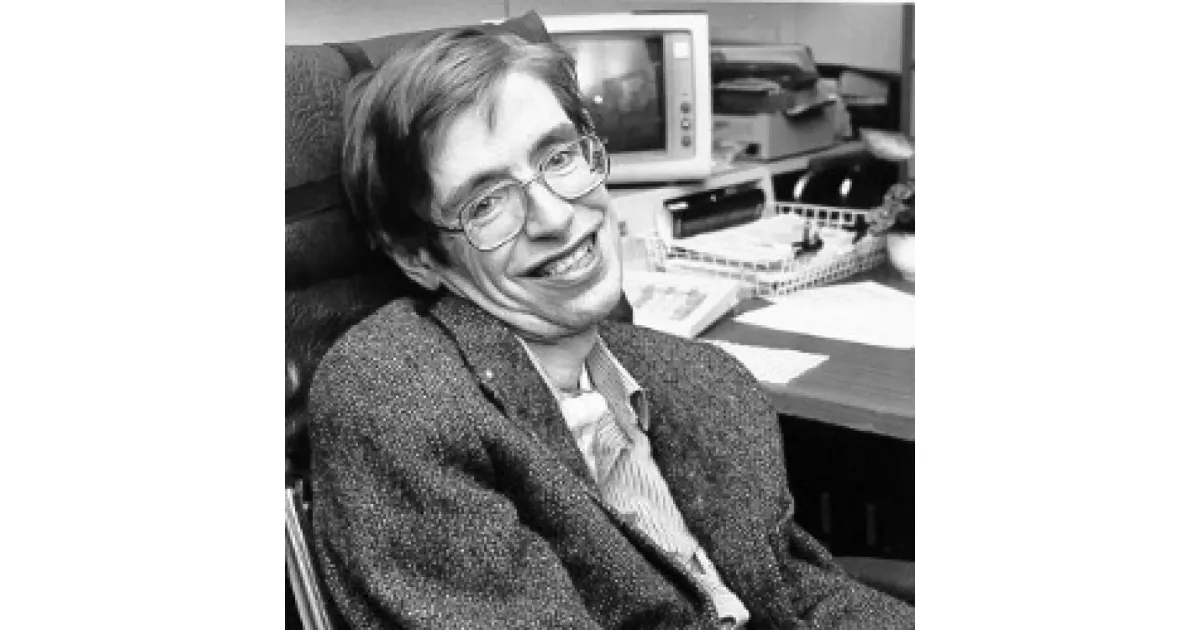
An overview of the childhood and early education of Stephen Hawking, highlighting the experiences that shaped the journey.
Stephen Hawking was a highly influential English theoretical astrophysicist and cosmologist. He served as the Director of Research at the Centre for Theoretical Cosmology at the University of Cambridge and held the prestigious position of Lucasian Professor of Mathematics at Cambridge from 1979 to 2009. His work significantly contributed to our understanding of black holes, the Big Bang, and the unification of general relativity with quantum mechanics. Despite battling amyotrophic lateral sclerosis (ALS) for most of his adult life, Hawking made groundbreaking contributions to science and became a popular science icon through his books, making complex concepts accessible to a wide audience.
January 1942: Stephen Hawking's birth
In January 1942, Stephen William Hawking was born. He would later become a renowned English theoretical astrophysicist, cosmologist, and author.


1950: Hawking family moves to St Albans
In 1950, Stephen Hawking's family moved to St Albans, Hertfordshire, after his father became head of the division of parasitology at the National Institute for Medical Research.
September 1952: Hawking starts at St Albans School
In September 1952, Stephen Hawking began attending St Albans School in Hertfordshire, after passing the eleven-plus exam a year early.
1958: Hawking builds a computer with friends
From 1958, Stephen Hawking, with the help of Dikran Tahta, and his friends built a computer from clock parts, an old telephone switchboard, and other recycled components.
March 1959: Hawking awarded a scholarship
In March 1959, Stephen Hawking was awarded a scholarship after taking examinations, despite his headmaster's advice to wait until the next year.
October 1959: Hawking begins university education at Oxford
In October 1959, at the age of 17, Stephen Hawking began his university education at University College, Oxford.
1959: Hawking builds a record player
In 1959, Stephen Hawking built a record player from spare parts, showcasing his resourcefulness and interest in electronics.
1959: Hawking begins university education
In 1959, at the age of 17, Stephen Hawking began his university education at University College, Oxford.
October 1962: Hawking begins graduate work at Cambridge
In October 1962, after receiving a first-class BA degree in physics, Stephen Hawking began his graduate work at Trinity Hall, Cambridge.
1962: Hawking begins graduate work
In 1962, Stephen Hawking began his graduate work at Trinity Hall, Cambridge, focusing on applied mathematics and theoretical physics.
1962: Hawking meets Jane Wilde
In 1962, Stephen Hawking met his future wife, Jane Wilde, at a party.
1963: Hawking diagnosed with motor neurone disease
In 1963, at the age of 21, Stephen Hawking was diagnosed with an early-onset slow-progressing form of motor neurone disease.
1963: Hawking Diagnosed with MND
In 1963, at the age of 21, Stephen Hawking was diagnosed with motor neurone disease (MND), also known as amyotrophic lateral sclerosis (ALS) or Lou Gehrig's disease), and given a life expectancy of two years.
October 1964: Hawking and Jane Wilde get engaged
In October 1964, Stephen Hawking and Jane Wilde became engaged, aware of Hawking's new physical limitations and shortened life expectancy due to motor neurone disease.
July 1965: Hawking and Jane Wilde marry
On 14 July 1965, Stephen Hawking and Jane Wilde were married in their shared hometown of St Albans.
1965: Hawking writes thesis
In 1965, Stephen Hawking wrote his thesis focusing on the application of spacetime singularity theorems to the entire universe.
1965: Doctoral Thesis
In 1965, Stephen Hawking's doctoral thesis titled 'Properties of Expanding Universes, PhD thesis, Cambridge University' was completed. In November 2018, his thesis was auctioned for approximately £1.8 million.
March 1966: Hawking receives PhD degree
In March 1966, Stephen Hawking received his PhD degree in applied mathematics and theoretical physics, specialising in general relativity and cosmology.
1966: Hawking obtains PhD
In 1966, Stephen Hawking obtained his PhD in applied mathematics and theoretical physics from Trinity Hall, Cambridge, specialising in general relativity and cosmology.
May 1967: Birth of Robert Hawking
In May 1967, Robert Hawking, the first child of Stephen Hawking and Jane Wilde, was born.
November 1970: Birth of Lucy Hawking
In November 1970, Lucy Hawking, the second child of Stephen Hawking and Jane Wilde, was born.
1974: Hawking takes position at Caltech
In 1974, upon Stephen Hawking's appointment to a year-long position at Caltech, Bernard Carr travelled with the Hawking family as the first of many students who helped with his care.
1975: Hawking returns to Cambridge
In 1975, Stephen Hawking returned to Cambridge and Don Page began working as his live-in graduate student assistant.
December 1977: Jane Hawking meets Jonathan Hellyer Jones
Around December 1977, Jane Hawking met organist Jonathan Hellyer Jones when singing in a church choir. He became close to the Hawking family and eventually developed romantic feelings for Jane.
April 1979: Birth of Timothy Hawking
In April 1979, Timothy Hawking, the third child of Stephen Hawking and Jane Wilde, was born.
1981: Jane Hawking completes PhD
In 1981, Jane Hawking completed her PhD programme in medieval Spanish poetry through Westfield College.
1982: Decision to Write a Popular Book
In 1982, Hawking decided to write a popular book about the universe to finance his children's education and home expenses. He signed a contract with Bantam Books and received a large advance.
1985: Hawking undergoes tracheotomy
In 1985, while visiting CERN, Stephen Hawking contracted pneumonia and underwent a tracheotomy, resulting in the loss of his speech and requiring round-the-clock nursing care.
1985: Hawking contracts pneumonia
In mid-1985, during a visit to CERN, Stephen Hawking contracted pneumonia, which led to a tracheotomy and the loss of his remaining speech. The cost of his subsequent care was funded by an American foundation.
1986: Hawking receives computer program "Equalizer"
In 1986, Stephen Hawking received the "Equalizer" computer program from Walter Woltosz, CEO of Words Plus, which allowed him to select phrases, words, or letters from a scanned bank.
1988: Appearance in "God, the Universe and Everything Else"
In 1988, Stephen Hawking appeared in the documentary film, God, the Universe and Everything Else.
February 1990: Hawking leaves Jane for Elaine Mason
In February 1990, Stephen Hawking told Jane that he was leaving her for Elaine Mason and departed the family home.
1990: Hawking Acknowledges Losing Bet
In 1990, Hawking acknowledged losing the 1974 bet he had made with Kip Thorne regarding the nature of Cygnus X-1. This was the first of several bets he would make with Thorne and others.
1992: Appearance on Desert Island Discs
In 1992, Stephen Hawking appeared on the radio program Desert Island Discs, where he chose musical works that "[sum] up his life" and George Eliot's Middlemarch as a book to sum up his life.
1993: Appeared in Star Trek: The Next Generation
In 1993, Stephen Hawking played a holographic simulation of himself in an episode of Star Trek: The Next Generation.
1993: Synthesiser Voice Recorded for Pink Floyd Song
In 1993, Stephen Hawking's synthesiser voice was recorded for use in the Pink Floyd song "Keep Talking".
1995: Hawking marries Elaine Mason
In 1995, Stephen Hawking married Elaine Mason after divorcing Jane.
1999: Jane Hawking publishes memoir
In 1999, Jane Hawking published a memoir, Music to Move the Stars, about her marriage and its breakdown, causing a sensation in the media.
1999: Synthesiser Voice Recorded for The Simpsons
In 1999, Stephen Hawking's synthesiser voice was recorded for an episode of The Simpsons.
2001: Appearance in "The Real Stephen Hawking"
In 2001, Stephen Hawking appeared in the documentary film, The Real Stephen Hawking.
2002: Appearance in "Stephen Hawking: Profile"
In 2002, Stephen Hawking appeared in the documentary film, Stephen Hawking: Profile.
2003: Growing consensus among physicists that Hawking was wrong about loss of information
By 2003, consensus among physicists was growing that Hawking was wrong about the loss of information in a black hole.
2005: Hawking uses cheek muscles to control communication device
In 2005, Stephen Hawking began controlling his communication device with movements of his cheek muscles, allowing him to communicate at a rate of about one word per minute.
2006: Hawking poses open question on the Internet
In 2006, Hawking posed the open question on the internet: "In a world that is in chaos politically, socially and environmentally, how can the human race sustain another 100 years?", to get people to think about it, and to be aware of the dangers we now face.
2006: Hawking and Mason divorce
In 2006, Stephen Hawking and Elaine Mason quietly divorced, leading to Hawking resuming closer relationships with Jane, his children, and his grandchildren.
2006: Expressed Desire to Travel to Space
In late 2006, Stephen Hawking stated his desire to travel to space.
April 2007: Experienced Weightlessness Aboard Modified Boeing 727-200
On April 26, 2007, Stephen Hawking flew aboard a specially-modified Boeing 727-200 jet operated by Zero-G Corp off the coast of Florida to experience weightlessness. The flight was extended to eight parabolic arcs after it was determined that he could withstand the g-forces involved in spaceflight.
2007: Hawking uses DragonMobility Dragon elevating powerchair
From 2007 Stephen Hawking used a DragonMobility Dragon elevating powerchair.
2007: Jane's book is republished
In 2007, a revised version of Jane Hawking's book, re-titled Travelling to Infinity: My Life with Stephen, was published.
September 2008: Unveiled the Corpus Clock
In September 2008, Stephen Hawking unveiled the mechanical "Chronophage" (or time-eating) Corpus Clock at Corpus Christi College, Cambridge.
2008: Appearance in "Stephen Hawking, Master of the Universe"
In 2008, Stephen Hawking appeared in the documentary series Stephen Hawking, Master of the Universe.
June 2009: Party for Time-Travelers
On 28 June 2009, Hawking held a party open to all, complete with food and drinks, but publicised the party only after it was over so that only time-travellers would know to attend; as expected, nobody showed up, as a tongue-in-cheek test of the conjecture that time travel is impossible.
2009: Retirement as Lucasian Professor
In 2009, Hawking retired as Lucasian Professor of Mathematics at the University of Cambridge, as required by university policy.
2009: Projected Space Flight
In 2009, the date of Stephen Hawking's trip to space was projected to be as early as this year, but commercial flights to space did not commence before his death.
2010: Hawking warns against contact with aliens
In 2010, Stephen Hawking warned against making contact with alien life forms, suggesting that they might pillage Earth for resources, comparing it to Columbus's arrival in America, which had a negative outcome for Native Americans.
2011: International Travel via Private Jet Only
By 2011, due to practical reasons related to his disability, Stephen Hawking's only mode of international travel had become by private jet.
2011: Hawking: "philosophy is dead"
In 2011, at Google's Zeitgeist Conference, Stephen Hawking stated that "philosophy is dead", arguing philosophers have not kept up with modern science and that science is now the bearer of discovery. He expressed that science can answer philosophical problems and discussed the relationship between physics, morality, love, and faith.
2011: Hawking on the afterlife
In 2011, during an interview, Stephen Hawking expressed his atheism, viewing the brain as a computer that ceases to function upon component failure. He described the concept of an afterlife as a "fairy story for people afraid of the dark".
August 2012: Narrated 2012 Summer Paralympics Opening Ceremony
In August 2012, Stephen Hawking narrated part of the opening ceremony of the 2012 Summer Paralympics in London.
September 2013: Expressed Support for Legalisation of Assisted Suicide
In September 2013, Stephen Hawking voiced his support for the legalisation of assisted suicide for the terminally ill.
2013: Appearance in "Hawking"
In 2013, Stephen Hawking appeared in the documentary film, Hawking.
2014: Hawking endorses vote against Scottish independence
Before the 2014 referendum on Scottish independence from the UK, Stephen Hawking was one of two hundred public figures who signed a letter endorsing a vote against independence.
2014: Hawking uses Permobil C350
From 2014 Stephen Hawking used a Permobil C350 wheelchair.
2014: Featured at Monty Python Live (Mostly) Show
In 2014, Stephen Hawking was featured at the Monty Python Live (Mostly) show, shown in a pre-recorded video singing Monty Python's "Galaxy Song".
2014: Hawking's Views on Religion
In 2014, Stephen Hawking's views on religion came to light. He had been a member of Oxford University's humanist group since his university years.
2014: "The Theory of Everything" film released
In 2014, the film "The Theory of Everything", based on Jane Hawking's book, was released.
2015: Applied to Trademark His Name
In 2015, Stephen Hawking applied to trademark his name, as well as advertising multiple products.
2016: Hawking uses Permobil F3
From 2016 Stephen Hawking used a Permobil F3 wheelchair.
2016: Hawking denounces Brexit
In 2016, Stephen Hawking denounced Brexit, the UK's withdrawal from the European Union (EU). He predicted it would weaken the UK's contribution to global scientific efforts.
2016: Pride of Britain Lifetime Achievement Award
In 2016, Stephen Hawking was awarded the Pride of Britain lifetime achievement award for his contribution to science and British culture. After receiving the award from Theresa May, Hawking jokingly requested that she not seek his help with Brexit.
2017: Hawking on the UK general election
In 2017, Stephen Hawking endorsed the Labour Party in the UK general election, citing concerns about the Conservative Party's proposed cuts to the National Health Service (NHS), but he was openly critical of Labour's ability to win a general election under party leader Jeremy Corbyn.
2017: Hawking to speak at Humanists UK conference
In 2017, Stephen Hawking was scheduled to be the keynote speaker at the Humanists UK conference, highlighting his association with atheism and freethinking.
March 2018: Voice of The Book Mark II on The Hitchhiker's Guide to the Galaxy
Broadcast in March 2018, before his death, Stephen Hawking was the voice of The Book Mark II on The Hitchhiker's Guide to the Galaxy radio series, and he was a guest of Neil deGrasse Tyson on StarTalk.
March 2018: Stephen Hawking's death
In March 2018, Stephen Hawking passed away, marking the end of a distinguished career in theoretical astrophysics and cosmology.
November 2018: Hawking's powerchair sold at Christie's
In November 2018, the earliest surviving example of Stephen Hawking's BEC Mobility motorised wheelchair was sold by Christie's for £296,750.
2018: Hawking dies at 76
In 2018, Stephen Hawking died at the age of 76, more than 50 years after his diagnosis of motor neurone disease.
2019: Death of Jeffrey Epstein
In 2019, American financier Jeffrey Epstein, who conspired with Ghislaine Maxwell, died. An email of his sent in 2015 mentioned Hawking.
2025: Death of Virginia Giuffre
In 2025, Virginia Giuffre, an alleged victim of Epstein, died. An email from Epstein in 2015 mentioned Giuffre regarding an allegation about Stephen Hawking.
Mentioned in this timeline
Neil deGrasse Tyson is a prominent American astrophysicist author and...
Google LLC is a multinational technology corporation specializing in a...
Jeffrey Epstein was an American financier and convicted sex offender...
California is a U S state on the Pacific Coast...
Ghislaine Maxwell is a British former socialite convicted in of...

Al Gore served as the th U S Vice President...
Trending
4 hours ago Jennifer Connelly and Paul Bettany Discuss Their Longstanding Marriage and Professional Projects
4 hours ago Demi Moore Stuns Fans With Ageless Makeup-Free Glowing Complexion Photo

4 hours ago Riot Games to Sunset League of Legends Classic Mode in January 2027

5 hours ago Justin Bieber Named White Boy of the Year at Anthony Edwards' Believe That Awards

5 hours ago AJ Dybantsa Exits Wizards Preseason Finale Due to Ankle Injury

6 hours ago Alexander Bublik Causes Stir After Racket Meltdown During Tennis Match
Popular

Ilhan Omar is a prominent American politician currently serving as...

Ken Paxton is an American politician and lawyer serving as...
Elon Musk is a visionary entrepreneur and engineer known for...

Michael Joseph Jackson the King of Pop was a highly...

Jameis Winston is an American football quarterback currently playing for...

Cristiano Ronaldo widely considered one of the greatest footballers captains...