


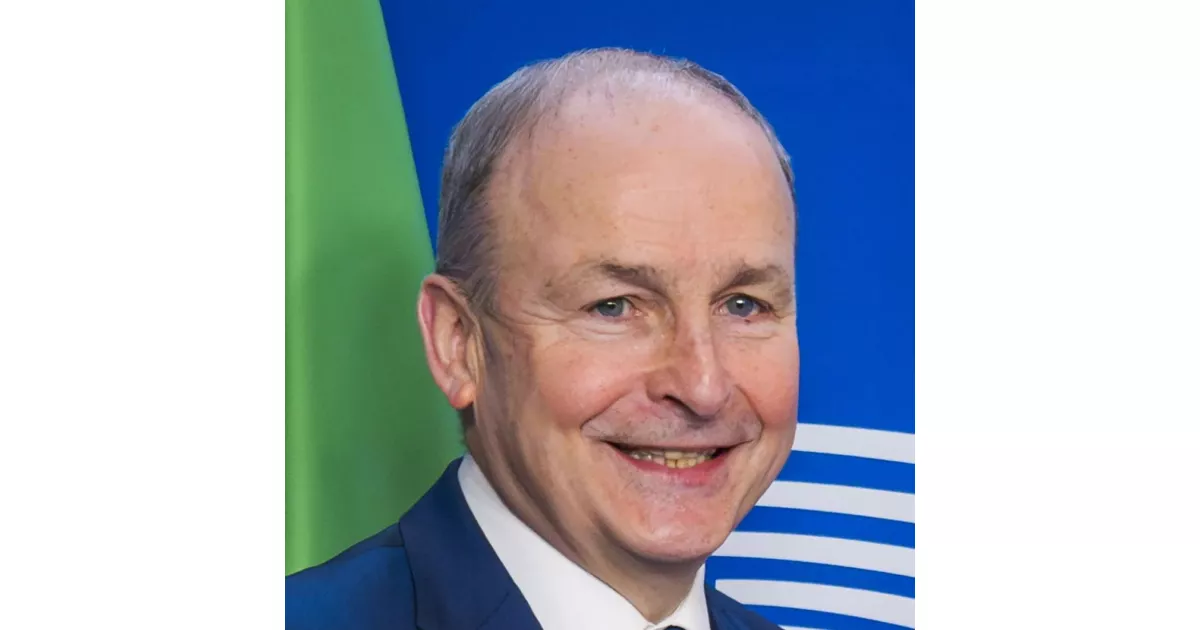
The Taoiseach is the prime minister, or head of government, of Ireland. The President of Ireland appoints the Taoiseach, but only after they have been nominated by Dáil Éireann, the lower house of the Irish parliament. To remain in office, the Taoiseach must maintain the support of a majority of the members of Dáil Éireann. This ensures that the head of government has the confidence of the elected representatives of the people.
1913: "Amhrán Dóchais" Written
In 1913, Osborn Bergin wrote the poem "Amhrán Dóchais" ("Song of Hope"), which would later be chosen as the musical salute for the taoiseach.


1922: W. T. Cosgrave as President of the Executive Council
From 1922 to 1932, W. T. Cosgrave of Cumann na nGaedheal served as the President of the Executive Council.
1922: Establishment of the President of the Executive Council Position
In 1922, the position of President of the Executive Council was established in the Irish Free State, which later transitioned into the modern position of Taoiseach in 1937.
1932: Éamon de Valera as President of the Executive Council
From 1932 to 1937, Éamon de Valera of Fianna Fáil served as the President of the Executive Council.
1937: Enactment of 1937 Constitution
Before the enactment of the 1937 Constitution, the head of government was the President of the Executive Council.
1937: Amendment Proposed for 'Taoiseach' Title
In 1937, during debates on the draft Constitution of Ireland, Frank MacDermot proposed an amendment to replace "Taoiseach" with "Prime Minister" in the English text, while retaining "Taoiseach" in the Irish text.
1937: Enhanced Power of the Taoiseach Position
In 1937, the office of taoiseach was created with significantly more power, allowing the holder to advise the President to dismiss ministers and dissolve Parliament, with the President typically required to follow this advice.
1937: Adoption of 'Taoiseach' Title
In 1937, the term "taoiseach," meaning "chief" or "leader," was officially adopted in the 1937 Constitution of Ireland to designate the head of government or Prime Minister.
1944: Presidential Prerogative Arose
In 1944, an opportunity arose for the President to exercise the prerogative to refuse a dissolution of Dáil Éireann, though the option was not ultimately taken.
1982: Presidential Prerogative Arose
In 1982, two occasions arose for the President to exercise the prerogative to refuse a dissolution of Dáil Éireann, though the option was not ultimately taken either time.
1994: Presidential Prerogative Arose
In 1994, an opportunity arose for the President to exercise the prerogative to refuse a dissolution of Dáil Éireann, though the option was not ultimately taken.
1999: State Acquisition of Farmleigh Estate
In 1999, the State acquired the Farmleigh estate for €29.2 million.
2005: Renovation of Steward's Lodge
In 2005, the Office of Public Works renovated the Steward's Lodge, part of the Farmleigh estate, at a cost of nearly €600,000.
2007: Proposed Salary Increase Deferred
In 2007, a proposed increase of €38,000 for the Taoiseach's salary was deferred when Brian Cowen became taoiseach.
October 2008: Government Announces Salary Cut
In October 2008, the government declared a voluntary 10% salary cut for all ministers, including the taoiseach, though the salaries remained nominally the same.
2008: Speculation About Official Residence
In 2008, it was speculatively reported that the former Steward's Lodge at Farmleigh might become the official residence of the Taoiseach, though no official action was taken.
December 2009: Controversy Over Salary Cut Calculation
In December 2009, a controversy arose when a 20% salary cut was based on the higher figure before the refused 10% reduction was deducted.
2011: Brian Cowen's Resignation as Party Leader
In 2011, Taoiseach Brian Cowen resigned as party leader and was succeeded by Micheál Martin, but continued as Taoiseach until the formation of a new government following a general election.
2011: Salary Cut for Taoiseach
In 2011, when Enda Kenny assumed office, the taoiseach's salary was reduced from €214,187 to €200,000.
2013: Further Salary Cut Under Haddington Road Agreement
In 2013, under the Haddington Road Agreement, the taoiseach's salary was further reduced to €185,350.
2020: Fianna Fáil and Fine Gael Enter Coalition
Following the 2020 election, Fianna Fáil and Fine Gael formed a coalition for the first time, agreeing to rotate the role of taoiseach.
2024: Rotation Agreement Continued
After the 2024 election, Fianna Fáil and Fine Gael chose to continue their rotation agreement for the role of taoiseach.
2024: General Election
In 2024, a general election took place, leading to an agreement between Fianna Fáil, Fine Gael, and independent TDs, resulting in Micheál Martin assuming the office of taoiseach in January 2025.
January 2025: Micheál Martin Takes Office
On 23 January 2025, Micheál Martin, TD, leader of Fianna Fáil, assumed the office of taoiseach following the 2024 general election and an agreement among Fianna Fáil, Fine Gael, and independent TDs.
August 2025: Annual Expenses
As of 1 August 2025, the taoiseach is also allowed an additional €134,148 in annual expenses.
Mentioned in this timeline
A constitution serves as the foundational legal document for any...
Ireland is an island in the North Atlantic divided between...
An election is a structured decision-making process where a population...
Trending
4 hours ago Dodgers Finalize Mookie Betts Lineup Decision Ahead of Crucial NLCS Game Two
4 hours ago Abner Uribe and Brewers Bullpen Dominate During 2026 MLB Postseason Run

6 months ago Jeopardy! Champ Jamie Ding Achieves Top 5, Michigan Contestants, and Victory Streaks Covered.

4 hours ago Matthew Stafford Leads Daughters' Flag Football Team to Championship Victory

29 days ago Myles Garrett to Undergo Knee Surgery and Head to Injured Reserve
4 hours ago Aaron Donald cleared to play for Rams in Monday Night Football against Bills
Popular

Ken Paxton is an American politician and lawyer serving as...

Jameis Winston is an American football quarterback currently playing for...

Michael Joseph Jackson the King of Pop was a highly...
Cristiano Ronaldo widely considered one of the greatest footballers captains...
Elon Musk is a visionary entrepreneur and engineer known for...
Marco Rubio is a prominent American politician serving as the...