


Tenerife is the largest and most populous island of the Canary Islands, which is an autonomous community of Spain. It has a land area of 2,034.38 km2 and a population of 972,018 inhabitants (as of January 2026), making it the most populous island in Spain and Macaronesia. It accounts for 42.7% of the Canary Islands' total population.
1906: Óscar Domínguez was born
In 1906, Óscar Domínguez, famed for his versatility and surrealist style, was born in La Laguna.


1909: Eruption of Chinyero volcano
In 1909, the last eruption of the historic volcano of Chinyero occurred.
1909: Chinyero Eruption
In 1909, the most recent volcanic eruption in Tenerife formed the Chinyero cinder cone in the municipality of Santiago del Teide.
March 1913: Creation of the Cabildo Insular de Tenerife
In March 1913, the Cabildo Insular de Tenerife was created as the island's government.
1917: Death of Juan Rodríguez Botas
In 1917, Juan Rodríguez Botas, considered the first Canarian impressionist, died. His works are displayed in the Museo Municipal de Bellas Artes de Santa Cruz.
1927: Co-capital Arrangement
In 1927, the Crown established a co-capital arrangement for the Canary Islands, sharing the capital between Santa Cruz de Tenerife and Las Palmas de Gran Canaria.
1929: Increase in number of schools
From 1929 to 1933, the number of schools in Tenerife nearly doubled, marking a turning point in education.
1933: Increase in number of schools
From 1929 to 1933, the number of schools in Tenerife nearly doubled, marking a turning point in education.
March 1936: Franco Posted to Tenerife
In March 1936, Francisco Franco was posted to Tenerife by a Republican government.
July 1936: Canaries fall to Nationalists
In July 1936, Franco collaborated in the military coup in Gran Canaria that would result in the Spanish Civil War, leading to the Canaries falling to the Nationalists.
1954: Teide National Park Declared
In 1954, the area around Mount Teide was declared a national park.
1970: Ley General de Educación
In 1970, the Ley General de Educación (General Law of Education) shifted the balance from religiously based education to public education in Tenerife.
1976: Collapse in Birth Rate in Spain
From 1976 there was a collapse in the birth rate in Spain.
1980: Tourism Shift to South Tenerife
By 1980, tourism in Tenerife was focused in the south of the island, particularly in cities like Arona or Adeje, with tourist centers like Los Cristianos or Playa de Las Americas housing 65% of the hotels.
1986: Peak Banana Production
In 1986, Tenerife reached its peak banana production of 200,000 tons annually.
May 1989: Official Adoption of the Flag of Tenerife
In May 1989, specifically on 9 May 1989, the flag of Tenerife was officially approved by the Cabildo Insular de Tenerife and the Government of the Canary Islands, and made official on 22 May.
July 1990: Regulation of the Cabildo Insular de Tenerife
In July 1990, Law 14/1990 regulated the capabilities and duties of the Cabildo Insular de Tenerife.
1990: Population of Tenerife in 1990
In 1990, Tenerife had 663,306 registered inhabitants.
2000: Population of Tenerife in 2000
In 2000, the population of Tenerife increased to 709,365.
2000: Immigration in Spain
Since 2000, immigration in Spain reversed the slowdown in population growth.
2001: Growth rate in Spain
Since 2001 the overall growth rate in Spain has been around 1.7 percent per year.
2002: Tenerife flood of 2002
In 2002, on March 31, the Tenerife flood took place, characterized by torrential rains and lightning, causing 8 deaths, 12 missing, dozens injured, and significant material damage.
November 2005: Tropical Storm Delta
In November 2005, Tenerife was heavily affected by Tropical Storm Delta, with recorded winds of 140 km/h on the coast and nearly 250 km/h on the Teide summit.
2005: Light-rail Network Plans Approved
By 2005, plans for a light-rail network linking the capital with the South had been approved by both the Tenerife Council and the Canary Islands Government.
2006: Port of Santa Cruz de Tenerife is the first fishing port
The Port of Santa Cruz de Tenerife is the first fishing port in the Canary Islands with approximately 7,500 tons of fish caught according to the Statistical Yearbook of the State Ports 2006.
June 2007: Teide National Park recognised by UNESCO
In June 2007, Teide National Park was recognized by UNESCO as a World Heritage Site.
2007: Population of Tenerife in 2007
By 2007, the population of Tenerife had risen to 865,070.
2007: Opening of Tranvía de Tenerife
In early 2007, the Tranvía de Tenerife (Tenerife Tram) opened, connecting Santa Cruz and La Laguna with almost 20 stops.
2007: Tenerife Tram connects Santa Cruz de Tenerife and La Laguna
Since 2007, the Tenerife Tram connects Santa Cruz de Tenerife and La Laguna through the suburb of Taco. There are 20 stops and it covers a distance of 12.5 km (7.8 mi) in 37 minutes.
2008: Tenerifan cured goats cheese awarded
In 2008, Tenerifan cured goats cheese was awarded best cheese in the world final of the 2008 World Cheese Awards held in Dublin, Ireland.
2009: Electrical Generation Capacity
As of 2009, Tenerife had 910 MW of electrical generation capacity, primarily powered by petroleum-derived fuels, along with 37 MW of wind turbines and 79 MW of solar panels.
2009: Addition of a second line to Tranvía de Tenerife
In 2009, a second line was added to the Tranvía de Tenerife within La Laguna.
March 2011: Plans for a High-Speed Rail Line
By March 2011, plans had advanced for a single 80 km high-speed rail line, the South Train, to connect Santa Cruz de Tenerife with Adeje.
2012: Opening of the Hospital del Norte de Tenerife
The Hospital del Norte de Tenerife (Tenerife North Hospital) opened in 2012 in Icod de los Vinos.
2013: Establishment of Zona de Especial Conservación Teno-Rasca
In 2013, the Zona de Especial Conservación Teno-Rasca (Teno-Rasca Special Area of Conservation) was established as a marine protected area.
2014: Tourism Statistics for Tenerife
In 2014, Tenerife had 4,171,384 foreign tourist arrivals, excluding Spanish tourists.
2015: Macizo de Anaga designated as a UNESCO Biosphere Reserve
In 2015, the Macizo de Anaga (massif) in Tenerife was designated as a UNESCO Biosphere Reserve.
2015: Opening of the Hospital del Sur de Tenerife
The Hospital del Sur de Tenerife (Tenerife South Hospital) opened in 2015 in Arona.
2017: Opening of the Port of Granadilla
In 2017, a large important port was opened in the south of the island, the Port of Granadilla.
2017: Resurrection of train system plans
Plans for the train system were resurrected in 2017.
January 2021: Tenerife-La Gomera Marine Area Designated Whale Heritage Area
In January 2021, the Tenerife-La Gomera Marine Area became the first European designated Whale Heritage Area.
August 2023: Forest Fire in Tenerife
On August 15, 2023, a forest fire in Tenerife, caused by arson, led to the evacuation of 12,000 residents within a week.
January 2024: Population of Tenerife
According to INE data as at 1 January 2024, Tenerife had the largest population of the seven Canary Islands and was the most populated island of Spain with 964,021 officially estimated inhabitants.
2024: Major Towns and Municipalities of Tenerife
As of the start of 2024, the major towns and municipalities of Tenerife after Santa Cruz were San Cristóbal de La Laguna (160,258), Arona (86,624), Granadilla de Abona (57,143), Adeje (50,549), La Orotava (42,585), Los Realejos (37,522) and Puerto de la Cruz (31,377).
2024: Metropolitan Areas of Tenerife
In 2024, Tenerife had two other metropolitan areas recognized by the Ministry of Development: the Tenerife South metropolitan area with 215,532 inhabitants and the La Orotava Valley metropolitan area with 111,606 inhabitants.
2024: Tourism in Tenerife
In 2024, Tenerife was visited by 7,384,707 tourists, making it the most visited island in the Canary Islands archipelago.
January 2026: Population of Tenerife
As of January 2026, Tenerife had a population of 972,018 inhabitants, making it the most-populous island in Spain and the Macaronesia region.
Mentioned in this timeline

The Boeing Company is a multinational corporation and one of...
Spain officially the Kingdom of Spain is a large country...

War is defined as an armed conflict involving the armed...
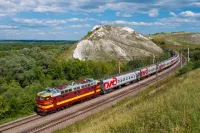
Trains are a connected series of vehicles traveling on railway...
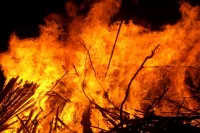
Fire is a rapid oxidation process specifically combustion that releases...
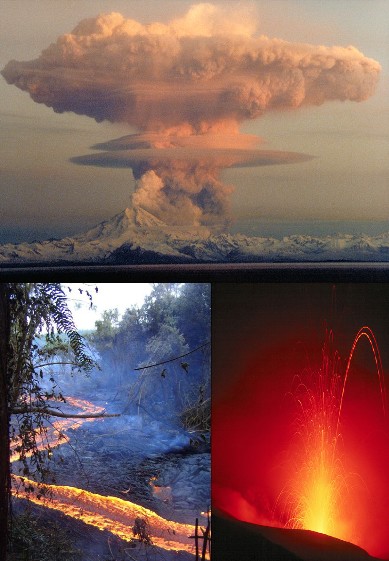
A volcanic eruption involves the expulsion of material from a...
Trending

3 hours ago Sean Newcomb Featured as Potential Opener for Guardians in Critical ALDS Game 3

23 hours ago Mark Zuckerberg Launches Meta's New Muse AI Assistant

3 hours ago Sydney Sweeney Discovered to Be Distant Cousin of Marilyn Monroe

3 hours ago Miguel Vargas Becomes Key Steady Presence for Chicago White Sox During Playoff Run

3 hours ago Golden State Warriors Focus on Fast-Tracked Development for Rookie Yaxel Lendeborg

3 hours ago Comedian Matt Rife Set to Perform Historic Arena Show in Boise Amid Personal Faith Journey
Popular

Ken Paxton is an American politician and lawyer serving as...

Cristiano Ronaldo widely considered one of the greatest footballers captains...

Michael Joseph Jackson the King of Pop was a highly...

Elon Musk is a visionary entrepreneur and engineer known for...

Shakira Isabel Mebarak Ripoll the Queen of Latin Music is...

Bernie Sanders is a prominent American politician and the senior...