Rise to Success: Career Highlights of Tyson Fury


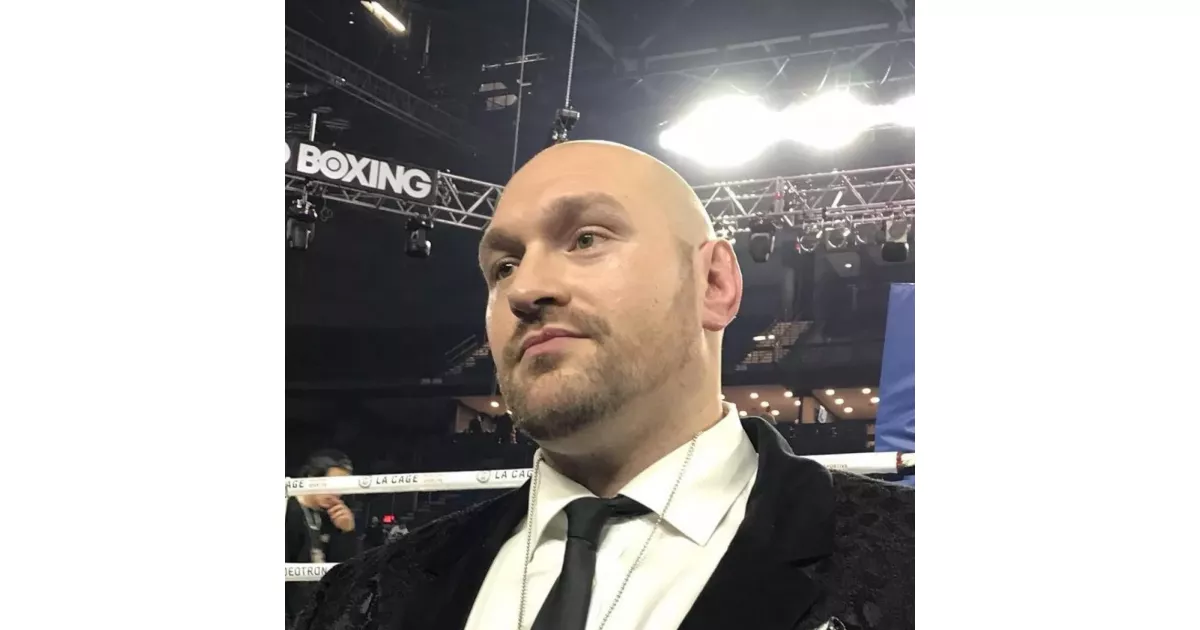
How Tyson Fury built a successful career. Explore key moments that defined the journey.
Tyson Fury, known as 'The Gypsy King,' is a prominent British professional boxer and a two-time world heavyweight champion. Standing at 6'9", he is renowned for his exceptional mobility, ring intelligence, and defensive prowess despite his massive frame. His career is highlighted by his historic 2015 upset victory over Wladimir Klitschko, which ended Klitschko's long-standing reign, and his epic, highly celebrated trilogy against Deontay Wilder. Beyond his physical achievements, Fury is widely recognized for his public battle with mental health and substance abuse, which led to a hiatus from the sport. His successful return to the ring after significant weight loss and personal recovery has made him an influential figure, symbolizing resilience and redemption in the world of sports. As one of the most charismatic and polarizing personalities in boxing, Fury remains a dominant force in the modern heavyweight division.
17 September 2011: Tyson Fury vs. Nicolai Firtha
On 17 September 2011, Tyson Fury secured a victory against Nicolai Firtha in a non-title bout held at King's Hall, Belfast. Although Firtha managed to land a significant punch in the third round that troubled Fury, Fury recovered to dominate the match and ultimately forced a referee stoppage in the fifth round.


2006: World Junior Championships Bronze Medal
During the 2006 World Junior Championships, Tyson Fury showcased his early amateur boxing talent by securing a bronze medal.
2006: Senior National Championships Participation
In 2006, Tyson Fury represented Jimmy Egan's Boxing Academy at the senior national championships, where he suffered a defeat against David Price with a score of 22–8.
2006: Bronze Medal at AIBA Youth World Boxing Championships
In 2006, Tyson Fury secured a bronze medal while competing at the AIBA Youth World Boxing Championships, marking a significant early achievement in his amateur boxing career.
May 2007: EU Junior Championship Victory
In May 2007, Tyson Fury achieved a significant career milestone by winning the EU Junior Championship after defeating Istvan Bernath in the final.
July 2007: European Junior Championship Silver Medal
In July 2007, Tyson Fury secured a silver medal at the European Junior Championship after a hard-fought final match against Maxim Babanin.
2007: Victory in Polish International Matches
In 2007, during an international boxing event where the Irish team faced Poland, Tyson Fury achieved individual success by winning both of his fights held in Rzeszów and Białystok, despite the Irish team losing the overall match 12–6.
2007: Junior Amateur Championship Success
Throughout 2007, Tyson Fury performed at a high level in amateur boxing, winning gold at the EU Junior Championships and silver at the European Junior Boxing Championships.
December 2008: Professional Boxing Debut
On December 6, 2008, Tyson Fury made his professional boxing debut in Nottingham at the age of 20. Fighting on the undercard of Carl Froch vs. Jean Pascal, Fury secured a victory against Bela Gyongyosi by way of a first-round technical knockout.
2008: ABA Super-Heavyweight Title Win
In 2008, Tyson Fury achieved a major amateur milestone by winning the ABA super-heavyweight title.
2008: Winning the ABA Super-Heavyweight Title and Turning Professional
In 2008, Tyson Fury secured the ABA super-heavyweight title after a decisive 19:1 victory over Damien Campbell. Following this accomplishment, he opted to turn professional later that same year, concluding his amateur career with an impressive record of 31 wins and 4 losses.
2008: 2008 Olympic Qualification Failure
In 2008, despite being a top-ranked junior boxer, Tyson Fury was unable to represent Great Britain at the Olympics as David Price was selected instead, and he also failed in his attempts to qualify for Ireland due to eligibility protests regarding his place of birth.
September 2009: Victory against John McDermott for the English Heavyweight Title
On 11 September 2009, Tyson Fury defeated John McDermott to win the English heavyweight title. Although Fury entered as the heavy favorite, his performance was widely considered lackluster, and the referee's scoring of 98-92 was heavily criticized as a "travesty." The controversy surrounding this match prompted the British Boxing Board of Control to require three judges for future English title bouts and ultimately led to an ordered rematch.
June 2010: Tyson Fury vs John McDermott Rematch
On June 25, 2010, Tyson Fury faced John McDermott in a high-stakes rematch to settle the controversy surrounding their previous bout. Fury secured a decisive victory via TKO in the 9th round after knocking McDermott down three separate times, ultimately reclaiming the English heavyweight title.
July 2011: Tyson Fury defeats Derek Chisora
On 23 July 2011, Tyson Fury secured a unanimous decision victory over undefeated heavyweight Derek Chisora at Wembley Arena in London. Despite being the underdog, the 22-year-old Fury outpointed his opponent to claim both the British and Commonwealth heavyweight titles in a match that drew a peak of 3 million viewers on Channel 5.
2011: Regional Heavyweight Championship Success
In 2011, Tyson Fury successfully secured the British heavyweight title for the first time and also claimed the Commonwealth heavyweight title.
April 2012: Tyson Fury vs. Martin Rogan for the Irish Heavyweight Title
On 14 April 2012, Tyson Fury competed at the Odyssey Arena in Belfast for the vacant Irish heavyweight title. Fighting at the lightest weight of his professional career at 245 3/4 pounds, Fury defeated veteran Martin Rogan via a technical knockout after knocking him down in the third and fifth rounds.
November 2012: Announcement of Tyson Fury vs. Kevin Johnson WBC title eliminator
On 12 November 2012, it was officially announced that Tyson Fury would face American heavyweight contender Kevin Johnson in a WBC title eliminator match held at the Odyssey Arena in Belfast on 1 December 2012.
2012: Decision to Forgo 2012 Olympics
Due to a growing disillusionment with the amateur boxing circuit, Tyson Fury officially decided in 2012 not to pursue participation in the 2012 Olympics, choosing instead to focus entirely on his professional career.
2012: Conclusion of Commonwealth Title Reign
In 2012, Tyson Fury finished his period as the Commonwealth heavyweight champion, having held the title since 2011.
2014: Death of uncle and trainer Hughie Fury
Following the death of his uncle and trainer Hughie Fury in 2014, Tyson Fury transitioned to being trained by his other uncle, Peter Fury, in anticipation of his bout against Klitschko.
2014: European Heavyweight Championship Win
In 2014, Tyson Fury achieved a significant milestone in his career by winning the European heavyweight title, a reign he held until 2015.
2015: End of Regional Title Reigns
By 2015, Tyson Fury concluded his second reign as the British heavyweight champion and his tenure as the European heavyweight champion.
2015: World Heavyweight Championship Success
In 2015, Tyson Fury achieved significant career success by securing unified world heavyweight titles and the Ring magazine title for the first time.
2015: Victory over Wladimir Klitschko
In 2015, Tyson Fury secured a significant victory against Wladimir Klitschko, which led to him being named Fighter of the Year and the match being recognized as Upset of the Year by The Ring magazine.
2016: End of Initial Unified Title Reign
By 2016, Tyson Fury's initial run as a unified world heavyweight champion came to an end after holding the titles since 2015.
2018: Drawn Fight against Deontay Wilder
During 2018, Tyson Fury fought to a draw against Deontay Wilder; the bout was honored with Round of the Year, and Fury was awarded Comeback of the Year by The Ring magazine.
2020: Rematch Victory over Deontay Wilder
In 2020, Tyson Fury defeated Deontay Wilder in their rematch, earning his second Fighter of the Year award and becoming the third heavyweight to hold The Ring magazine title on two separate occasions.
2020: Winning the WBC Heavyweight Title
In 2020, Tyson Fury reached a major career milestone by winning the World Boxing Council (WBC) heavyweight championship.
2021: Trilogy Fight against Wilder
In 2021, the third encounter between Tyson Fury and Deontay Wilder was officially named the Fight of the Year by The Ring magazine.
2022: Conclusion of Second Ring Magazine Title Reign
The year 2022 marked the end of Tyson Fury's second tenure holding the prestigious Ring magazine heavyweight title.
2024: Annual Income Achievement
Throughout the calendar year of 2024, Tyson Fury earned an estimated $147 million, securing his spot as one of the highest-paid professional athletes in the world.
2024: Conclusion of WBC Championship Reign
Tyson Fury's reign as the World Boxing Council (WBC) heavyweight champion concluded in 2024, ending a title run that began in 2020.
February 2025: Sportico Highest-Paid Athletes Ranking
In February 2025, Sportico ranked Tyson Fury as the third highest-paid athlete of 2024, noting that he generated an estimated income of $147 million during that year.
May 2025: Forbes Highest-Paid Athletes Ranking
During May 2025, Forbes released its list of the world's highest-paid athletes, placing Tyson Fury at the third position with estimated earnings of $146 million.
November 2025: Heavyweight Ranking Update
As of November 2025, Tyson Fury holds the ranking of the sixth-best active heavyweight boxer according to BoxRec, while The Ring magazine considers him the top-ranked heavyweight behind their champion, Oleksandr Usyk.
22 December 2018: Professional debut of Tommy Fury
On 22 December 2018, Tyson Fury's half-brother, Tommy Fury, officially launched his professional boxing career while training under the guidance of two-weight world champion Ricky Hatton.
Mentioned in this timeline

Instagram is a globally prominent social media platform centered on...
Mike Tyson nicknamed 'Iron Mike ' is a legendary heavyweight...
Conor McGregor is an Irish professional mixed martial artist renowned...

World Wrestling Entertainment WWE is the global leader in professional...
Saudi Arabia officially the Kingdom of Saudi Arabia KSA is...

Christmas is an annual festival celebrated on December th commemorating...
Trending
5 days ago Arnold Schwarzenegger Childhood Home Transformed Into Dedicated Museum in Austria
5 hours ago Citibank Navigates Hiring Shifts, Expansion in China, and Stock Valuation Forecasts
5 hours ago Two Teenage Girls Arrested for Alleged Corona High School Shooting Plot
6 hours ago Catherine Breed Makes History Swimming Entire 900-Mile California Coastline
6 hours ago League of Legends Patch 26.21 Introduces ARAM Mayhem and New Augments
6 hours ago U.S. and Israel Coordinate Potential Renewed Strike Plans Against Iran
Popular

Ken Paxton is an American politician and lawyer serving as...

Ilhan Omar is a prominent American politician currently serving as...
Michael Joseph Jackson the King of Pop was a highly...

Elon Musk is a visionary entrepreneur and engineer known for...
Cristiano Ronaldo widely considered one of the greatest footballers captains...

Linda Ronstadt is a versatile American singer renowned for her...