


The U.S. Open is one of the four major championships in professional golf, known for its challenging course setup and prestigious status. Held annually in mid-June, it is organized by the USGA and features 72 holes of stroke play. The tournament rotates venues, with courses specifically designed to test players' accuracy and strategy. The U.S. Open boasts a substantial $20 million prize purse, making it the most lucrative of the majors.
1910: End of Early Non-American Dominance
The streak of four consecutive non-American winners of the U.S. Open from 2004 to 2007 marked the first time this had happened since 1910.


1911: First American-Born Champion
In 1911, John J. McDermott became the first golfer born in the United States to win the U.S. Open, marking a turning point in the tournament's history.
1911: Dominance of American Golfers
Since John J. McDermott's victory in 1911, American golfers have consistently dominated the U.S. Open, showcasing their talent on a global stage.
1925: Additional 18-Hole Rounds for Tiebreakers
Before the introduction of sudden-death playoffs in the 1950s, the U.S. Open utilized additional 18-hole rounds to break ties, such as in the tournaments held in 1925, 1939, and 1946.
1931: Two 36-Hole Playoffs Required
In a unique situation in 1931, the U.S. Open required two separate 36-hole playoff rounds to determine the champion after the initial playoff ended in a tie.
1939: 18-Hole Playoff Rounds Continue
The 1939 U.S. Open also employed the format of additional 18-hole rounds to determine a winner in the event of a tie.
1946: Last Use of 18-Hole Playoff Rounds
The 1946 U.S. Open marked the last time additional 18-hole rounds were used to resolve a tie, before the adoption of sudden-death playoffs.
1950: International Competition Increases
Since 1950, golfers from only six countries other than the United States have won the championship, indicating a broader range of talent in the tournament.
1965: Rise of South African Golfers
South African golfers have emerged as strong contenders in the U.S. Open, winning the tournament five times since 1965.
1966: ABC Acquires Broadcasting Rights
In 1966, ABC acquired the broadcasting rights for the U.S. Open.
1966: Introduction of Special Exemptions
Since 1966, the USGA has granted special exemptions to a total of 35 golfers on 53 occasions, allowing notable players to participate in the U.S. Open despite not meeting standard qualification criteria.
1970: Tony Jacklin's Victory
Tony Jacklin from England held the distinction of being the last European golfer to win the U.S. Open until Graeme McDowell's victory in 2010.
1978: Special Exemptions for Palmer and Ballesteros
In 1978, both Arnold Palmer and Seve Ballesteros were granted special exemptions to compete in the U.S. Open.
1980: Arnold Palmer's Special Exemption
Arnold Palmer received a special exemption to participate in the 1980 U.S. Open.
1981: Special Exemptions for Palmer and Player
Both Arnold Palmer and Gary Player were granted special exemptions for the 1981 U.S. Open.
1983: Special Exemptions for Palmer, Player, and Trevino
In 1983, Arnold Palmer, Gary Player, and Lee Trevino all received special exemptions to compete in the U.S. Open.
1984: Lee Trevino's Special Exemption
Lee Trevino was granted a special exemption to participate in the 1984 U.S. Open.
1990: Hale Irwin's Special Exemption and Victory
Hale Irwin received a special exemption to play in the 1990 U.S. Open, which he ultimately won, marking a significant accomplishment.
1990: Hale Irwin's Victory with Special Exemption
In 1990, Hale Irwin achieved a notable victory in the U.S. Open after being granted a special exemption to participate.
1990: Sudden-Death Playoff Introduced
The concept of a sudden-death playoff was first used in 1990 to decide the U.S. Open champion.
1991: Jack Nicklaus's Special Exemption
Jack Nicklaus was granted a special exemption to participate in the 1991 U.S. Open.
1993: Special Exemptions for Nicklaus and Watson
Both Jack Nicklaus and Tom Watson received special exemptions for the 1993 U.S. Open.
1994: Conclusion of ABC's Coverage
ABC's coverage of the U.S. Open came to an end in 1994.
1994: Special Exemptions for Palmer and Ballesteros
Both Arnold Palmer and Seve Ballesteros were granted special exemptions for the 1994 U.S. Open.
1994: Ernie Els's First U.S. Open Title
Ernie Els secured his first U.S. Open championship in 1994.
1994: Sudden-Death Playoff Used Again
The sudden-death playoff format was implemented again in the 1994 U.S. Open to determine the winner.
1995: Jack Nicklaus's Special Exemption
Jack Nicklaus was granted a special exemption to participate in the 1995 U.S. Open.
1995: NBC's First Run as Rightsholder
NBC's first tenure as the rightsholder for the U.S. Open began in 1995.
1996: Special Exemptions for Nicklaus and Watson
Both Jack Nicklaus and Tom Watson received special exemptions for the 1996 U.S. Open.
1997: Ernie Els's Second U.S. Open Victory
Ernie Els achieved his second U.S. Open victory in 1997.
1997: Jack Nicklaus's Special Exemption
Jack Nicklaus was granted a special exemption to participate in the 1997 U.S. Open.
1998: Jack Nicklaus's Special Exemption
Jack Nicklaus was granted a special exemption to participate in the 1998 U.S. Open.
1999: Jack Nicklaus's Special Exemption
Jack Nicklaus was granted a special exemption to participate in the 1999 U.S. Open.
2000: Special Exemptions for Nicklaus and Watson
Both Jack Nicklaus and Tom Watson received special exemptions for the 2000 U.S. Open.
2001: Retief Goosen's First U.S. Open Title
Retief Goosen secured his first U.S. Open championship in 2001.
2002: Hale Irwin's Special Exemption
Hale Irwin was granted a special exemption for the 2002 U.S. Open.
2003: Special Exemptions for Irwin and Watson
Both Hale Irwin and Tom Watson received special exemptions to compete in the 2003 U.S. Open.
2003: Jim Furyk's U.S. Open Victory
Jim Furyk claimed the U.S. Open title in 2003.
2004: Streak of Non-American Victories
From 2004 to 2007, a unique streak occurred where the U.S. Open was won by four consecutive non-American golfers, marking the first time since 1910.
2004: Retief Goosen's Second U.S. Open Victory
Retief Goosen achieved his second U.S. Open victory in 2004.
2005: Michael Campbell's Victory
New Zealand's Michael Campbell emerged victorious in the 2005 U.S. Open, adding to the streak of non-American winners.
2005: Challenging Course Conditions at Pinehurst No. 2
The 2005 U.S. Open, held at Pinehurst No. 2, featured incredibly difficult course conditions, with the greens being notoriously challenging to putt on, even described as "like trying to hit a ball on top of a VW Beetle" by NBC's Johnny Miller.
2006: Geoff Ogilvy's Triumph
Australian golfer Geoff Ogilvy secured the U.S. Open title in 2006, continuing the run of non-American champions.
2007: Southern Hemisphere Dominance
The four consecutive non-American winners of the U.S. Open from 2004 to 2007, including Retief Goosen, Michael Campbell, Geoff Ogilvy, and Ángel Cabrera, all hailed from countries in the Southern Hemisphere.
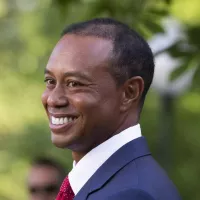
2008: Tiger Woods's Sudden-Death Victory
In 2008, Tiger Woods secured his U.S. Open victory by defeating Rocco Mediate in a thrilling sudden-death playoff on the first extra hole.
2010: Graeme McDowell's Breakthrough Win
Graeme McDowell from Northern Ireland became the first European player to win the U.S. Open since Tony Jacklin in 1970, breaking a significant drought for European golfers.
2010: Impact of OWGR Cutoff Changes
The 2010 U.S. Open saw golfers like Justin Rose and Rickie Fowler rising in the OWGR rankings between the initial cutoff and the tournament, prompting changes to exemption categories for subsequent years.
2010: Tom Watson's Special Exemption
Tom Watson was granted a special exemption to compete in the 2010 U.S. Open.
2011: New Exemption Category for Top 50 Golfers
In 2011, the U.S. Open introduced a new exemption category for golfers ranked in the top 50 of the Official World Golf Ranking (OWGR) at the tournament date, addressing the increasing number of players moving into the top 50 between the original cutoff and the event.
2011: Elimination of Money List Exemptions
In 2011, the U.S. Open made a significant change by removing exemptions based on leading money winners on various tours, including the PGA, European, Japanese, and Australasian tours, opting to focus on the OWGR rankings instead.
2012: Youngest U.S. Open Qualifier
In 2012, 14-year-old Andy Zhang from China became the youngest golfer to qualify for the U.S. Open after Paul Casey withdrew from the tournament.
2012: New Exemption for BMW PGA Championship Winner
Starting in 2012, the U.S. Open added a new exemption for the winner of the current year's BMW PGA Championship, the European Tour's counterpart to The Players Championship.
2013: Fox Sports Signs 12-Year Deal for USGA Championships
Fox Sports signed a 12-year deal with the USGA in 2013, securing exclusive rights to broadcast USGA championships, including the U.S. Open, from 2015 to 2026.
2014: Rise of European Golfers
Between 2004 and 2014, only three American golfers managed to win the U.S. Open, highlighting the increasing competitiveness of European players.
2014: End of NBC and ESPN's Coverage
NBC and ESPN concluded their coverage of the U.S. Open in 2014.
2015: Fox Sports Australia Secures Exclusive Broadcasting Rights
Fox Sports Australia became the exclusive broadcaster of the U.S. Open in Australia starting in 2015.
2015: Fox Sports Begins Coverage of USGA Championships
Fox Sports began its coverage of USGA championships, including the U.S. Open, in 2015 as part of their 12-year deal.
2015: U.S. Open Held in Washington
The 2015 U.S. Open was held in Washington, marking the 18th state to host the prestigious tournament.
2016: Retief Goosen's Special Exemption
Former U.S. Open champion Retief Goosen, with previous victories in 2001 and 2004, received a special exemption to compete in the 2016 tournament.
2017: U.S. Open Held in Wisconsin
In 2017, Wisconsin became the 19th state to host the U.S. Open, further expanding the tournament's reach across the country.
2017: Increased Prize Money for U.S. Open
The 2017 U.S. Open saw a significant increase in prize money, with a total purse of $12 million, and the winner receiving $2.16 million. The European Tour, using conversion rates at the time, calculated their Race to Dubai prize money based on this (€10,745,927 in 2017).
2017: Full 18-Hole Playoff Format Until 2017
Until 2017, the U.S. Open maintained a traditional full 18-hole playoff format on the following Monday to determine a winner in case of a tie after the initial four rounds.
2018: End of Fox Sports Australia's Contract
Fox Sports Australia's exclusive broadcasting rights for the U.S. Open in Australia concluded in 2018.
2018: Special Exemptions for Furyk and Els
In 2018, special exemptions were granted to former U.S. Open champions Jim Furyk, who won in 2003, and Ernie Els, who emerged victorious in 1994 and 1997, allowing them to compete in the tournament.
2018: Two-Hole Aggregate Playoff Format Adopted
In 2018, the USGA introduced a new playoff format for the U.S. Open, shifting to a two-hole aggregate playoff based on feedback from fans, players, and media partners, while still retaining sudden death if the playoff remained tied.
August 5, 2019: Rule Change for Amateur Exemptions
On August 5, 2019, the USGA implemented a significant rule change allowing players to retain their U.S. Open exemption even if they turned professional before the tournament, as long as they were amateurs on the tournament date.
2020: NBCUniversal Acquires U.S. Open Television Rights
In 2020, NBCUniversal took over the U.S. Open television rights from Fox Sports, marking the beginning of their coverage of the tournament.
2021: Golf Channel Carries Early Round Coverage
In 2021, Golf Channel provided coverage for the early rounds of the U.S. Open as part of NBCUniversal's broadcasting agreement.
2022: USA Network Takes Over Early Round Coverage
Starting in 2022, USA Network took over the responsibility of broadcasting early-round coverage of the U.S. Open, replacing Golf Channel.
2023: U.S. Open Prize Money Increase
As of 2023, the U.S. Open increased its total purse to $20 million, making it the largest prize pool among all four major golf championships.
2024: Tiger Woods's Special Exemption
Tiger Woods has received a special exemption to compete in the 2024 U.S. Open.
2026: End of Fox Sports's USGA Championships Contract
Fox Sports's contract with the USGA for broadcasting championships, including the U.S. Open, is set to end in 2026.
Mentioned in this timeline
Tiger Woods is an American professional golfer considered one of...
New Zealand is an island country in the southwestern Pacific...
The National Broadcasting Company NBC is a major American commercial...

China officially the People's Republic of China PRC is located...
England a constituent country of the United Kingdom occupies roughly...
Dubai is the most populous city in the United Arab...
Trending
3 hours ago Virginia Health Officials Urge Residents to Get Early Flu Vaccinations
3 hours ago Alexander Bublik Destroys Racket During Intense On-Court Outburst At Shanghai Masters
3 hours ago Meagan Good Opens Up About Her Happiness and Relationship With Jonathan Majors
3 hours ago NBA Legend Dennis Rodman Scheduled for San Antonio Fan Signing Event
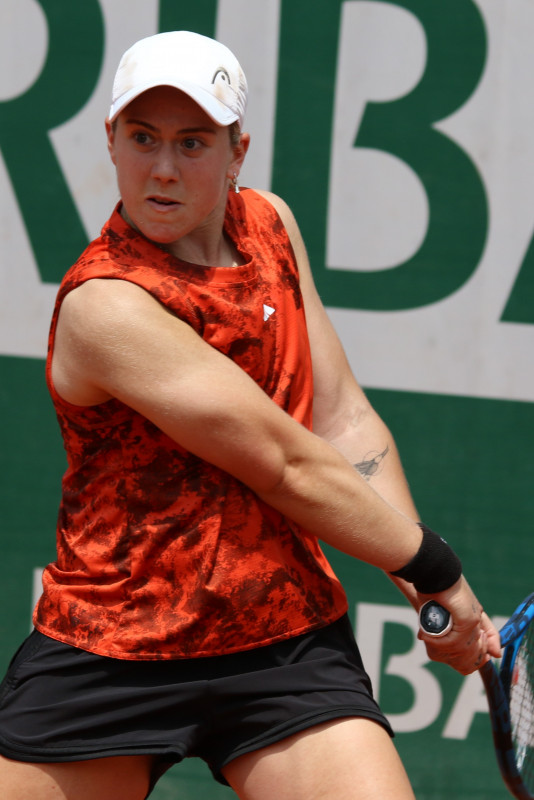
3 hours ago Sonay Kartal Stuns Jasmine Paolini to Advance to Wuhan Open Quarter-Finals

3 hours ago CHP Pursues Armed Driver While KTLA Promotes Bike MS Bay to Bay Charity Event
Popular
Ilhan Omar is a prominent American politician currently serving as...

Ken Paxton is an American politician and lawyer serving as...

Elon Musk is a visionary entrepreneur and engineer known for...

Jameis Winston is an American football quarterback currently playing for...
Michael Joseph Jackson the King of Pop was a highly...

Cristiano Ronaldo widely considered one of the greatest footballers captains...