


The universe comprises all of space, time, matter, and energy, originating approximately 13.8 billion years ago from the Big Bang. Since its inception, it has been in a state of continuous expansion, driven by dark energy. The observable universe contains billions of galaxies, each hosting countless stars, planetary systems, and complex celestial structures held together by gravity. Fundamental physical laws, such as general relativity and quantum mechanics, govern its behavior, from the motion of galaxies to the interactions of subatomic particles. While the exact ultimate fate of the universe remains a subject of intense scientific debate—hypothesizing scenarios like the Big Freeze, Big Rip, or Big Crunch—current observations confirm that it is vast, isotropic, and increasingly dominated by mysterious dark components. It remains the ultimate frontier of human inquiry, encompassing everything that exists physically.
1902: Clarification of the Jeans instability criterion
In 1902, the Jeans instability criterion was established, providing a formal clarification for the gravitational instabilities that Newton previously theorized would occur if an infinite, uniform universe were filled with matter.


1915: Formulation of General Relativity
In 1915, Albert Einstein formulated the theory of general relativity, which fundamentally changed the understanding of gravitation by defining it as the geometric curvature of spacetime caused by matter and energy.
1915: Publication of the General Theory of Relativity
In 1915, Albert Einstein introduced his general theory of relativity, which fundamentally transformed the field of cosmology. This theory provided the mathematical framework necessary to quantitatively predict the origin, evolution, and final state of the universe, serving as the foundation for most modern cosmological models, including the Big Bang theory.
1917: Application of General Relativity to Cosmology
In 1917, Albert Einstein pioneered the modern era of physical cosmology by applying his general theory of relativity to model the structure and dynamics of the entire universe.
1922: Initial Identification of Galaxies Outside the Milky Way
Starting in 1922, Edwin Hubble used the Hooker Telescope to identify Cepheid variables in spiral nebulae, beginning the process of proving that the universe contains many galaxies beyond our own.
1923: Conclusive Proof of Multitude of Galaxies
By 1923, Edwin Hubble provided conclusive evidence that objects like the Andromeda Nebula and Triangulum were distinct galaxies existing outside the Milky Way, forever expanding the understanding of the universe.
1998: Discovery of Cosmic Acceleration
In 1998, two independent research groups measured the deceleration parameter of the universe and found it to be approximately -0.55. This 1998 discovery indicated that the expansion of the universe is actually accelerating rather than slowing down, implying that the second derivative of the cosmic scale factor has been positive for the past 5–6 billion years.
2015: Calculation of the Universe's Age
In 2015, based on the Lambda-CDM model and data synthesized from various scientific experiments, the age of the universe was determined to be approximately 13.799 billion years, with a margin of error of ± 0.021 billion years.
Mentioned in this timeline
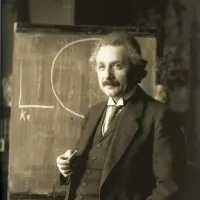
Albert Einstein - was a German-born theoretical physicist renowned for...
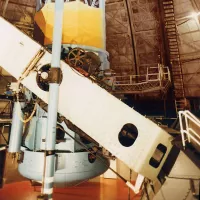
A telescope is an instrument used to observe distant objects...
Time is a fundamental dimension used to sequence events measure...
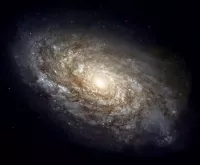
Galaxies are vast systems of stars gas dust and dark...

A community is a social unit defined by shared characteristics...

Jeans are trousers typically made from denim or dungaree cloth...
Trending

4 hours ago Jalen Hurts Out For Season Following Discovery Of Blood Clots
4 hours ago Dallas Mavericks Waive Veteran Center Dwight Powell from Roster

4 hours ago KJ Lacey Gains Attention Amid Struggles for Texas Quarterback Arch Manning

4 hours ago Stellantis and Leapmotor Begin B10 Electric SUV Production in European Zaragoza Facility

29 days ago Cooper Rush Steps Up for Falcons Amid Michael Penix Jr Injury Concerns

5 hours ago Caleb Wilson Embraces Michael Jordan’s Legacy as New Chicago Bulls Franchise Player
Popular

Ilhan Omar is a prominent American politician currently serving as...

Ken Paxton is an American politician and lawyer serving as...

Elon Musk is a visionary entrepreneur and engineer known for...

Michael Joseph Jackson the King of Pop was a highly...

Cristiano Ronaldo widely considered one of the greatest footballers captains...

MrBeast the professional name of Jimmy Donaldson is the most-subscribed...