History of Waterbury and Milldale Tramway in Timeline


The Waterbury and Milldale Tramway was a streetcar line operating between Waterbury and Milldale, Connecticut, spanning 8.7 miles. Chartered in 1907, construction began in 1912, with the first section opening in November 1913 and the full line operational by December 1914. Known locally as the "Green Line" due to its green streetcars, it also had unique cars. Due to unprofitability, the eastern portion was abandoned in October 1927, and the remaining line in October 1933. A bus route replaced part of the line which is now operated by Northeast Transportation Company as CTtransit route 425.
July 1905: First attempt rejected
In July 1905, the first attempt to incorporate the Waterbury and Milldale Tramway was rejected by the state legislature.


June 5, 1907: Second attempt approved
On June 5, 1907, a second attempt to charter the Waterbury and Milldale Tramway was approved by the legislature.
June 1907: Company chartered
In June 1907, the Waterbury and Milldale Tramway company was chartered to build a streetcar line between Waterbury and Milldale, Connecticut.
August 1911: Charter extension granted
In August 1911, an extension to the charter for the Waterbury and Milldale Tramway was granted.
October 1912: Construction began
In October 1912, construction of the Waterbury and Milldale Tramway ultimately began.
1912: Construction begins
In mid-1912, construction of the Waterbury and Milldale Tramway began.
July 1913: Contract awarded
In July 1913, a contract to complete the Waterbury and Milldale Tramway line as far east as Hitchcock Lake was awarded.
November 19, 1913: First section opens
On November 19, 1913, the first section of the Waterbury and Milldale Tramway entered service.
December 19, 1914: Full line opens
On December 19, 1914, the full Waterbury and Milldale Tramway line was open.
1914: Service extended to Hitchcock Lake
In late 1913 or early 1914, service on the Waterbury and Milldale Tramway was extended to Hitchcock Lake.
July 1915: Request denied
In July 1915, the state denied the Connecticut Company's petition to allow the Waterbury and Milldale Tramway to lay a second track near Milldale.
December 1916: Subsidiary created
In December 1916, the Waterbury and Milldale Tramway created a subsidiary, the Waterbury and Bristol Tramway, to build a connecting line from Mill Plain to Bristol.
1916: Additional streetcars acquired
In 1916, The Waterbury and Milldale Tramway acquired two additional "semi-convertible" streetcars from Wason.
1918: Cars originally ordered
In 1918, Birney cars, later purchased by Waterbury and Milldale, were originally ordered by the Cape Breton Electric Company of Nova Scotia.
1921: Additional cars purchased
In 1921, the Waterbury and Milldale Tramway purchased additional cars numbered 112 and 114 from the American Car Company.
1924: Supplied electricity to Wolcott
By 1924, the Waterbury and Milldale Tramway supplied much of Wolcott with residential electric power.
1925: Road paving begins
In 1925, paving of the Waterbury–Cheshire Road began, creating a fully paved road between Waterbury and Meriden.
September 1927: Agreement to sell bus franchise
In September 1927, the Waterbury and Milldale Tramway agreed to sell its bus franchise and buses to the New England Transportation Company.
October 1927: East portion abandoned
In October 1927, the east portion of the Waterbury and Milldale Tramway line was abandoned.
October 16, 1927: Bus service begins
On October 16, 1927, the Waterbury and Milldale Tramway began operating a Waterbury–Hartford bus service and ended streetcar service east of Hitchcock Lake.
1927: Power distribution rights purchased
In 1927, Connecticut Light and Power purchased the Wolcott power distribution rights and equipment from the Waterbury and Milldale Tramway.
October 1933: Operating rights sold
In October 1933, the Waterbury and Milldale Tramway agreed to sell the operating rights to its route to Cooke Street Line.
October 1933: Remainder abandoned
In October 1933, the remaining portion of the Waterbury and Milldale Tramway line was abandoned.
October 29, 1933: Final day of streetcar operation
October 29, 1933 was the final day of streetcar operation for the Waterbury and Milldale Tramway.
April 3, 1936: Company dissolved
On April 3, 1936, the stockholders voted to dissolve the Waterbury and Milldale Tramway company.
June 1938: Waterbury–Dickerman's Corner route added
In June 1938, Cooke Street Line added a Waterbury–Dickerman's Corner route, restoring service to the full length of the former streetcar line.
January 1969: Service cut back
In January 1969, service was again cut back to just the Waterbury–Hitchcock Lake route.
October 1, 1969: CR&L takes over operations
On October 1, 1969, the Connecticut Railway and Lighting Company (CR&L) took over the Cooke Street Line operations.
1972: Northeast Transportation Company takes over
In late 1972, the Northeast Transportation Company took over CR&L operations in Waterbury, including the Hitchcock Lake line.
June 2017: Route renumbered
In June 2017, long numbered as route 25, it became route 425 as part of a statewide renumbering of CT Transit routes.
Mentioned in this timeline
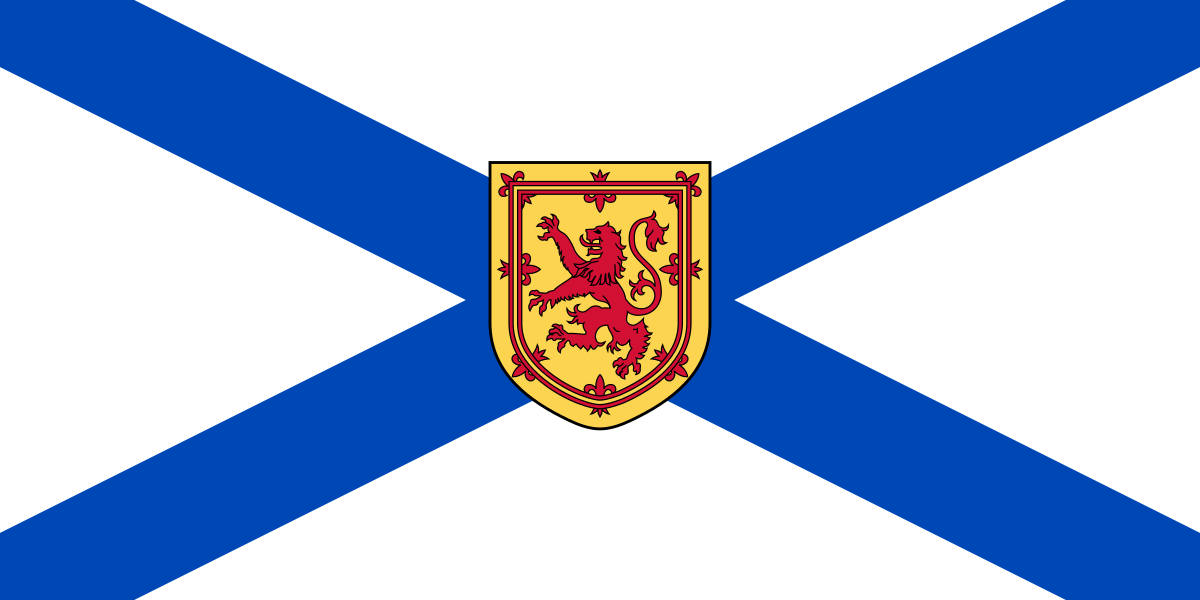
Nova Scotia is a province located in the Maritimes region...
England a constituent country of the United Kingdom occupies roughly...
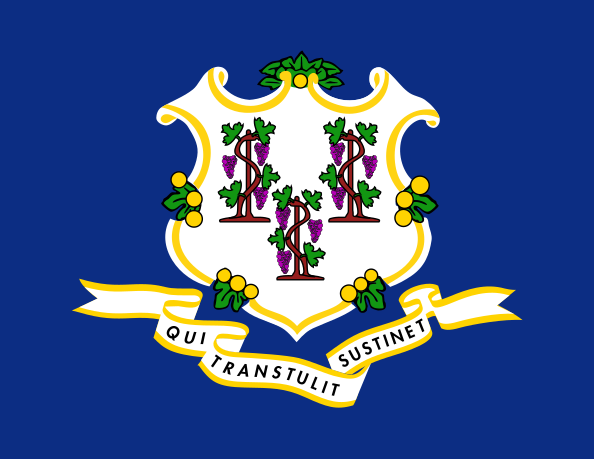
Connecticut is a state in the New England region of...

A car also known as an automobile is a wheeled...
September is the ninth month of the year in the...

Novae are astronomical events where a bright seemingly new star...
Trending

3 hours ago Kyle MacLachlan Discusses Iconic Roles and New Memoir Fictional Selves
3 hours ago Two Missing Children Found Deceased in Daytona Beach Pond
3 hours ago Karrueche Tran Reacts to Unexpected Nickname from Deion Sanders' Grandson

3 hours ago Maduro-Linked Fugitive Arrested for Alleged Money Laundering and Bribery Scheme

2 days ago Ryan Reynolds' Private Texts Against Justin Baldoni Surface Amid Blake Lively Legal Battle
4 hours ago The New York Times Highlights Social Media Controversies and Personal Health Struggles
Popular
Ken Paxton is an American politician and lawyer serving as...

Jameis Winston is an American football quarterback currently playing for...

Cristiano Ronaldo widely considered one of the greatest footballers captains...

Michael Joseph Jackson the King of Pop was a highly...

Elon Musk is a visionary entrepreneur and engineer known for...

Bernie Sanders is a prominent American politician and the senior...