


An arrest warrant is a formal legal document issued by a judge or magistrate that authorizes law enforcement officers to take a specific individual into custody. It is typically issued based on a showing of probable cause, indicating that there is a reasonable belief the person has committed a crime. The warrant must specify the name of the suspect, the alleged offense, and the date and location of issuance. Once issued, it grants police the legal authority to arrest the named individual, often involving taking them into physical custody to appear before a court. Warrants ensure that law enforcement actions comply with constitutional protections against unreasonable searches and seizures, serving as a critical check on government power in the criminal justice process. While warrants are generally required for arrests made outside of public view, exceptions exist for crimes committed in an officer's presence or under exigent circumstances.
1964: Establishment of the Aguilar-Spinelli Standard
Starting in 1964, legal requirements dictated that affidavits primarily based on hearsay needed to prove the credibility of the declarant and provide a strong basis of knowledge for the information provided to the magistrate, a standard that remained in place until 1983.


1980: Enactment of the Magistrates' Courts Act 1980
In 1980, the Magistrates' Courts Act 1980 was established, which includes section 1, authorizing a justice of the peace to issue arrest warrants for individuals suspected of committing an offense, provided that written information is laid before them.
1983: Transition to the Totality of the Circumstances Test
In 1983, the legal standard for determining probable cause shifted to a "totality of the circumstances" approach, where magistrates evaluate the relative reliability of information rather than strictly adhering to previous evidentiary rules.
1996: New Orleans outstanding warrant statistics
During the year 1996, New Orleans, Louisiana, documented 49,000 outstanding warrants.
1999: California outstanding warrant statistics
In 1999, the state of California reported approximately 2.5 million outstanding warrants, with nearly 1 million of those concentrated in the Los Angeles area.
2023: Enactment of Bharatiya Nagarik Suraksha Sanhita
In 2023, the Bharatiya Nagarik Suraksha Sanhita (BNSS) was established, introducing specific legal provisions such as Section 72 regarding arrest warrants, Section 74 and 75 concerning the powers of Magistrates to direct warrants for escaped convicts or proclaimed offenders, and Section 78 which mandates that police must present an arrested individual before a magistrate within 24 hours of their arrest.
2023: ICC Arrest Warrant for Vladimir Putin
In 2023, the International Criminal Court issued an arrest warrant for Russian president Vladimir Putin regarding his alleged involvement in international crimes.
2024: ICC Arrest Warrant for Benjamin Netanyahu
The International Criminal Court officially issued an arrest warrant for Israeli prime minister Benjamin Netanyahu in 2024.
2025: ICC Arrest Warrant for Rodrigo Duterte
In 2025, the International Criminal Court issued an arrest warrant for former Philippine president Rodrigo Duterte as part of its ongoing judicial proceedings.
Mentioned in this timeline
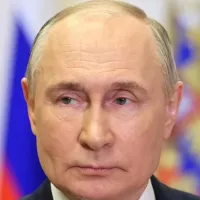
Vladimir Putin is a prominent Russian politician who has significantly...

Benjamin Netanyahu is a prominent Israeli politician who has served...
California is a U S state on the Pacific Coast...
Texas is the second-largest U S state by area and...
Los Angeles California's most populous city and Southern California's hub...

New Orleans is the most populous city in Louisiana and...
Trending
14 days ago Mike Tirico Reports on Saints Superdome Anniversary and NBC Sunday Night Football Coverage
3 hours ago Ryan Reynolds Spotted with Blake Lively Amidst Justin Baldoni Media Drama

3 hours ago Trump Defends Russia Sanction Waivers Amidst Potential Hostage Deal and Oil Price Shifts

3 hours ago Jamie Lee Curtis Honored With Inaugural Champion for Change Award

3 hours ago Paul Bettany Clarifies Relationship With Johnny Depp Following High Profile Libel Trial

4 hours ago Lil Kev Season 2 Starring Kevin Hart and Wanda Sykes Coming to Paramount+
Popular

Ilhan Omar is a prominent American politician currently serving as...

Ken Paxton is an American politician and lawyer serving as...

Elon Musk is a visionary entrepreneur and engineer known for...

Michael Joseph Jackson the King of Pop was a highly...

Cristiano Ronaldo widely considered one of the greatest footballers captains...

Greta Thunberg is a Swedish climate activist who gained international...