Most Talked-About Controversies Linked to Barney Frank


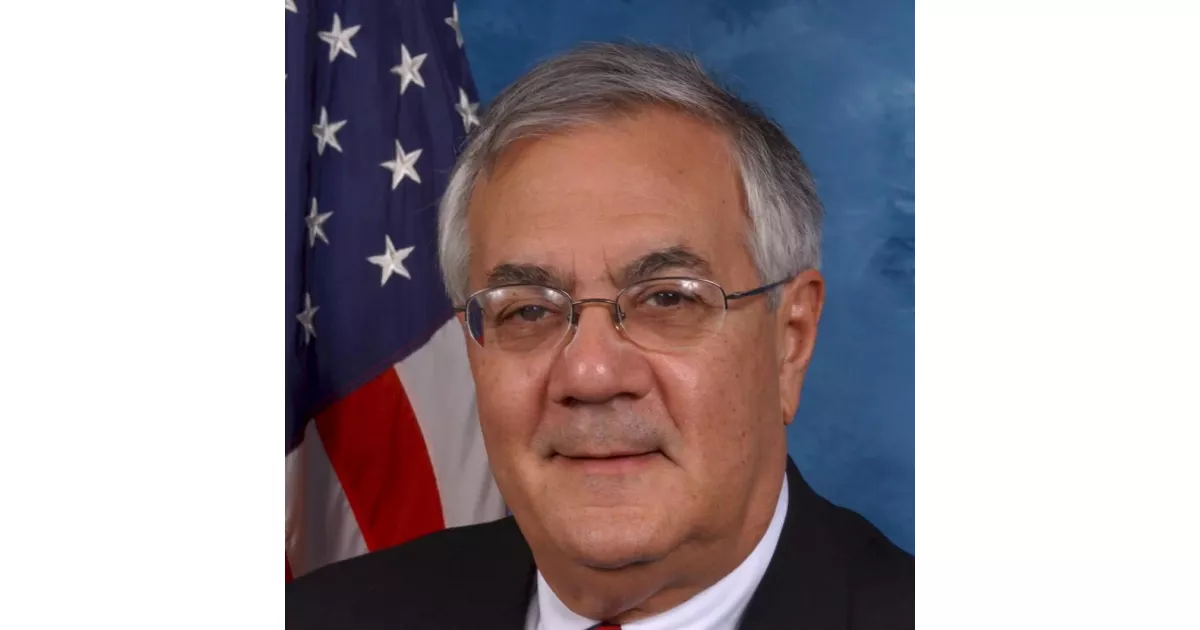
Public opinion and media debates around Barney Frank—discover key moments of controversy.
Barney Frank is a retired American politician who served as a U.S. Representative for Massachusetts from 1981 to 2013. As a prominent Democrat, he chaired the House Financial Services Committee (2007-2011) and played a key role in enacting the Dodd-Frank Act of 2010, aimed at financial regulatory reform. Notably, Frank was one of the most visible openly gay politicians in the United States during his congressional tenure.
1933: Frank Criticizes Gramm-Leach-Bliley Act repealing Glass-Steagall Act
In 1933, the Glass-Steagall Act was passed. Frank later stated that the Gramm-Leach-Bliley Act of 1999 which repealed part of the Glass–Steagall Act of 1933, contributed to the financial meltdown.


1985: Hired Steve Gobie
In 1985, Barney Frank hired Steve Gobie, a male prostitute, for sex and they became "more friends than sexual partners." Frank housed Gobie and hired him as an aide, housekeeper and driver and paid for his attorney and court-ordered psychiatrist.
1987: Evicted Steve Gobie
In 1987, Barney Frank evicted Steve Gobie after being advised by his landlord that Gobie kept escorting despite the support and was doing so in the residence.
1989: Gobie Story
In 1989, Steve Gobie tried to initiate a bidding war for the story between WUSA-TV (Channel 9), The Washington Times, and The Washington Post and then gave the story to The Washington Times for nothing, in hopes of getting a book contract.
1989: Campaign Contributions
Since 1989, Barney Frank received over $42,000 in campaign contributions from Fannie Mae and Freddie Mac, reported in 2009.
1991: Fannie Mae Hires Frank's Partner; Frank Objects to Safety Proposal
In 1991, Fannie Mae hired Herb Moses, Frank's domestic partner, to a managerial position after Frank's recommendation. Also in 1991, during a House Banking subcommittee hearing, Frank opposed making "safety and soundness" the primary objective for Fannie Mae.
1994: Grant to charity cofounded by Frank's mother
In 1994, Fannie Mae made grants of $75,000 to a charity cofounded by Barney Frank's mother.
1995: Armey Refers to Frank with Slur
In 1995, then-Republican House Majority Leader Dick Armey referred to Frank as "Barney Fag" in a press interview. Armey apologized, but Frank did not accept his explanation.
1999: Frank Criticizes Gramm-Leach-Bliley Act
In 1999, the Republican-led Gramm–Leach–Bliley Act was passed. Frank later stated that this act, which repealed part of the Glass–Steagall Act of 1933 and removed the wall between commercial and investment banks, contributed to the financial meltdown.
2001: Grant to charity cofounded by Frank's mother
In 2001, Fannie Mae made grants of $75,000 to a charity cofounded by Barney Frank's mother.
2004: Bush Administration Pushes Fannie and Freddie into Subprime Mortgages
In 2004, Frank claimed that the Bush administration started pushing Fannie and Freddie into subprime mortgages.
2006: Frank Responds to "Radical Homosexual Agenda" Accusation
In 2006, Frank responded to Rep. John Hostettler's accusation of a "radical homosexual agenda," outlining his goals for LGBT rights. Frank's stance on outing gay Republicans was discussed during the Mark Foley scandal, clarifying that privacy should not be a right to hypocrisy.
2006: Frank Responds to Fannie Mae Criticism
In 2006, Frank responded to criticism about Fannie Mae's involvement in non-traditional mortgages, stating that in 2004, the Bush administration pushed Fannie and Freddie into subprime mortgages, which he believed would jeopardize their profitability and put people in homes they couldn't afford.
2006: Frank Opposes Respect for America's Fallen Heroes Act
In 2006, Frank was one of three Representatives to oppose the Respect for America's Fallen Heroes Act, citing civil liberties and constitutional grounds. He expressed concerns about restricting protests at soldiers' funerals.
2006: Comparison of FHA Loans to 2009
In 2009, total FHA loans were four times that of 2006, raising concerns about potential defaults if the economy dipped back into recession. Frank responded that the increased defaults were worth the economic stabilization.
2007: Criticized Larry Craig
In 2007, Barney Frank criticized Larry Craig for hypocrisy after Craig's arrest for lewd conduct in a public restroom.
2008: Economic Crisis
In the years leading up to the economic crisis of 2008, it was claimed that Frank did not play a strong enough role in reforming Fannie Mae and Freddie Mac.
2009: Frank Responds to Blame for Subprime Mortgage Crisis
In 2009, Frank addressed what he called inaccurate efforts by Republicans to blame Democrats for the subprime mortgage crisis. He outlined his efforts to reform Fannie Mae and Freddie Mac, but faced resistance. He pointed to a 2005 bill that died due to President Bush's opposition.
2009: Reported Campaign Contributions
In 2009, OpenSecrets reported that Barney Frank received over $42,000 in campaign contributions from Fannie Mae and Freddie Mac since 1989.
2009: Increase in FHA Loans Raises Concerns
In 2009, total FHA loans were four times that of 2006, raising concerns about potential defaults if the economy dipped back into recession. Frank responded that the increased defaults were worth the economic stabilization.
2011: "Reckless Endangerment" Publication
In their 2011 book Reckless Endangerment, Gretchen Morgenson and Josh Rosner called Frank a "major recipient of Fannie Mae's largesse, albeit indirectly" and "a perpetual protector of Fannie."
Mentioned in this timeline

Donald John Trump is an American politician media personality and...
Bill Clinton served as the nd U S President from...

Hillary Diane Rodham Clinton is a prominent American politician lawyer...

Benjamin Netanyahu is a prominent Israeli politician who has served...
Ronald Reagan the th U S President - was a...
The United States of America is a federal republic primarily...
Trending

3 hours ago India Test Stars Return to Action in Ranji Trophy Opening Round

3 hours ago Emma Watson Makes Rare Public Appearances at Recent Hollywood Gala and Armani Party

3 hours ago Alexander Bublik Faces Criticism Following Latest Violent Tennis Court Outbursts
5 hours ago GAO report warns of significant weather forecasting gaps due to satellite funding cuts

5 hours ago Lexie Hull Navigates WNBA Offseason Amid Indiana Fever Roster Speculation

5 hours ago Bleach Thousand-Year Blood War The Calamity Final Trailer and Episode Details Revealed
Popular

Ilhan Omar is a prominent American politician currently serving as...

Ken Paxton is an American politician and lawyer serving as...

Elon Musk is a visionary entrepreneur and engineer known for...
Michael Joseph Jackson the King of Pop was a highly...

Cristiano Ronaldo widely considered one of the greatest footballers captains...

MrBeast the professional name of Jimmy Donaldson is the most-subscribed...