


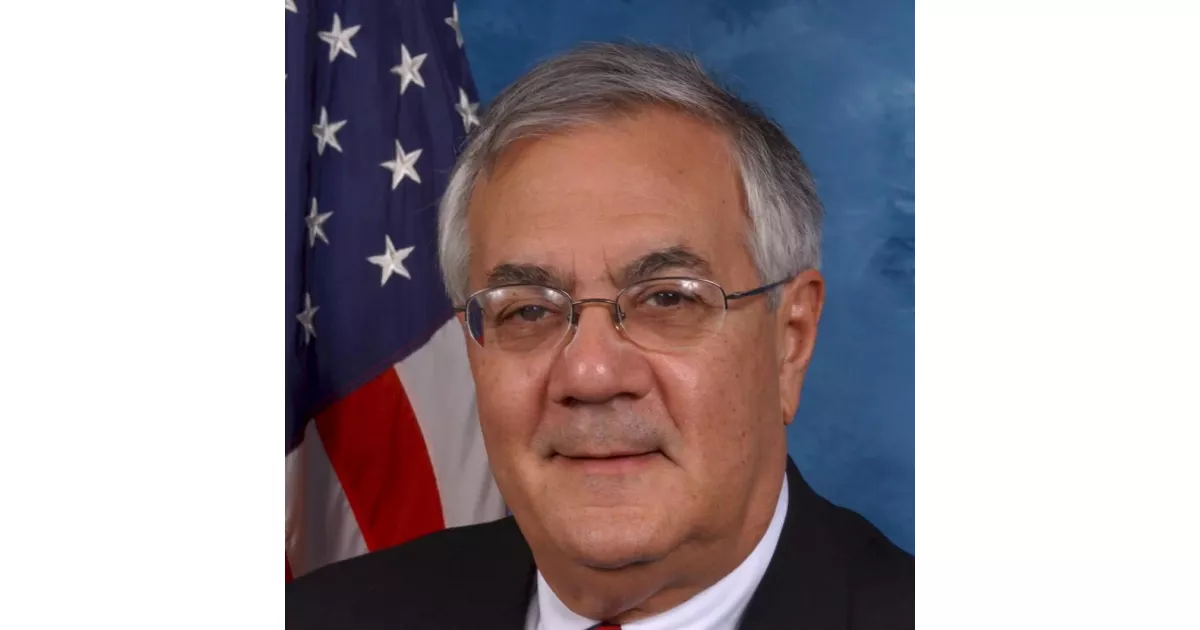
Barney Frank is a retired American politician who served as a U.S. Representative for Massachusetts from 1981 to 2013. As a prominent Democrat, he chaired the House Financial Services Committee (2007-2011) and played a key role in enacting the Dodd-Frank Act of 2010, aimed at financial regulatory reform. Notably, Frank was one of the most visible openly gay politicians in the United States during his congressional tenure.
1933: Frank Criticizes Gramm-Leach-Bliley Act repealing Glass-Steagall Act
In 1933, the Glass-Steagall Act was passed. Frank later stated that the Gramm-Leach-Bliley Act of 1999 which repealed part of the Glass–Steagall Act of 1933, contributed to the financial meltdown.


March 31, 1940: Barnett Frank's Birth
On March 31, 1940, Barnett Frank, later known as Barney Frank, was born. He would become an American politician and U.S. Representative.
1962: Graduated from Harvard College
In 1962, Barney Frank graduated from Harvard College.
1964: Volunteer in Mississippi during Freedom Summer
In 1964, Barney Frank was a volunteer in Mississippi during Freedom Summer.
1972: Elected to Massachusetts House of Representatives
In 1972, Barney Frank was elected to the Massachusetts House of Representatives where he served for eight years.
1973: Served in Massachusetts House of Representatives
In 1973, Barney Frank served in the Massachusetts House of Representatives.
1977: Graduated from Harvard Law School
In 1977, Barney Frank graduated from Harvard Law School while serving as a Massachusetts state representative.
1979: Admitted to the bar in Massachusetts
In 1979, Barney Frank was admitted to the bar in Massachusetts.
1981: Became a U.S. Representative
In 1981, Barney Frank became a member of the U.S. House of Representatives, representing Massachusetts.
1981: End of term in Massachusetts House of Representatives
In 1981, Barney Frank's service in the Massachusetts House of Representatives concluded.
1982: Past credible election challenge
In 1982, Barney Frank defeated Margaret Heckler.
1982: Elected against Margaret Heckler
In 1982, redistricting forced Barney Frank to run against Republican Margaret Heckler. Frank focused on Heckler's support for President Ronald Reagan's tax cuts, and won with 60% of the vote.
1985: Hired Steve Gobie
In 1985, Barney Frank hired Steve Gobie, a male prostitute, for sex and they became "more friends than sexual partners." Frank housed Gobie and hired him as an aide, housekeeper and driver and paid for his attorney and court-ordered psychiatrist.
May 30, 1987: Publicly came out as gay
On May 30, 1987, Barney Frank came out publicly as gay, prompted by increased media interest in his private life and the death of Stewart McKinney, a closeted bisexual Republican representative from Connecticut.
1987: Evicted Steve Gobie
In 1987, Barney Frank evicted Steve Gobie after being advised by his landlord that Gobie kept escorting despite the support and was doing so in the residence.
1987: Publicly Came Out as Gay
In 1987, Barney Frank publicly came out as gay, becoming the first member of Congress to do so voluntarily.
1987: Frank Chairs House Judiciary Subcommittee
In 1987, Frank was the Chair of the House Judiciary Subcommittee on Administrative Law and Governmental Relations in the 100th Congress and a staunch supporter of redress and reparations for Japanese American internment during World War II.
1989: Gobie Story
In 1989, Steve Gobie tried to initiate a bidding war for the story between WUSA-TV (Channel 9), The Washington Times, and The Washington Post and then gave the story to The Washington Times for nothing, in hopes of getting a book contract.
1989: Campaign Contributions
Since 1989, Barney Frank received over $42,000 in campaign contributions from Fannie Mae and Freddie Mac, reported in 2009.
1990: Re-elected After Controversy
Despite the Steve Gobie controversy, Barney Frank won re-election in 1990 with 66 percent of the vote.
1990: Frank Instrumental in Crafting Immigration Act
In 1990, Frank was instrumental in crafting the 1990 Immigration Act, which restated the reasons for which a person could be denied entry into the country. The act did not include "sexual preference exclusion[s]", reforming earlier immigration law which allowed persons to be excluded for a sexual deviance.
1990: National Housing Trust Fund Enacted
Since 1990, The National Housing Trust Fund, of which Frank was a chief advocate, was the first affordable housing program to be enacted by the Congress as part of the Housing and Economic Recovery Act of 2008
1991: Fannie Mae Hires Frank's Partner; Frank Objects to Safety Proposal
In 1991, Fannie Mae hired Herb Moses, Frank's domestic partner, to a managerial position after Frank's recommendation. Also in 1991, during a House Banking subcommittee hearing, Frank opposed making "safety and soundness" the primary objective for Fannie Mae.
1992: Published "Speaking Frankly"
In 1992, Barney Frank published "Speaking Frankly", a book on the role the Democratic Party should play in the 1990s.
1993: Co-sponsored "Safe Drinking Water Act Amendments"
In 1993, Barney Frank co-sponsored "Safe Drinking Water Act Amendments" (H.R.3392) to regulate more contaminants under the Clean Water Act.
1993: Frank Co-sponsors "Freedom of Choice Act"
In 1993, Frank co-sponsored the "Freedom of Choice Act" (H.R.25) (1993-H25) to "protect the reproductive rights of women."
1994: Grant to charity cofounded by Frank's mother
In 1994, Fannie Mae made grants of $75,000 to a charity cofounded by Barney Frank's mother.
1995: Armey Refers to Frank with Slur
In 1995, then-Republican House Majority Leader Dick Armey referred to Frank as "Barney Fag" in a press interview. Armey apologized, but Frank did not accept his explanation.
1996: Membership in the Congressional Internet Caucus
In 1996, Barney Frank became a member of the Congressional Internet Caucus, which was established to promote the growth and advancement of the Internet and to advance the United States' world leadership in the digital world.
1996: Co-sponsored the "Federal Law Enforcement Dependents Assistance Act"
In 1996, Barney Frank co-sponsored the "Federal Law Enforcement Dependents Assistance Act" (H.R.4111. Became Public Law No: 104–238.) to provide educational assistance to the dependents of Federal law enforcement officials killed or disabled in the line of duty.
1996: Frank Comments on Being in the Minority
In a 1996 interview, Frank said: "I'm used to being in the minority. I'm a left-handed gay Jew. I've never felt, automatically, a member of any majority."
July 1998: Amicable break-up with Herb Moses
In July 1998, Barney Frank and Herb Moses had an amicable break-up, ending their eleven-year relationship. They were considered "Washington's most powerful and influential gay couple".
1998: Herb Moses' tenure with Fannie Mae ends
From 1991 to 1998, Herb Moses, Frank's domestic partner, worked at Fannie Mae in a managerial position, overseeing projects to relax restrictions on home improvement loans and small farm mortgages.
1998: Frank Founds National Stonewall Democrats
In 1998, Frank founded the national LGBT Democratic organization, National Stonewall Democrats.
February 1999: Defense of Bill Clinton during Impeachment Trial
In January and February 1999, Barney Frank dedicatedly defended U.S. President Bill Clinton during his impeachment trial.
1999: Frank Criticizes Gramm-Leach-Bliley Act
In 1999, the Republican-led Gramm–Leach–Bliley Act was passed. Frank later stated that this act, which repealed part of the Glass–Steagall Act of 1933 and removed the wall between commercial and investment banks, contributed to the financial meltdown.
2000: Rating by Citizens United for Rehabilitation of Errants
In 2000, Frank was rated at 89% by Citizens United for Rehabilitation of Errants, indicating pro-rehabilitation crime votes.
2001: Authored States' Rights to Medical Marijuana Act
In 2001, Barney Frank authored the States' Rights to Medical Marijuana Act (H.R. 2592), which aimed to prevent the federal government from overriding state medical marijuana laws.
2001: Co-sponsored "the MX Missile Stand-Down Act" and the Landmine Elimination and Victim Assistance Act
In 2001, Barney Frank co-sponsored "the MX Missile Stand-Down Act" (01-HR2718) aimed at taking fifty Peacekeeper missiles off high-alert status, and the Landmine Elimination and Victim Assistance Act (01-HR948).
2001: Co-sponsored the "Anti-Spamming Act"
In 2001, Barney Frank co-sponsored the "Anti-Spamming Act" (01-HR718) to protect individuals and businesses from "unsolicited and unwanted electronic mail".
2001: Co-sponsored the "National Forest Protection and Restoration Act"
In 2001, Barney Frank co-sponsored the "National Forest Protection and Restoration Act" (H.R.1494) aiming to "prohibit commercial logging on Federal public lands".
2001: Grant to charity cofounded by Frank's mother
In 2001, Fannie Mae made grants of $75,000 to a charity cofounded by Barney Frank's mother.
2001: Frank Co-sponsors Amendment for Equal Rights
In 2001, Frank co-sponsored an amendment to the U.S. Constitution to apply equal rights based on gender differences.
2001: Frank Co-sponsors Legislation on Crime and Hate Crimes
In 2001, Frank co-sponsored the "Innocence Protection Act" (H.R. 912, S.486) to reduce the risk of executing innocent persons and the "Local Law Enforcement Hate Crimes Prevention Act" (01-HR1343) to provide federal assistance to prosecute hate crimes.
2002: Frank Co-sponsors "Federal Agency Protection of Privacy Act"
In 2002, Frank co-sponsored the "Federal Agency Protection of Privacy Act" (H.R.4561) to require a "Privacy Impact Statement" on new federal rules.
December 2003: 89% rating by Peace Action
As of December 2003, Barney Frank received an 89% rating by Peace Action, indicating a pro-peace voting record.
2003: Leading Democrat on House Financial Services Committee
In 2003, Barney Frank became the leading Democrat on the House Financial Services Committee.
2003: Rated 95% by the League of Conservation Voters
In 2003, Barney Frank received a 95% rating by the League of Conservation Voters, indicating pro-environment votes.
2003: Rated "A" by Vote Hemp
In 2003, Barney Frank received an "A" rating from Vote Hemp, indicating a pro-hemp voting record.
2003: Release of "Let's Get Frank"
In 2003, a documentary film about Barney Frank entitled Let's Get Frank was released.
2004: Bush Administration Pushes Fannie and Freddie into Subprime Mortgages
In 2004, Frank claimed that the Bush administration started pushing Fannie and Freddie into subprime mortgages.
2004: Capitol Hill Staffers Survey
In 2004, a survey of Capitol Hill staffers published in Washingtonian gave Barney Frank the title of the "brainiest," "funniest," and "most eloquent" member of the House.
2005: Co-sponsored "Rail Security Act"
In 2005, Barney Frank co-sponsored the "Rail Security Act" (S.1379/H.R.153) (05-S1379), which prioritized rail transportation security.
2005: Bipartisan Bill for Fannie and Freddie Regulation Fails
In 2005, Frank and Mike Oxley achieved bipartisan support for a bill to impose tighter regulation of Fannie and Freddie and new funds for rental housing. The bill passed the House, but the Senate never voted on it due to likely veto by President Bush.
2006: Opposed Internet Gambling Prohibition Acts
In 2006, Barney Frank strongly opposed H.R. 4777, the Internet Gambling Prohibition and Enforcement Act, and H.R. 4411, the Goodlatte-Leach Internet Gambling Prohibition Act.
2006: Voted for the "Communications, Opportunity, Promotion, and Enhancement Act"
In 2006, Barney Frank voted for the "Communications, Opportunity, Promotion, and Enhancement Act" (Bill HR 5252 Amendment 987) to "establish "network neutrality" (non-tiered Internet)."
2006: Rated '+30' by NORML
In 2006, Barney Frank was rated "+30" by NORML, signifying a pro-drug-reform stance.
2006: Frank Responds to "Radical Homosexual Agenda" Accusation
In 2006, Frank responded to Rep. John Hostettler's accusation of a "radical homosexual agenda," outlining his goals for LGBT rights. Frank's stance on outing gay Republicans was discussed during the Mark Foley scandal, clarifying that privacy should not be a right to hypocrisy.
2006: Frank Responds to Fannie Mae Criticism
In 2006, Frank responded to criticism about Fannie Mae's involvement in non-traditional mortgages, stating that in 2004, the Bush administration pushed Fannie and Freddie into subprime mortgages, which he believed would jeopardize their profitability and put people in homes they couldn't afford.
2006: Frank Opposes Respect for America's Fallen Heroes Act
In 2006, Frank was one of three Representatives to oppose the Respect for America's Fallen Heroes Act, citing civil liberties and constitutional grounds. He expressed concerns about restricting protests at soldiers' funerals.
2006: Capitol Hill Staffers Survey
In 2006, a survey of Capitol Hill staffers published in Washingtonian gave Barney Frank the title of the "brainiest," "funniest," and "most eloquent" member of the House.
2006: Frank Co-sponsors "Compassionate Assistance for Rape Emergencies Act"
In 2006, he co-sponsored the "Compassionate Assistance for Rape Emergencies Act" (S.3945) (06-S3945), a bill for "emergency contraception for rape victims."
2006: Human Rights Campaign Scores Frank at 100%
In 2006, the Human Rights Campaign scored Frank at 100%, indicating a pro-gay-rights stance.
2006: Comparison of FHA Loans to 2009
In 2009, total FHA loans were four times that of 2006, raising concerns about potential defaults if the economy dipped back into recession. Frank responded that the increased defaults were worth the economic stabilization.
August 2007: Frank Advocates for Regulation in Financial Times Op-Ed
In August 2007, Frank wrote an op-ed in the Financial Times, arguing that the subprime situation provides ammunition for those who believe in reasonable regulation of markets.
2007: FHA's Role in Housing Market During Crisis
From 2007 to 2010, the Federal Housing Administration played a crucial role in providing low-down-payment mortgages during the housing crisis, helping to avert a full-scale disaster.
2007: Chairman of House Financial Services Committee
From 2007 to 2011, Barney Frank served as committee chairman when his party held a House majority.
2007: Co-sponsored the "Drug Sentencing Reform & Kingpin Trafficking Act"
In 2007, Barney Frank co-sponsored the "Drug Sentencing Reform & Kingpin Trafficking Act" ((S.1711) 07-S1711) to target cocaine kingpins and address sentencing disparity between crack and powder cocaine.
2007: Co-sponsored the "Great Cats and Rare Canids Act" and "Animal Fighting Prohibition Enforcement Act"
In 2007, Barney Frank co-sponsored the "Great Cats and Rare Canids Act" (H.R.1464) to "provide financial resources and to foster international cooperation for promoting conservation of rare felids & canids" and he co-sponsored the "Animal Fighting Prohibition Enforcement Act" (S.261/H.R.137) to "strengthen prohibitions against animal fighting".
2007: Criticized Larry Craig
In 2007, Barney Frank criticized Larry Craig for hypocrisy after Craig's arrest for lewd conduct in a public restroom.
2007: Sponsored the Internet Gambling Regulation and Enforcement Act
In 2007, Barney Frank sponsored H.R. 2046, the Internet Gambling Regulation and Enforcement Act, aiming to establish licensing and regulation of online gaming sites.
2007: Frank Becomes Chairman of House Financial Services Committee
In 2007, Frank became the chairman of the House Financial Services Committee, positioning him "at the center of power."
2007: Frank Co-sponsors Legislation on Partnership Benefits and Equal Rights
In 2007, Frank co-sponsored the "Partnership Benefits and Obligations Act" (S.2521/H.R.4838) to provide benefits to domestic partners of Federal employees. That same year, he co-sponsored the "Equal Rights Amendment" (S.J.RES.10/H.J.RES.40).
2007: Frank Co-sponsors Recidivism Reduction Act
In 2007, Frank co-sponsored the "Recidivism Reduction and Second Chance Act" to reduce recidivism.
2007: Frank Co-sponsors Legislation for Servicewomen
In 2007, Frank co-sponsored two important pieces of legislation: the "Compassionate Care for Servicewomen Act" (S.1800 & HR.2064) (07-HR2064) to provide "emergency contraception at military facilities,"
2007: Frank Helps Guide Housing Reform Acts to Passage
In 2007, Frank helped guide the Federal Housing Reform Act (H.R. 1427) and the Mortgage Reform and Anti-Predatory Lending Act (H.R. 3915) to passage once control shifted to the Democrats.
January 2008: Attempt to include housing reform in economic stimulus legislation
In January 2008, Frank and others attempted to include a strong housing reform bill in the economic stimulus legislation, but needed the Bush administration's approval.
March 2008: Proposal of the Personal Use of Marijuana by Responsible Adults Act of 2008
In March 2008, Barney Frank proposed the Personal Use of Marijuana by Responsible Adults Act of 2008 (HR 5843), seeking to legalize small amounts of marijuana at the federal level, but it did not pass the committee during the 110th Congress.
July 2008: Housing reform bill passed and sent to President Bush
In July 2008, a strong housing reform bill, after being passed by the House, was sent to President Bush's desk.
2008: Introduced the Payment Systems Protection Act
In 2008, Barney Frank and Ron Paul introduced H.R. 5767, the Payment Systems Protection Act, seeking a moratorium on the enforcement of the Unlawful Internet Gambling Enforcement Act of 2006 while the United States Treasury Department and the Federal Reserve defined "unlawful Internet gambling".
2008: Co-sponsored the "Veterans Suicide Study Act"
In 2008, Barney Frank co-sponsored the "Veterans Suicide Study Act" ( (S.2899/H.R.4204) 08-S2899) designed to study and address suicides among veterans.
2008: Voted against the "FISA Amendments Act"
In 2008, Barney Frank voted against the "FISA Amendments Act" (Bill HR6304), which would have granted retroactive immunity for those involved in the NSA warrantless surveillance controversy. That same year, he co-sponsored overturning FCC approval of media consolidation (S.J.RES.28&H.J.RES.79 2008-SJR28).
2008: Sister's Role in Hillary Clinton's Campaign
In 2008, Barney Frank's sister, Ann Lewis, served as a senior adviser for the Hillary Clinton 2008 presidential campaign.
2008: Frank Supports American Housing Rescue & Foreclosure Prevention Act
In 2008, Frank supported passage of the American Housing Rescue & Foreclosure Prevention Act, aimed at protecting homeowners from foreclosure. This law was considered one of the most important issues he worked on.
2008: Sharp-Tongued and Quick-Witted Debater
In 2008, The New York Times summarized that Barney Frank has earned a reputation during his 28 years in Congress as a sharp-tongued and quick-witted debater.
2008: Capitol Hill Staffers Survey
In 2008, the same survey named Barney Frank "brainiest" and runner-up for "workhorse" and "most eloquent."
2008: Economic Crisis
In the years leading up to the economic crisis of 2008, it was claimed that Frank did not play a strong enough role in reforming Fannie Mae and Freddie Mac.
2008: Unprecedented Number of Loans Made Since
Since 2008, the unprecedented number of loans made were performing far better than those in the prior two years.
February 2009: Frank One of Three Openly Gay Members of Congress
In February 2009, Frank was one of three openly gay members of Congress, along with Tammy Baldwin and Jared Polis.
April 2009: Frank Named Top of Out's "Annual Power 50 List"
In April 2009, Frank was named in the LGBT magazine Out's "Annual Power 50 List", landing at the top spot.
June 18, 2009: Re-introduction of the Personal Use of Marijuana by Responsible Adults Act
On June 18, 2009, Barney Frank re-introduced the Personal Use of Marijuana by Responsible Adults Act of 2009 (HR 2943) in Congress.
August 2009: Defense of Nadav Tamir
In August 2009, after a confidential memo written by the consul general of Israel in Boston, Nadav Tamir, was leaked to the Israeli media and Tamir was reprimanded, Barney Frank defended Tamir in a letter to Prime Minister Benjamin Netanyahu.
2009: Signed the "Community AIDS and Hepatitis Prevention Act" and the Industrial Hemp Farming Act of 2009
In 2009, Barney Frank signed the "Community AIDS and Hepatitis Prevention Act" (HR 179 2009-H179) to allocate Federal funds for syringe exchange programs to reduce the transmission of bloodborne pathogens and the Industrial Hemp Farming Act of 2009 (H.R.1866 2009-H1866) to grant each state regulatory authority for the growing and processing of industrial hemp.
2009: Frank Responds to Blame for Subprime Mortgage Crisis
In 2009, Frank addressed what he called inaccurate efforts by Republicans to blame Democrats for the subprime mortgage crisis. He outlined his efforts to reform Fannie Mae and Freddie Mac, but faced resistance. He pointed to a 2005 bill that died due to President Bush's opposition.
2009: Frank Signs Bills Recognizing Anniversaries
In 2009, Frank signed bills recognizing the 40th anniversary of the Stonewall riots and the 100th anniversary of the NAACP.
2009: Frank's Pro-Choice Voting Record
In 2009, NARAL Pro-Choice America gave Frank a 100% rating, indicating a pro-choice voting record on abortion rights. He also co-sponsored the "Prevention First Act" to "expand access to preventive health care services that help reduce unintended pregnancy, reduce abortions, and improve access to women's health care."
2009: Reported Campaign Contributions
In 2009, OpenSecrets reported that Barney Frank received over $42,000 in campaign contributions from Fannie Mae and Freddie Mac since 1989.
2009: Increase in FHA Loans Raises Concerns
In 2009, total FHA loans were four times that of 2006, raising concerns about potential defaults if the economy dipped back into recession. Frank responded that the increased defaults were worth the economic stabilization.
2010: FHA's Role in Housing Market During Crisis
From 2007 to 2010, the Federal Housing Administration played a crucial role in providing low-down-payment mortgages during the housing crisis, helping to avert a full-scale disaster.
2010: Re-election to 16th term
In 2010, Barney Frank ran for his 16th term and faced a credible challenge. He won re-election with 54% of the vote.
2010: Co-Sponsor of Dodd–Frank Act
In 2010, Barney Frank was a leading co-sponsor of the Dodd–Frank Act.
2010: Capitol Hill Staffers Survey
In 2010, Barney Frank was declared "brainiest," "workhorse," and "funniest" member of the House.
2010: Re-election with Reduced Margin
In the 2010 mid-term elections, Barney Frank's victory margin went down to eleven points.
June 23, 2011: Introduction of the Ending Federal Marijuana Prohibition Act
On June 23, 2011, Barney Frank introduced the Ending Federal Marijuana Prohibition Act aimed at removing marijuana from the Controlled Substances Act.
November 28, 2011: Announced Retirement
On November 28, 2011, Barney Frank announced that he would not seek re-election in 2012.
2011: End of Chairmanship
From 2007 to 2011, Barney Frank served as committee chairman when his party held a House majority.
2011: "Reckless Endangerment" Publication
In their 2011 book Reckless Endangerment, Gretchen Morgenson and Josh Rosner called Frank a "major recipient of Fannie Mae's largesse, albeit indirectly" and "a perpetual protector of Fannie."
July 7, 2012: Marriage to Jim Ready
On July 7, 2012, Barney Frank married Jim Ready at the Boston Marriott Newton in suburban Boston.
July 2012: Married James Ready
In July 2012, Barney Frank married his long-time partner, James Ready, becoming the first member of Congress to marry someone of the same sex while in office.
2012: Retirement from Congress
In 2012, Barney Frank did not seek re-election and retired from Congress.
August 3, 2013: Appearance on Real Time with Bill Maher
On August 3, 2013, Barney Frank expressed sympathy with the host's atheism on the television program Real Time with Bill Maher.
2013: End of term as U.S. Representative
In 2013, Barney Frank's service as a U.S. Representative for Massachusetts concluded.
May 2014: Awarded Humanist of the Year by the American Humanist Association
In May 2014, the American Humanist Association awarded Barney Frank the Humanist of the Year. During his acceptance speech, he discussed his personal beliefs and the complexities of working in government, focusing on the politicized case of Terri Schiavo.
June 17, 2015: Joined the board of directors of Signature Bank
On June 17, 2015, Barney Frank joined the board of directors of the New York-based Signature Bank.
2015: Interview with Boston Magazine
In 2015, Barney Frank said in an interview with Boston Magazine, that it was unfair to Sullivan to date her with him being gay.
2018: Featured on Who Is America?
In 2018, Barney Frank was featured on Sacha Baron Cohen's spoof comedy series Who Is America?, discussing the Donald Trump Access Hollywood tape and the Pizzagate conspiracy theory. He eventually walked out of the interview.
December 8, 2022: Presence at Respect for Marriage Act Passage
On December 8, 2022, Barney Frank, despite being retired, was present on the floor of the House of Representatives when the Respect for Marriage Act was successfully passed.
April 28, 2026: Barney Frank Enters Hospice Care
On April 28, 2026, the announcement was made that Barney Frank had entered hospice care in Ogunquit, Maine, due to congestive heart failure.
2064: Frank Co-sponsors Legislation for Servicewomen
In 2007, Frank co-sponsored two important pieces of legislation: the "Compassionate Care for Servicewomen Act" (S.1800 & HR.2064) (07-HR2064) to provide "emergency contraception at military facilities,"
Mentioned in this timeline

Donald John Trump is an American politician media personality and...
Bill Clinton served as the nd U S President from...

Hillary Diane Rodham Clinton is a prominent American politician lawyer...

Benjamin Netanyahu is a prominent Israeli politician who has served...
Ronald Reagan the th U S President - was a...
The United States of America is a federal republic primarily...
Trending

4 hours ago GAO report warns of significant weather forecasting gaps due to satellite funding cuts

4 hours ago Lexie Hull Navigates WNBA Offseason Amid Indiana Fever Roster Speculation

4 hours ago Bleach Thousand-Year Blood War The Calamity Final Trailer and Episode Details Revealed

5 hours ago Singer D4vd Ordered to Stand Trial in Teen Murder Case

5 hours ago Alexander Bublik Faces Criticism Over Recent Tennis On-Court Outbursts

5 hours ago Diana Shnaider Faces Yulia Putintseva in WTA Wuhan Open Tennis Matchup
Popular

Ilhan Omar is a prominent American politician currently serving as...

Ken Paxton is an American politician and lawyer serving as...

Elon Musk is a visionary entrepreneur and engineer known for...
Michael Joseph Jackson the King of Pop was a highly...

Cristiano Ronaldo widely considered one of the greatest footballers captains...

MrBeast the professional name of Jimmy Donaldson is the most-subscribed...