Lasting Legacy of Bill Clinton: A Look at the Influence on History


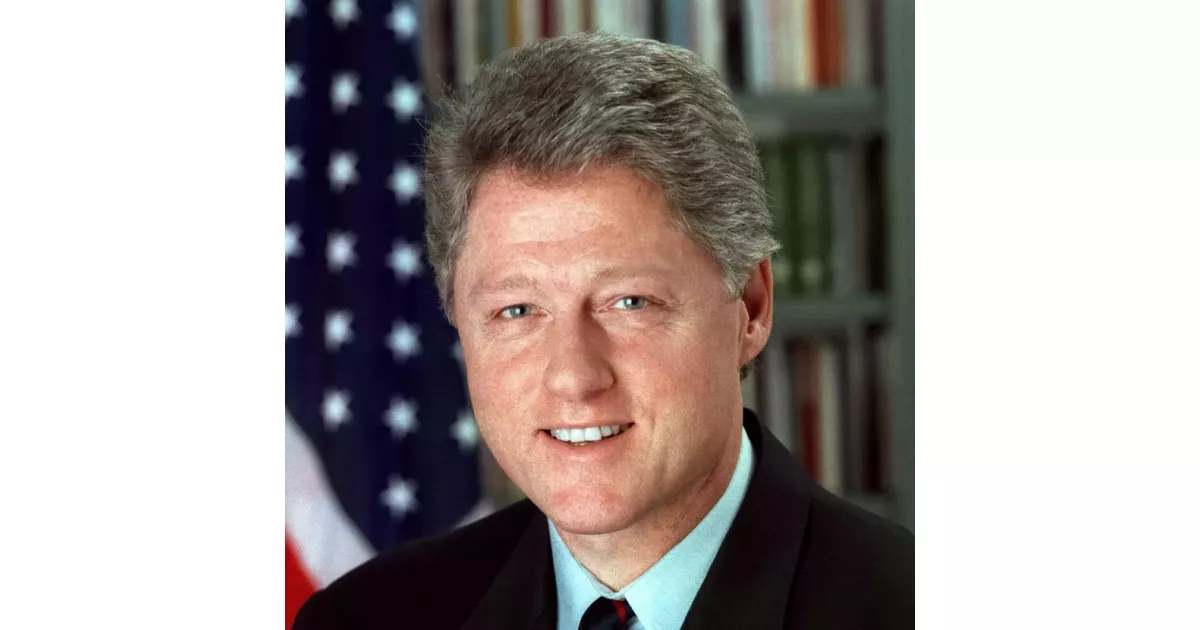
A closer look at the lasting mark left by Bill Clinton—a timeline of influence.
Bill Clinton served as the 42nd U.S. President from 1993 to 2001. A Democrat, he previously served as Arkansas's Attorney General and Governor. His political ideology, known as "Clintonism", centered on a centrist "Third Way" approach. This philosophy significantly shaped his presidency and influenced the Democratic Party for decades.
1933: Enactment of the Glass-Steagall Act
The Glass–Steagall Act was enacted in 1933. The Financial Services Modernization Act of 1999 repealed the part of the Glass–Steagall Act that had prohibited a bank from offering a full range of investment, commercial banking, and insurance services since its enactment in 1933.


1993: Appointment of Ruth Bader Ginsburg to the Supreme Court
In 1993, President Clinton appointed Ruth Bader Ginsburg as a justice to the Supreme Court.
April 1994: Genocide broke out in Rwanda
In April 1994, genocide broke out in Rwanda and Bill Clinton chose not to intervene, fearing a reprisal of the events in Somalia.
1994: Appointment of Stephen Breyer to the Supreme Court
In 1994, President Clinton appointed Stephen Breyer as a justice to the Supreme Court.
1996: First year of decline in new HIV/AIDS diagnoses.
In 1996, the U.S. marked the first year since the beginning of the HIV/AIDS epidemic that the number of new HIV/AIDS diagnoses would decline.
1997: Significant decline in AIDS-related deaths
In 1997, the U.S. Centers for Disease Control and Prevention (CDC) reported a significant 47% decline in the number of AIDS-related deaths compared to the previous year, credited to the effectiveness of new drug therapy such as highly active antiretroviral therapy (HAART) promoted by the Clinton Administration.
1998: Toni Morrison calls Clinton "the first black president"
In 1998, Nobel laureate Toni Morrison called Bill Clinton "the first black president", citing similarities between his background and common tropes associated with blackness.
1998: Lewinsky Scandal Impact
In 1998, the Lewinsky scandal had an enduring impact on Clinton's legacy. The scandal's impact extends beyond his impeachment.
December 1999: Gallup's List of Most Widely Admired People
From a poll conducted in December 1999, Bill Clinton was among eighteen included in Gallup's List of Most Widely Admired People of the 20th Century.
1999: Clinton signed into law the Financial Services Modernization Act
In 1999, Bill Clinton signed into law the Financial Services Modernization Act, also known as the Gramm–Leach–Bliley Act. This act repealed the part of the Glass–Steagall Act that had prohibited a bank from offering a full range of investment, commercial banking, and insurance services since its enactment in 1933.
January 20, 2001: Clinton issued 141 pardons and 36 commutations on his last day in office
On January 20, 2001, Bill Clinton issued 141 pardons and 36 commutations on his last day in office, leading to controversy surrounding Marc Rich and allegations about Hillary Clinton's brother.
2001: Medal for Distinguished Public Service
In 2001, Bill Clinton was presented with the Medal for Distinguished Public Service. In 2001, The Clinton Presidential Center was also opened in Little Rock, Arkansas.
2002: Gallup poll on Clinton's job approval
In 2002, a Gallup poll showed that fewer Americans approved of the job Clinton did as president compared to a 2006 poll which showed a 10-point increase.
June 2004: Unveiling of White House portrait
In June 2004, Bill Clinton's official White House portrait, commissioned by the White House Historical Association, was unveiled. It was painted by Simmie Knox.
May 2006: CNN poll comparing Clinton's and Bush's job performance
In May 2006, a CNN poll compared Clinton's job performance with that of his successor, George W. Bush, and found that a strong majority of respondents said Clinton outperformed Bush in six different areas questioned.
June 2006: Gallup poll on Clinton's job approval
In June 2006, a Gallup poll found that 61 percent of Americans approved of the job Clinton did as president, a 10-point increase from the 2002 poll.
2006: Death of Slobodan Milošević
In 2006, Slobodan Milošević, the president of Yugoslavia during the Kosovo conflict, died before the completion of his trial at the International Criminal Tribunal for the former Yugoslavia in the Hague, where he faced charges including crimes against humanity and war crimes.
2007: Release of "Giving: How Each of Us Can Change the World"
In 2007, Bill Clinton released his book "Giving: How Each of Us Can Change the World", which became a New York Times Best Seller and garnered positive reviews.

2007: Gallup poll on greatest U.S. presidents
In 2007, Gallup polls showed that Clinton was regarded by 13 percent of Americans as the greatest president in U.S. history.
July 2009: Clinton comes out for gay marriage
In July 2009, former President Bill Clinton publicly announced his support for gay marriage.
2010: Gallup survey on Clinton's job approval
In 2010, a Gallup survey showed that 69 percent of respondents approved of the job Clinton did as president, including 47 percent of Republicans and 68 percent of independents. His spike in popularity was attributed to Americans comparing him to then-incumbent Democratic president Barack Obama.
July 2, 2011: The New York Times editorial criticizing DOMA
On July 2, 2011, The New York Times published an editorial characterizing the Defense of Marriage Act (DOMA), which was signed by President Bill Clinton in 1996, as one of his "worst policy moments."
2011: Gallup poll on greatest U.S. presidents
In 2011, Gallup polls showed that Clinton was regarded by 13 percent of Americans as the greatest president in U.S. history.
2011: Repeal of "Don't Ask, Don't Tell" policy
In 2011, the "Don't Ask, Don't Tell" policy was repealed, removing open sexual orientation as a reason for dismissal from the armed forces.
June 2013: U.S. Supreme Court strikes down DOMA
In June 2013, the U.S. Supreme Court struck down the Defense of Marriage Act (DOMA) in the case of United States v. Windsor.
November 20, 2013: Awarded Presidential Medal of Freedom
On November 20, 2013, President Obama awarded Bill Clinton the Presidential Medal of Freedom.
2013: Clinton urges the Supreme Court to overturn DOMA
In 2013, former President Bill Clinton urged the Supreme Court to overturn the Defense of Marriage Act (DOMA).
2014: Quinnipiac University poll on best presidents since World War II
In 2014, a Quinnipiac University Polling Institute poll showed that 18 percent of respondents regarded Clinton as the best president since World War II, making him the third most popular among postwar presidents, behind John F. Kennedy and Ronald Reagan.
2015: Ranking by the American Political Science Association scholars
In 2015, a poll by The Washington Post asked 162 scholars of the American Political Science Association to rank all the U.S. presidents in order of greatness. Clinton ranked eighth overall, with a rating of 70 percent.
2018: Revisiting the Lewinsky Affair
In 2018, commentators, Democratic political leaders, and Monica Lewinsky revisited the Lewinsky affair, characterizing it as an abuse of power. Clinton stated he made the right decision in not resigning. The New York Times alleged the lack of Democratic candidates asking Clinton to campaign was a change attributed to the revised understanding of the Lewinsky scandal.
March 2024: Details about Clinton's near assassination released.
As of March 2024, Reuters reported that details about President Clinton's near assassination attempt in the Phillipines in November 1996 remained classified. Reuters spoke with eight retired secret service agents about the incident.
November 2024: Publication of "Citizen: My Life After the White House"
In November 2024, Bill Clinton's second volume of memoirs, "Citizen: My Life After the White House", was published.

December 2024: Earliest-Serving Living Former U.S. President
Following Jimmy Carter's death in December 2024, Bill Clinton became the earliest-serving living former U.S. president and the last surviving president to have served in the 20th century.
Mentioned in this timeline
Barack Obama the th U S President - was the...
John F Kennedy JFK was the th U S President...

Hillary Diane Rodham Clinton is a prominent American politician lawyer...
George W Bush the rd U S President - is...
Joe Biden served as the th President of the United...
Martin Luther King Jr was a pivotal leader in the...
Trending

3 hours ago New Mexico Judge Dismisses Criminal Charges Against Actor Timothy Busfield

3 hours ago DeVonta Smith Returns to Action for Eagles Week 6 Clash
4 hours ago Tesla Autopilot Crash Injures Two CHP Officers in Solano County

4 hours ago Chuck Lorre Reveals CBS Initially Rejected Melissa McCarthy for Mike & Molly Lead Role

4 hours ago Mike Gansey Instrumental in Cleveland Cavaliers' Strategic James Harden Acquisition
5 hours ago Colts Tight End Tyler Warren Added to Week 6 Injury Report
Popular

Ilhan Omar is a prominent American politician currently serving as...

Ken Paxton is an American politician and lawyer serving as...

Elon Musk is a visionary entrepreneur and engineer known for...

Michael Joseph Jackson the King of Pop was a highly...

Jameis Winston is an American football quarterback currently playing for...

Cristiano Ronaldo widely considered one of the greatest footballers captains...