Rise to Success: Career Highlights of Bruce Lee


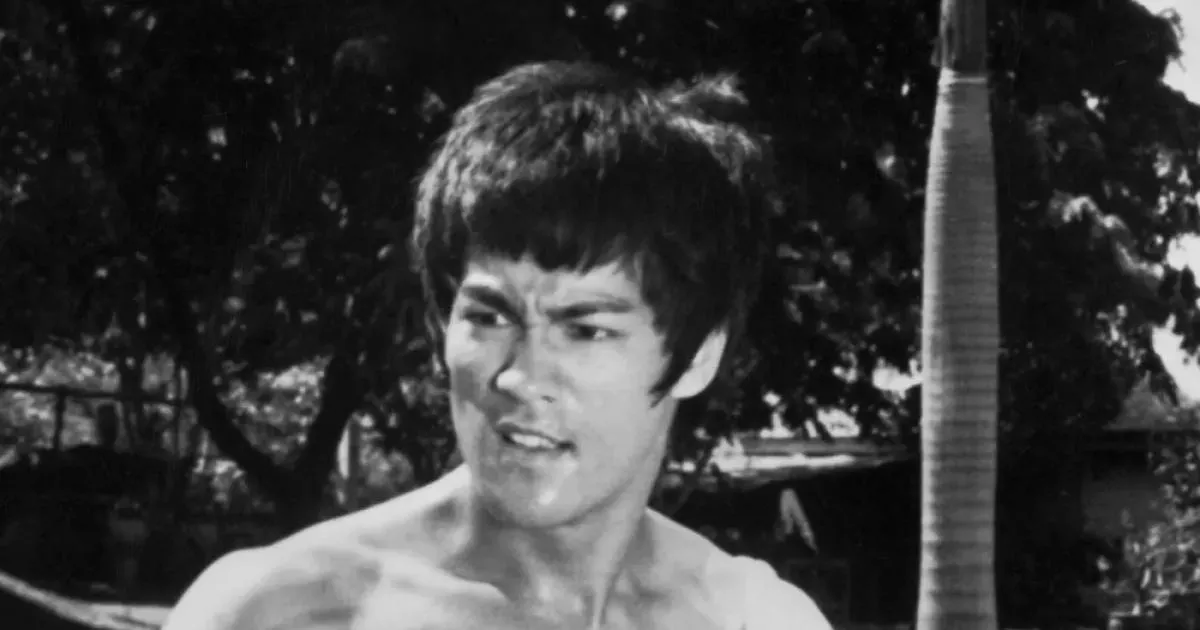
Discover the career path of Bruce Lee, from the first major opportunity to industry-changing achievements.
Bruce Lee was a highly influential Hong Kong and American martial artist, actor, and filmmaker. He founded Jeet Kune Do, a unique martial arts philosophy blending his fighting experience with philosophical concepts. Lee is considered the first global Chinese film star and significantly popularized martial arts films in the 1970s. His impact on martial arts and action cinema remains profound, solidifying his legacy as a cultural icon.
1950: First Leading Role in The Kid
In 1950, at age nine, Bruce Lee co-starred with his father in "The Kid", based on the comic book character "Kid Cheung", marking his first leading role.


1959: Move to Seattle
In 1959, Bruce Lee moved to Seattle and continued his high school education while working as a live-in waiter. He also started considering making money by teaching martial arts.
1959: Starts Teaching Martial Arts
In 1959, Bruce Lee started teaching martial arts, calling his approach Jun Fan Gung Fu. He taught friends he met in Seattle, and invented his one-inch punch, also becoming interested in boxing.
1961: Enrolls at the University of Washington
In 1961, Bruce Lee enrolled at the University of Washington, marking a significant step in his education and personal development. He considered making money by teaching martial arts while aspiring to a career in acting.
1964: Demonstration at Long Beach International Karate Championships
In 1964, Bruce Lee demonstrated his Jeet Kune Do martial arts at the Long Beach International Karate Championships, showcasing quick eye strikes, the one-inch punch, chi sao drills while blindfolded, and participating in a full-contact sparring bout.
1964: Demonstrates One-Inch Punch
In 1964, Bruce Lee demonstrated the "one-inch punch" at the Long Beach International Karate Championships, causing Bob Baker to fall backward into a chair and experience chest pain. He also met Taekwondo master Jhoongoo Rhee and developed a friendship that benefited them as martial artists. Rhee taught Lee the side kick, and Lee taught Rhee the "non-telegraphic" punch.
1964: Long Beach International Karate Championships
In 1964, Bruce Lee drew significant attention at the Long Beach International Karate Championships with demonstrations and speaking, leading to opportunities teaching martial arts in Los Angeles.
1964: Meeting Jhoongoo Rhee and Exchange of Techniques
In 1964, Bruce Lee met taekwondo master Jhoongoo Rhee at the Long Beach International Karate Championships. Rhee taught Lee the side kick, while Lee taught Rhee the "non-telegraphic" punch, which Rhee later incorporated into American taekwondo as the "accupunch".
1964: Invitation to Audition for "Number One Son"
In 1964, Bruce Lee's martial arts exhibition in Long Beach led to an invitation by television producer William Dozier for an audition for a role in the pilot for "Number One Son", about Lee Chan, the son of Charlie Chan.
1964: Joins Jun Fan martial arts studio and Appears at Long Beach International Karate Championships
In early 1964, Bruce Lee dropped out of university and moved to Oakland to found the second Jun Fan martial arts studio in Oakland. At the invitation of Parker, Lee appeared in the 1964 Long Beach International Karate Championships.
September 1966: The Green Hornet Premieres
In September 1966, Bruce Lee played the role of Kato in "The Green Hornet" TV series, which premiered on ABC.
1966: The Green Hornet Debut
In 1966, Bruce Lee gained exposure to American audiences through his role as Kato in the ABC action television series "The Green Hornet".
March 1967: The Green Hornet Ends
In March 1967, "The Green Hornet" TV series, featuring Bruce Lee as Kato, ran for one season and concluded.
1967: The Green Hornet Finale
In 1967, Bruce Lee's role as Kato in "The Green Hornet" ended, marking the conclusion of the TV series.
1967: Jeet Kune Do Originated
In 1967, Jeet Kune Do, meaning "way of the intercepting fist" in Cantonese, originated as a new hybrid martial art system. It incorporated footwork from boxing, kicks from kung fu, and techniques from fencing, emphasizing a "style of no style" by removing formalized approaches and evolving into a philosophy beyond traditional styles.
1967: The Green Hornet cancellation and Lee's Thank You Note
In 1967, after the show "The Green Hornet" was cancelled, Bruce Lee wrote to William Dozier thanking him for starting "my career in show business".
1968: Demonstration at Long Beach International Karate Championships
In 1968, Bruce Lee demonstrated his Jeet Kune Do martial arts at the Long Beach International Karate Championships, showcasing quick eye strikes, the one-inch punch, chi sao drills while blindfolded, and participating in a full-contact sparring bout. Higher-quality video footage of this event is available.
1969: Lee's Role in Marlowe
In 1969, Bruce Lee acted in Marlowe, playing Winslow Wong, a hoodlum skilled in martial arts, marking his first collaboration with screenwriter Stirling Silliphant.
1969: Collaboration on 'The Silent Flute' Script
In 1969, Bruce Lee collaborated with Hollywood script writer Stirling Silliphant and actor James Coburn on a script for a film titled "The Silent Flute". The trio also embarked on a location-hunt to India for the project.
1969: Film Appearances and Martial Arts Advisor Role
In 1969, Bruce Lee made a brief appearance in the film "Marlowe", penned by Stirling Silliphant. He played a hoodlum who used martial arts to intimidate a private detective. The same year, Lee was credited as the karate advisor in "The Wrecking Crew", starring Dean Martin. Also in 1969, Lee acted in one episode each of "Here Come the Brides" and "Blondie".
1969: Development of Kung Fu TV series
In 1969, Ed Spielman and Howard Friedlander created an identical concept to Lee's "The Warrior" series. Warner Bros. developed it and renamed it "Kung Fu", with no credit to Lee.
1970: Fight Choreography for "A Walk in the Spring Rain"
In 1970, Bruce Lee did the fight choreographies for the film A Walk in the Spring Rain.
December 9, 1971: Television Interview on 'The Pierre Berton Show'
On December 9, 1971, during a television interview on "The Pierre Berton Show", Bruce Lee stated that both Paramount and Warner Bros. wanted him to be in a "modernized type of a thing" and that they thought "the Western idea is out", whereas he wanted to do a Western.
1971: Role in Longstreet TV Show
In 1971, Bruce Lee played Li Tsung, a Jeet Kune Do instructor, in the television show Longstreet and elements of his martial arts philosophy were incorporated into the script.
1971: Leading Role in 'The Big Boss'
In 1971, Bruce Lee played his first leading role in "The Big Boss", which became a box-office success across Asia and made him a star in Hong Kong.
October 1972: Filming 'Game of Death'
From August to October 1972, Bruce Lee began working on his fourth Golden Harvest film, "Game of Death". He filmed scenes including a fight sequence with Kareem Abdul-Jabbar.
November 1972: Production Halt on 'Game of Death'
In November 1972, production on "Game of Death" was stopped after Warner Bros. offered Bruce Lee the opportunity to star in "Enter the Dragon".
1972: Stars in Fist of Fury and Directs The Way of the Dragon
In 1972, Bruce Lee starred in "Fist of Fury", portraying Chen Zhen, and also directed and wrote "The Way of the Dragon".
1972: Success of 'Fist of Fury' and Formation of Concord Production Inc.
In 1972, Bruce Lee's film, "Fist of Fury", surpassed box office records previously set by "The Big Boss". Lee negotiated a new deal with Golden Harvest, and later formed his own company, Concord Production Inc., with Chow.
1972: Plans for 'Yellow-Faced Tiger'
In 1972, after the success of "The Big Boss" and "Fist of Fury", Raymond Chow planned a third film, "Yellow-Faced Tiger", to be directed by Lo Wei. Bruce Lee decided to direct and produce his own script for "Way of the Dragon" instead.
February 1973: Filming Begins for 'Enter the Dragon'
In February 1973, filming began in Hong Kong for "Enter the Dragon", a joint production by Concord, Golden Harvest, and Warner Bros.
April 1973: Completion of 'Enter the Dragon' Filming
In April 1973, filming for "Enter the Dragon" in Hong Kong was completed. The movie was a joint production by Concord, Golden Harvest, and Warner Bros.
November 1973: Period film planned with Shaw Brothers Studio
From September–November 1973, a period film titled "The Seven Sons of the Jade Dragon" was planned with the Shaw Brothers Studio, to be directed by either Chor Yuen or Cheng Kang, and written by Yi Kang and Chang Cheh.
1973: Enter the Dragon release and success
In 1973, "Enter the Dragon" was made for US$850,000 and went on to become one of the year's highest-grossing films, solidifying Bruce Lee's legacy as a martial arts legend.
1973: Stars in Enter the Dragon
In 1973, Bruce Lee starred in the American-Hong Kong co-production "Enter the Dragon".
1973: Kung Fu Craze Dominates Hong Kong Films
In 1973, the "kung fu craze" that Bruce Lee helped launch in the West began to dominate Hong Kong martial arts films.
1975: Ali Uses "Accupunch" to Knockout Dunn
In 1975, heavyweight boxing champion Muhammad Ali used the "accupunch", taught to him by Jhoon Goo Rhee who learned it from Bruce Lee, to knockout Richard Dunn.
1978: The Game of Death Release
In 1978, "The Game of Death", starring Bruce Lee, was released.
1978: Release of Cobbled-Together 'Game of Death'
In 1978, Robert Clouse released a controversial, cobbled-together version of "Game of Death", using a Bruce Lee look-alike, archive footage, and a new storyline. Only fifteen minutes of actual footage of Lee was included.
1978: Release of 'Circle of Iron'
In 1978, the film "Circle of Iron", starring David Carradine, was released. This film was based on the plot of "The Silent Flute" script that Bruce Lee, Stirling Silliphant and James Coburn had worked on in 1969.
1986: Brandon Lee in "Legacy of Rage"
In 1986, Brandon Lee found success acting in action pictures, including "Legacy of Rage".
1991: Brandon Lee in "Showdown in Little Tokyo"
In 1991, Brandon Lee starred in "Showdown in Little Tokyo", continuing his acting career in action-oriented films.
1992: Brandon Lee in "Rapid Fire"
In 1992, Brandon Lee acted in "Rapid Fire", adding to his portfolio of action films.
2004: Dana White Calls Lee 'Father of MMA'
In 2004, Ultimate Fighting Championship (UFC) founder Dana White called Bruce Lee the "father of mixed martial arts" due to his training methods and philosophy.
2010: Plans for 'The Silent Flute' Film
In 2010, producer Paul Maslansky reportedly planned and secured funding to create a film based on the original script for "The Silent Flute", which Bruce Lee had worked on.
Mentioned in this timeline
Muhammad Ali nicknamed The Greatest was an iconic American professional...

Marvel Comics founded in as Timely Comics by Martin Goodman...
The United States of America is a federal republic primarily...
California is a U S state on the Pacific Coast...
Kareem Abdul-Jabbar a Naismith Memorial Basketball Hall of Famer is...

Seattle is the most populous city in Washington and the...
Trending
3 hours ago DK Metcalf Status Uncertain for Week 6 Game Due to Illness

3 hours ago Josh Jacobs Files Lawsuit to Block Release of Battery Case Evidence and Video
3 hours ago Jamie Vardy Scores Debut Goal for Burnley in EFL Championship Match
3 hours ago Colts Tight End Tyler Warren Added to Week 6 Injury Report
3 hours ago Zohran Mamdani Collaborates With Schumer And Jeffries To Challenge ICE Presence In NYC
3 hours ago Ethan Hawke Criticizes Hollywood Elites and Predicts Future Rebellion
Popular

Ilhan Omar is a prominent American politician currently serving as...

Ken Paxton is an American politician and lawyer serving as...
Elon Musk is a visionary entrepreneur and engineer known for...

Michael Joseph Jackson the King of Pop was a highly...
Jameis Winston is an American football quarterback currently playing for...

Cristiano Ronaldo widely considered one of the greatest footballers captains...