


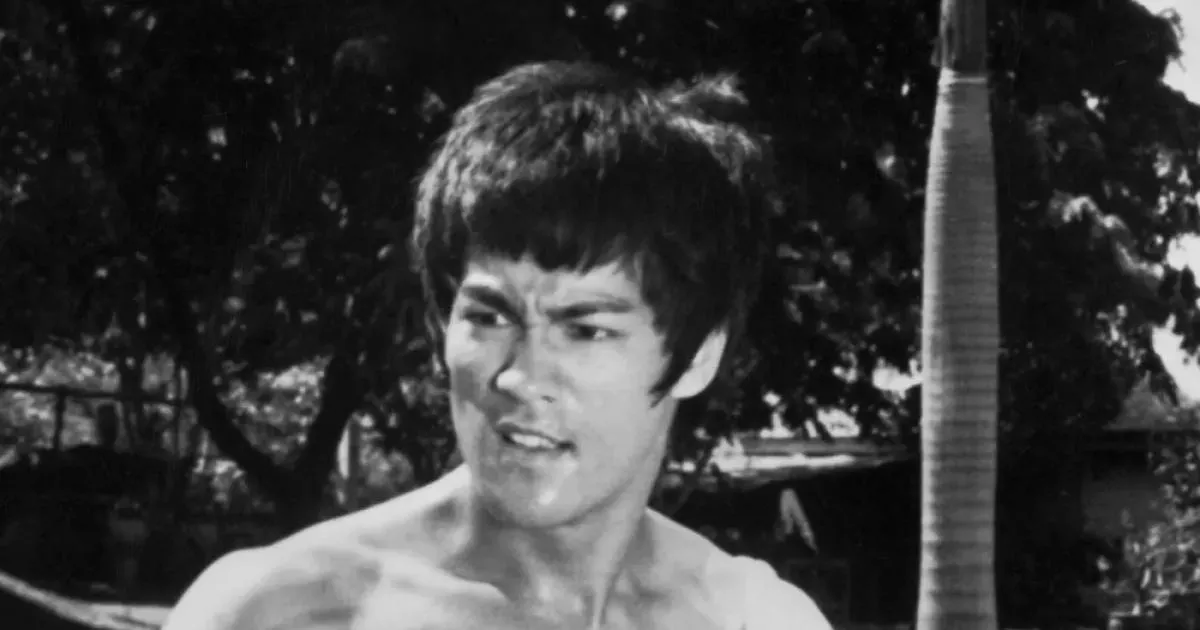
Bruce Lee was a highly influential Hong Kong and American martial artist, actor, and filmmaker. He founded Jeet Kune Do, a unique martial arts philosophy blending his fighting experience with philosophical concepts. Lee is considered the first global Chinese film star and significantly popularized martial arts films in the 1970s. His impact on martial arts and action cinema remains profound, solidifying his legacy as a cultural icon.
December 1939: Opera Tour in California
In December 1939, Bruce Lee's parents traveled to California for an international opera tour in Chinatown, San Francisco.


November 27, 1940: Bruce Lee's Birth
On November 27, 1940, Bruce Lee, originally named Lee Jun-fan, was born in San Francisco, California. He was a Hong Kong and American martial artist, actor, and filmmaker, known for founding Jeet Kune Do.
April 1941: Lee Family Returns to Hong Kong
In April 1941, when Bruce Lee was four months old, the Lee family returned to Hong Kong.
December 1941: Japan Attacks Hong Kong
In December 1941, the Lee family experienced hardships when Japan launched a surprise attack on Hong Kong during World War II, leading to a four-year occupation.
1950: First Leading Role in The Kid
In 1950, at age nine, Bruce Lee co-starred with his father in "The Kid", based on the comic book character "Kid Cheung", marking his first leading role.
1953: Introduction to Ip Man
In 1953, Bruce Lee was introduced to Ip Man by his friend William Cheung and began training in Wing Chun kung fu.
1956: Boxing Training Begins
In 1956, Bruce Lee began his boxing training under Brother Edward, coach of the St. Francis Xavier's College boxing team.
1956: Transfer to St. Francis Xavier's College
In 1956, Bruce Lee was transferred to St. Francis Xavier's College due to poor academic performance and was mentored by Brother Edward Muss, who was a teacher and coach of the school boxing team.
1956: Studying Wing Chun Martial Arts
In late 1956, Bruce Lee, at the age of 16, began studying Wing Chun under the tutelage of Ip Man. This followed losing to rival gang members.
1957: Studying Wing Chun Martial Arts
In 1957, Bruce Lee continued his study of Wing Chun under the tutelage of Ip Man. This training came after losing to rival gang members.
1958: Rooftop Fight and Police Complaint
In 1958, Bruce Lee engaged in a fight on a rooftop after a challenge from a rival school. He beat a boy so badly that one of his teeth was knocked out, leading to the boy's parents making a complaint to the police.
1958: Boxing Tournament Win
In 1958, Bruce Lee won the Hong Kong Schools boxing tournament, scoring knockdowns against the previous champion Gary Elms in the final.
1958: Boxing and Cha-Cha Achievements
In 1958, Bruce Lee won the Hong Kong schools boxing tournament and the Hong Kong's Crown Colony Cha-Cha Championship.
April 1959: Sent to the United States
In April 1959, Bruce Lee's parents sent him to the United States to stay with his older sister in San Francisco.
1959: Move to Seattle
In 1959, Bruce Lee moved to Seattle and continued his high school education while working as a live-in waiter. He also started considering making money by teaching martial arts.
1959: Starts Teaching Martial Arts
In 1959, Bruce Lee started teaching martial arts, calling his approach Jun Fan Gung Fu. He taught friends he met in Seattle, and invented his one-inch punch, also becoming interested in boxing.
March 1961: Enrolls at the University of Washington
In March 1961, Bruce Lee enrolled at the University of Washington, majoring in drama. He also took classes in psychology and philosophy.
1961: Enrolls at the University of Washington
In 1961, Bruce Lee enrolled at the University of Washington, marking a significant step in his education and personal development. He considered making money by teaching martial arts while aspiring to a career in acting.
August 1964: Secret Marriage to Linda Emery
In August 1964, Bruce Lee secretly married Linda Emery, a fellow student at the University of Washington, due to the ban on interracial relations in many US states at the time.
1964: Demonstration at Long Beach International Karate Championships
In 1964, Bruce Lee demonstrated his Jeet Kune Do martial arts at the Long Beach International Karate Championships, showcasing quick eye strikes, the one-inch punch, chi sao drills while blindfolded, and participating in a full-contact sparring bout.
1964: Demonstrates One-Inch Punch
In 1964, Bruce Lee demonstrated the "one-inch punch" at the Long Beach International Karate Championships, causing Bob Baker to fall backward into a chair and experience chest pain. He also met Taekwondo master Jhoongoo Rhee and developed a friendship that benefited them as martial artists. Rhee taught Lee the side kick, and Lee taught Rhee the "non-telegraphic" punch.
1964: Long Beach International Karate Championships
In 1964, Bruce Lee drew significant attention at the Long Beach International Karate Championships with demonstrations and speaking, leading to opportunities teaching martial arts in Los Angeles.
1964: Controversial Match with Wong Jack-man
In 1964, Bruce Lee had a controversial private match with Wong Jack-man after being challenged by the Chinese community to stop teaching non-Chinese people.
1964: Meeting Chuck Norris
In 1964, Bruce Lee met karate champion Chuck Norris at a demonstration in Long Beach, California. Lee later introduced Norris to moviegoers in "The Way of the Dragon", featuring them in a famous fight scene.
1964: Meeting Jhoongoo Rhee and Exchange of Techniques
In 1964, Bruce Lee met taekwondo master Jhoongoo Rhee at the Long Beach International Karate Championships. Rhee taught Lee the side kick, while Lee taught Rhee the "non-telegraphic" punch, which Rhee later incorporated into American taekwondo as the "accupunch".
1964: Invitation to Audition for "Number One Son"
In 1964, Bruce Lee's martial arts exhibition in Long Beach led to an invitation by television producer William Dozier for an audition for a role in the pilot for "Number One Son", about Lee Chan, the son of Charlie Chan.
1964: Joins Jun Fan martial arts studio and Appears at Long Beach International Karate Championships
In early 1964, Bruce Lee dropped out of university and moved to Oakland to found the second Jun Fan martial arts studio in Oakland. At the invitation of Parker, Lee appeared in the 1964 Long Beach International Karate Championships.
1965: Birth of Son Brandon Lee
In 1965, Bruce Lee and his wife Linda Emery had their first child, a son named Brandon Lee.
1965: Change in Training Approach After Wong Jack-man Match
In 1965, after his match with Wong Jack-man, Bruce Lee changed his approach toward martial arts training, emphasizing physical conditioning and incorporating muscular strength, endurance, cardiovascular endurance, and flexibility. He also maintained that mental and spiritual preparation are fundamental to the success of physical training.
September 1966: The Green Hornet Premieres
In September 1966, Bruce Lee played the role of Kato in "The Green Hornet" TV series, which premiered on ABC.
1966: The Green Hornet Debut
In 1966, Bruce Lee gained exposure to American audiences through his role as Kato in the ABC action television series "The Green Hornet".
March 1967: The Green Hornet Ends
In March 1967, "The Green Hornet" TV series, featuring Bruce Lee as Kato, ran for one season and concluded.
1967: Letters to Robert Baker Begin
In 1967, Bruce Lee began writing letters to Robert "Bob" Baker, a fellow actor from Fist of Fury, which continued until 1973.
1967: The Green Hornet Finale
In 1967, Bruce Lee's role as Kato in "The Green Hornet" ended, marking the conclusion of the TV series.
1967: Jeet Kune Do Originated
In 1967, Jeet Kune Do, meaning "way of the intercepting fist" in Cantonese, originated as a new hybrid martial art system. It incorporated footwork from boxing, kicks from kung fu, and techniques from fencing, emphasizing a "style of no style" by removing formalized approaches and evolving into a philosophy beyond traditional styles.
1967: The Green Hornet cancellation and Lee's Thank You Note
In 1967, after the show "The Green Hornet" was cancelled, Bruce Lee wrote to William Dozier thanking him for starting "my career in show business".
1968: Demonstration at Long Beach International Karate Championships
In 1968, Bruce Lee demonstrated his Jeet Kune Do martial arts at the Long Beach International Karate Championships, showcasing quick eye strikes, the one-inch punch, chi sao drills while blindfolded, and participating in a full-contact sparring bout. Higher-quality video footage of this event is available.
1969: Lee's Role in Marlowe
In 1969, Bruce Lee acted in Marlowe, playing Winslow Wong, a hoodlum skilled in martial arts, marking his first collaboration with screenwriter Stirling Silliphant.
1969: Birth of Daughter Shannon Lee
In 1969, Bruce Lee and his wife Linda Emery had their second child, a daughter named Shannon Lee.
1969: Collaboration on 'The Silent Flute' Script
In 1969, Bruce Lee collaborated with Hollywood script writer Stirling Silliphant and actor James Coburn on a script for a film titled "The Silent Flute". The trio also embarked on a location-hunt to India for the project.
1969: Film Appearances and Martial Arts Advisor Role
In 1969, Bruce Lee made a brief appearance in the film "Marlowe", penned by Stirling Silliphant. He played a hoodlum who used martial arts to intimidate a private detective. The same year, Lee was credited as the karate advisor in "The Wrecking Crew", starring Dean Martin. Also in 1969, Lee acted in one episode each of "Here Come the Brides" and "Blondie".
1969: Development of Kung Fu TV series
In 1969, Ed Spielman and Howard Friedlander created an identical concept to Lee's "The Warrior" series. Warner Bros. developed it and renamed it "Kung Fu", with no credit to Lee.
1970: Fight Choreography for "A Walk in the Spring Rain"
In 1970, Bruce Lee did the fight choreographies for the film A Walk in the Spring Rain.
December 9, 1971: Television Interview on 'The Pierre Berton Show'
On December 9, 1971, during a television interview on "The Pierre Berton Show", Bruce Lee stated that both Paramount and Warner Bros. wanted him to be in a "modernized type of a thing" and that they thought "the Western idea is out", whereas he wanted to do a Western.
1971: Role in Longstreet TV Show
In 1971, Bruce Lee played Li Tsung, a Jeet Kune Do instructor, in the television show Longstreet and elements of his martial arts philosophy were incorporated into the script.
1971: Leading Role in 'The Big Boss'
In 1971, Bruce Lee played his first leading role in "The Big Boss", which became a box-office success across Asia and made him a star in Hong Kong.
February 1972: Kung Fu TV Show Debuts
In February 1972, the TV show "Kung Fu", starring David Carradine, debuted and reached #1 by mid-1973, contributing to a fad in martial arts.
October 1972: Filming 'Game of Death'
From August to October 1972, Bruce Lee began working on his fourth Golden Harvest film, "Game of Death". He filmed scenes including a fight sequence with Kareem Abdul-Jabbar.
November 1972: Production Halt on 'Game of Death'
In November 1972, production on "Game of Death" was stopped after Warner Bros. offered Bruce Lee the opportunity to star in "Enter the Dragon".
1972: Stars in Fist of Fury and Directs The Way of the Dragon
In 1972, Bruce Lee starred in "Fist of Fury", portraying Chen Zhen, and also directed and wrote "The Way of the Dragon".
1972: Success of 'Fist of Fury' and Formation of Concord Production Inc.
In 1972, Bruce Lee's film, "Fist of Fury", surpassed box office records previously set by "The Big Boss". Lee negotiated a new deal with Golden Harvest, and later formed his own company, Concord Production Inc., with Chow.
1972: Plans for 'Yellow-Faced Tiger'
In 1972, after the success of "The Big Boss" and "Fist of Fury", Raymond Chow planned a third film, "Yellow-Faced Tiger", to be directed by Lo Wei. Bruce Lee decided to direct and produce his own script for "Way of the Dragon" instead.
1972: Views on religion
In 1972, when asked about his religious affiliation, Bruce Lee replied, "None whatsoever". When asked if he believed in God, he said, "To be perfectly frank, I really do not."
1972: Underarm Sweat Gland Removal
In late 1972, Bruce Lee had his underarm sweat glands removed because he believed underarm sweat was unphotogenic on film.
February 1973: Filming Begins for 'Enter the Dragon'
In February 1973, filming began in Hong Kong for "Enter the Dragon", a joint production by Concord, Golden Harvest, and Warner Bros.
April 1973: Completion of 'Enter the Dragon' Filming
In April 1973, filming for "Enter the Dragon" in Hong Kong was completed. The movie was a joint production by Concord, Golden Harvest, and Warner Bros.
May 1973: Cocaine Allegedly Caused Collapse
In May 1973, Doctor Poon Wai-ming in Hong Kong suggested that cocaine use could have contributed to Bruce Lee's collapse.
July 20, 1973: Bruce Lee's Death
On July 20, 1973, Bruce Lee passed away. He was a Hong Kong and American martial artist, actor, and filmmaker. He was the founder of Jeet Kune Do.
July 25, 1973: Bruce Lee's Funeral
On July 25, 1973, Bruce Lee's funeral was held in Lake View Cemetery in Seattle, with Taky Kimura, Steve McQueen, James Coburn, Dan Inosanto, Peter Chin, and Robert Lee serving as pallbearers.
July 26, 1973: Bruce Lee's Death
Bruce Lee died on July 26, 1973, just six days before the release of "Enter the Dragon".
November 1973: Period film planned with Shaw Brothers Studio
From September–November 1973, a period film titled "The Seven Sons of the Jade Dragon" was planned with the Shaw Brothers Studio, to be directed by either Chor Yuen or Cheng Kang, and written by Yi Kang and Chang Cheh.
1973: Bruce Lee's Passing
Following Bruce Lee's passing in 1973, his wife Linda Lee continued to promote his martial art, Jeet Kune Do.
1973: Enter the Dragon release and success
In 1973, "Enter the Dragon" was made for US$850,000 and went on to become one of the year's highest-grossing films, solidifying Bruce Lee's legacy as a martial arts legend.
1973: Stars in Enter the Dragon
In 1973, Bruce Lee starred in the American-Hong Kong co-production "Enter the Dragon".
1973: Kung Fu Craze Dominates Hong Kong Films
In 1973, the "kung fu craze" that Bruce Lee helped launch in the West began to dominate Hong Kong martial arts films.
1973: Shang-Chi Debut
Shortly after Bruce Lee's death, Marvel Comics introduced the character Shang-Chi in 1973, inspired by Lee.
1974: Marvel Introduces Iron Fist and The Deadly Hands of Kung Fu
In 1974, Marvel Comics debuted the character Iron Fist and the comic book series The Deadly Hands of Kung Fu, both inspired by Bruce Lee.
1974: Release of 'Kung Fu Fighting' and Master of Kung Fu Comic
In 1974, the song "Kung Fu Fighting" and Marvel's "Master of Kung Fu" comic book were released.
1975: Linda Lee's Book Release
In 1975, Linda Lee wrote and released the book Bruce Lee: The Man Only I Knew, which served as the basis for the 1993 film Dragon: The Bruce Lee Story.

1975: Ali Uses "Accupunch" to Knockout Dunn
In 1975, heavyweight boxing champion Muhammad Ali used the "accupunch", taught to him by Jhoon Goo Rhee who learned it from Bruce Lee, to knockout Richard Dunn.
1978: The Game of Death Release
In 1978, "The Game of Death", starring Bruce Lee, was released.
1978: Release of Cobbled-Together 'Game of Death'
In 1978, Robert Clouse released a controversial, cobbled-together version of "Game of Death", using a Bruce Lee look-alike, archive footage, and a new storyline. Only fifteen minutes of actual footage of Lee was included.
1978: Release of 'Circle of Iron'
In 1978, the film "Circle of Iron", starring David Carradine, was released. This film was based on the plot of "The Silent Flute" script that Bruce Lee, Stirling Silliphant and James Coburn had worked on in 1969.
1980: Publication of Bruce Lee's Toughest Fight
In 1980, Michael Dorgan's book, "Bruce Lee's Toughest Fight", described the 1964 fight between Bruce Lee and Wong Jack-man, noting that the fight ended due to Lee's "unusually winded" condition.
1984: Kung-Fu Master Game Released
In 1984, the first beat 'em up game, Kung-Fu Master, was released, and it was based on Bruce Lee's Game of Death.
1984: Dragon Ball Influence
In Japan, the manga and anime franchise Dragon Ball (1984–1995) was inspired by Bruce Lee films such as Enter the Dragon.
1986: Brandon Lee in "Legacy of Rage"
In 1986, Brandon Lee found success acting in action pictures, including "Legacy of Rage".
1987: Street Fighter Inspired by Enter the Dragon
In 1987, the Street Fighter video game franchise debuted, inspired by Enter the Dragon, and set the template for all fighting games that followed.
1988: Biography Sells Millions of Copies
By 1988, one of the biography books written about Bruce Lee had sold more than 4 million copies.
1989: Linda Lee's Biography of Bruce Lee
In 1989, Linda Lee suggested in her biography "The Bruce Lee Story" that Grace (Bruce Lee's mother) had a German father and was a Catholic.
1989: Linda Lee's Book "The Bruce Lee Story"
In 1989, Linda Lee wrote the book titled The Bruce Lee Story, further documenting the life and legacy of Bruce Lee.
1991: Brandon Lee in "Showdown in Little Tokyo"
In 1991, Brandon Lee starred in "Showdown in Little Tokyo", continuing his acting career in action-oriented films.
1992: Brandon Lee in "Rapid Fire"
In 1992, Brandon Lee acted in "Rapid Fire", adding to his portfolio of action films.
1993: Brandon Lee's Accidental Death
In 1993, at the age of 28, Brandon Lee tragically died after being accidentally shot by a prop gun on the set of the movie "The Crow".
1993: "Dragon: The Bruce Lee Story" Film Release
The feature film "Dragon: The Bruce Lee Story", based on Linda Lee's book, was released in 1993.
1994: Bruce Thomas's Biography of Bruce Lee
In 1994, Bruce Thomas, in his biography "Bruce Lee: Fighting Spirit," suggested that Grace (Bruce Lee's mother) had a Chinese mother and a German father.
1995: Review by Black Belt magazine
In 1995, Black Belt magazine reviewed footage of Bruce Lee, concluding that "the action is as fast and furious as anything in Lee's films."
1995: Dragon Ball End Date
In Japan, the manga and anime franchise Dragon Ball (1984–1995) was inspired by Bruce Lee films such as Enter the Dragon.
1998: Cowboy Bebop References Lee
In 1998, the anime Cowboy Bebop featured the protagonist Spike Spiegel practicing Jeet Kune Do and quoting Bruce Lee.
1999: Underworld Pays Tribute in "Bruce Lee"
In 1999, Underworld paid tribute to Bruce Lee in their song "Bruce Lee" from their album Beaucoup Fish, interpreting his philosophy as encouragement for self-actualization.
1999: Alumni Publication Article
In 1999, an article in the University of Washington's alumni publication clarified that Bruce Lee's major was drama, contrary to popular belief that it was philosophy.
2001: Linda Lee Retires
In 2001, Linda Lee retired from the family estate.
2004: Dana White Calls Lee 'Father of MMA'
In 2004, Ultimate Fighting Championship (UFC) founder Dana White called Bruce Lee the "father of mixed martial arts" due to his training methods and philosophy.
2007: Inflation Adjustment of Enter the Dragon's Budget
In 2007, the US$850,000 budget for "Enter the Dragon" in 1973 was calculated to be equivalent to $4 million when adjusted for inflation.
2008: Nokia Commercial Campaign
In 2008, Nokia launched an Internet-based campaign featuring staged "documentary-looking" footage of Bruce Lee playing ping-pong with nunchaku, which went viral on YouTube.
2008: The Legend of Bruce Lee TV Series
In 2008, the Chinese television drama series The Legend of Bruce Lee premiered.
January 6, 2009: Preservation of Hong Kong Home Announced
On January 6, 2009, it was announced that Bruce Lee's Hong Kong home would be preserved and transformed into a tourist site by Yu Pang-lin.
2010: Eric Peter Ho's Book on Lineage
In 2010, Bruce Lee's relative Eric Peter Ho, in his book "Tracing My Children's Lineage", suggested that Grace (Bruce Lee's mother) was born in Shanghai to a Eurasian woman named Cheung King-sin, and her father was Ho Kom Tong.
2010: Plans for 'The Silent Flute' Film
In 2010, producer Paul Maslansky reportedly planned and secured funding to create a film based on the original script for "The Silent Flute", which Bruce Lee had worked on.
April 2014: Lee Featured in EA Sports UFC
In April 2014, Bruce Lee was named a featured character in the combat sports video game EA Sports UFC, playable in multiple weight classes.
2015: Announcement of 'The Warrior' Series Production
In 2015, Perfect Storm Entertainment and Bruce Lee's daughter, Shannon Lee, announced that the series "The Warrior" would be produced and would air on Cinemax.
2015: Yu Pang-lin Passes Away
Yu Pang-lin, who had planned to preserve Bruce Lee's Hong Kong home, passed away in 2015, and the plan did not materialize.
October 2017: Production Begins for 'The Warrior' Series
In October 2017, production for "The Warrior" series began in Cape Town, South Africa. Justin Lin was chosen to direct the series.
2018: Plans for Chinese Studies Center
In 2018, Yu Pang-lin's grandson, Pang Chi-ping, announced plans to convert Bruce Lee's former mansion into a center for Chinese studies.
2018: Heat Stroke Theory Proposed
In a 2018 biography, Matthew Polly theorized that heat stroke, exacerbated by the removal of Bruce Lee's sweat glands in 1972, contributed to the cerebral edema that caused his death in 1973.
2018: Biography Identifies Lee's Maternal Grandfather
In the 2018 biography Bruce Lee: A Life, Matthew Polly identifies Bruce Lee's maternal grandfather as Ho Kom-tong and reveals details about his ancestry, including his Dutch Jewish great-grandfather and Chinese heritage.

April 2019: 'The Warrior' Series Renewed for Second Season
In April 2019, Cinemax renewed the series "The Warrior" for a second season.
March 2021: Acquisition of Rights to 'The Silent Flute' for Miniseries
In March 2021, it was announced that producer Jason Kothari had acquired the rights to "The Silent Flute" to turn it into a miniseries, with John Fusco as the screenwriter and executive producer.
July 2021: Letters Sold at Auction
In July 2021, a collection of over 40 handwritten letters from Bruce Lee to Robert "Bob" Baker, containing requests for various drugs, was sold for $462,500 at Heritage Auctions.
November 2022: Ang Lee to Direct Bruce Lee Biopic
In November 2022, it was announced that Taiwanese filmmaker Ang Lee would direct a biopic on Bruce Lee, starring his son Mason Lee, with Shannon Lee producing.
December 2022: Hyponatremia Theory Published
In December 2022, an article in the Clinical Kidney Journal suggested that Bruce Lee's fatal cerebral edema was caused by hyponatremia, linked to factors such as excessive water intake and drug use.
2022: Worldwide gross of Enter the Dragon adjusted for inflation
In 2022, it was estimated that "Enter the Dragon" had grossed over $400 million worldwide. After adjusting for inflation, this would be equivalent to $2 billion.
2023: 'The Warrior' Series Ends After Three Seasons
In 2023, the television series "The Warrior" concluded after airing for three seasons.
2024: Proposal for Bruce Lee Statue in San Francisco
In 2024, a proposal to erect a statue of Bruce Lee in San Francisco was made, with Lee's daughter expressing her support.
July 2025: TVB Program Concludes SUD in Epilepsy
In July 2025, the Hong Kong TVB program "Ctrl+F The Truth" concluded that Bruce Lee died of sudden unexpected death in epilepsy, citing medical experts and dismissing previous theories.
September 2025: Bruce Lee in Hitman: World of Assassination
In September 2025, Bruce Lee will appear in Hitman: World of Assassination, reinvented as an agent in the game.
Mentioned in this timeline
Muhammad Ali nicknamed The Greatest was an iconic American professional...

Marvel Comics founded in as Timely Comics by Martin Goodman...
The United States of America is a federal republic primarily...

California is a U S state on the Pacific Coast...
Kareem Abdul-Jabbar a Naismith Memorial Basketball Hall of Famer is...

Seattle is the most populous city in Washington and the...
Trending
3 hours ago Karoline Leavitt Addresses Trump Work Experiences and Defends Her Marriage Age Gap

3 hours ago Olympic Legend Lindsey Vonn Celebrates Birthday Weekend with European Beach Photos

3 hours ago Trump Faces Criticism Over Renewed Efforts to Question Representative Ilhan Omar’s Citizenship Status
3 hours ago James Talarico Faces Tough Questions From Texas Voters at CNN Town Hall
4 hours ago Jeremiyah Love Misses Cardinals Practice Due to Lingering Ankle Injury

4 hours ago Tech Stocks Slump as S&P 500 and Dow Face Weekly Losses
Popular

Ilhan Omar is a prominent American politician currently serving as...

Ken Paxton is an American politician and lawyer serving as...

Elon Musk is a visionary entrepreneur and engineer known for...
Michael Joseph Jackson the King of Pop was a highly...

Jameis Winston is an American football quarterback currently playing for...

Cristiano Ronaldo widely considered one of the greatest footballers captains...